Mr. Bucket: The 1990s game that turned cleanup into chaos
Mr. Bucket became a staple of 1990s family game nights by turning a simple cleanup task into a loud, fast-paced race against a runaway plastic bucket.
Compare prices and availability
Check current prices and availability for this guide on eBay.
As an eBay Partner, we may be compensated if you make a purchase.
Few children's games captured pure household chaos quite like Mr. Bucket. The setup was simple: a battery-powered plastic bucket rolled around the floor while players scrambled to scoop up and toss colored balls into its moving top. In practice, it felt more like a miniature sporting event mixed with a cleanup race. The game stood out in the early 1990s because it transformed an ordinary childhood chore — picking up scattered toys — into loud, unpredictable competition.
Where it came from
Mr. Bucket arrived during a period when battery-powered action games were becoming a major category in toy aisles. Released in 1991, the game fit neatly alongside other fast-moving tabletop and floor-based games that emphasized motion, speed, and noise over strategy. Rather than asking players to sit quietly and take turns, Mr. Bucket encouraged everyone to chase after a constantly moving target.
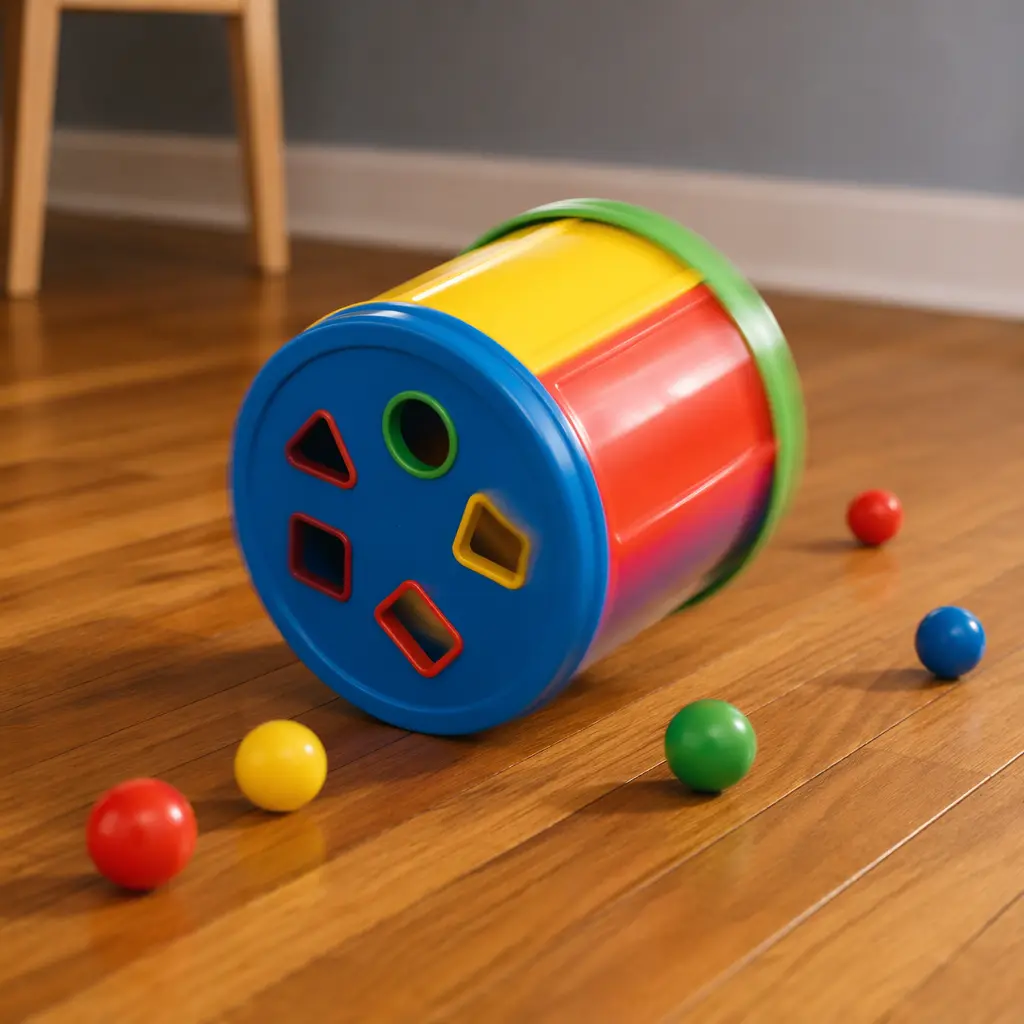
The design itself was intentionally straightforward. A motorized bucket-shaped toy spun and rolled unpredictably while ejecting lightweight plastic balls back onto the floor. Players used small paddle-like scoops to retrieve the balls and toss them back in. The appeal came from movement and repetition rather than complicated rules, making the game accessible to younger children almost immediately after opening the box.
Why it works
At its core, Mr. Bucket succeeds because it combines several kinds of play at once. It is partly a chase game, partly a dexterity challenge, and partly a test of hand-eye coordination. The moving bucket creates a constantly changing target, which means even simple actions like dropping a ball into the opening become unpredictable. Children tend to react strongly to that unpredictability because the game produces instant feedback: success is noisy and visible, while failure usually sends the balls flying across the room again.
The toy also benefits from a design that rewards movement rather than precision. Younger players who may struggle with traditional board games can still participate successfully because the experience is physical and energetic instead of rule-heavy. That made Mr. Bucket especially popular for family gatherings, rainy-day indoor play, and group playdates where attention spans varied.
- Motorized movement that changes direction unpredictably
- Bright high-contrast colors designed for quick visual tracking
- Simple rules that younger children can understand quickly
- Short rounds that encourage repeat play
- Physical activity mixed with hand-eye coordination
- Lightweight pieces that are easy for small hands to handle
Who it's for
Mr. Bucket was designed primarily for younger children, especially early elementary-age players who enjoy active games but may not yet have patience for longer strategy-based experiences. The game works best in open indoor spaces where players can move around safely. Adults who grew up in the 1990s often remember it fondly because of its frantic pace and memorable television commercials, giving the toy a strong nostalgia factor today. Modern families may also appreciate how little setup is required compared with larger electronic play systems.
Variants and what to look for today
Over the years, Mr. Bucket has appeared in slightly different forms, with updated plastics, revised color palettes, and occasional packaging redesigns. The core gameplay, however, has remained remarkably consistent. Most versions still rely on a battery-powered motor and lightweight plastic balls that pop back out during play. Because the toy depends heavily on movement, working mechanical condition matters more than cosmetic appearance when shopping secondhand.
Collectors and nostalgic parents often seek out older editions from the 1990s, but newer reissues are usually easier to maintain and may use quieter motors or sturdier plastics. When buying used copies, it helps to check for missing balls, cracked scoops, or weak battery compartments. Generic lookalikes exist as well, and some cheaper versions struggle to move smoothly across carpet or tile surfaces.
- Look for complete sets with matching scoops and balls
- Check that the motor runs consistently without stalling
- Battery compartments should be clean and corrosion-free
- Hard floors generally produce smoother movement than thick carpet
- Younger players benefit from wider open play areas
Frequently asked questions
Is Mr. Bucket considered a board game?
Technically, it falls closer to an action or activity game than a traditional board game. There is no board, and players spend most of the game moving around the room rather than sitting at a table.
Why do so many adults remember the game?
The toy became heavily associated with 1990s television advertising and sleepover-style family play. Its loud sounds, fast movement, and memorable concept made it easy for children to recall years later.
Does it work on carpet?
Most versions function best on hard floors or low-pile carpet. Thick carpeting can slow the motorized movement and reduce the unpredictable rolling that makes the game fun.
Are modern versions different from older ones?
Most reissues keep the original gameplay intact. Differences are usually limited to materials, color styling, or minor updates to durability and battery efficiency rather than major rule changes.
Mr. Bucket remains a good example of a toy built around a single energetic idea executed well. It did not rely on deep storytelling or complicated electronics. Instead, it turned movement, mess, and repetition into a memorable family game that still feels distinct decades after its debut. For many players, that noisy scramble across the living room floor remains one of the defining toy memories of the 1990s.