Parachute Men: Why tossing tiny parachutists still thrills
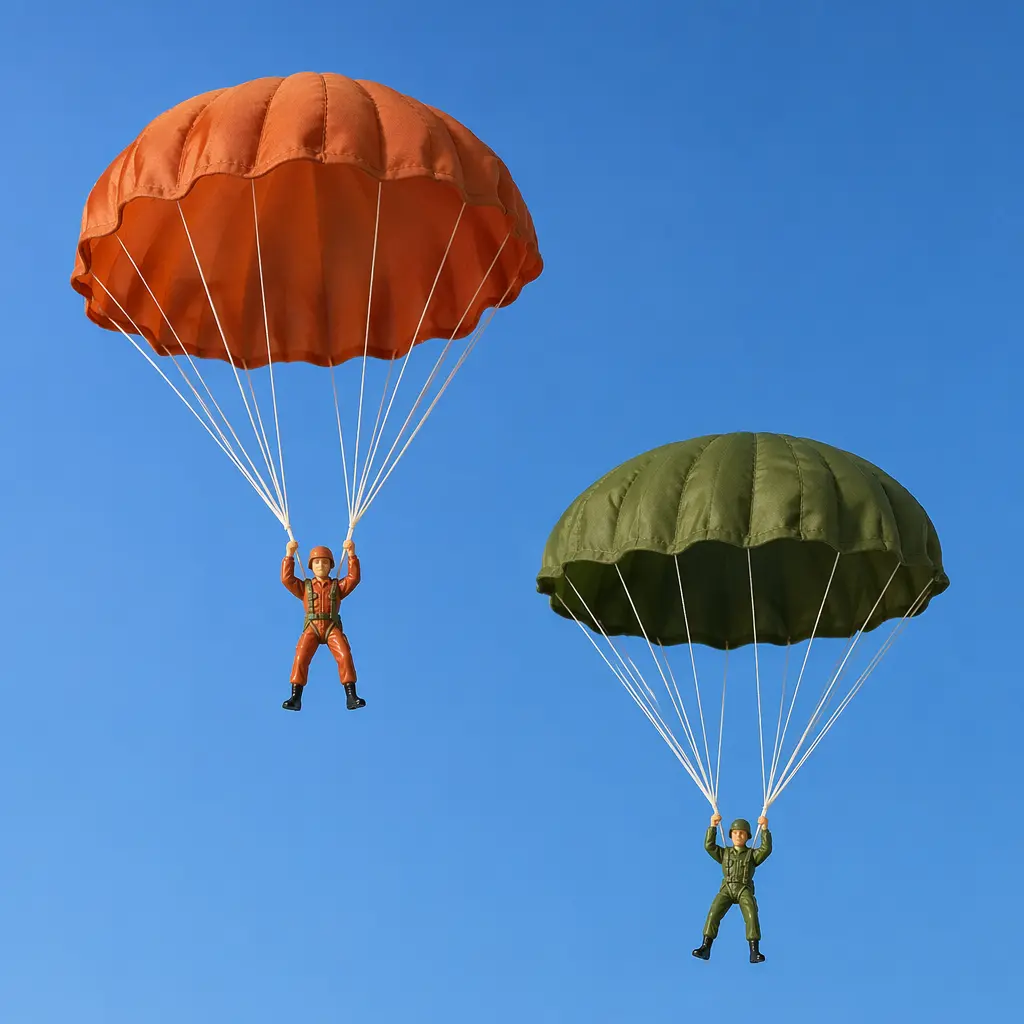
Parachute Men are pocket-sized toys built for big drops. From playground tosses to stairwell tests, their slow, drifting falls explain why this simple classic never lost its pull.
Compare prices and availability
Check current prices and availability for this guide on eBay.
As an eBay Partner, we may be compensated if you make a purchase.
Parachute Men are about as simple as toys get: a tiny figure, a canopy, and gravity. Toss one into the air and watch it float back down, turning an ordinary moment into a miniature spectacle. That slow, suspenseful descent—will it snag a branch, land on the roof, or drift perfectly to hand?—is the whole point. Decade after decade, kids keep coming back to that feeling, even as toys around them grow louder and more digital.
Where it came from
Parachute Men trace their roots to mid‑20th‑century novelty toys, inspired by real military and sport parachuting that captured public imagination after World War II. Early versions were often sold as inexpensive pocket toys or party favours—small plastic figures with paper or fabric chutes folded tightly around them. The appeal was immediate: no batteries, no instructions, just throw and watch.
Because they were cheap to make and easy to ship, parachute toys popped up everywhere—from seaside gift shops to school fair stalls. Different companies produced their own takes, but the core idea barely changed. That continuity is part of their charm: a child today can play with a parachute figure in almost exactly the same way their grandparents did.
Why it works
The genius of Parachute Men lies in how clearly they demonstrate a real-world principle. Throw one up and you see gravity pulling down, air resistance pushing back, and balance determining whether the figure spins or glides. It’s a physics lesson disguised as a game, but kids don’t need to know that to feel the satisfaction of a perfect landing.
They also invite experimentation. Kids quickly learn that height matters, that folding the canopy neatly helps, and that a light breeze can turn a simple toss into a long drift. That open-ended play keeps the toy fresh long after the first throw.
- Instant cause-and-effect play with no setup
- Slow, visible action that builds anticipation
- Encourages outdoor movement and exploration
- Easy to share and play with in groups
Who it's for
Parachute Men are typically best for children around ages 4 and up, mainly because of small parts and the coordination needed to fold the chute. That said, their appeal stretches well beyond kids. Adults often rediscover them as nostalgic desk toys or simple outdoor distractions, and they’re popular with grandparents looking for something timeless to share. Few toys bridge generations so effortlessly.
Variants and what to look for today
Modern Parachute Men come in a range of materials and sizes. Some use lightweight nylon canopies that resist tearing better than old paper versions. Others add slightly weighted figures to improve stability during descent. You’ll also find multi-packs designed for races or group play.
When choosing one today, focus on build quality rather than gimmicks. A smooth, snag-free canopy and securely attached strings matter more than flashy colours. Very cheap versions can have uneven lines that cause constant spinning or fast drops, which takes away from the classic floating effect.
Frequently asked questions
Are Parachute Men safe for young children?
Most are intended for ages 4 and up due to small parts and strings. Supervision is a good idea, especially outdoors where toys can land out of reach.
Do they work indoors?
They can, but they’re best outside or in tall, open indoor spaces like stairwells. Low ceilings don’t give the parachute enough time to open fully.
Why does my parachute spin instead of float?
Spinning usually means the strings are tangled or uneven. Straightening them and spreading the canopy evenly often fixes the problem.
Can they be used for simple science lessons?
Yes. They’re great for demonstrating air resistance, gravity, and how surface area affects falling speed—without needing any special equipment.
In a world crowded with screens and complicated toys, Parachute Men endure by doing one thing beautifully. They turn a throw into a moment of wonder, proving that sometimes the simplest ideas have the longest life.