PlasmaCar: The pedal-free ride-on that made motion the motor
Introduced in the early 2000s, the PlasmaCar showed that kids don’t need pedals or batteries to roll—just a clever design that turns wiggling into forward motion.
Compare prices and availability
Check current prices and availability for this guide on eBay.
As an eBay Partner, we may be compensated if you make a purchase.
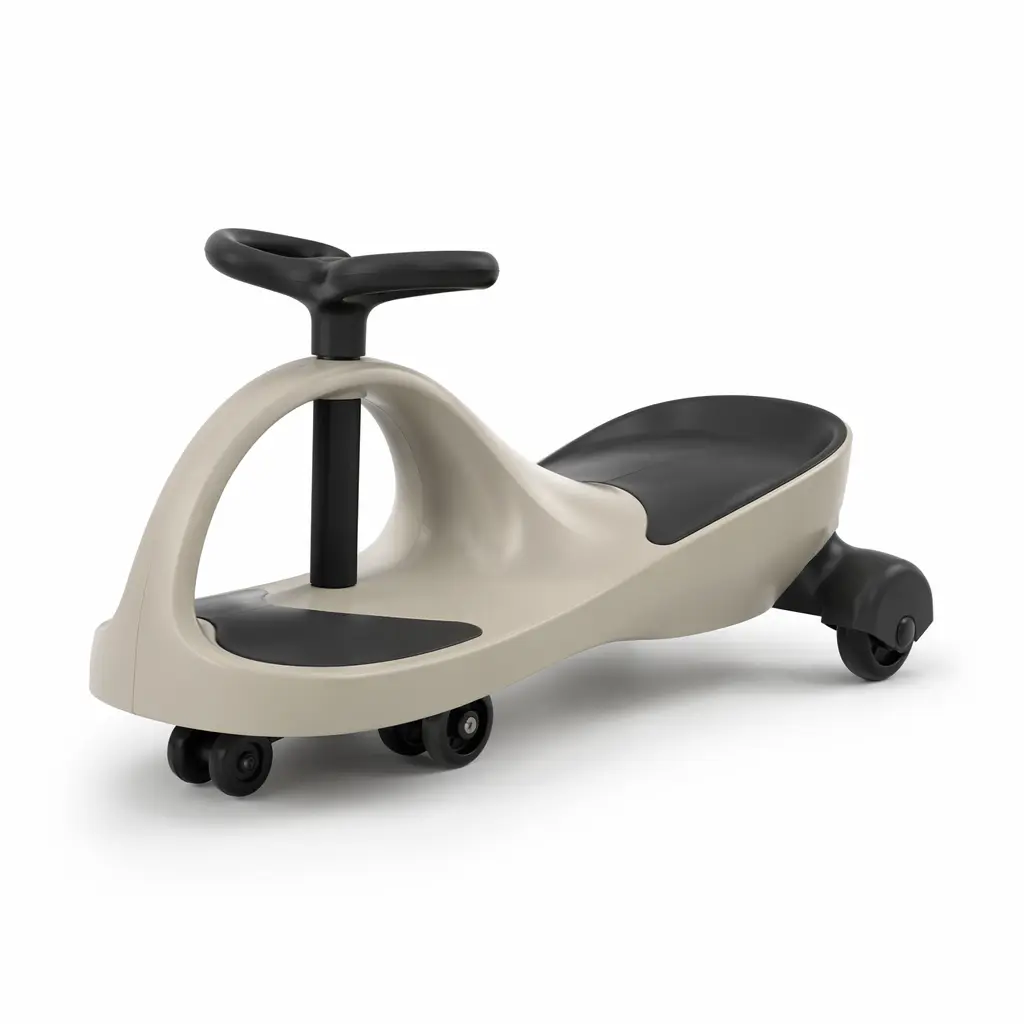
At first glance, the PlasmaCar looks almost too simple to work. There are no pedals, no chains, no batteries, and no obvious way to make it go. And yet, place a child on the seat, let them turn the steering wheel back and forth, and the car glides forward with surprising speed. When it arrived in the early 2000s, the PlasmaCar felt like a quiet revelation: a ride-on toy powered entirely by movement itself.
Where it came from
The PlasmaCar originated in South Korea in 2003, created by inventor Shin-Young An. His goal wasn’t to make a faster or flashier ride-on, but a simpler one—something that used basic physics instead of mechanical complexity. The design quickly stood out in a market crowded with tricycles and battery-powered cars.
When it reached international markets, the PlasmaCar appealed to parents as much as kids. It promised physical activity without pedals to master, fewer parts to break, and no charging cables to lose. Schools and therapy settings also took notice, seeing it as a playful way to encourage movement, balance, and coordination.
Why it works
The secret behind the PlasmaCar is its steering mechanism. By turning the steering wheel left and right in small, rhythmic motions, the front caster wheels generate forward momentum. It’s an intuitive action—often described as “wiggling”—that most children pick up within minutes.
Because the movement is self-generated, kids control both speed and direction through their bodies. There’s no single correct way to ride, which makes play feel exploratory rather than instructional.
- Pedal-free propulsion using side-to-side steering
- Low, stable seating that builds confidence
- Smooth wheels suitable for indoor floors and pavements
- Simple, durable construction with minimal moving parts
Who it's for
The PlasmaCar is typically enjoyed by children from around age three up through early primary years, though older kids and even adults often test it “just once.” Its low seat height makes it approachable for younger riders, while its surprising speed keeps it interesting as confidence grows. For parents, it sits in a sweet spot between gross-motor toy and everyday plaything.
Variants and what to look for today
Over the years, the PlasmaCar family has expanded to include slightly different sizes, colours, and versions designed for younger or heavier riders. The core idea remains the same, but build quality matters: smooth steering, strong plastic, and well-mounted wheels are key to that effortless glide.
There are many pedal-free ride-ons inspired by the PlasmaCar concept. While some are perfectly serviceable, very cheap copies may have stiff steering or wheels that don’t roll smoothly, undermining the whole experience. Looking for rounded edges, a solid feel, and clear weight guidance can help avoid disappointment.
Frequently asked questions
Does it really move without pedals?
Yes. Forward motion comes from turning the steering wheel side to side. The design converts that motion into momentum through the front wheels.
Is it suitable for indoor use?
On smooth floors, it can be great fun indoors. Parents often appreciate that it doesn’t require pushing off walls or furniture, though clear space is still important.
Does it help with physical development?
Riding encourages coordination, balance, and core engagement. Many parents notice kids naturally switching directions and speeds as they experiment.
Is assembly required?
Most versions come largely assembled, with minimal setup. The appeal is very much a take-it-out-and-ride experience.
More than two decades on, the PlasmaCar still feels quietly clever. It doesn’t rely on characters, screens, or sound effects—just a smart understanding of how kids move. In a world of increasingly complex toys, its enduring popularity is a reminder that sometimes the best engine for play is the child themselves.