Play-Doh: How a soft lump became a creative classic
From an unlikely start as wallpaper cleaner to a classroom staple, Play-Doh endures by keeping creativity simple, tactile, and endlessly reusable for generations of kids and parents.
Compare prices and availability
Check current prices and availability for this guide on eBay.
As an eBay Partner, we may be compensated if you make a purchase.
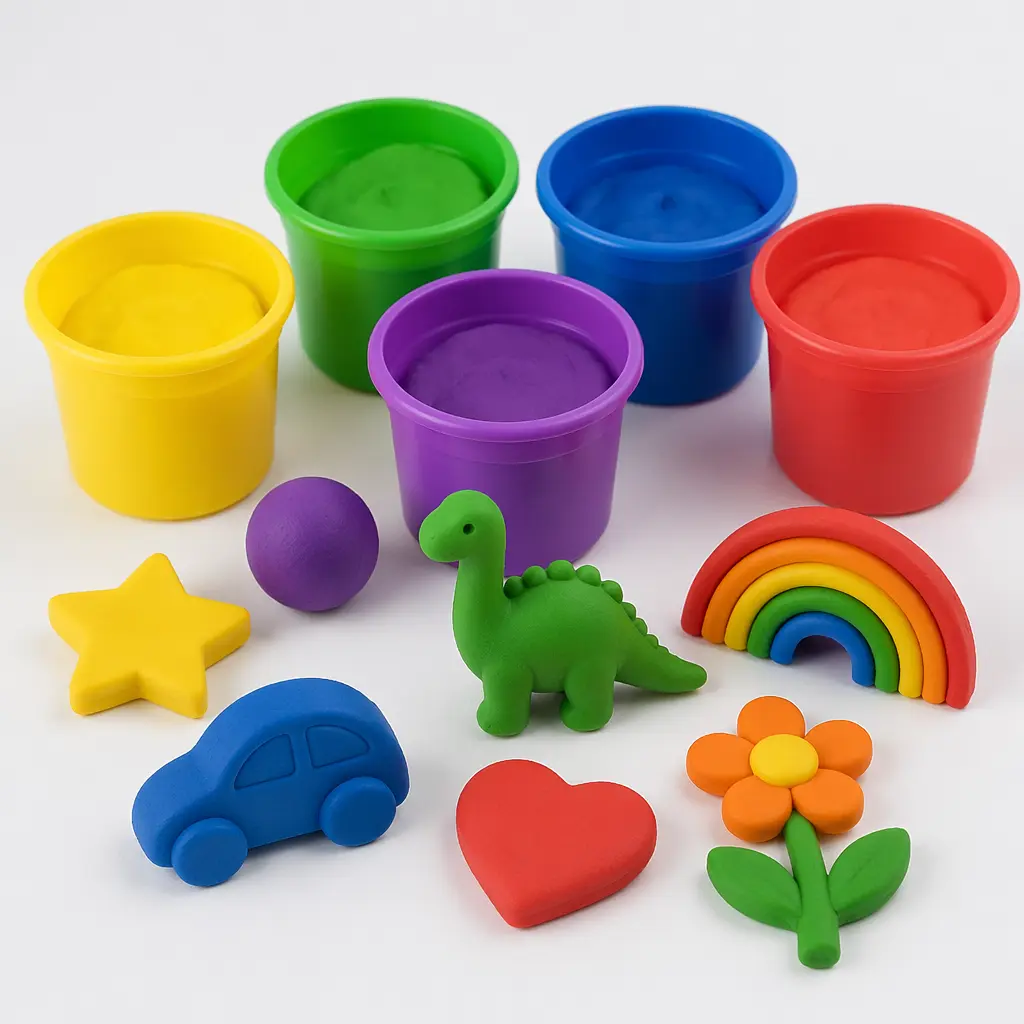
Play-Doh is one of those toys that feels like it has always been around. Brightly coloured, pleasantly squishy, and faintly salty-smelling, it sits at the intersection of art supply and toy box staple. What makes it interesting isn’t just nostalgia—it’s how a simple material has stayed relevant for nearly seven decades without needing screens, batteries, or complicated rules.
Where it came from
Play-Doh began life far from the playroom. In the early 1950s, a soap manufacturer developed a soft, pliable compound to clean coal dust from wallpaper. When home heating shifted away from coal, the product lost its purpose—until a schoolteacher suggested it could work as a children’s modeling clay.
Rebranded and reformulated to be safer and more colourful, Play-Doh officially launched as a toy in 1956. Its appeal was immediate: it didn’t harden like traditional clay, it was easy for small hands to shape, and it invited free-form creativity at a time when many toys were rigid or instructional.
Why it works
At its core, Play-Doh succeeds because it lowers the barrier to creativity. There’s no right or wrong outcome, no final product that has to be preserved. You make something, squash it, and start again. That loop is deeply satisfying for children and surprisingly calming for adults.
The compound itself is carefully tuned: soft enough to manipulate, firm enough to hold basic shapes, and forgiving when mistakes happen. It also engages multiple senses—touch, sight, even smell—which is part of why it’s widely used in early learning settings.
- Soft, easy-to-shape texture for small hands
- Reusable and non-drying with proper storage
- Bright colours that encourage imaginative play
- Open-ended play with no fixed rules
Who it’s for
Play-Doh is typically aimed at preschool and early primary-aged children, but its reach is broader. Younger kids enjoy the sensory experience and simple shaping, while older children use tools and sets to build more detailed creations. Many adults keep it around for crafts, classroom use, or even stress relief.
Variants and what to look for today
Over the years, Play-Doh has expanded well beyond single tubs. Today you’ll find multi-pack colour sets, themed playsets with tools and molds, and larger tubs designed for classrooms or heavy use. The core material remains similar, but the accessories shape how children interact with it.
When choosing Play-Doh today, look for fresh, well-sealed tubs to ensure the compound is soft. Sets that emphasise tools over characters tend to age better and encourage more open-ended play. Generic modeling compounds can be tempting, but consistency and softness vary widely.
Frequently asked questions
Does Play-Doh dry out?
Yes, if left exposed to air. Properly sealed in its container, it stays soft for months. If it does dry, it’s usually time to replace it rather than rehydrate it.
Is Play-Doh safe for young children?
Play-Doh is designed to be non-toxic, but it’s not meant to be eaten. Supervision is recommended for very young children, especially when using small tools.
Why does it smell the way it does?
The distinctive scent comes from its salt-based formula and has become part of the brand’s identity over time.
Is it just for kids?
Not at all. Teachers, therapists, and adults often use it for demonstrations, stress relief, or casual crafting.
Play-Doh’s longevity isn’t about chasing trends. It’s about sticking to a simple promise: give people a material that invites imagination without pressure. In a toy landscape that changes fast, that kind of simplicity has proven remarkably durable.