Play Kitchens: The pretend toy that never runs out of ideas
Miniature kitchens have powered pretend play for generations. From make-believe meals to social role-play, their open-ended design keeps kids engaged long after other toys are forgotten.
Compare prices and availability
Check current prices and availability for this guide on eBay.
As an eBay Partner, we may be compensated if you make a purchase.
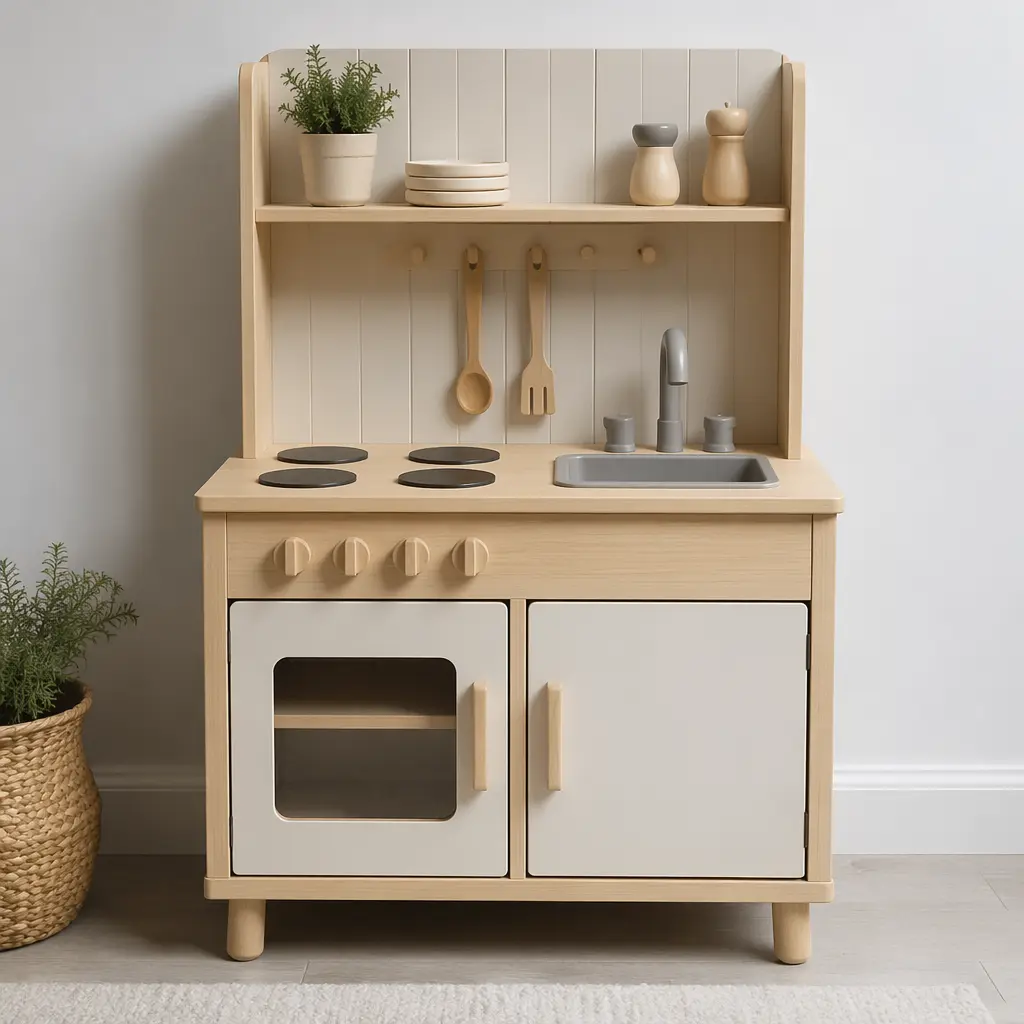
Few toys invite children to step into the adult world quite like a play kitchen. With its pint-sized oven doors, pretend taps and cupboards full of toy food, it turns everyday routines into endless stories. What looks simple on the surface is actually one of the deepest engines of pretend play ever made.
Where it came from
Play kitchens trace their roots to the early 20th century, when toy makers began shrinking household items to child scale. At a time when domestic work was highly visible in family life, miniature stoves and cupboards were designed to let children imitate what they saw at home.
Originally made from metal or wood and often quite heavy, early play kitchens mirrored real appliances closely. Over time, plastics, brighter colours and safer materials made them more accessible, and the idea spread globally. Despite changing styles and shifting ideas about gendered play, the basic concept never disappeared.
Why it works
The strength of a play kitchen is how much it leaves to the imagination. There is no fixed objective, no winning or losing. Instead, children decide what’s for dinner, who is invited and how the story unfolds. This open-ended structure supports creativity, language development and social skills.
- Familiar routines that children recognise from daily life
- Multiple access points for solo or group play
- Simple mechanisms like doors, knobs and switches that invite repetition
- Space to combine with other toys such as dolls or action figures
Because cooking is a universal activity, play kitchens also age well. A toddler might focus on opening and closing doors, while an older child invents elaborate café menus or family dramas. The same toy grows with the child rather than being outgrown quickly.
Who it's for
Most play kitchens are aimed at children aged two to six, but the appeal often stretches beyond that range. Younger children enjoy the physical interaction, while older ones use the setup as a stage for storytelling. Adults tend to appreciate play kitchens too, seeing them as toys that encourage cooperation, sharing and everyday life skills.
Variants and what to look for today
Today’s play kitchens come in many forms, from minimalist wooden sets to colourful plastic models packed with sound effects. Some are designed to look like modern home kitchens, while others lean into a more whimsical, childlike style.
When choosing one now, think less about gimmicks and more about play value. Sturdy construction, smooth edges and enough accessories to spark ideas matter more than flashing lights. It’s also worth being cautious of very flimsy copies, which can break easily and interrupt play.
Frequently asked questions
Do play kitchens help with learning?
Yes. They support language development, social interaction and problem-solving through role-play, all without feeling like structured learning.
Are play kitchens only for certain children?
No. Play kitchens are open-ended and can appeal to any child interested in pretend scenarios, regardless of gender.
How much space do you need for one?
Sizes vary widely. Some compact models fit on a tabletop, while larger ones work best against a wall or in a playroom corner.
What accessories matter most?
A small selection of pots, utensils and pretend food is usually enough. Too many pieces can overwhelm younger children.
In a toy world full of quick distractions, the play kitchen stands out for its staying power. By reflecting everyday life and leaving room for imagination, it remains one of the most reliable ways to spark meaningful, self-directed play.