Radio Flyer Tricycle: The first ride that felt like freedom
Since the 1920s, the Radio Flyer tricycle has marked a milestone: a child’s first taste of riding under their own power. Its simple, sturdy design helped make learning to pedal a shared childhood memory.
Compare prices and availability
Check current prices and availability for this guide on eBay.
As an eBay Partner, we may be compensated if you make a purchase.
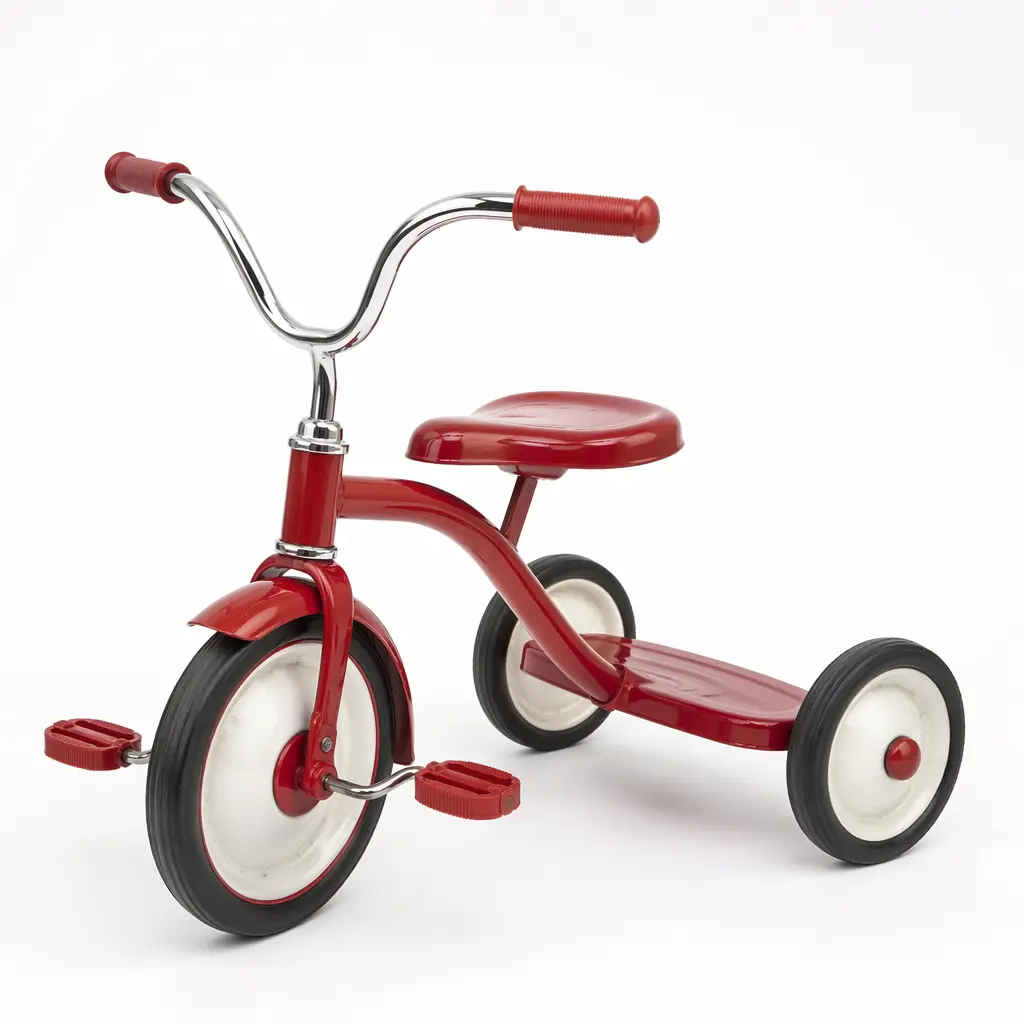
For many families, the first set of wheels isn’t a bike — it’s a tricycle. The Radio Flyer tricycle became iconic because it turned that wobbly, determined moment into a rite of passage. Low to the ground, built to last, and instantly recognisable in red, it helped generations of children learn that pushing pedals could take them somewhere on their own.
Where it came from
Radio Flyer traces its roots back to 1927, when Italian immigrant Antonio Pasin began building wooden wagons in Chicago. His focus was durability and affordability — toys that could survive real play. As the company expanded beyond wagons, ride-on toys were a natural next step, and the tricycle became one of its defining products.
The early Radio Flyer tricycles reflected the manufacturing values of their time: heavy-gauge steel frames, wide stances for stability, and parts that could handle rough pavements. At a point when many toys were disposable, these trikes were meant to be handed down. That reputation for sturdiness is a big reason the design lodged itself in cultural memory.
Why it works
The genius of a tricycle is simplicity. Three wheels remove the balance challenge, letting children focus on pedalling and steering. Radio Flyer leaned into that simplicity, pairing it with a reassuringly solid feel. The result is a ride-on that feels safe without feeling restrictive.
Several design choices helped make the Radio Flyer tricycle a classic:
- Low centre of gravity that reduces tipping and builds confidence
- Wide rear wheelbase for stability on uneven surfaces
- Sturdy metal frame designed for outdoor use
- Simple pedals and handlebars sized for small hands and feet
- Bold red finish that made the toy easy to spot and remember
Together, these elements created a play pattern that was easy to understand but endlessly repeatable. Children could circle a driveway for half an hour, mastering movement through repetition — an underrated kind of learning.
Who it’s for
Traditionally, tricycles like this suit toddlers and preschoolers who are ready to pedal but not yet ready to balance on two wheels. They appeal to parents as much as children: adults recognise the milestone, while kids feel a sense of independence. There’s also a strong nostalgia factor. Many parents seek out a Radio Flyer-style trike because it mirrors their own early memories of outdoor play.
Variants and what to look for today
Modern Radio Flyer tricycles still echo the classic look, but they’ve evolved with contemporary safety standards and family needs. You’ll find versions with adjustable seats, quieter tyres, and lighter materials that are easier to carry and store.
When browsing today, it helps to think in terms of use rather than nostalgia alone. Some families prefer metal frames for durability and heirloom appeal, while others opt for lighter plastic designs for ease of handling. It’s also worth being cautious with very cheap imitations that may look similar but lack stable geometry or robust construction.
Frequently asked questions
At what age can a child use a tricycle?
Most children are ready between ages 2 and 4, once they can sit upright, reach the pedals, and understand basic steering. Development matters more than age alone.
Is a tricycle better than a balance bike?
They serve different purposes. Tricycles teach pedalling and coordination, while balance bikes focus on balance. Many families use both at different stages.
Can tricycles be used outdoors only?
They’re designed primarily for outdoor spaces like gardens and pavements, but smooth indoor areas can work if there’s enough room and supervision.
Why is the red tricycle so iconic?
The bold red colour, paired with a durable metal build, made it visually memorable and emotionally tied to early independence — a powerful combination.
Nearly a century after its debut, the Radio Flyer tricycle endures not because it changed dramatically, but because it didn’t need to. It captured a moment — a child’s first real ride — and built a toy sturdy enough to carry that moment across generations.