Sensory Balls: Why textured spheres became early-play essentials
Once a therapy tool, sensory balls quietly moved into nurseries worldwide. Their textures, squeezability, and simple shapes support early motor skills while fitting modern, low-pressure play.
Compare prices and availability
Check current prices and availability for this guide on eBay.
As an eBay Partner, we may be compensated if you make a purchase.
Sensory balls don’t shout for attention. They don’t light up, play songs, or promise to teach the alphabet. And yet, they’ve become one of the most reliable fixtures in baby playrooms, therapy clinics, and early-years classrooms. These textured, squeezable spheres are often among the first objects a baby learns to grasp, roll, and mouth—and they’ve earned that role quietly, through usefulness rather than hype.
Where it came from
Sensory balls don’t have a single inventor or launch year. Instead, they evolved out of physical and occupational therapy tools used in the late 20th century. Therapists working with infants and children needed simple objects that encouraged grasping, bilateral coordination, and tactile exploration. A ball—already familiar, durable, and endlessly adaptable—was an obvious starting point.
By adding textures, soft materials, and varied resistance, these balls crossed over from clinics into homes. As early childhood education shifted toward sensory-rich, child-led play, manufacturers began producing sets specifically for babies and toddlers. Over time, sensory balls became less of a specialist item and more of a mainstream staple, often included in play gyms, activity baskets, and baby gift sets.
Why it works
At their core, sensory balls succeed because they match how babies naturally learn. Infants explore the world through touch, movement, and repetition. A textured ball offers immediate feedback: it feels different depending on how it’s squeezed, rolled, or mouthed. There’s no correct way to play, which makes it low-pressure for both child and parent.
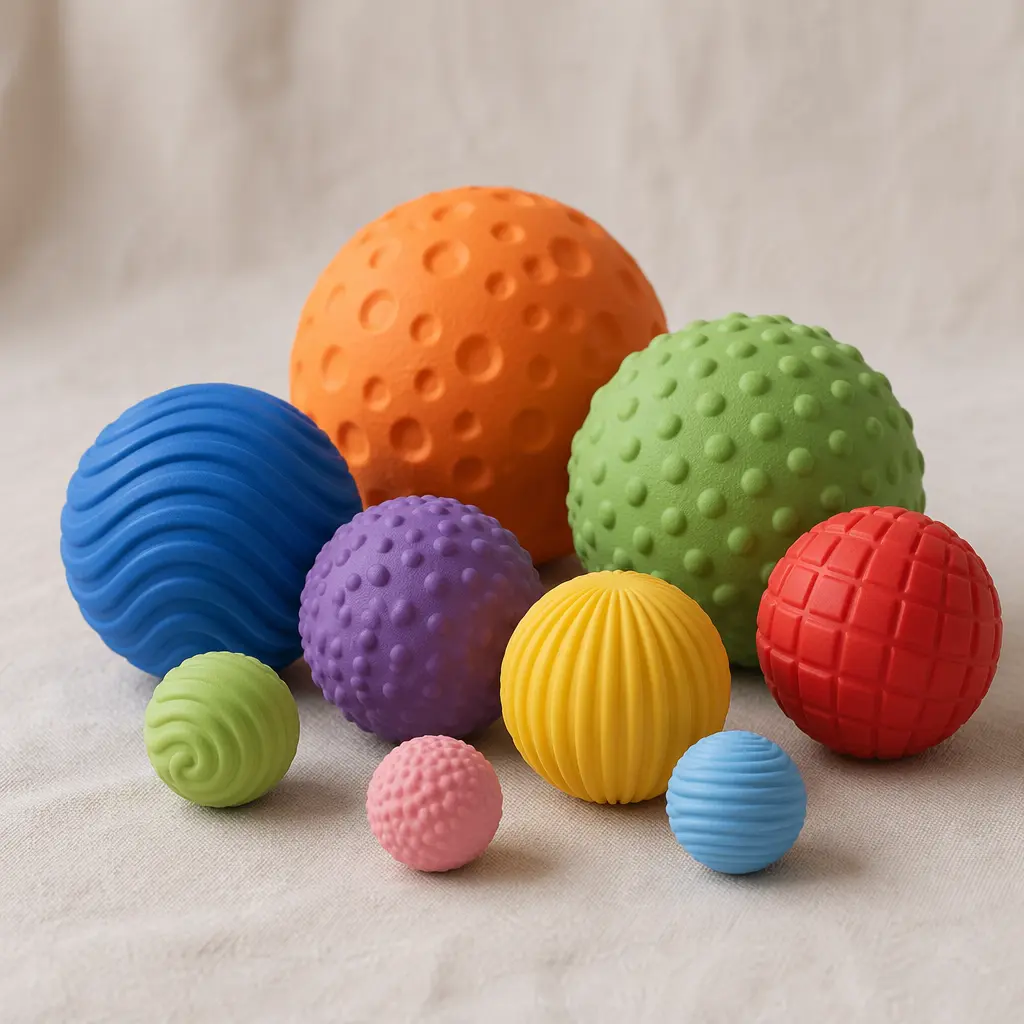
Design-wise, sensory balls are deceptively thoughtful. Their features are tuned to early development rather than novelty. Common standout elements include:
- Varied textures that stimulate tactile awareness
- Soft, flexible materials that are easy to grip
- Lightweight construction for safe indoor play
- Rounded shapes that roll unpredictably, encouraging crawling
- Subtle resistance that builds hand strength without strain
Who it's for
Sensory balls are typically aimed at babies from around three months onward, once grasping and reaching begin. They grow with the child: younger babies explore them with hands and mouths, while older infants chase, roll, and throw them. Toddlers often incorporate them into imaginative or physical play. Adults haven’t abandoned them either—sensory balls still appear in therapy settings and as discreet fidget tools, a reminder of their broad, age-spanning appeal.
Variants and what to look for today
Today’s sensory balls come in many variations, though the core idea remains unchanged. You’ll find sets with multiple textures, single oversized balls for tummy time, and smaller balls designed for tiny hands. Some include gentle rattles or air holes that change the way the ball compresses.
When choosing sensory balls now, it’s less about brand names and more about materials and construction. Look for soft, flexible plastics or silicone that rebound easily and feel pleasant to touch. Avoid balls that are overly rigid or have sharp seams. As with many baby items, extremely cheap knock-offs may cut corners on material quality, so it’s worth choosing options that clearly state they’re designed for infant use.
Frequently asked questions
Are sensory balls safe for babies?
Most sensory balls made for infants are designed with safety in mind, using soft, non-toxic materials. Always follow age recommendations and supervise play, particularly when babies are mouthing toys.
Do sensory balls actually help development?
They support development indirectly by encouraging grasping, rolling, reaching, and movement. While they won’t teach specific skills on their own, they create opportunities for practice during everyday play.
How many sensory balls do you need?
One or two can be enough, but small sets offer more variety in texture and size. Multiple balls also invite interactive games like rolling back and forth as children grow.
Can sensory balls be used outside babyhood?
Yes. Many toddlers and older children continue to enjoy them for active play, and similar designs are still used in therapy and stress-relief contexts for adults.
Sensory balls endure because they respect the basics of play. They don’t try to entertain a child so much as invite exploration. In an age of increasingly complex toys, their quiet success is a reminder that sometimes the simplest designs are the ones that last.