Silly Bandz: The playground craze that bent recess economics
In the late 2000s, Silly Bandz turned simple silicone shapes into playground currency. Here’s how a low-tech craft became a cultural moment—and what to know about them now.
Compare prices and availability
Check current prices and availability for this guide on eBay.
As an eBay Partner, we may be compensated if you make a purchase.
For a brief, noisy stretch of the late 2000s, school playgrounds ran on rubber. Silly Bandz—bright silicone bands that snapped into recognizable shapes when not worn—became a social currency, a fashion statement, and a lesson in supply and demand, all before the lunch bell rang.
Where it came from
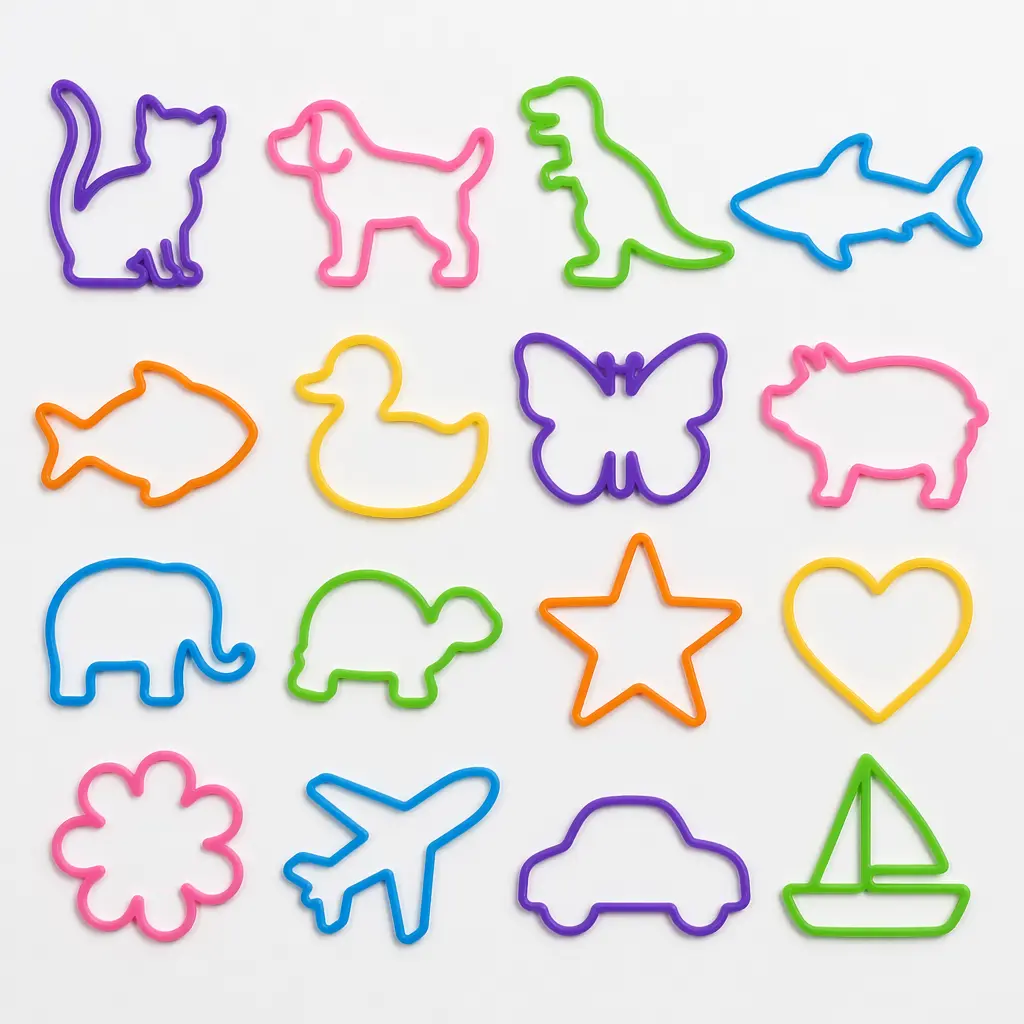
Silly Bandz emerged around 2008, when a small US company popularised the idea of silicone rubber bands moulded into shapes—animals, letters, symbols—that only revealed themselves when taken off the wrist. The concept wasn’t entirely new; shaped elastics had existed before. But clever packaging, timing, and word-of-mouth did the rest.
They arrived just as social media and playground culture began feeding each other. Kids compared collections online after school and traded in person the next day. What started as a novelty accessory quickly became a phenomenon that spread internationally, especially through primary schools.
Why it works
At heart, Silly Bandz are extremely simple. That simplicity is exactly why they worked. They were inexpensive, durable, and instantly understandable—yet just mysterious enough to invite collecting and trading.
- Dual identity: a bracelet on the wrist, a recognisable shape off it
- Bright colours that stood out across a playground
- Tactile, stretchy silicone that felt different from standard elastics
- Endless themes that encouraged collecting and comparison
Most importantly, they created rules without adults having to explain them. Some shapes felt rarer. Some colours were more desirable. Kids negotiated trades, debated value, and learned quickly who was getting the better deal.
Who it's for
Originally aimed at primary-school children, Silly Bandz found an unexpected secondary audience: nostalgic teens and adults who enjoyed the harmless fun of collecting. Today, they’re mostly a nostalgia item for parents who remember confiscation bins and school bans, but they still appeal to younger kids as a low-stakes craft and dress-up accessory.
Variants and what to look for today
At their peak, shape bands came in countless themes—animals, vehicles, sports icons, letters, holiday shapes. Today’s versions tend to be more generic, often sold as craft or party-pack items rather than must-have collectibles.
If you’re buying now, look for silicone bands that are clearly labelled as latex-free and designed for children. Avoid ultra-thin bands that snap easily or lose their shape after minimal wear.
Frequently asked questions
Do Silly Bandz actually turn back into shapes?
Yes. When removed from the wrist and left alone, the silicone naturally relaxes back into its moulded shape, though some may take longer depending on use.
Why were they banned in some schools?
Bans usually came from distraction and disputes. Trading could lead to arguments, and large stacks worn on arms sometimes interfered with writing or play.
Are modern versions the same quality?
Quality varies. Well-made silicone bands still hold their shape and colour, while cheaper versions may stretch out quickly.
Silly Bandz didn’t last long at the top, but they didn’t need to. For a few years, they dominated recess, taught kids about value and trade, and proved that even the simplest idea can become a cultural moment when it hits at the right time.