Slip ’N Slide: How a backyard accident became summer tradition
Invented by chance in 1961, the Slip ’N Slide turned ordinary lawns into splashy playgrounds. Here’s how a simple idea endured—and what to know before laying one out today.
Compare prices and availability
Check current prices and availability for this guide on eBay.
As an eBay Partner, we may be compensated if you make a purchase.
Few toys are as closely tied to a season as the Slip ’N Slide. It’s not something you keep on a shelf or bring out on a rainy afternoon. This is a toy that announces summer: hot grass, a hose running, and kids lining up barefoot for a fast, squealing glide. Its appeal isn’t complicated, but its story—and staying power—are.
Where it came from
The Slip ’N Slide dates back to 1961 and owes its existence to a happy accident. Robert Carrier, an industrial designer, was experimenting with ways to keep his son cool during a heatwave. He unrolled a length of slick plastic, ran water over it, and watched kids instinctively start sliding across it.
What began as a backyard improvisation quickly caught the attention of toy makers. The idea was simple enough to mass-produce and exciting enough to feel new. Within a year, the Slip ’N Slide was on store shelves, marketed as an affordable way to bring pool-like fun to families without pools. It fit perfectly into the post-war boom of suburban lawns and outdoor play.
Why it works
At its core, the Slip ’N Slide succeeds because it turns physics into play. Water reduces friction, the plastic surface stays slick, and gravity does the rest. There’s no setup beyond a hose and a patch of grass, and no learning curve—kids understand what to do the second they see it.
It also hits a sweet spot between thrill and accessibility. The slide is low to the ground, so it feels fast without being intimidating. Runs are short, which keeps kids cycling through turns and encourages group play rather than solitary use.
- Long, low profile that feels exciting but approachable
- Water spray that keeps the surface slick and cool
- Quick setup using a standard garden hose
- Encourages turn-taking and social play
Who it’s for
The Slip ’N Slide is traditionally aimed at school-age children, roughly five and up, depending on the version and supervision. That said, it has long had crossover appeal. Older kids, teens, and even adults often can’t resist a run—though modern packaging usually includes age and use guidance. Its multigenerational pull is part of its charm, especially at family gatherings and summer parties.
Variants and what to look for today
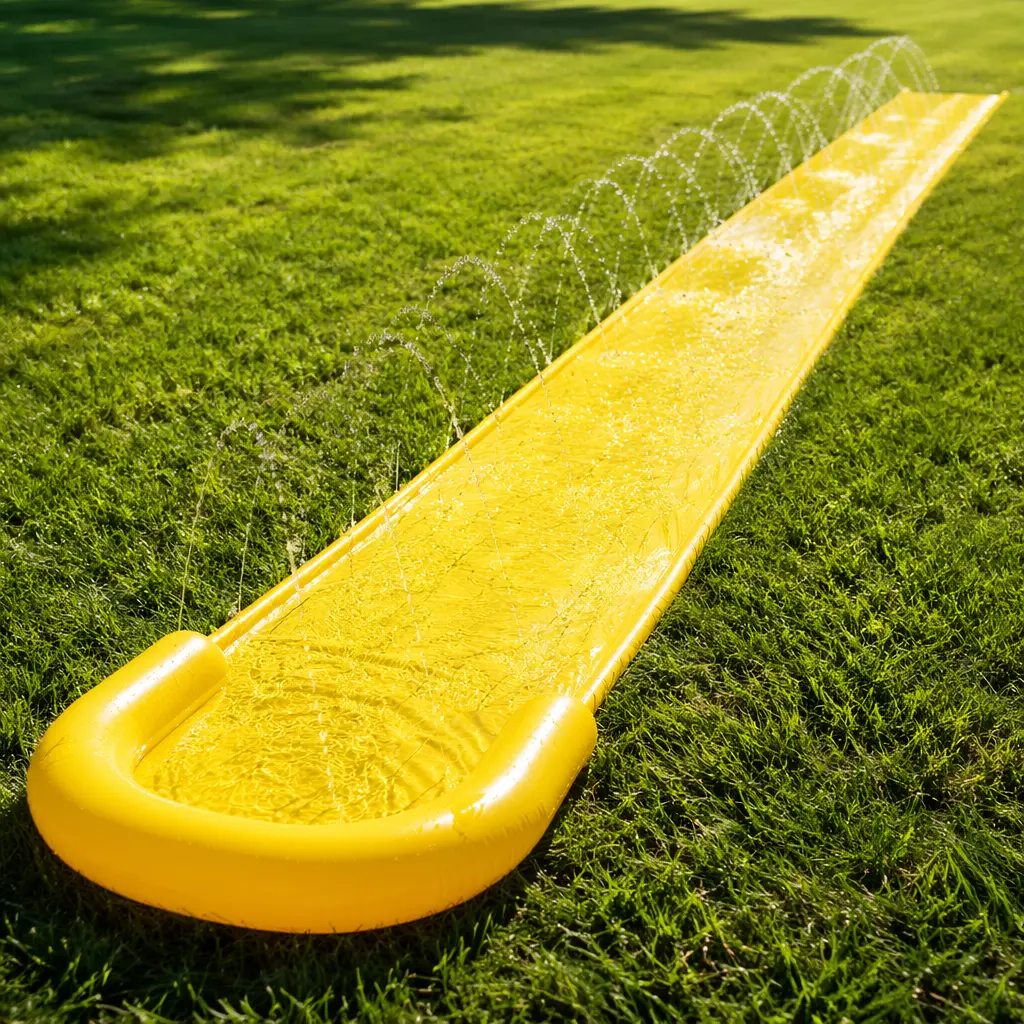
Over the decades, the Slip ’N Slide concept has expanded beyond a single strip of plastic. Today you’ll find longer lanes, wider designs for racing, and versions with small splash pools at the end. Some add soft bumpers or inflatable sections to help slow sliders down.
When shopping now, focus less on nostalgia and more on practical details. Thicker material tends to last longer and resist tearing. Look for evenly spaced water jets and secure hose connectors. As with many classic toys, generic versions exist; while some are fine, very thin plastic or poorly sealed seams can shorten the fun.
Frequently asked questions
Do Slip ’N Slides still use the same design as the original?
The basic idea is unchanged: a long plastic surface kept slick with water. Modern versions may be wider, longer, or include splash zones, but the core experience remains remarkably faithful to the original.
Is it safe for younger children?
Many are designed with children in mind, but age recommendations matter. Younger kids should be supervised closely, and it’s important to follow guidance about running starts, diving, and surface placement.
How much space do you need?
Most versions require a straight stretch of lawn at least several metres long. Extra space at the end helps slow sliders safely, especially for longer or racing designs.
Why has it lasted so long?
The Slip ’N Slide endures because it delivers instant fun with almost no barrier to entry. It’s inexpensive, easy to store, and perfectly matched to hot weather—qualities that don’t go out of style.
More than sixty years on, the Slip ’N Slide remains a reminder that not every great toy needs batteries or screens. Sometimes all it takes is water, motion, and a bit of summer heat to create a memory that sticks.