Snap Ships: The modular sci‑fi building toy built for storytelling
Launched in 2019, Snap Ships combined construction play with customizable sci‑fi vehicles and serialized storytelling, giving kids a modular system designed for rebuilding, display, and imaginative battles.
Compare prices and availability
Check current prices and availability for this guide on eBay.
As an eBay Partner, we may be compensated if you make a purchase.
Snap Ships arrived at a moment when construction toys were competing not just on engineering, but on world-building. Introduced in 2019 by PlayMonster, the line combined snap-together building systems with customizable spacecraft, vehicles, and faction-based storytelling. Instead of treating a model as a finished object, Snap Ships encouraged constant rebuilding, swapping, and experimentation. The result felt part construction set, part action toy, and part science-fiction universe, aimed at kids who liked both hands-on assembly and imaginative play.
Where it came from
PlayMonster launched Snap Ships in 2019 during a period when modular construction systems were expanding beyond traditional brick formats. The idea behind the line was straightforward but ambitious: create a building toy that felt closer to assembling customizable spacecraft from a science-fiction series than following a fixed instruction booklet. Each vehicle belonged to a larger fictional conflict between factions, giving the sets a built-in narrative framework without requiring kids to know a long history of characters or lore.
Unlike many classic construction systems that emphasize architectural builds or static display models, Snap Ships leaned heavily into reconfiguration. Pieces connected through a cube-based grid system that allowed sections of ships to rotate, detach, and recombine quickly. The toy line also tied into animated shorts and online storytelling, reflecting a broader trend in modern toys where physical play and digital media support each other. Even with the media tie-ins, though, the core appeal remained tactile: building machines that looked fast, armored, and ready for battle.
Why it works
The biggest strength of Snap Ships is how approachable the building process feels. Many construction toys reward precision and patience, but Snap Ships emphasized experimentation. Components snap together in large, satisfying chunks, making it easier for younger builders to improvise without worrying about tiny alignment details. The modular cube connectors also meant a ship could be rebuilt in dramatically different ways within minutes. Wings could become armor, engines could move to different positions, and vehicles could shift from sleek racers to bulky combat machines.
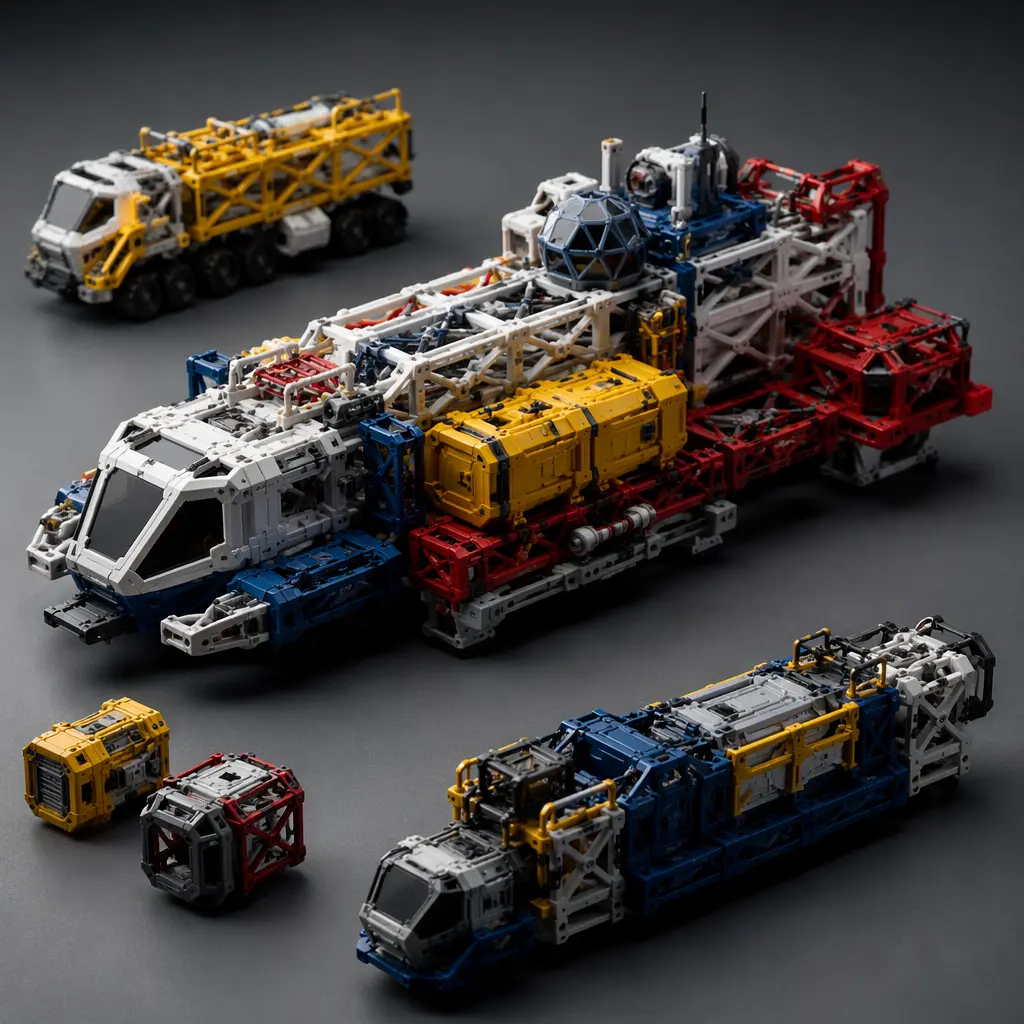
Visually, the toy line borrowed heavily from familiar science-fiction design language: exposed mechanical details, asymmetrical hulls, bright faction colors, and oversized engines. That gave even simple builds a cinematic feel. The ships looked dynamic on a shelf but were sturdy enough for active play, which helped separate the line from more fragile display-oriented model kits.
- Modular cube-based connection system for fast rebuilding
- Designed for both construction and action play
- Faction-based storytelling encouraged imaginative scenarios
- Mix-and-match parts across different sets
- Chunky pieces suited to younger builders compared with advanced model kits
Who it's for
Snap Ships was primarily aimed at school-age kids who enjoyed both building and imaginative science-fiction play. The larger pieces and simplified connection system made it more accessible than advanced hobby models, while the customizable designs appealed to children who liked inventing their own vehicles rather than copying a single finished build. The line also found an audience among adult collectors interested in modular toy systems, especially fans of kitbashing and speculative spacecraft design. Because the ships were designed to be handled and rebuilt repeatedly, they tended to work best for kids who enjoyed active experimentation instead of preserving a completed model untouched on a shelf.
Variants and what to look for today
The Snap Ships line included different ship classes, faction themes, and build sizes ranging from small starter-style vehicles to larger command ships. Some sets emphasized speed and agility, while others focused on heavier armor or support functions. The modular system encouraged combining parts across the entire line, so collectors often mixed multiple sets together to create larger custom designs.
Today, shoppers are most likely to find Snap Ships through online toy retailers, resale marketplaces, and specialty hobby shops. Condition matters more than rarity for most buyers. Since the appeal of the system depends on modular rebuilding, complete part assortments are usually more valuable than unopened packaging alone. Generic compatible pieces and imitation sets also appeared after the line gained attention, but lower-quality plastic and weak connectors can affect the experience considerably.
- Look for sets with complete accessory and connector pieces
- Check that joints and cube connectors still snap firmly into place
- Mixed lots can offer better value for builders who enjoy customization
- Starter-sized ships are often easier for younger kids to assemble
- Storage containers help prevent small connector pieces from getting lost
Frequently asked questions
Are Snap Ships compatible with brick-based construction toys?
Not directly. Snap Ships used its own modular cube connection system rather than standard brick connections. The focus was on larger interchangeable vehicle sections instead of tiny layered builds.
Were Snap Ships meant more for display or play?
The line balanced both. The ships were visually detailed enough for shelf display, but the sturdy construction and swappable parts were clearly designed for repeated handling and rebuilding.
Did the line include a larger story universe?
Yes. Snap Ships introduced factions, pilots, and conflicts through animated content and packaging lore. The storytelling framework gave context to the vehicle designs without making the toys dependent on a single movie or television property.
Is Snap Ships still appealing if instructions are missing?
Often, yes. Because customization was central to the concept, many fans treat loose parts as creative building material rather than collectible display items. Complete instructions are useful, but not essential to enjoying the system.
Snap Ships stood out because it treated construction as an evolving process rather than a one-time task. By combining modular engineering with science-fiction storytelling, the line encouraged kids to rebuild, improvise, and imagine new vehicles long after the original instructions were finished. Even years after its launch, it remains an interesting example of how modern toy design blends creativity, customization, and narrative play into a single system.