Stomp Rocket: The backyard launcher that made science loud
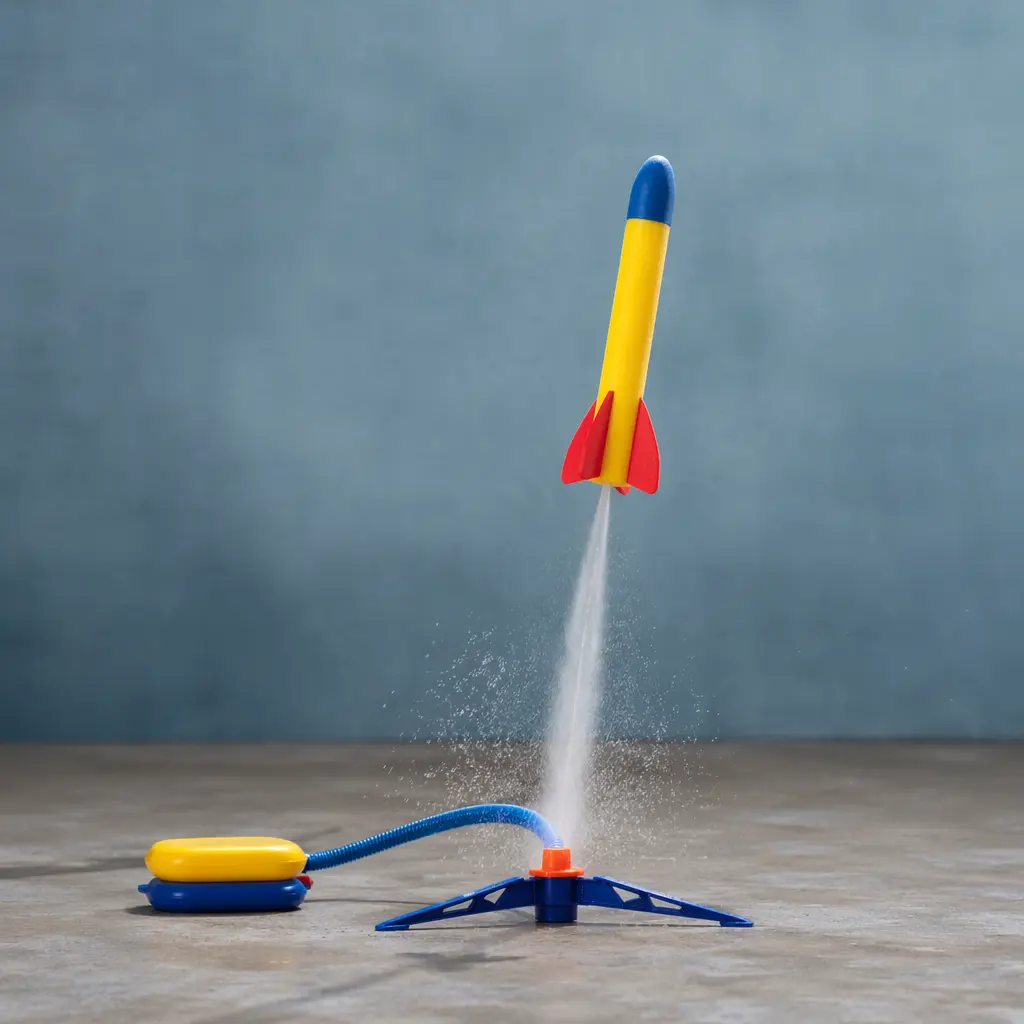
First launched in the 1990s, Stomp Rocket turned simple physics into outdoor spectacle. Its air-powered rockets endure because they’re safe, active, and endlessly replayable.
Compare prices and availability
Check current prices and availability for this guide on eBay.
As an eBay Partner, we may be compensated if you make a purchase.
Few toys combine shouting, running, and physics quite like Stomp Rocket. It’s a simple idea—jump on an air bladder, send a foam rocket flying—but one that reliably turns any patch of grass into a launch site. Since the mid-1990s, Stomp Rocket has held a steady place in back gardens, school playgrounds, and science cupboards, proving that you don’t need screens or batteries to create excitement.
Where it came from
Stomp Rocket appeared in the mid-1990s, a period when toy makers were leaning into hands-on science and outdoor play. The concept was rooted in basic air pressure and motion: compress air quickly, force it through a tube, and something lightweight will launch. The toy was developed to be safe, intuitive, and dramatic, with foam rockets replacing anything hard or heavy.
From the start, the appeal was educational as well as physical. Teachers adopted it for simple demonstrations of force and trajectory, while parents appreciated a toy that encouraged kids to run, jump, and experiment. Over time, the design evolved—adding multi-rocket sets and adjustable launch angles—but the core idea stayed refreshingly unchanged.
Why it works
At its heart, Stomp Rocket succeeds because it delivers instant feedback. Jump harder and the rocket goes higher. Change the angle and the flight path shifts. That clear cause-and-effect loop keeps children experimenting long after the novelty of the first launch wears off.
- Air-powered launch with no batteries or motors
- Soft foam rockets that are lightweight and forgiving
- Physical play that involves running, jumping, and coordination
- Built-in lessons on force, angle, and gravity
- Quick setup that works on grass, sand, or playground surfaces
The design also scales with effort. Younger children can manage small hops for modest launches, while older kids compete to see who can send a rocket highest. That adaptability is a big reason it hasn’t aged out.
Who it’s for
Stomp Rocket is typically aimed at primary-school-aged children, but its appeal stretches wider. Younger kids enjoy the spectacle and the soft materials, while older children turn it into a competitive or experimental game. Adults often find themselves joining in, whether to explain the science or to prove they can still get the highest launch.
Variants and what to look for today
Today’s Stomp Rocket-style sets come in a range of sizes and configurations. Some focus on maximum height with long launch tubes, while others include multiple rockets for group play. Adjustable launch angles are common, letting children explore distance as well as altitude.
When choosing one, look for sturdy tubing, a responsive air bladder, and replacement rockets that are easy to find. Foam density matters: too soft and rockets won’t fly well; too firm and they lose the safety advantage. Be cautious of very cheap copies with thin plastic or poorly sealed hoses, which can leak air and frustrate play.
Frequently asked questions
Is Stomp Rocket safe for younger children?
The foam rockets are designed to be lightweight and soft, making them safer than hard projectiles. Supervision is still important, especially to ensure rockets aren’t aimed at faces.
Does it really teach science?
Yes, in a practical way. Children experience basic principles like force, air pressure, and gravity through play rather than instruction, which often makes the lessons stick.
Can it be used indoors?
Most sets are intended for outdoor use due to the height and distance rockets can travel. Indoor use is best avoided unless the space is very large and clear.
What happens when rockets get lost or damaged?
Replacement foam rockets are widely available. Choosing a set with standard-sized rockets makes it easier to keep the fun going.
Stomp Rocket’s longevity comes from its honesty. It promises loud, physical fun and delivers it every time, with a side order of learning that feels incidental rather than instructional. In a toy landscape crowded with flashing lights and apps, that simplicity still launches high.