The Tupperware Shape-O Toy: A quiet classic of baby learning
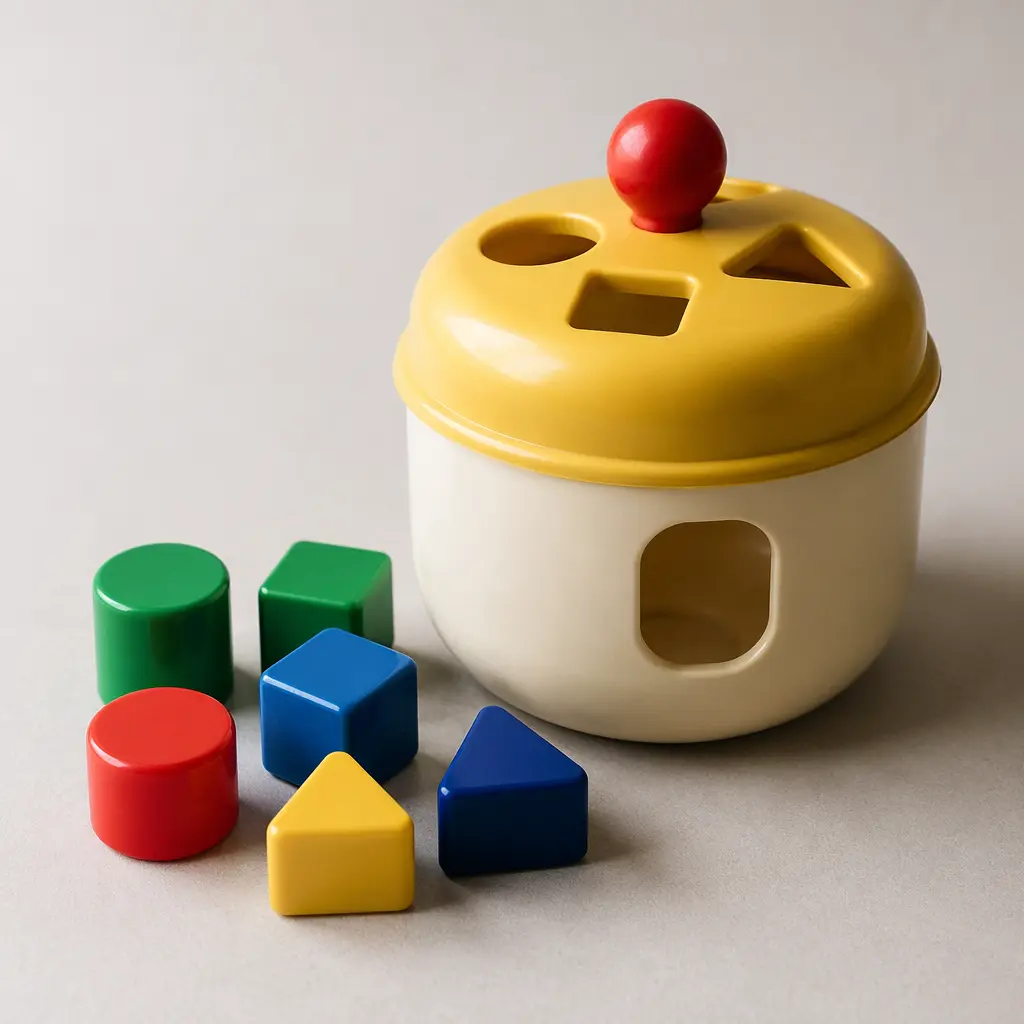
Introduced in 1961, the Tupperware Shape-O Toy used simple shapes and trial-and-error play to teach babies problem-solving—long before “educational toys” were a marketing term.
Compare prices and availability
Check current prices and availability for this guide on eBay.
As an eBay Partner, we may be compensated if you make a purchase.
Long before apps promised to make babies smarter, there was the Tupperware Shape-O Toy. It didn’t light up, make noise, or claim to boost IQ. Instead, it sat quietly on the floor, inviting small hands to try, fail, and try again. For generations of parents, it became a first puzzle—one that taught problem-solving without anyone needing to explain what problem-solving was.
Where it came from
The Shape-O Toy was introduced by Tupperware in 1961, during a period when the company was already a household name thanks to its airtight containers and home-party sales model. Designed at a time when baby toys were often either plush or purely decorative, the Shape-O stood out for being unapologetically functional.
Its original purpose wasn’t framed in modern developmental jargon. Instead, it reflected mid-century confidence in hands-on learning: give a child a sturdy object, let them explore it, and trust that learning would follow. Made from the same durable plastics that built Tupperware’s reputation, the toy was meant to last, be chewed on, dropped, and passed down.
Why it works
At heart, the Shape-O Toy is a lesson in cause and effect. A shape doesn’t go in? Turn it. Try another hole. Drop it from the top. Each attempt teaches something small, and those small lessons add up. There’s no right way demonstrated and no voice praising success—just physical feedback.
The design is intentionally forgiving. The container is easy to open, the shapes are oversized for safety, and the plastic is light enough for babies to manipulate but sturdy enough to survive frustration. That balance keeps children engaged without overwhelming them.
- Chunky shapes that are easy for small hands to grasp
- Multiple openings encouraging rotation and experimentation
- Durable plastic built for drops and throws
- Simple, distraction-free design that rewards persistence
Who it's for
The Shape-O Toy is typically suited for babies and toddlers from around 9 months through the preschool years. Younger babies enjoy removing shapes and exploring textures, while older toddlers start matching shapes with intention. There’s also a quiet adult appeal: many parents and grandparents recognize it instantly, making it as much a nostalgia object as a plaything.
Variants and what to look for today
Over the decades, the Shape-O Toy has seen subtle changes in color palettes and materials, but the core idea remains the same. Modern versions may use slightly different plastics or brighter colors, while vintage pieces often feature more muted tones typical of the 1960s and 70s.
If you’re shopping today, the biggest things to look for are build quality and safety. Well-made shape sorters should have smooth edges, secure lids, and shapes large enough to avoid choking hazards. Be cautious of very cheap imitations that use brittle plastic or poorly fitting parts, as these can frustrate children and wear out quickly.
Frequently asked questions
Is the Shape-O Toy still made?
The original design has been produced on and off over the years, and similar versions are widely available today. Availability can vary by region, and many families also find them second-hand.
What skills does it actually teach?
It supports fine motor control, spatial awareness, and early problem-solving. Just as importantly, it teaches patience and persistence through trial and error.
Is it better than modern electronic toys?
“Better” depends on what you value. The Shape-O Toy offers open-ended play without screens or sounds, which many parents see as a benefit rather than a limitation.
Can older kids still enjoy it?
Most children outgrow active play with it by preschool age, but some continue to use it for imaginative play or sorting games.
The Tupperware Shape-O Toy endures because it never tried to do too much. Its quiet confidence—trusting children to learn through doing—feels just as relevant today as it did in 1961. In a crowded toy box, that simplicity is often what makes it stand out.