UNO Attack: How a card launcher revived a family card game
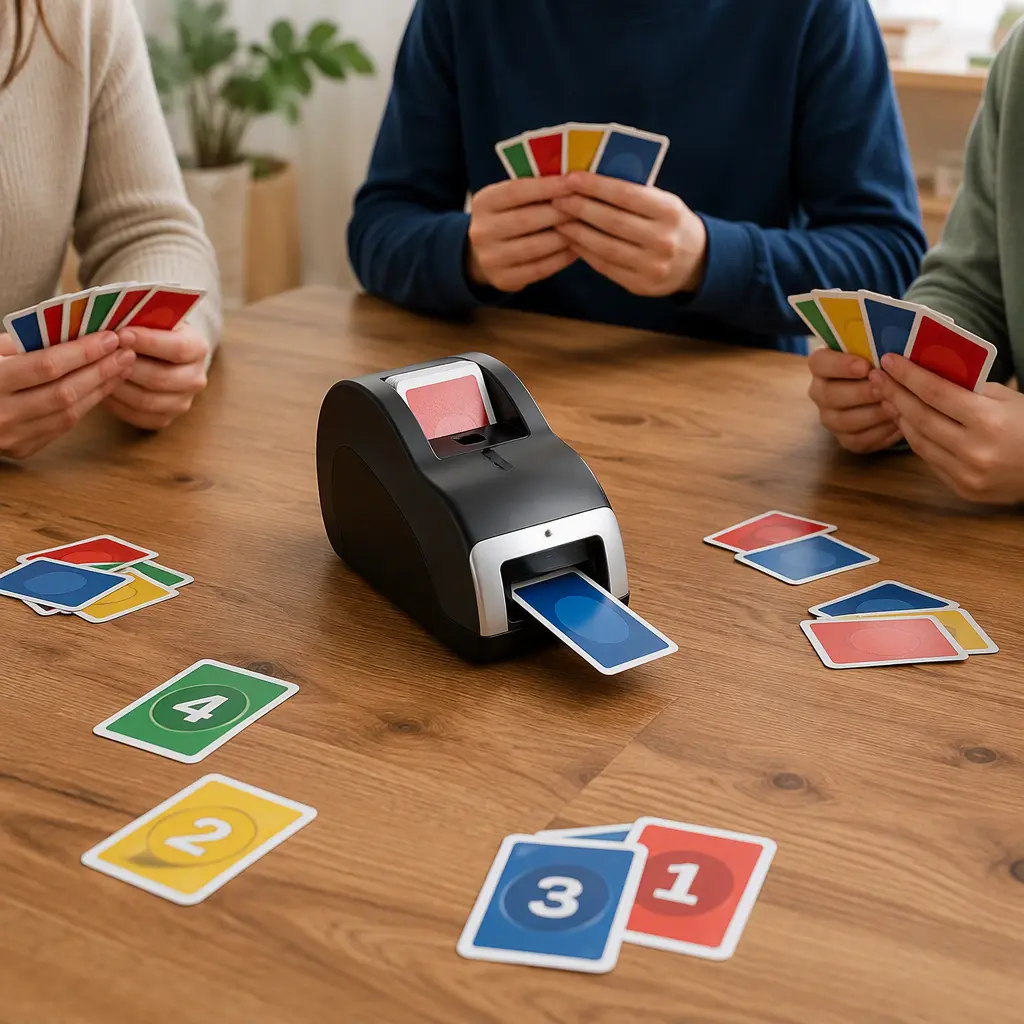
UNO Attack turned a familiar matching game into a louder, more suspenseful family activity by replacing the draw pile with a motorized card launcher that can fire out cards at random.
Compare prices and availability
Check current prices and availability for this guide on eBay.
As an eBay Partner, we may be compensated if you make a purchase.
UNO Attack arrived at a moment when many classic tabletop games were looking for ways to compete with louder electronic entertainment. The core of UNO was already familiar to millions of families: match colors and numbers, use action cards strategically, and try to empty your hand before everyone else. What changed with UNO Attack was the tension. Instead of calmly drawing a card from a pile, players pressed a button on a motorized launcher that might release nothing at all or suddenly fire out a burst of cards. That single change transformed the pace of the game and gave an established card brand a surprisingly durable second act.
Where it came from
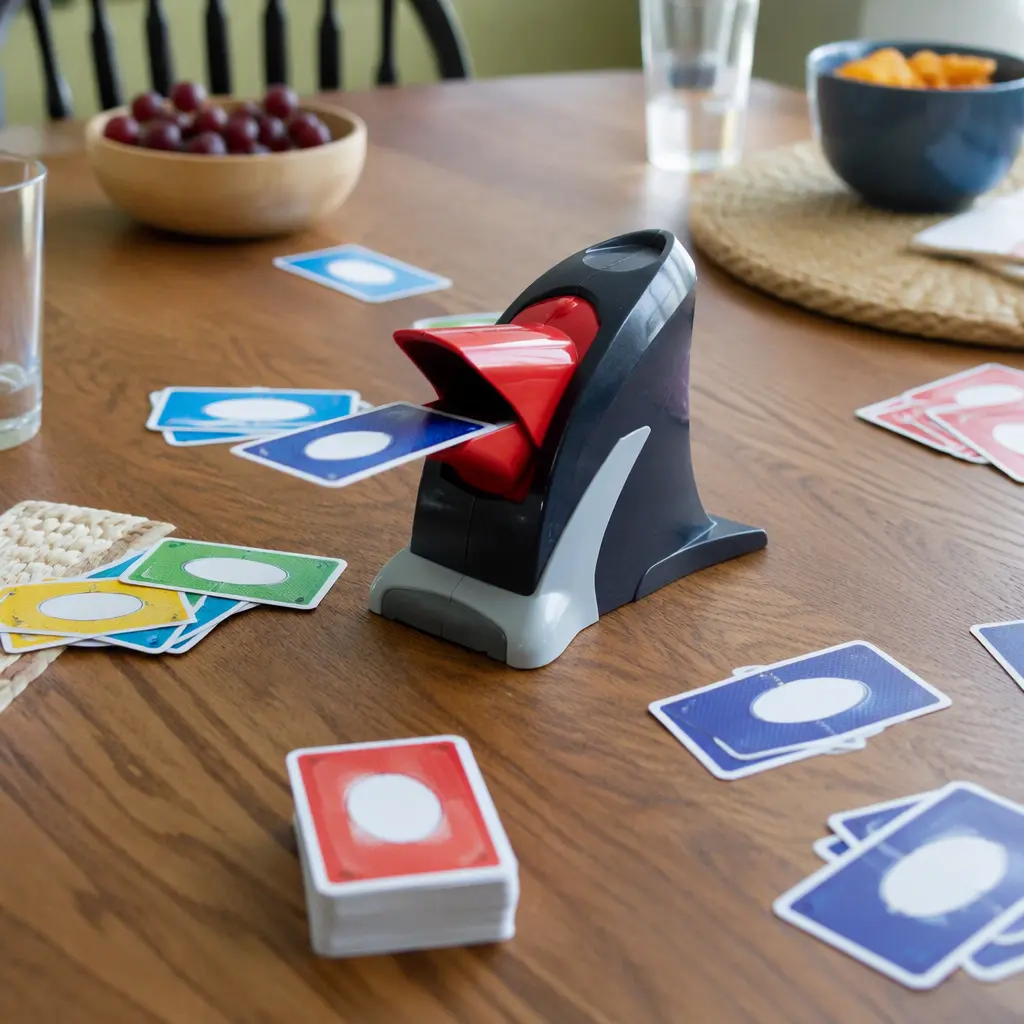
Mattel introduced UNO Attack in 1998 as a spin on its long-running UNO card game, which had already become one of the most recognizable family card brands in the world. Traditional UNO relied on a standard draw pile and a simple rule structure that made it accessible across generations. UNO Attack kept most of the familiar gameplay intact while adding a battery-powered launcher that dispensed cards unpredictably.
The idea reflected a broader trend in late-1990s and early-2000s toy design. Electronic features were increasingly added to classic games to make them feel more active and theatrical. Instead of changing UNO into something completely different, the designers focused on one dramatic mechanic: uncertainty. Pressing the launcher button became the emotional center of the experience. Players could get lucky and receive nothing, or suddenly end up with a large stack of extra cards. That random burst of chaos made the game feel more physical and social than a normal deck of cards.
Why it works
UNO Attack succeeds because it preserves the easy-to-learn structure of UNO while introducing suspense that even younger players immediately understand. The launcher creates anticipation every time someone is forced to draw. The sound effects, moving parts, and possibility of a sudden spray of cards add a layer of excitement that standard card games usually do not have.
The design also changes the rhythm of play. In regular UNO, drawing cards can feel routine. In UNO Attack, every button press becomes a small event. Players pay attention even when it is not their turn because they want to see whether the launcher fires. That keeps larger groups engaged and makes the game work well at parties, family gatherings, and mixed-age game nights.
- Motorized launcher replaces the traditional draw pile
- Random card bursts create suspense and unpredictability
- Simple color-and-number matching remains easy to learn
- Electronic sounds and movement add energy to group play
- Rounds often swing dramatically, keeping players engaged
Who it's for
UNO Attack is designed mainly for families and casual players rather than dedicated strategy gamers. Children who are old enough to recognize colors and numbers can usually learn the rules quickly, especially if they already know standard UNO. The electronic launcher makes the game especially appealing to kids who enjoy cause-and-effect toys or fast reactions. Adults often appreciate it for a different reason: it turns a familiar game into a louder, more social experience that works well during gatherings. Because luck plays a larger role than in some card games, younger players still have a reasonable chance to win against older opponents.
Variants and what to look for today
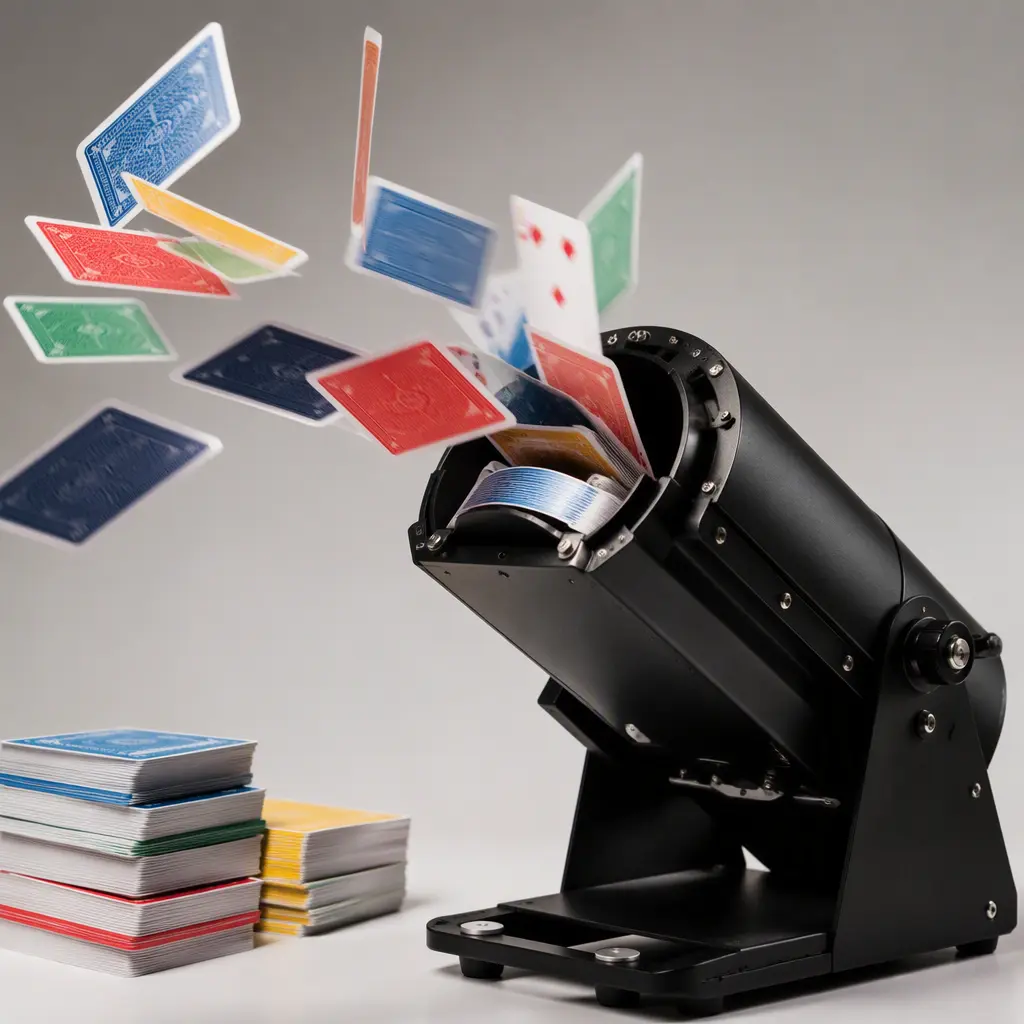
Over the years, UNO Attack has appeared in several visual styles and slightly revised editions. Some versions changed the shape or color of the launcher, while others updated sound effects or included additional action cards. The overall concept, however, has stayed remarkably consistent. The appeal still centers on the uncertainty of the launcher and the familiar flow of UNO gameplay.
Buyers looking for a set today should pay attention to the condition of the launcher mechanism. Since the toy includes moving electronic parts, older secondhand units may have weak springs, inconsistent card feeding, or battery corrosion. Complete card decks are also important because replacement cards can vary between editions.
- Check that the launcher ejects cards smoothly
- Look for complete decks with matching card backs
- Battery compartments should be clean and corrosion-free
- Modern reissues may have slightly different sounds or styling
- Very cheap imitation launchers may jam more frequently
Frequently asked questions
Is UNO Attack very different from regular UNO?
The core gameplay remains largely the same. Players still match colors and numbers while using action cards strategically. The biggest change is replacing the draw pile with the electronic launcher, which adds randomness and suspense.
Does the launcher always shoot out a large stack of cards?
No. Sometimes the launcher releases no cards at all, while other times it may eject several at once. That unpredictability is the main feature that changes the mood of the game.
Can younger children play it easily?
Most school-age children can learn UNO Attack quickly, especially if they already know basic UNO rules. The electronic effects and physical interaction often make it easier to hold their attention during longer rounds.
Are older versions still worth buying?
Many older editions still work well if the launcher has been kept in good condition. Some players even prefer the earlier designs because of their louder mechanisms or more mechanical feel, though condition matters more than release year.
UNO Attack remains an interesting example of how toy companies can refresh a familiar game without replacing what people already enjoy about it. By adding a single theatrical mechanic, Mattel turned an established card game into something that felt unpredictable, noisy, and more physical. Decades after its introduction, the launcher still delivers the same moment of suspense every time a player presses the button and waits to see what happens next.