Yoto Player: How a screen-free audio box gave kids control
The Yoto Player turned audio cards into kid-controlled entertainment, offering stories and music without screens. Its rise reflects a wider push for independence, calm play, and tech that stays out of the way.
Compare prices and availability
Check current prices and availability for this guide on eBay.
As an eBay Partner, we may be compensated if you make a purchase.
The Yoto Player arrived at a moment when many families were looking for a different relationship with technology. Not anti-tech, but calmer. Not silent, but less demanding. This small, card-powered audio player promised something deceptively simple: stories, music, and learning that kids could run themselves, without a screen and without a parent hovering nearby.
Where it came from
The Yoto Player was introduced around 2020 by a UK-based startup founded by parents who wanted their children to explore audio content independently. The idea grew out of a familiar frustration: phones and tablets offered endless stories and songs, but also brought notifications, ads, and screens that were hard to step away from.
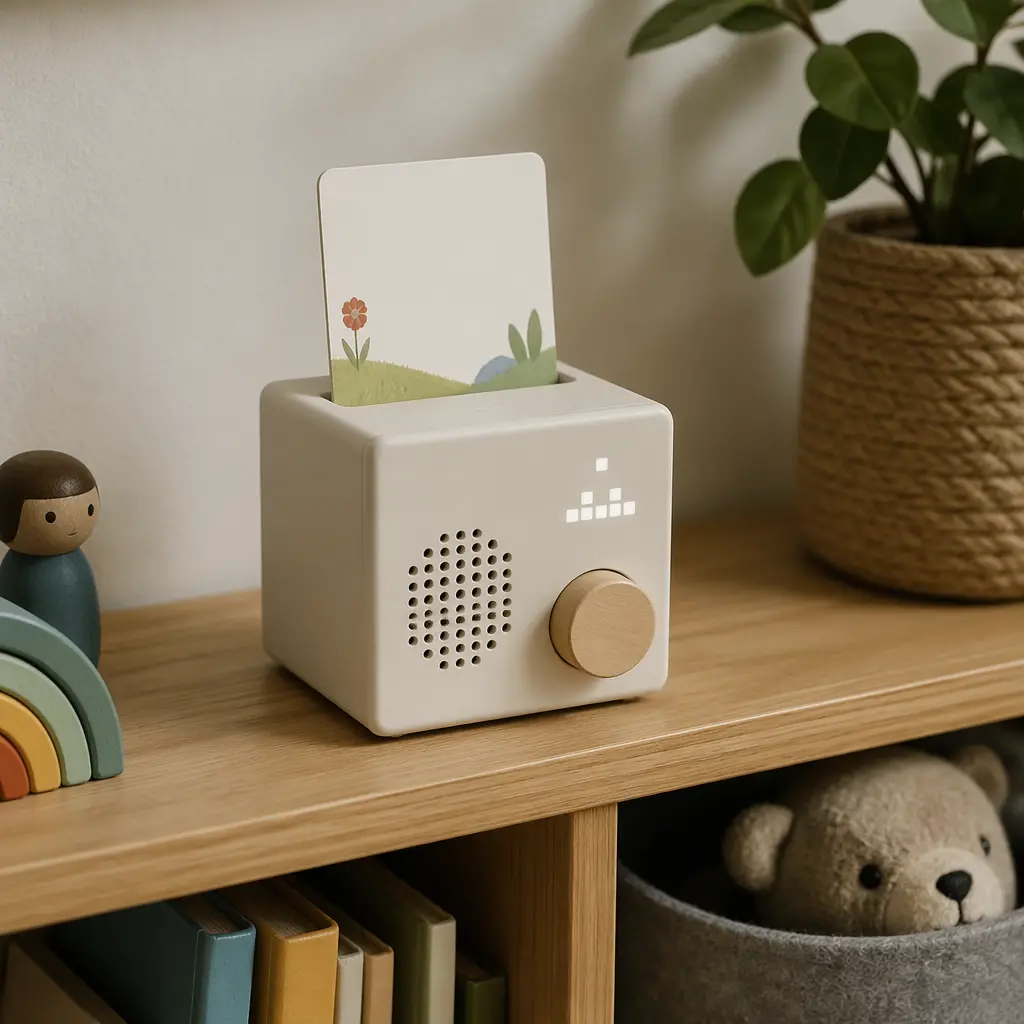
Instead of an app-first approach, Yoto built a physical object that felt more like a toy than a gadget. Content lived on physical cards that children could insert themselves, making the experience tangible and self-directed. Parents handled setup and content choices, but day-to-day control belonged to the child.
Why it works
At its core, the Yoto Player succeeds because it respects how children actually use things. There’s no touch screen to swipe or menus to navigate. Instead, kids insert a card, turn a knob, and listen. The interaction is clear, repeatable, and forgiving—qualities that matter far more than technical specs in a child’s room.
The design also acknowledges that audio can be both active and background play. A child might sit and listen intently to a story, or let music play while building blocks or drawing. By removing visuals, the Yoto Player makes room for imagination rather than competing with it.
- Physical cards that children can handle and choose themselves
- Simple controls sized for small hands
- Audio-only focus that encourages imagination
- Portable form that works in bedrooms, kitchens, or on trips
Who it's for
The Yoto Player is generally aimed at preschool and primary-school children, but its appeal stretches wider. Younger kids enjoy the ritual of choosing a card and pressing play, while older children use it for longer stories, music, or educational audio. Many parents admit that they, too, appreciate a device that can run a bedtime story without pulling out a phone.
Variants and what to look for today
Since its launch, the Yoto family has expanded to include variations that suit different homes and ages, including smaller portable versions and models with added features like night lights or travel-friendly designs. All share the same basic idea: cards plus audio, with optional app support handled by adults.
When looking for a Yoto Player today, it’s worth paying attention to durability and speaker quality rather than extras. The ecosystem matters too: the value of the device grows with the range of audio cards available to your child. Generic alternatives exist, but many lack the same balance of simplicity and thoughtful content curation.
Frequently asked questions
Does the Yoto Player need Wi‑Fi all the time?
Wi‑Fi is typically used for initial setup and syncing new audio content. Once stories or music are downloaded, children can listen without a constant internet connection.
Is it completely screen-free?
The player avoids traditional screens, using a simple pixel-style display for icons or basic visuals. There are no videos, animations, or apps for children to navigate.
Can kids change content on their own?
Yes. Children control what plays by choosing and inserting a card. Parents manage which cards are available, but day-to-day selection is child-led.
Is it suitable for bedtime use?
Many families use the Yoto Player as part of a bedtime routine. Its audio-only format and simple controls make it less stimulating than screens before sleep.
The Yoto Player didn’t invent audio storytelling, but it reframed it for modern families. By combining physical play, digital convenience, and genuine child control, it showed that technology doesn’t have to shout to be powerful. Sometimes, the quietest toys make the biggest impact.