First Craft Scissors for Preschoolers: What Cuts Well
A parent-focused guide to choosing preschool craft scissors that balance safety, comfort and real cutting ability without causing frustration for beginners aged 3–5.
Compare prices and availability
Check current prices and availability for this guide on eBay.
As an eBay Partner, we may be compensated if you make a purchase.
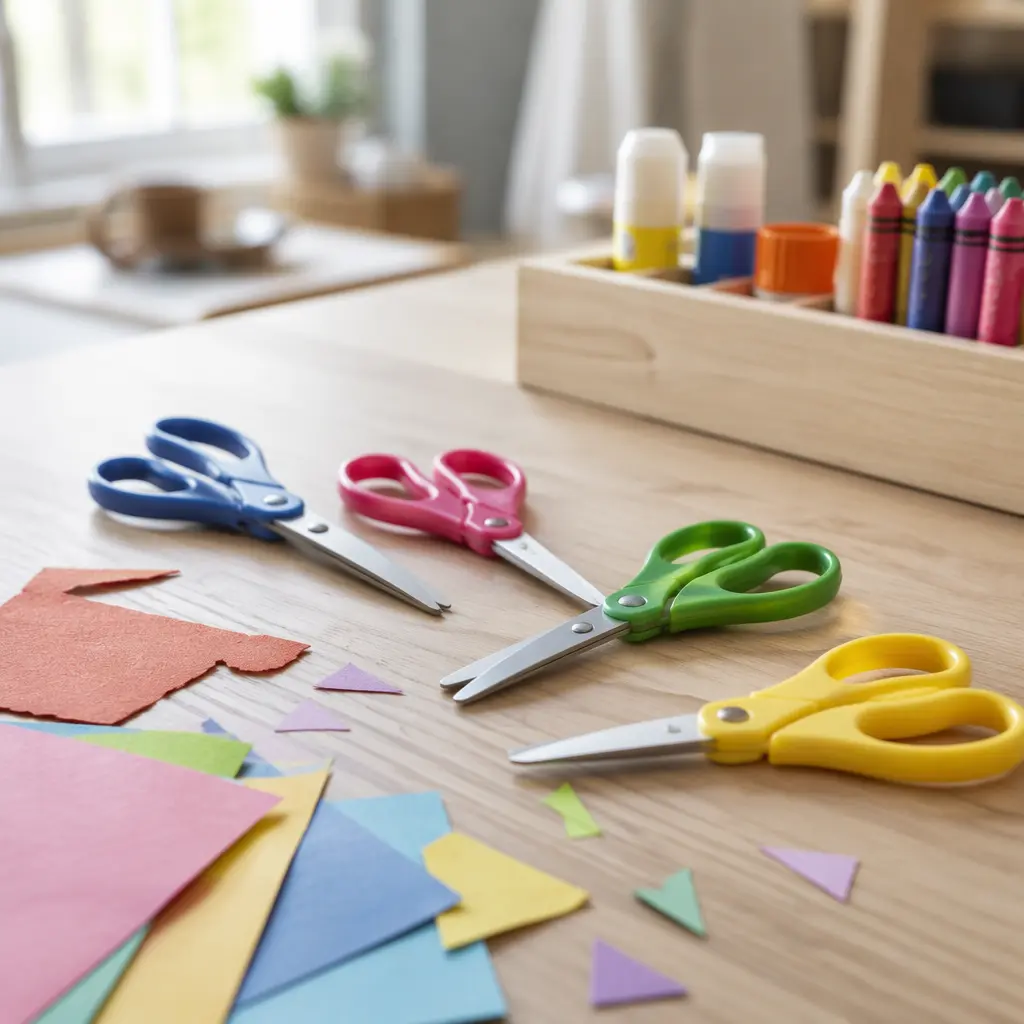
Choosing first scissors for a preschooler is less about finding the safest-looking pair and more about finding scissors that actually work for small hands. Many beginner scissors are so blunt or stiff that children cannot cut paper cleanly, which quickly turns a simple craft activity into a frustrating struggle. A good preschool pair should balance safety with enough cutting ability to help children practice real scissor skills, build confidence and develop hand strength. Parents also need to consider storage, supervision, left-handed use, cleanup and whether the scissors will survive frequent drops from a craft table.
What to look for
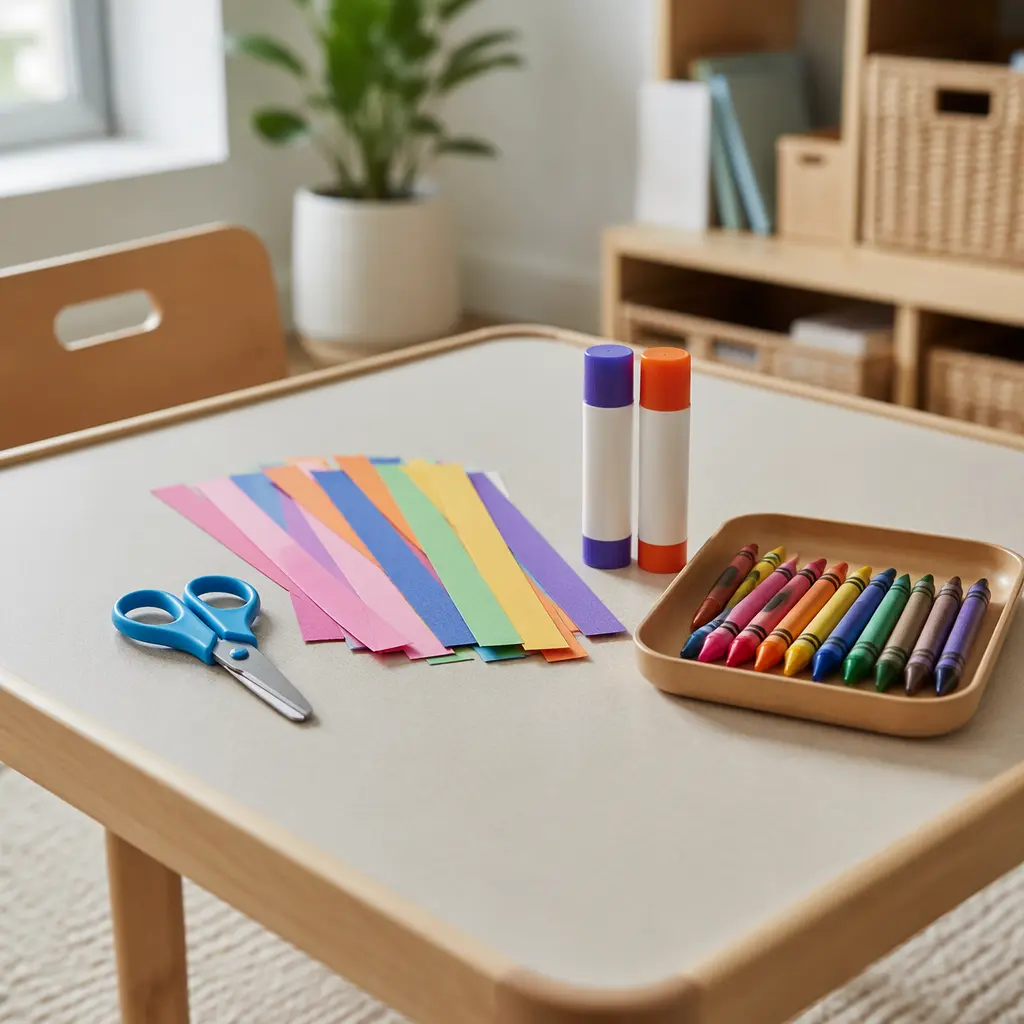
The best beginner scissors for ages three to five are usually small, lightweight and easy to open and close without excessive force. Preschoolers are still developing coordination, so the grip shape matters as much as the blade design. Some scissors are designed mainly for safety and barely cut paper, while others cut smoothly but require closer supervision. The right choice depends on how experienced the child is and how much support an adult can provide during craft time.
- Rounded blade tips reduce poking risk during early practice.
- Short blades are easier for preschoolers to control than long school-age scissors.
- Plastic-blade scissors are safest but often struggle with thicker paper and can frustrate beginners.
- Metal blades with rounded tips usually cut more smoothly and help children learn proper technique faster.
- Spring-assisted scissors can help children with weak grip strength or developing motor skills.
- Large finger loops suit children who still use an awkward full-hand grip rather than a mature thumb-and-finger hold.
- Left-handed scissors are worth considering for children who consistently switch hands or appear uncomfortable using standard pairs.
- Easy-to-clean handles matter because glue, paint and play dough residue build up quickly in preschool craft kits.
Age suitability
Most children are ready to start supervised scissor practice sometime between ages three and four, but readiness varies more than age labels suggest. Younger preschoolers often begin with snipping narrow strips of paper rather than cutting shapes. At age three, many children still need reminders about how to hold scissors safely and where to point the blades. By ages four and five, some children can follow cutting lines, manage simple crafts independently and use scissors for longer periods without tiring. Children who dislike hand-strength tasks or become frustrated easily may benefit from spring-open scissors or thicker handles that reduce strain. Families should also think about attention span and impulse control, especially if younger siblings are nearby during craft activities.
Options compared
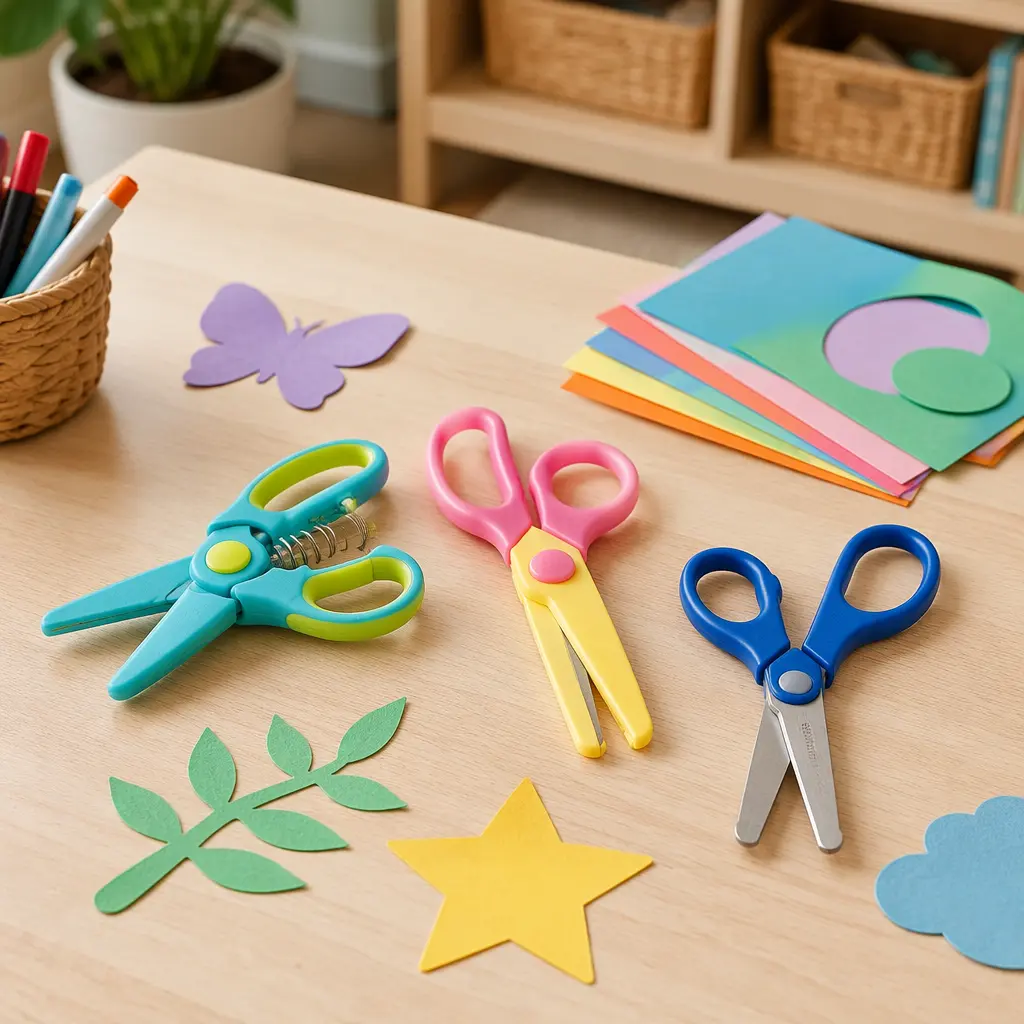
Plastic-blade safety scissors are often marketed for the youngest preschoolers because they reduce the risk of cuts. They can work well for introducing the opening-and-closing motion and for children who are still learning basic tool safety. The trade-off is performance. Many struggle to cut standard construction paper cleanly, especially once the blades loosen or collect paper fibers. Children may compensate by squeezing harder, which can increase frustration and fatigue.
Rounded-tip metal scissors are usually the most practical long-term option for preschool crafts. They cut paper more reliably, allowing children to focus on coordination instead of force. For many four- and five-year-olds, this smoother cutting experience builds confidence more quickly than extra-blunt safety models. Parents who supervise closely during seated craft time often find these easier for regular use. Spring-assisted scissors are useful for children with weaker grip strength, delayed fine motor development or difficulty reopening the blades after each cut. However, some children outgrow the spring feature quickly and may need standard scissors later to build hand control.
- Plastic-blade safety scissors: best for cautious introductions and very young beginners; less effective on thicker paper.
- Rounded-tip metal scissors: best balance of cutting ability and safety for many preschoolers.
- Spring-assisted scissors: helpful for children who tire easily or struggle with hand strength.
- Loop or training scissors: useful for occupational therapy-style practice but may feel less natural for everyday crafts.
- Ambidextrous scissors: convenient for shared classrooms or uncertain hand preference but not always ideal for strongly left-handed children.
Frequently asked questions
Are plastic safety scissors good enough for preschool crafts?
They can be useful for very early practice, especially for children who are just learning safe handling. However, many plastic models struggle with thicker paper and may frustrate children who want to cut shapes or complete craft projects independently.
How can parents tell if scissors are too difficult to use?
If a child squeezes with both hands, tears paper instead of cutting it, or gives up quickly despite wanting to continue, the scissors may require too much force. Stiff hinges and dull blades are common problems in low-cost beginner scissors.
Do left-handed preschoolers need special scissors?
Many left-handed children manage with standard preschool scissors at first, but dedicated left-handed scissors can improve visibility and comfort once cutting skills develop. If a child consistently twists their wrist awkwardly or complains about cutting, a left-handed pair may help.
What materials are easiest for beginners to cut?
Thin paper strips, tissue paper and lightweight construction paper are usually easiest. Cardboard, foam sheets and laminated materials often require more hand strength and can discourage beginners.
How many pairs of scissors does a preschooler need?
One reliable pair is enough for most home craft setups. Some families keep a second pair for messy activities involving glue or paint so that sticky residue does not affect everyday cutting performance.
For most preschoolers, the most useful first scissors are the ones that cut cleanly without requiring excessive force. Overly blunt designs may appear reassuring, but they can make learning harder than necessary. Rounded-tip metal scissors often provide the best balance for supervised craft time, while spring-assisted or training models can support children who need extra help with coordination and grip strength. Matching the scissors to the child's current skill level usually matters more than choosing the most heavily marketed safety design.