LCD vs Magnetic Drawing Boards for Travel With Preschoolers
Choosing a travel drawing toy for ages 3–5 often comes down to LCD doodle boards or magnetic drawing boards. This guide compares durability, cleanup, portability and battery needs for family trips.
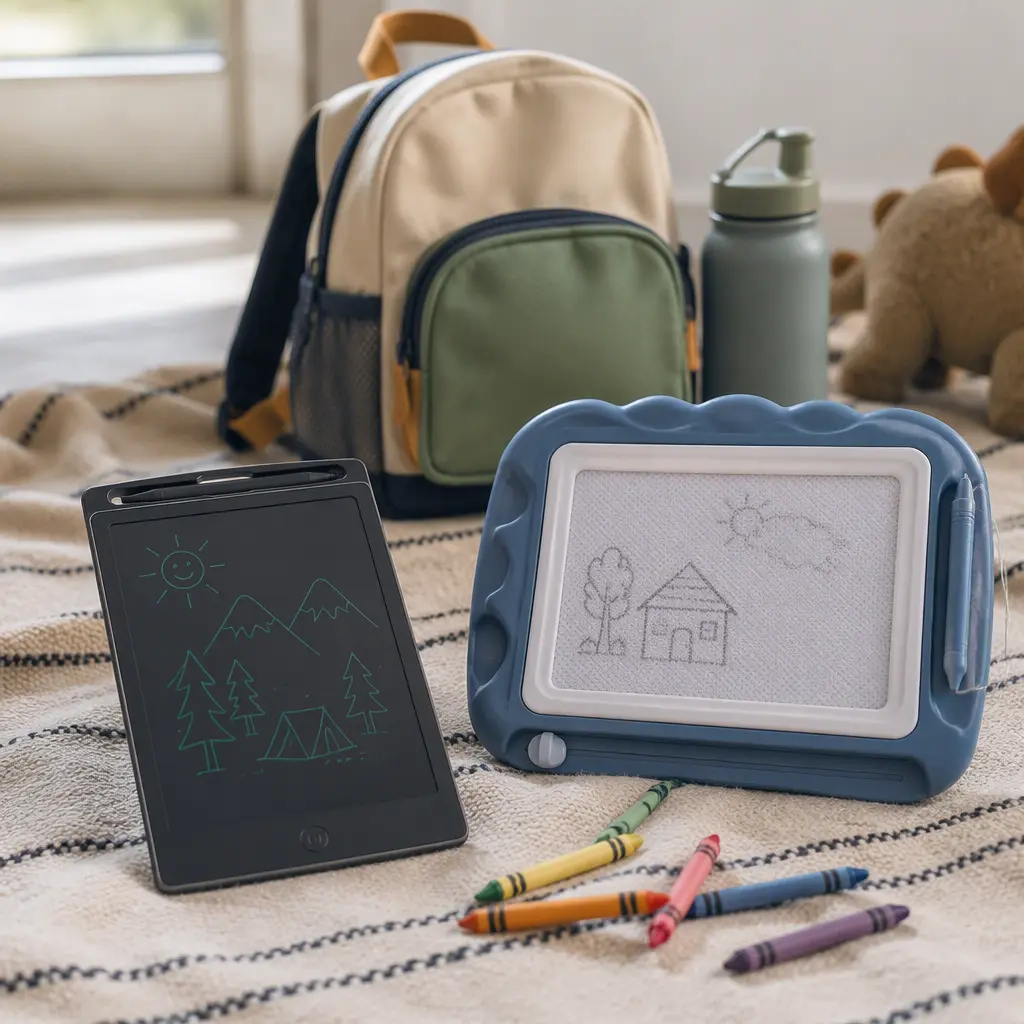
Compare prices and availability
Check current prices and availability for this guide on eBay.
As an eBay Partner, we may be compensated if you make a purchase.
Portable drawing toys are a common choice for keeping preschoolers occupied during flights, restaurant waits and long car rides without relying on tablets or phones. Two of the most popular screen-free options are LCD doodle boards and magnetic drawing boards. Both allow repeated drawing without paper waste or marker mess, but they work very differently. For parents choosing between them, the biggest differences usually come down to battery dependence, durability during travel, cleanup, drawing feel and how much supervision a child still needs while using them on the move.
What to look for
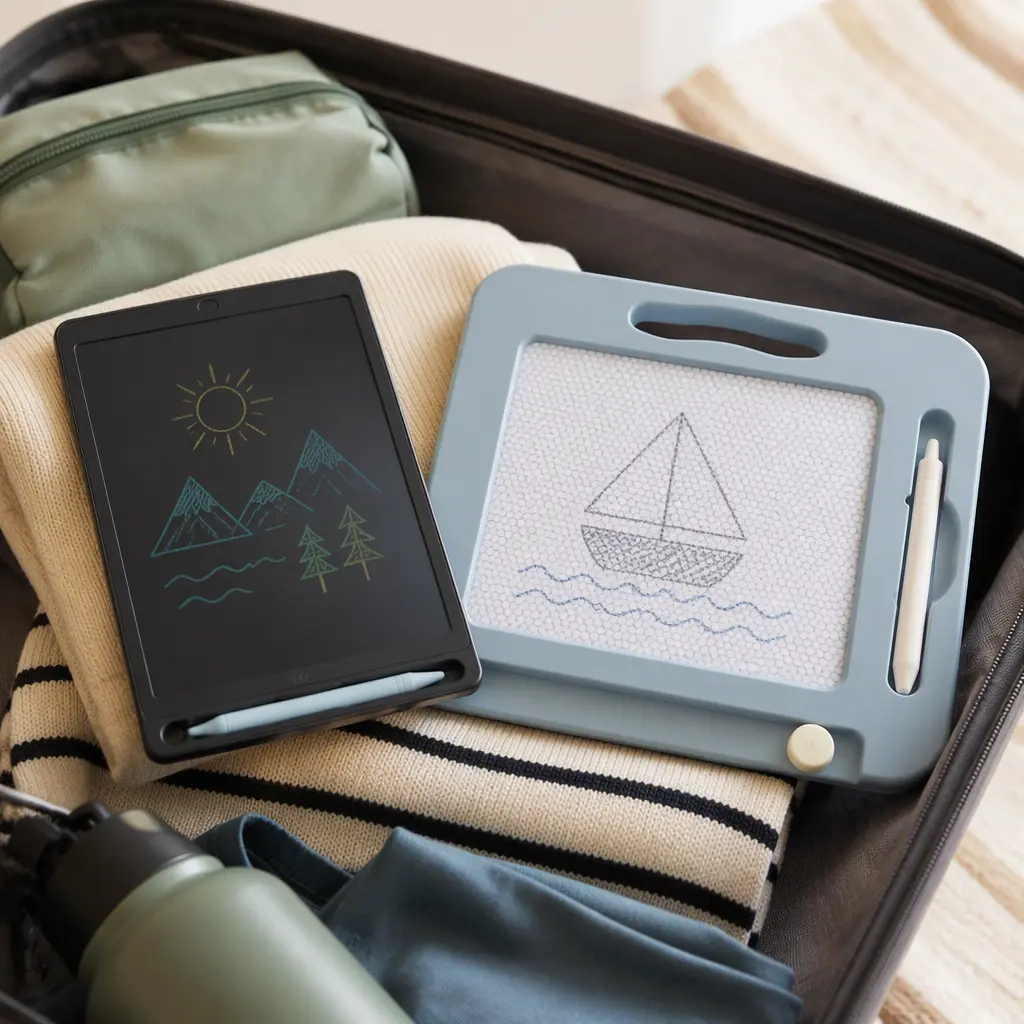
Travel drawing toys for ages 3–5 need to balance portability with durability. A toy that works well at home may become frustrating in a cramped airplane seat or noisy waiting room. Parents often find that the most useful travel toys are simple enough for independent play, easy to wipe clean or reset quickly, and sturdy enough to survive drops into car footwells or airport floors.
- Weight and size matter for travel bags. Slim LCD boards usually fit more easily into backpacks and seat pockets.
- Magnetic drawing boards tend to be bulkier but often feel sturdier for rough handling.
- Battery requirements vary. LCD boards usually need a small battery for the erase function, while magnetic boards work mechanically.
- Consider noise levels. Magnetic slider erasers can create scraping sounds, while LCD erase buttons are quieter.
- Attached styluses help prevent lost pieces during travel.
- Think about cleanup and mess. Both options avoid marker stains and paper scraps.
- Check how easily a child can erase drawings independently without help from an adult.
- Storage matters for small homes or packed luggage. Thin boards stack more easily with books and coloring pads.
Age suitability
For children aged 3–5, both toy types can support early drawing skills, pretend play and pre-writing practice. Younger preschoolers often prefer magnetic drawing boards because the drawing surface feels more physical and forgiving. The stylus typically stays attached, and the thicker frame can be easier for small hands to carry. Older preschoolers may enjoy LCD boards because they feel more modern, lightweight and portable. Some children also like the brighter lines produced by LCD surfaces. However, children who press very hard while drawing may wear down lightweight LCD surfaces more quickly than sturdier magnetic alternatives.
Options compared
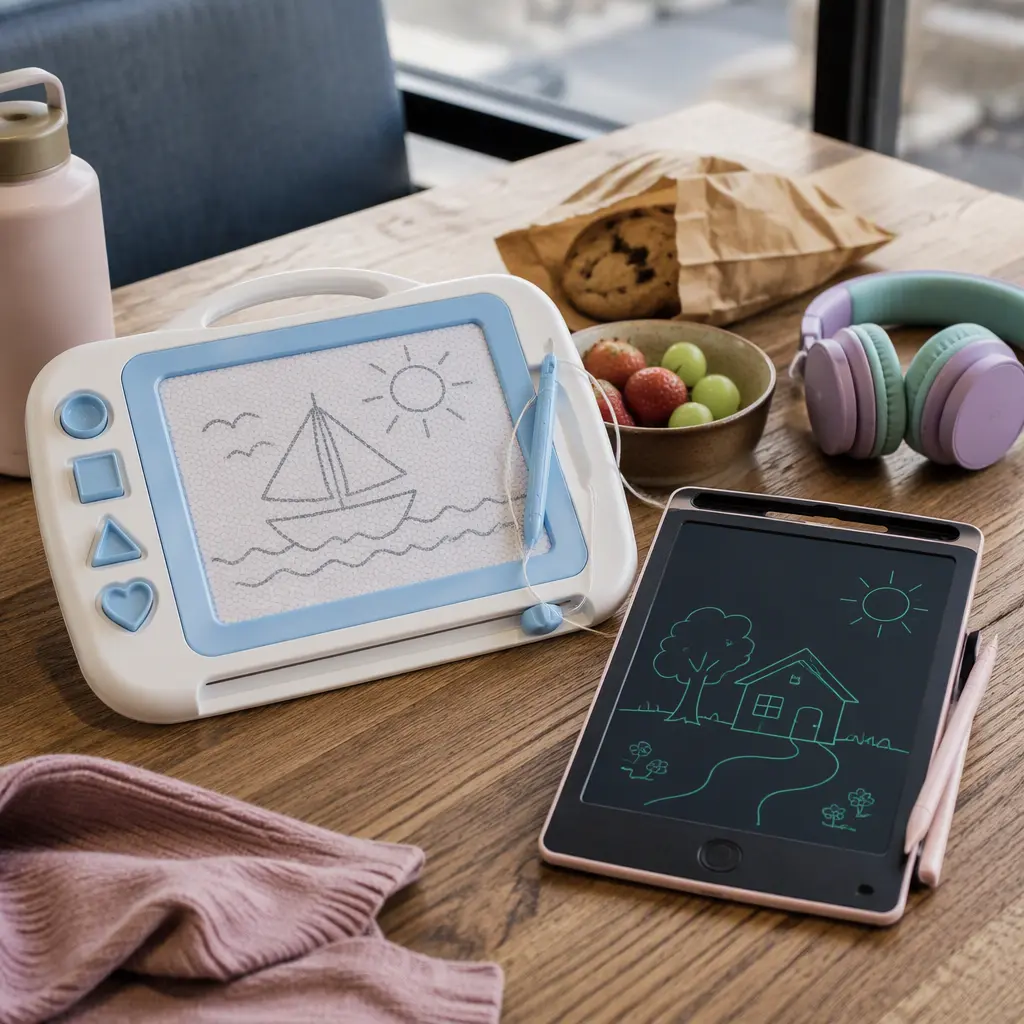
LCD doodle boards are usually the lighter and more compact option. They work well for families trying to reduce bag weight or fit activities into crowded travel situations. The drawing experience is smooth, and children can erase the screen instantly with a button press. Because there are no loose art supplies, cleanup is minimal. These boards are especially useful for airplane travel, restaurant visits and diaper bags where space is limited. The main trade-off is battery reliance. Even though batteries often last a long time, the erase feature may stop working unexpectedly during a trip if the battery fails. Some LCD surfaces can also scratch if packed carelessly beside hard toys.
Magnetic drawing boards are usually heavier and thicker, but many parents choose them for durability and reliability. Since they do not require batteries, they can keep working through long road trips and repeated daily use. The sliding eraser is simple for many preschoolers to understand independently, and the drawing surface often tolerates rougher handling. Some versions include magnetic shape stamps that encourage fine-motor play, although these extra pieces are easier to lose during travel. The bulkier size can make magnetic boards less convenient for tightly packed luggage or narrow tray tables. They also tend to produce softer, grainier lines than LCD boards, which some children enjoy less.
- Choose an LCD doodle board if portability, lightweight packing and quiet play are top priorities.
- Choose a magnetic drawing board if durability and battery-free reliability matter most.
- Frequent flyers may prefer slim LCD boards that fit seat pockets more easily.
- Families with younger siblings may prefer magnetic boards with fewer delicate surfaces.
- Children who like bold, bright drawing lines may enjoy LCD boards more.
- Children who press hard or play roughly may do better with sturdier magnetic models.
Frequently asked questions
Do LCD doodle boards count as screen time?
Most parents and educators treat LCD doodle boards differently from tablets or video devices because they do not display apps, videos or internet content. They function more like reusable paper for drawing and handwriting practice.
Which option is quieter for travel?
LCD boards are generally quieter because drawings erase with a button press. Magnetic drawing boards often use a sliding eraser that creates scraping sounds, which may matter during flights or quiet waiting rooms.
Are magnetic stamps useful or just extra clutter?
Magnetic stamps can add variety for preschoolers practicing shapes and patterns, but they are also easy to misplace during travel. Families trying to minimize loose pieces may prefer simpler board designs.
Which toy is easier to clean?
Both are cleaner than markers or crayons because they avoid ink and paper scraps. LCD boards usually wipe clean with a cloth if fingerprints build up, while magnetic boards may collect dust around the eraser track over time.
Is one option better for long-term use?
That depends on how the toy will be used. Magnetic boards often last well through rough handling and repeated drops. LCD boards may suit families prioritizing compact storage and lighter travel gear, especially if handled carefully.
For most families, the better travel drawing toy depends less on features and more on where and how it will be used. LCD doodle boards suit lightweight packing, quiet public spaces and older preschoolers who handle toys carefully. Magnetic drawing boards fit families wanting a sturdier, battery-free option that can tolerate heavier everyday use. Both can provide genuinely offline entertainment for ages 3–5 while reducing mess and cutting down on disposable paper during travel.