Lite-Brite: How a glowing peg board became a classic
First released in 1967, Lite-Brite turned coloured pegs and a lightbox into an open-ended art toy. Its simple design, screen-free appeal, and nostalgia keep it glowing today.
Compare prices and availability
Check current prices and availability for this guide on eBay.
As an eBay Partner, we may be compensated if you make a purchase.
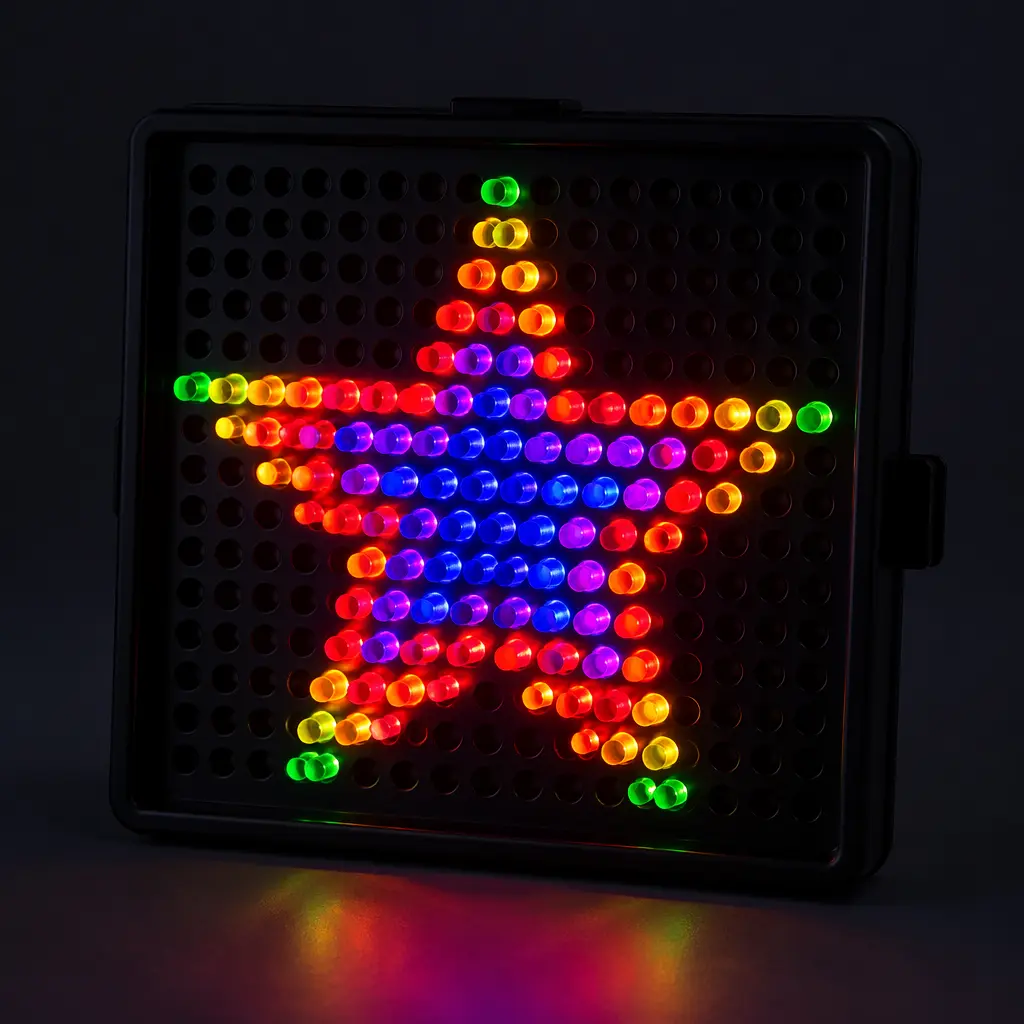
Lite-Brite is one of those toys that feels instantly familiar, even if you haven’t touched one in years. A light-up board, handfuls of coloured pegs, and the promise that you can make pictures that glow in the dark — it’s a simple idea that captured imaginations in the late 1960s and never quite let go.
Where it came from
Lite-Brite was introduced in 1967 by Hasbro, at a time when plastic, colour, and electronics were starting to reshape the toy aisle. The original idea reportedly came from designers inspired by lighted displays and marquee signs, translating that glowing effect into something a child could control at home.
The goal wasn’t fine art or structured lessons. Lite-Brite was positioned as creative play — part drawing, part puzzle, part magic trick — with the added novelty of pictures that only fully came alive when the lights went down.
Why it works
At its core, Lite-Brite works because it’s tactile and forgiving. Pegs are easy to hold, the board invites experimentation, and there’s no real way to get it “wrong.” The light source rewards even simple patterns with instant visual payoff.
The design hits several sweet spots at once: it feels slightly technical without being complicated, creative without being messy, and calming rather than competitive.
- Simple lightbox design that makes colours pop
- Reusable pegs instead of paper or paint
- Template guides for beginners, free play for everyone else
- Immediate feedback when the lights turn off
Who it’s for
Lite-Brite has always sat in a wide age range. Younger children enjoy following templates and exploring colours, while older kids (and adults) lean into free-form designs or nostalgic play. It’s also a rare creative toy that adults are happy to revisit, often buying it as much for themselves as for their children.
Variants and what to look for today
Over the decades, Lite-Brite has been reissued in many forms. Modern versions often use LED lighting instead of bulbs, which runs cooler and lasts longer. Sizes range from compact travel-friendly boards to larger versions closer to the original footprint.
When shopping today, it’s worth paying attention to peg quality and board brightness. Well-made pegs fit snugly without forcing, and an evenly lit board makes designs clearer. Generic versions exist, but the experience can vary if pegs are loose or the light is uneven.
Frequently asked questions
Does Lite-Brite still use paper templates?
Many versions still include paper templates you slide over the board, though some encourage freehand designs instead. Both approaches remain part of the classic experience.
Is Lite-Brite educational?
While not a formal learning toy, it supports fine motor skills, colour recognition, pattern making, and creative confidence — all without feeling instructional.
Are modern versions as bright as older ones?
LED-based versions are typically bright and more energy-efficient, though the glow can feel slightly different from older bulb-lit models.
Is Lite-Brite safe for young children?
It’s generally intended for children old enough to handle small pieces safely. Always check age guidance and supervise younger players.
Nearly 60 years on, Lite-Brite endures because it does one thing exceptionally well: it makes creativity feel magical. In a world full of screens and noise, there’s still something special about turning off the lights and watching your own picture glow back at you.