Magnetic Drawing Boards vs Water Mats for Toddlers
Compare magnetic drawing boards and reusable water mats for toddlers aged 1–2. Learn the trade-offs around mess, drying time, storage, supervision and travel use before buying.
Compare prices and availability
Check current prices and availability for this guide on eBay.
As an eBay Partner, we may be compensated if you make a purchase.
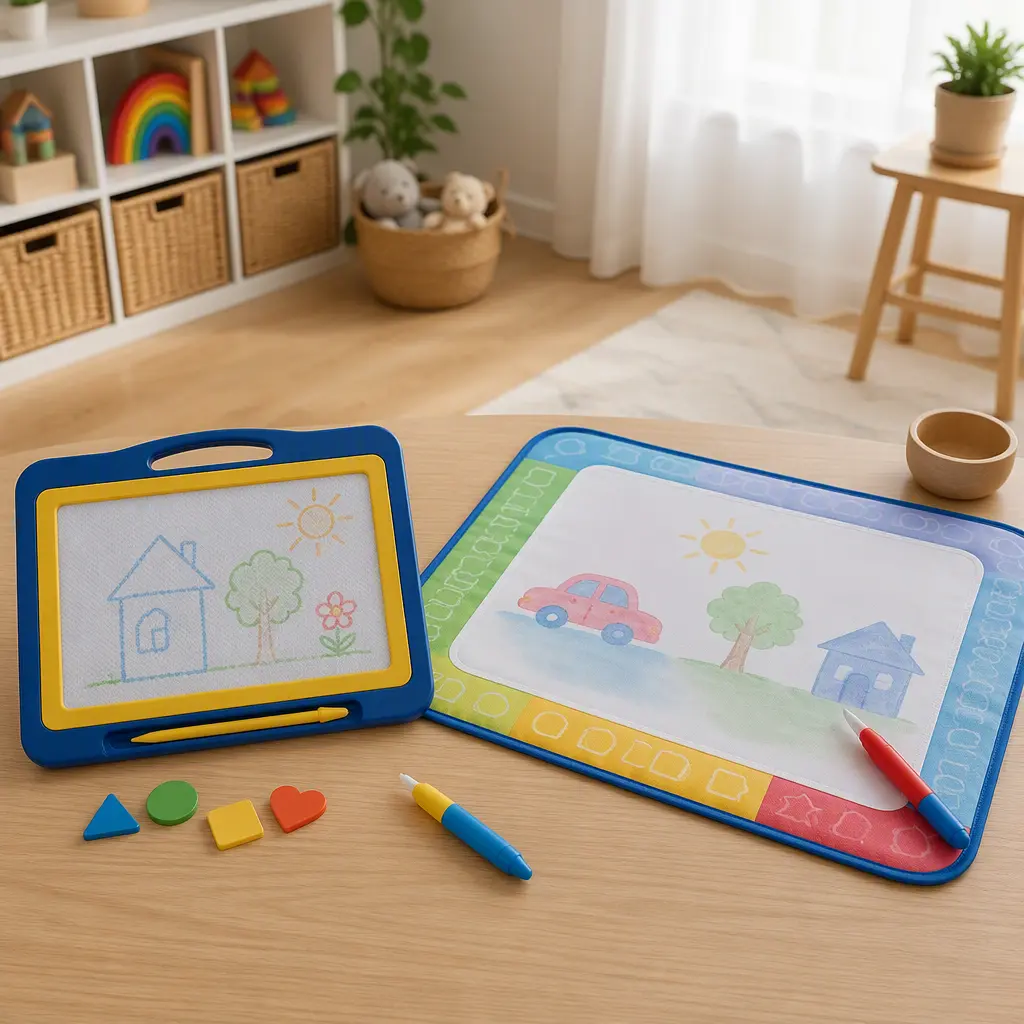
Reusable drawing toys appeal to many parents of toddlers because they reduce paper waste and keep crayons, markers and paint off furniture. Two common options are magnetic drawing boards and reusable water mats. Both support early mark-making, hand control and independent play, but they solve different problems. Magnetic boards are usually compact and dry instantly, while water mats offer larger drawing areas with fewer loose marks left on floors and walls. For children aged 1–2, the better choice often depends less on creativity and more on practical concerns such as cleanup, storage space, travel use, drying time and how closely an adult plans to supervise play.
What to look for
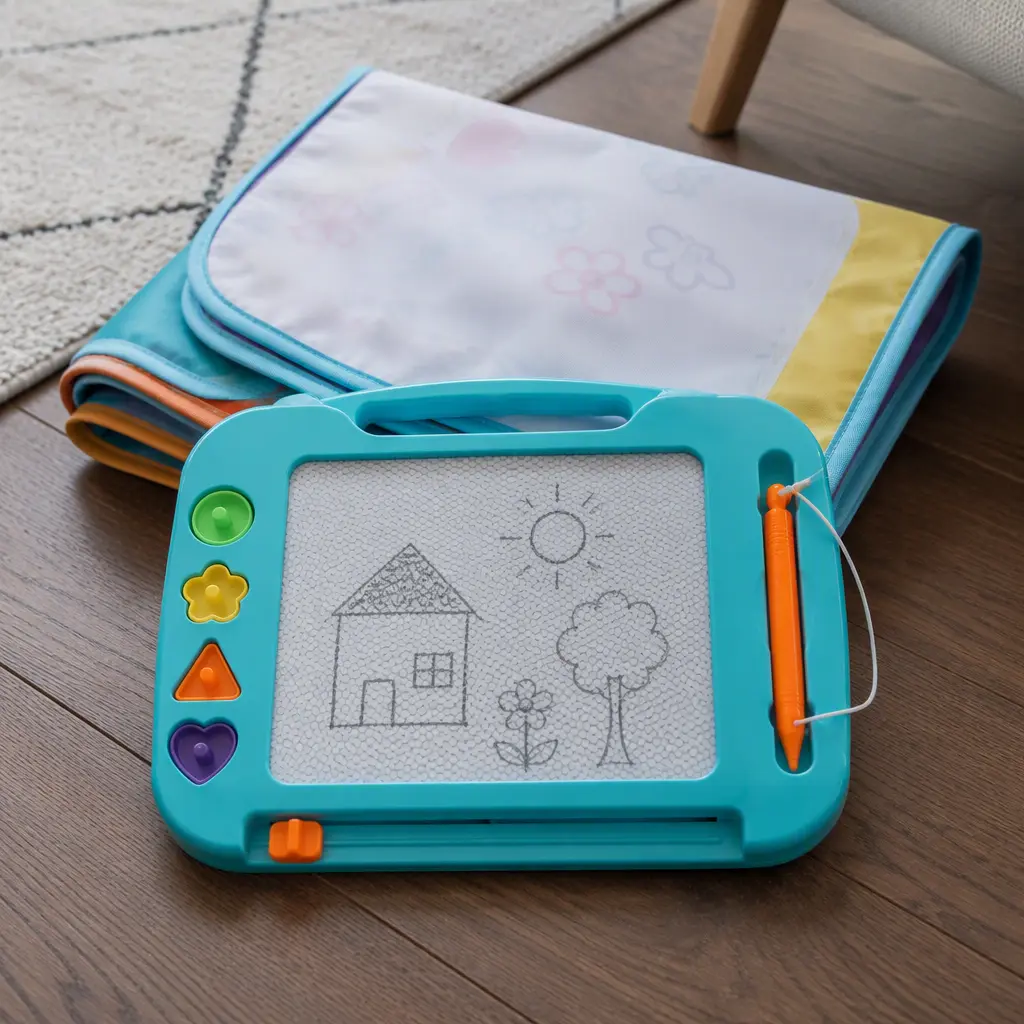
For toddlers, the safest and most practical reusable art toys are simple, durable and easy to reset. Since children in the 1–2 age range still mouth objects and spill liquids frequently, parents usually benefit from choosing designs with minimal removable parts and straightforward cleanup. The toy’s footprint also matters. Some options work well on a kitchen floor or while travelling, while others need open space and a drying area.
- Check whether drawing tools are attached or loose. Attached styluses are easier to keep track of during toddler play.
- Look for rounded edges and sturdy construction that can handle drops and stepping.
- Consider drying time. Magnetic boards erase instantly, while water mats may stay damp for several minutes.
- Think about floor space and storage. Large mats encourage movement but take longer to put away.
- Notice noise levels. Some magnetic sliders and stamps click loudly during repeated play.
- Choose sizes that suit your home and routine. Compact boards are easier for car trips and restaurants.
- Review supervision needs. Water-based toys may still lead to spills around cups, pens or refill containers.
Age suitability
Most magnetic drawing boards and reusable water mats are marketed broadly for toddlers and preschoolers, but the ideal experience differs by age. Younger toddlers around 12–18 months often benefit from simple, sturdy magnetic boards with large drawing surfaces and minimal accessories. The instant erase feature helps children repeat actions quickly without waiting. Water mats can also work well at this age when an adult manages the water tools and setup. By around 18–24 months, many toddlers enjoy the larger movement involved with floor mats, especially if they like crawling, kneeling and drawing with both hands. Children who become frustrated by delayed results may prefer magnetic boards because marks appear more clearly and disappear immediately.
Options compared
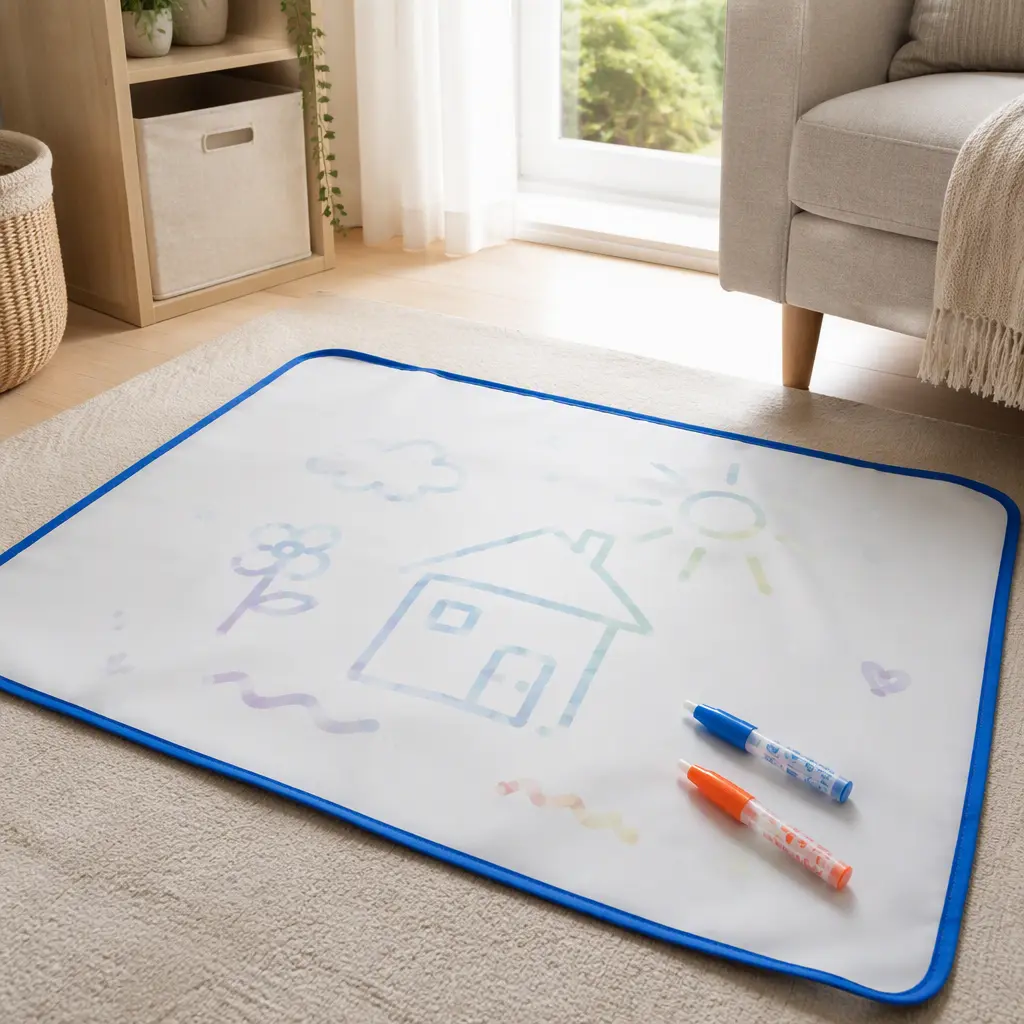
Magnetic drawing boards are usually the lower-mess option for everyday use. The drawing surface stays dry, marks erase quickly and there is little setup required. Many families choose them for travel, waiting rooms or quick independent play sessions because they can be picked up and stored easily. They also tend to work well in smaller homes or apartments where floor space is limited. The trade-off is that the drawing area is often smaller, and some toddlers lose interest if they prefer large arm movements or collaborative floor play.
Reusable water mats offer a different style of play. The larger surface encourages movement, shared drawing and broader scribbling motions that suit energetic toddlers. Since marks fade gradually, children can watch their drawings disappear over time, which some find calming and others find frustrating. Parents concerned about marker stains on walls may appreciate that only water is used, but these mats are not entirely maintenance-free. Damp fabric can stay wet for a while, and nearby water containers may still spill. Water mats also require more storage space and are less convenient for quick outings.
- Choose a magnetic drawing board if you want quick setup, compact storage, travel-friendly play or faster reset between drawings.
- Choose a reusable water mat if your toddler enjoys floor play, larger movements or shared drawing with siblings.
- Avoid bulky floor mats if your home has limited open space or if drying damp fabric is inconvenient.
- Avoid smaller magnetic boards for toddlers who become frustrated by confined drawing areas or repetitive erasing.
- For grandparents' homes or daycare drop-offs, lightweight magnetic boards are usually easier to transport.
- For sensory-focused play sessions at home, water mats may feel more engaging and physically active.
Frequently asked questions
Are water mats really mess-free?
They reduce ink and paint mess, but they are not completely spill-proof. Toddlers may squeeze water pens, tip refill cups or walk on damp sections of the mat. Most families still place mats on wipeable floors rather than carpet.
Do magnetic drawing boards hold toddlers' attention for long?
Attention span varies widely at this age. Magnetic boards tend to work best for short independent play periods because toddlers can draw, erase and repeat quickly without adult setup. Adding simple shape stamps may extend interest for some children.
Which option is easier to travel with?
Magnetic drawing boards are usually easier for travel because they are rigid, compact and ready to use immediately. Water mats often need floor space and access to water for refilling pens.
Are reusable art toys suitable for independent play?
Many toddlers can use magnetic boards independently for short periods once shown how they work. Water mats may require more supervision, especially if refill containers, loose pens or wet surfaces are involved.
What lasts longer over time?
Durability depends on materials and how the toy is used. Hard plastic magnetic boards can handle frequent transport and dropping, while fabric-based water mats may show wear if folded repeatedly or left damp after use.
For many families with toddlers aged 1–2, the decision comes down to routine rather than creativity alone. Magnetic drawing boards fit smaller spaces, quick outings and low-prep play. Reusable water mats suit active toddlers who enjoy floor-based movement and larger drawing surfaces. Both can support early creativity without relying on screens or disposable paper, but the more practical option is usually the one that fits comfortably into your home setup, cleanup tolerance and daily schedule.