Melissa & Doug Easel: The screen-free art station that stuck
The Melissa & Doug easel turned a classic classroom idea into a durable home art station, giving children a reusable space for drawing, painting, magnets, and open-ended creative play.
Compare prices and availability
Check current prices and availability for this guide on eBay.
As an eBay Partner, we may be compensated if you make a purchase.
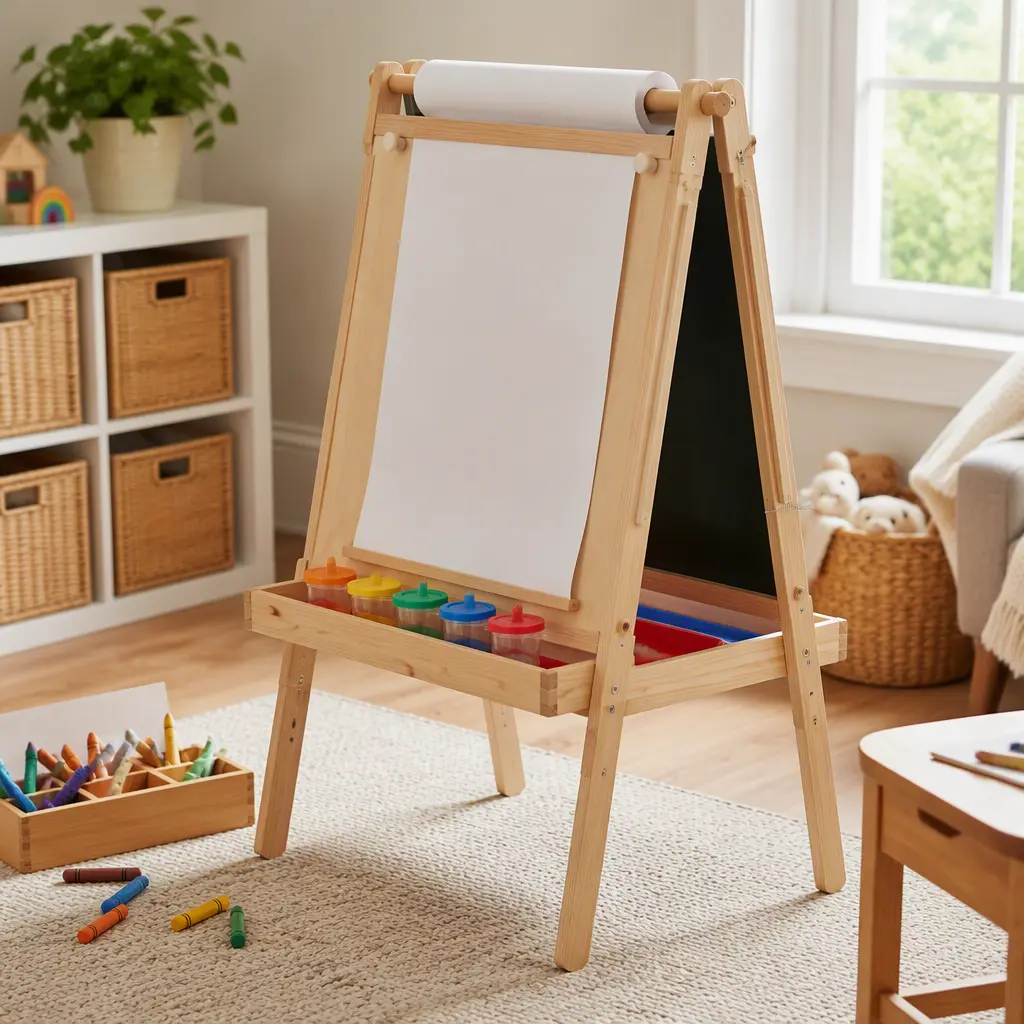
For many families, the Melissa & Doug easel became the piece of furniture that quietly took over a corner of the house and stayed there for years. Part art station, part pretend classroom, and part magnetic play surface, the standing wooden easel arrived at a moment when parents were looking for toys that encouraged hands-on creativity away from screens. Its appeal was straightforward: give children a dedicated place to make things, erase them, and start again without needing batteries, apps, or complicated instructions.
Where it came from
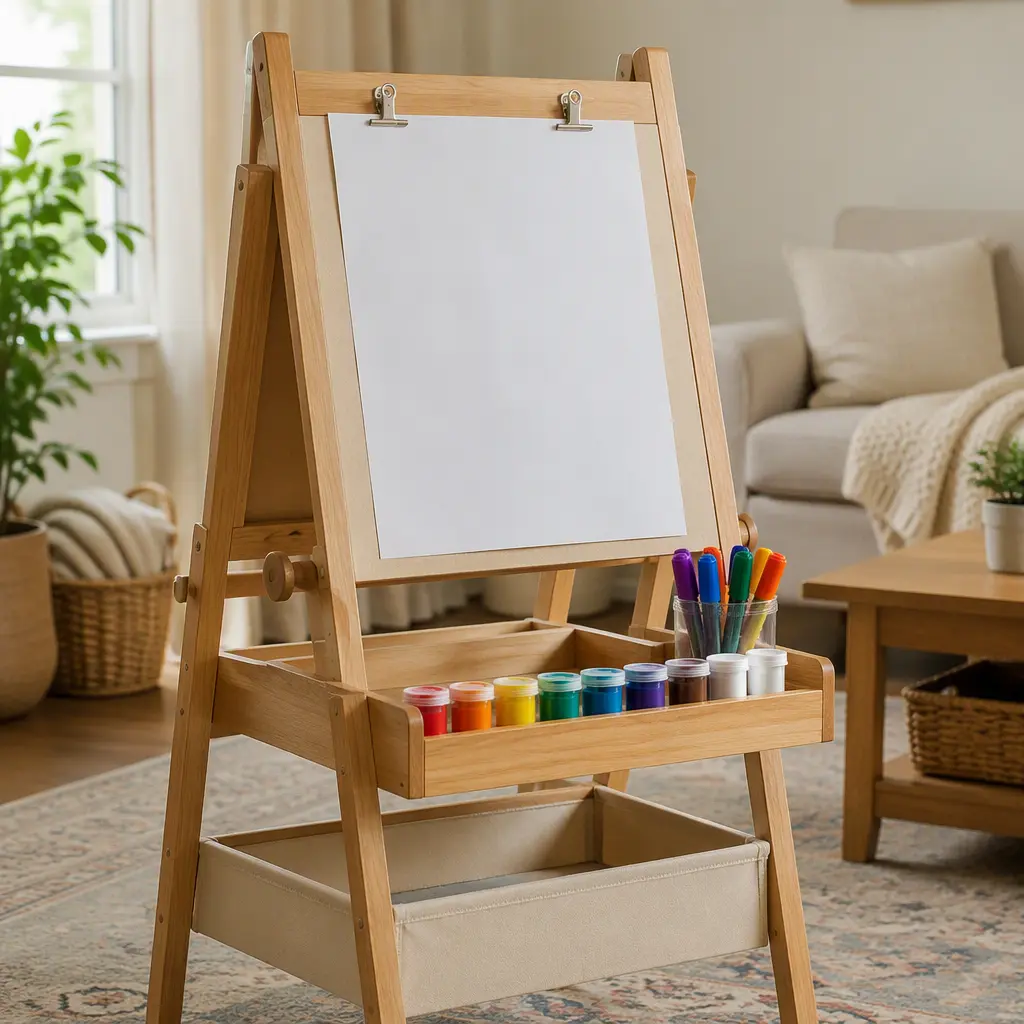
Melissa & Doug built its reputation around classic-style toys made from wood, fabric, and simple mechanical ideas rather than electronics. Founded in the late 1980s, the company leaned into open-ended play categories that many larger toy brands had moved away from. The standing easel fit neatly into that philosophy. Instead of offering a single activity, it created a reusable workspace that children could return to daily.
The easel itself was not a new invention. Classroom easels have existed for generations, and art educators long understood the value of vertical drawing surfaces for developing arm movement and hand control. Melissa & Doug adapted that familiar schoolroom format into a compact home version sized for young children. By combining a chalkboard, dry-erase board, paper roll, and storage trays into one foldable frame, the company made the easel practical enough for family homes rather than dedicated classrooms.
Why it works
The enduring appeal of the Melissa & Doug easel comes from how many different kinds of play it supports without dictating a specific outcome. One child may use it for finger painting, another for spelling games with magnets, and another for pretend teaching. Because the surfaces can be wiped clean or covered with fresh paper, the toy naturally encourages experimentation. Children can make mistakes without feeling that materials are being wasted.
Its physical design also matters more than it first appears. The upright drawing position changes how children use their shoulders, wrists, and arms compared with coloring at a table. Parents and educators often appreciate that the easel grows with children over several years, shifting from scribbling and washable paint to letters, diagrams, and more detailed artwork.
- Double-sided surfaces usually combine dry-erase and chalkboard play
- Paper roll compatibility supports painting, drawing, and large-format art
- Built-in trays keep markers, chalk, brushes, and magnets within reach
- Wooden construction gives the easel a furniture-like feel rather than a disposable toy
- Adjustable height on many versions helps extend usability as children grow
- Open-ended setup allows solo play, sibling sharing, or parent-child activities
Who it's for
Most standing easels in this category are aimed at preschool and early elementary ages, though many remain useful well beyond that range. Younger children tend to use the surfaces for broad drawing motions, magnetic letters, and washable paint, while older kids may turn the easel into a sign-making station, homework helper, or pretend business setup. Adults often appreciate the toy for a different reason: it creates a clear, contained place for creative messes. The easel's furniture-like appearance also helped it fit more comfortably into living rooms and playrooms than many brightly electronic toys of the same era.
Variants and what to look for today
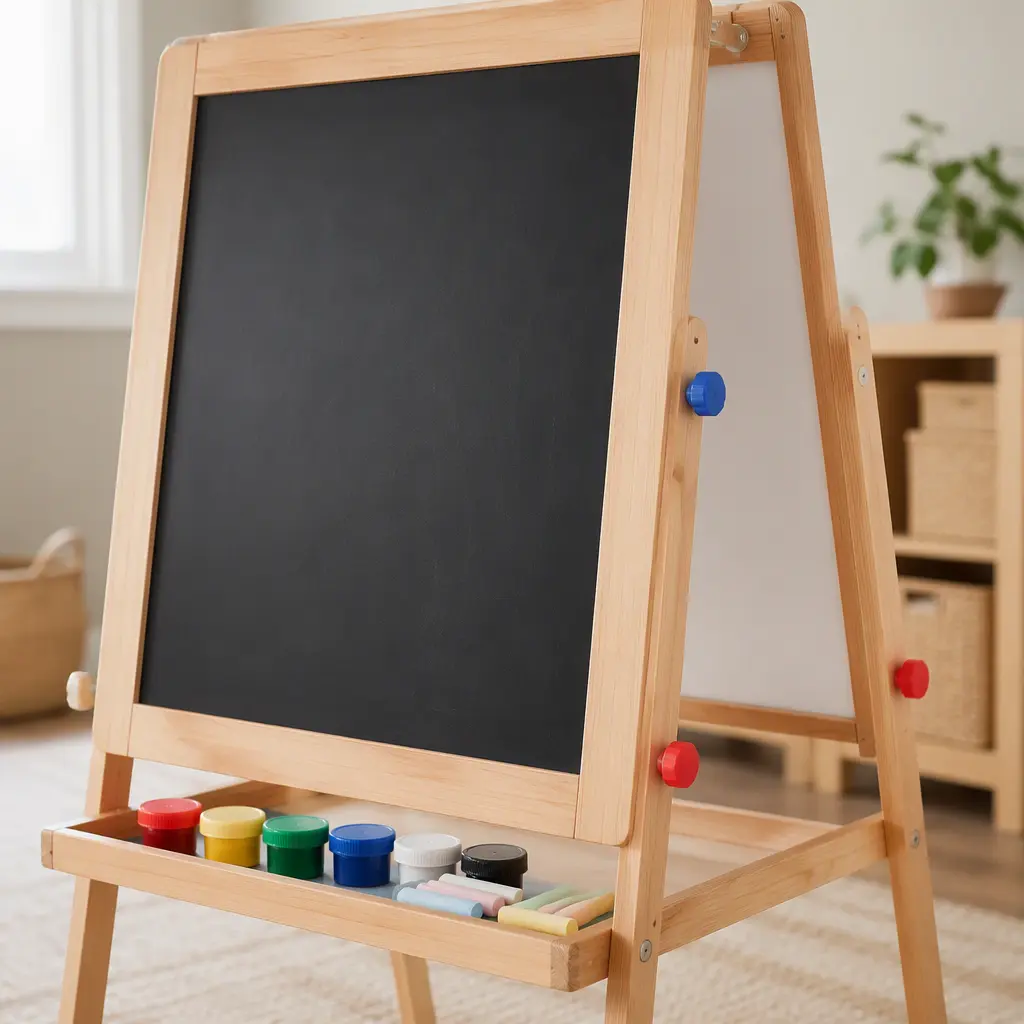
Over time, the category expanded well beyond one standard design. Some easels are freestanding and double-sided, while others fold flat for storage or include attached paper dispensers. Modern versions may add clip systems, larger trays, or easier-clean surfaces. Melissa & Doug remains one of the most recognizable names in the category, but many competing wooden easels now follow a similar template.
When shopping today, buyers usually focus less on decoration and more on practicality. Stability matters, especially for younger children who may lean on the frame during play. Surface quality also makes a noticeable difference. Cheap dry-erase coatings can stain over time, while low-quality chalkboards may resist cleaning. Families using paint frequently often look for removable trays or easy-wipe finishes to simplify cleanup.
- Look for sturdy wood or reinforced framing that resists wobbling
- Check whether art supplies and paper rolls are included or sold separately
- Magnetic whiteboard surfaces add extra play value with letters and shapes
- Foldable designs help in smaller homes or shared play spaces
- Avoid overly lightweight versions that tip easily during active play
Frequently asked questions
Is a standing easel good for toddlers?
Many children begin using easels around toddler age with supervision, especially for chunky crayons, magnets, and washable paints. The larger drawing surface encourages broad arm movement that younger children often enjoy.
Do children lose interest quickly?
Compared with single-purpose craft kits, easels often last longer because they support changing activities over time. A child may ignore it for a week and then return to it for drawing, pretend school play, or collaborative games.
Are chalkboards or whiteboards easier to maintain?
Whiteboards are usually quicker to clean and less dusty, while chalkboards can feel more tactile and forgiving for younger children. Many families appreciate having both surfaces available on the same frame.
Does an easel take up too much space?
A standing easel does require a dedicated footprint, but many models fold for storage. Families often find that having a permanent creative station reduces the need to repeatedly set up and pack away art supplies.
The Melissa & Doug easel succeeded because it treated creativity as an everyday activity rather than a scheduled project. Its mix of sturdy construction, reusable surfaces, and open-ended play helped it become a long-term household item instead of a short-lived novelty. In an era dominated by digital entertainment, the simple act of standing in front of a blank surface with markers, chalk, or paint still holds lasting appeal for many children and parents alike.