Water Drawing Mats vs Reusable Coloring Boards
Compare water drawing mats and reusable coloring boards for toddlers and preschoolers, including drying time, portability, mess control, storage, supervision needs and age fit.
Compare prices and availability
Check current prices and availability for this guide on eBay.
As an eBay Partner, we may be compensated if you make a purchase.
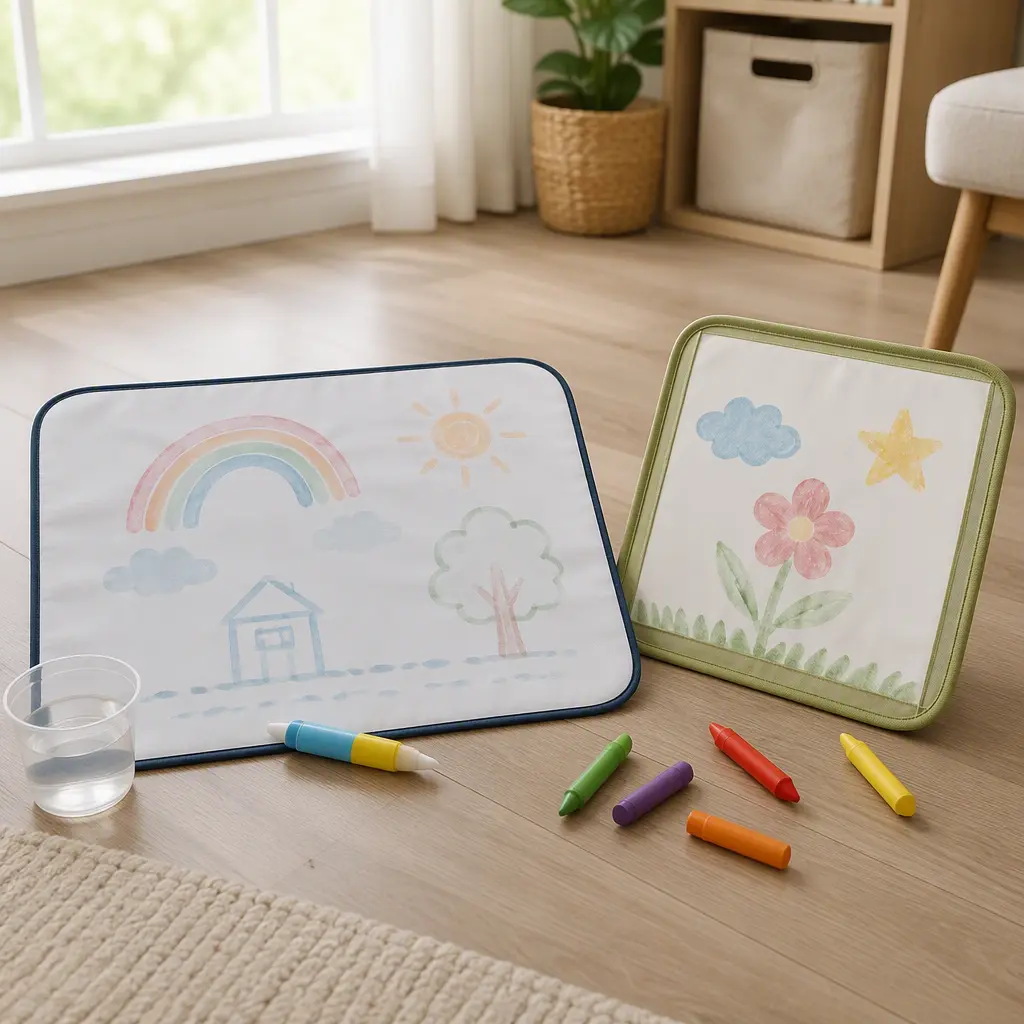
Water drawing mats and reusable coloring boards are both popular low-mess alternatives to crayons, markers and paint for young children. They encourage early drawing skills, hand control and independent play without leaving marks on walls or furniture. The right choice depends less on which toy is more entertaining and more on practical factors like drying time, travel use, storage space and how much supervision your child still needs. For toddlers and preschoolers, small differences in setup and cleanup can make one option much easier to live with day to day.
What to look for
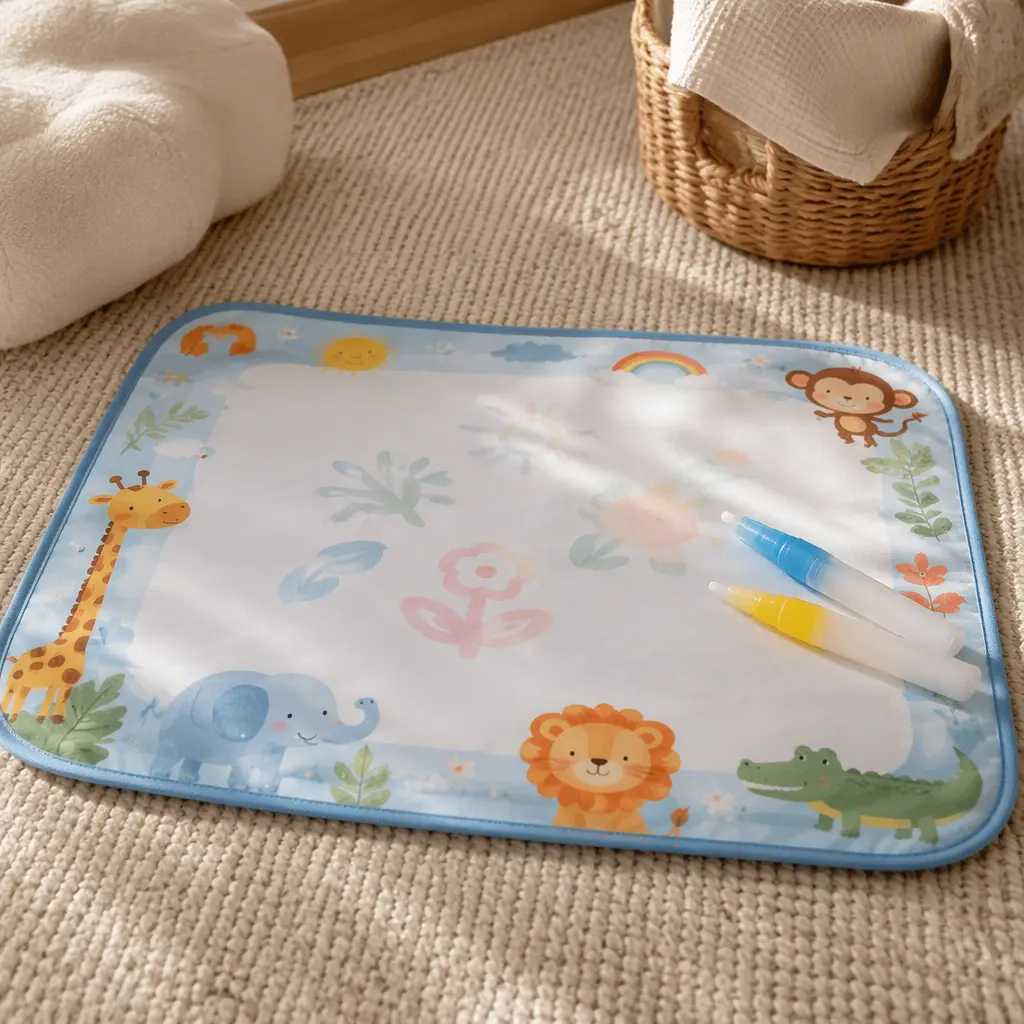
Both toy types are designed for repeat use, but they work differently. Water drawing mats use water-filled pens or brushes that reveal temporary colors on fabric-like surfaces before fading as they dry. Reusable coloring boards usually use magnetic styluses, sliding erasers or sealed gel surfaces that clear instantly. The best fit depends on how your child plays and where the toy will be used most often.
- Drying time: Water mats need several minutes to fully reset, while most reusable boards erase immediately. Children who dislike waiting may prefer boards.
- Mess control: Water mats avoid ink and paint stains, but spilled cups or overfilled pens can still create damp spots. Coloring boards are usually drier and easier for car trips.
- Portability: Compact boards fit more easily into diaper bags, travel backpacks and restaurant outings. Large mats work better for floor play at home.
- Play style: Mats encourage broad arm movement and shared drawing space, while boards often support seated solo play and fine motor practice.
- Storage: Foldable mats can save space but may need time to dry before storing. Hard plastic boards stack neatly but take more shelf space.
- Durability: Boards with fewer moving parts often tolerate drops and rough handling better. Fabric mats can crease or wear over time if folded tightly.
- Noise level: Magnetic or sliding-erase boards can make scraping sounds that some adults and children dislike. Water mats are usually quieter.
Age suitability
For children around 1 to 2 years old, simple water drawing mats are often easier to use because they respond to broad, less controlled movements. Toddlers can make marks with large water pens, damp hands or stamps without needing precise pressure. Large floor mats also allow crawling, kneeling and side-by-side play with a parent. Reusable coloring boards tend to suit older toddlers and preschoolers once they can hold a stylus more intentionally and understand how the erase function works. Some smaller boards also include detachable accessories that require closer supervision around younger children. Regardless of age guidance on packaging, parents should check pen thickness, removable parts and whether the child still mouths toys frequently.
Options compared
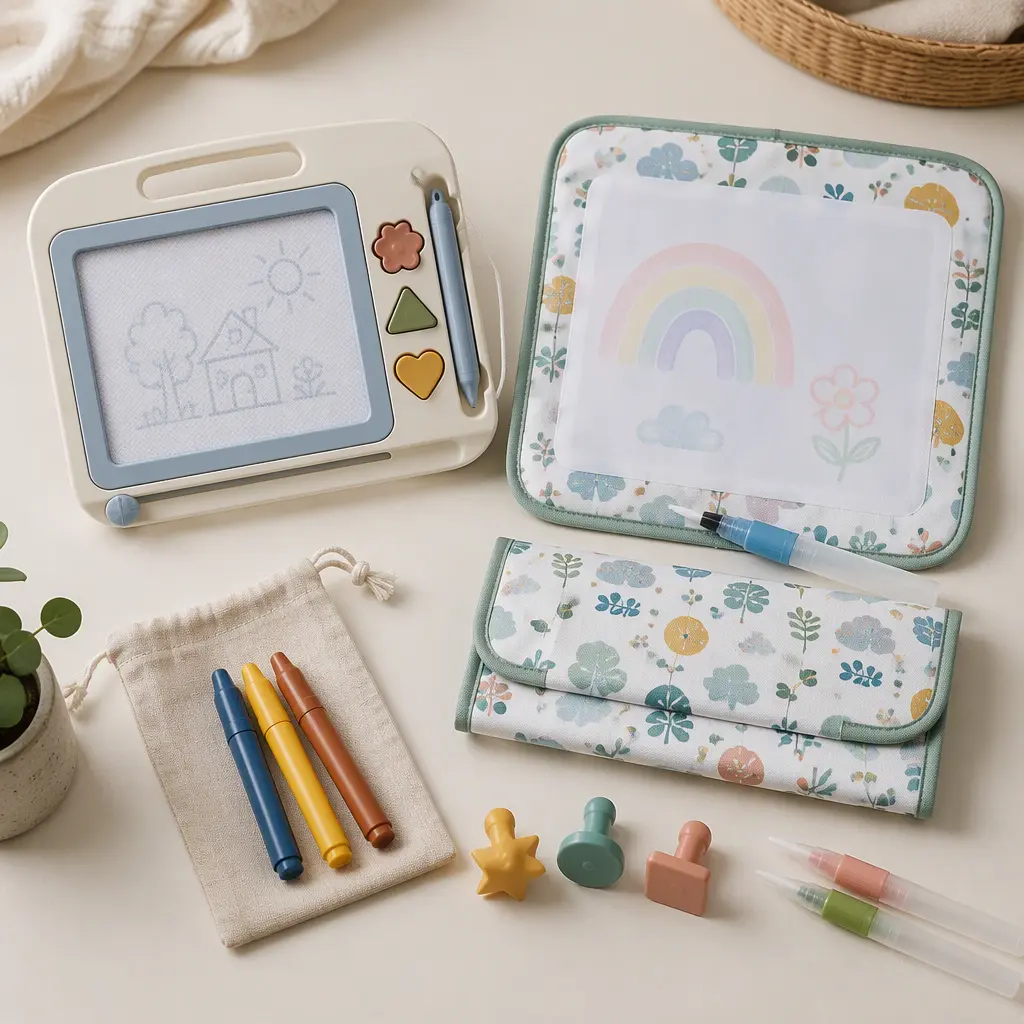
Water drawing mats are usually the stronger choice for parents prioritizing low-pressure creative play at home. Their larger surface area supports movement and cooperative play, which can work especially well for young toddlers still developing coordination. Because marks disappear gradually, children can continue layering drawings without stopping to erase constantly. The trade-off is drying time. Some children become frustrated waiting for the surface to clear, especially if they want to repeat the same shapes immediately. Mats also need floor space and are less convenient for travel or quick restaurant entertainment.
Reusable coloring boards are more portable and structured. They fit well into travel routines, waiting rooms and smaller homes because they need little setup and erase quickly. Many children enjoy the instant reset, which encourages repetitive drawing practice. However, smaller drawing surfaces can feel limiting for energetic toddlers, and some boards rely on attached styluses that are easy to misplace. Parents sensitive to toy noise may also prefer water mats, since sliding erasers and magnetic tools can create repetitive sounds during play. For families trying to minimize cleanup above all else, reusable boards generally create the least household disruption because they stay dry and store quickly.
- Choose a water drawing mat if you want large-scale floor play, quieter activity time, sibling sharing or broader arm movement for younger toddlers.
- Choose a reusable coloring board if you need travel-friendly entertainment, fast reset times, compact storage or dry mess-free use outside the house.
- Avoid oversized mats in very small apartments where drying and storage space are limited.
- Avoid boards with multiple detachable accessories for children who still mouth objects frequently or lose small pieces easily.
Frequently asked questions
Do water drawing mats grow mold or smell over time?
They can if stored damp for long periods. Allow the mat to air dry completely before folding or placing it in bins. Occasional surface cleaning according to manufacturer guidance can also help keep the material fresh.
Are reusable coloring boards truly mess free?
They are usually lower mess than markers or paints, but not entirely maintenance free. Magnetic styluses can go missing, sliding erasers may collect dust, and some boards can leave temporary marks on nearby surfaces if pressed hard during play.
Which option works better for travel?
Reusable coloring boards are generally easier for travel because they are compact, dry and ready to erase instantly. Water mats are better suited to home use unless you choose a smaller foldable version with secure water pens.
Can toddlers use these toys independently?
Many toddlers can use them with light supervision, especially simple water mats with chunky pens. Independence depends more on the child's stage of development than the toy category itself. Younger toddlers may still need help opening pens, refilling water or keeping accessories together.
Do these toys replace traditional art supplies?
They work best as complementary toys rather than full replacements. Water mats and reusable boards are useful for quiet time, travel and low-mess play, while crayons, paint and paper still provide different sensory and creative experiences as children get older.
For most families with children in the 1 to 2 year range, the decision comes down to where the toy will be used most often. Water drawing mats support relaxed floor play and shared creativity at home, while reusable coloring boards offer portability and quick cleanup for busy routines. Both options can encourage screen-free play with minimal mess when chosen with age suitability, storage space and supervision needs in mind.