First Tech Toys for Babies: Helpful or Just Noise?
An evidence-based buyer’s guide to electronic toys for babies 0–12 months, explaining which features support early development, which are just distracting, and how parents can choose wisely.
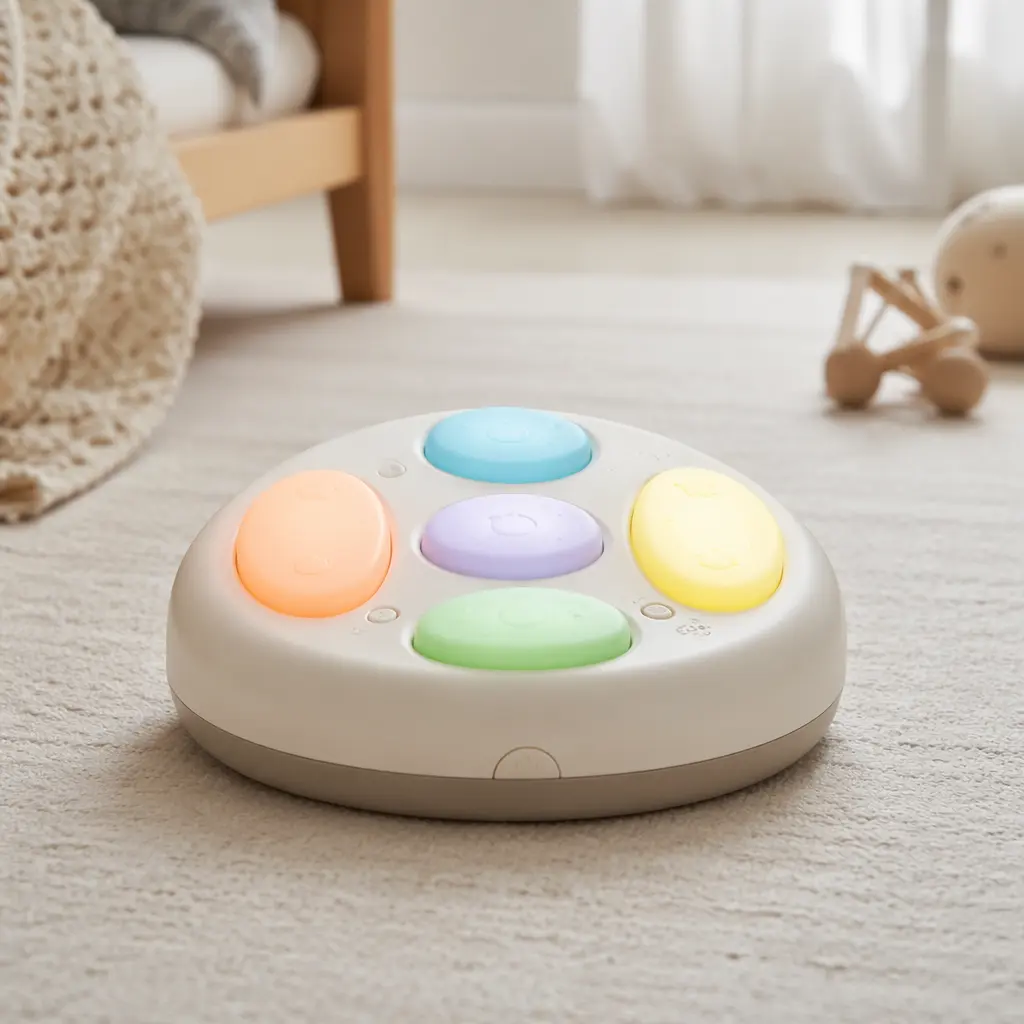
Compare prices and availability
Check current prices and availability for this guide on eBay.
As an eBay Partner, we may be compensated if you make a purchase.
Electronic toys are often marketed as "educational" from the very first months of life. Lights flash, music plays, and buttons promise early learning. For parents of babies under one year, the challenge is separating toys that truly support development from those that mainly add noise. Research on early childhood suggests that not all tech toys are equal, and many benefits depend less on the electronics and more on how a baby interacts with the toy—and with caregivers.
What to look for
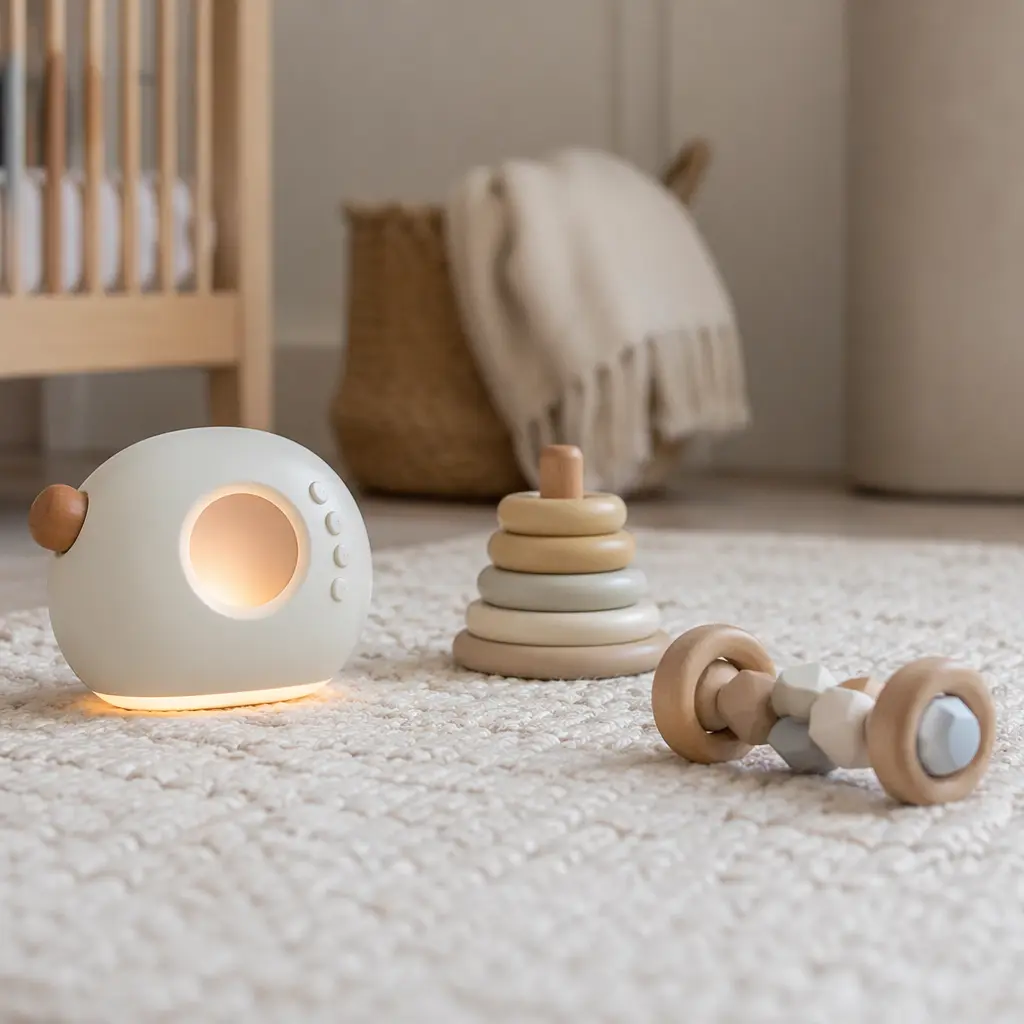
For babies 0–12 months, learning happens through senses and movement. The most helpful electronic toys support these basics rather than replacing them. When evaluating tech toys, focus on how they encourage active exploration instead of passive watching or listening.
- Cause-and-effect play: The toy responds when the baby presses, shakes, or moves something.
- Limited, gentle stimulation: Soft sounds and lights instead of constant noise or flashing.
- Simple interactions: Fewer buttons and modes are often better for young babies.
- Physical engagement: Toys that invite grasping, kicking, or reaching.
- Clear off switch or volume control: Allows parents to manage stimulation.
Age suitability
Within the 0–12 month range, needs change quickly. Newborns benefit most from high-contrast visuals, gentle sounds, and opportunities for tummy time. Around 4–6 months, babies begin reaching and grasping, making simple cause-and-effect toys more engaging. By 9–12 months, many babies enjoy pressing buttons or triggering sounds repeatedly as they learn that their actions matter. Electronic toys labeled for a wide age range may not match every stage, so it helps to think about your baby’s current skills rather than the label alone.
Standout categories or types
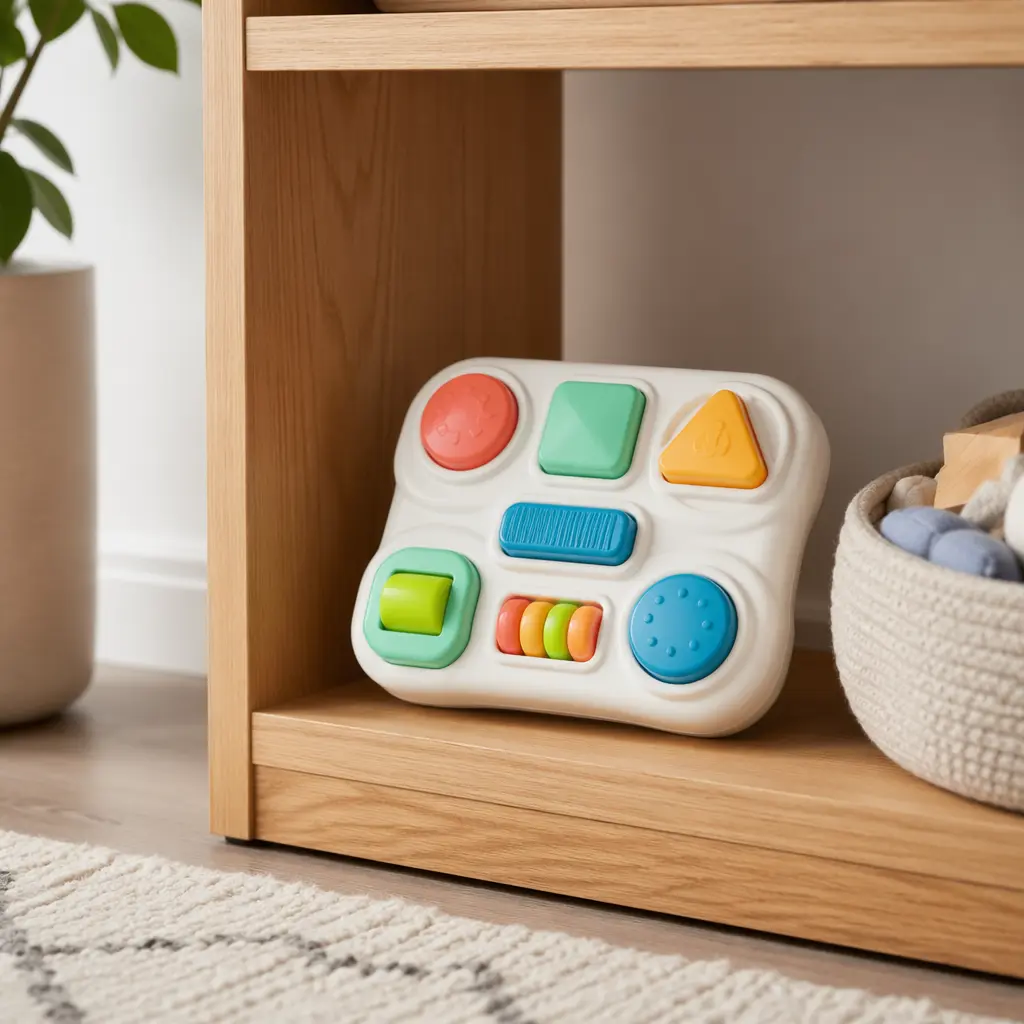
Some types of electronic toys consistently offer more developmental value than others. The key difference is whether the toy reacts to the baby or performs on its own.
- Cause-and-effect toys: These activate only when the baby touches or moves them, reinforcing learning through action.
- Sound-and-music toys with restraint: Simple tones or short songs can support auditory development without overwhelming.
- Motion-activated toys: Toys that respond to kicking or rolling can motivate early movement.
- Avoid fully automated toys: Toys that play long sequences without input often reduce engagement.
Frequently asked questions
Do electronic toys help babies learn faster?
Studies suggest that babies learn best through real-world interaction. Electronic toys can support learning when they encourage exploration, but they do not replace human interaction, talking, and play.
Are lights and sounds bad for babies?
Lights and sounds are not inherently harmful, but too much stimulation can be overwhelming. Toys with adjustable volume and gentle visuals are generally a better choice.
How many electronic toys does a baby need?
Most babies need very few. A small number of well-chosen toys, combined with books, physical play, and caregiver interaction, is typically enough.
Can electronic toys replace parent playtime?
No. Research consistently shows that babies learn more from responsive adults than from toys alone. Electronic toys work best as tools used alongside shared play.
For parents, the takeaway is balance. Electronic toys for babies are not automatically good or bad—they are tools. When chosen carefully and used in moderation, some can support early development. The most important factor remains active, responsive interaction with caregivers, which no toy can replace.