Munchkin Mozart Magic Cube and the Rise of Musical Play
The Munchkin Mozart Magic Cube turned simple button-pressing into an introduction to layered classical music, blending sensory play with early music exploration for young children.
Compare prices and availability
Check current prices and availability for this guide on eBay.
As an eBay Partner, we may be compensated if you make a purchase.
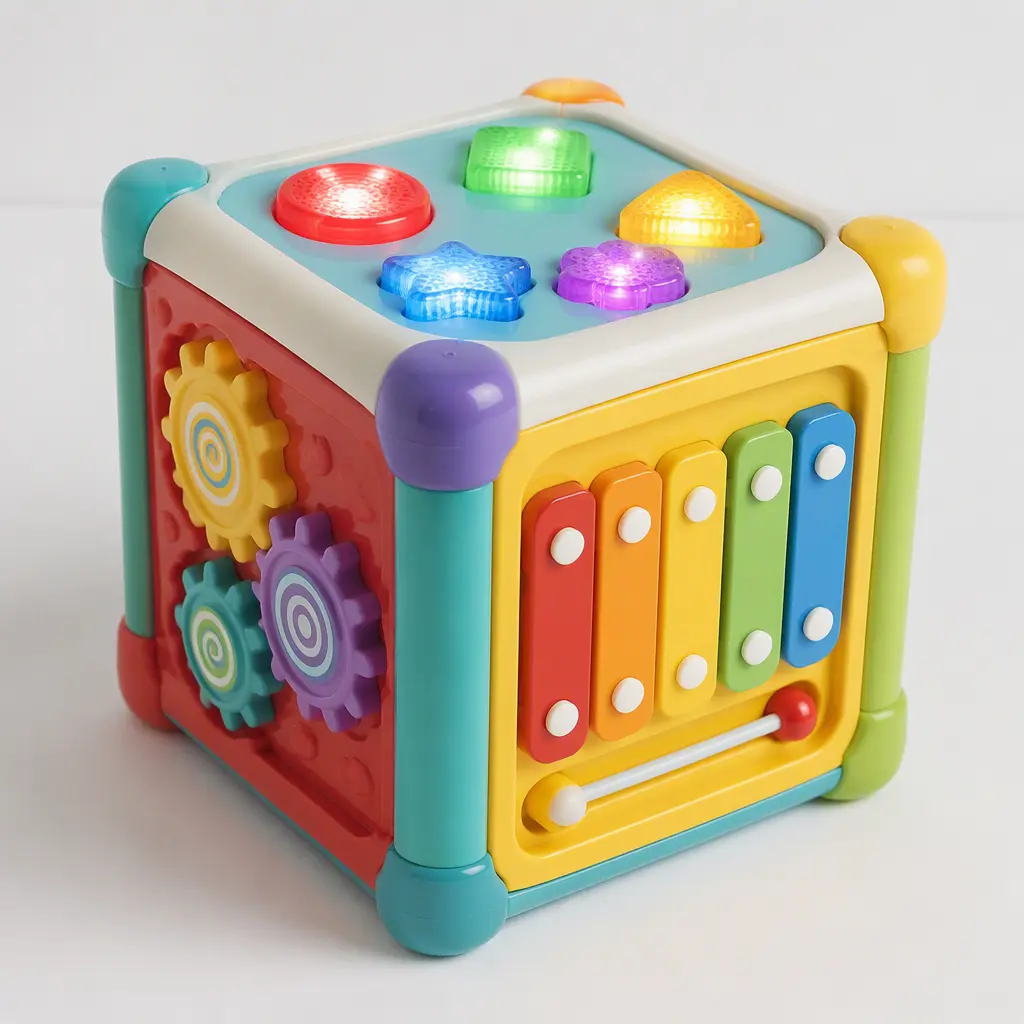
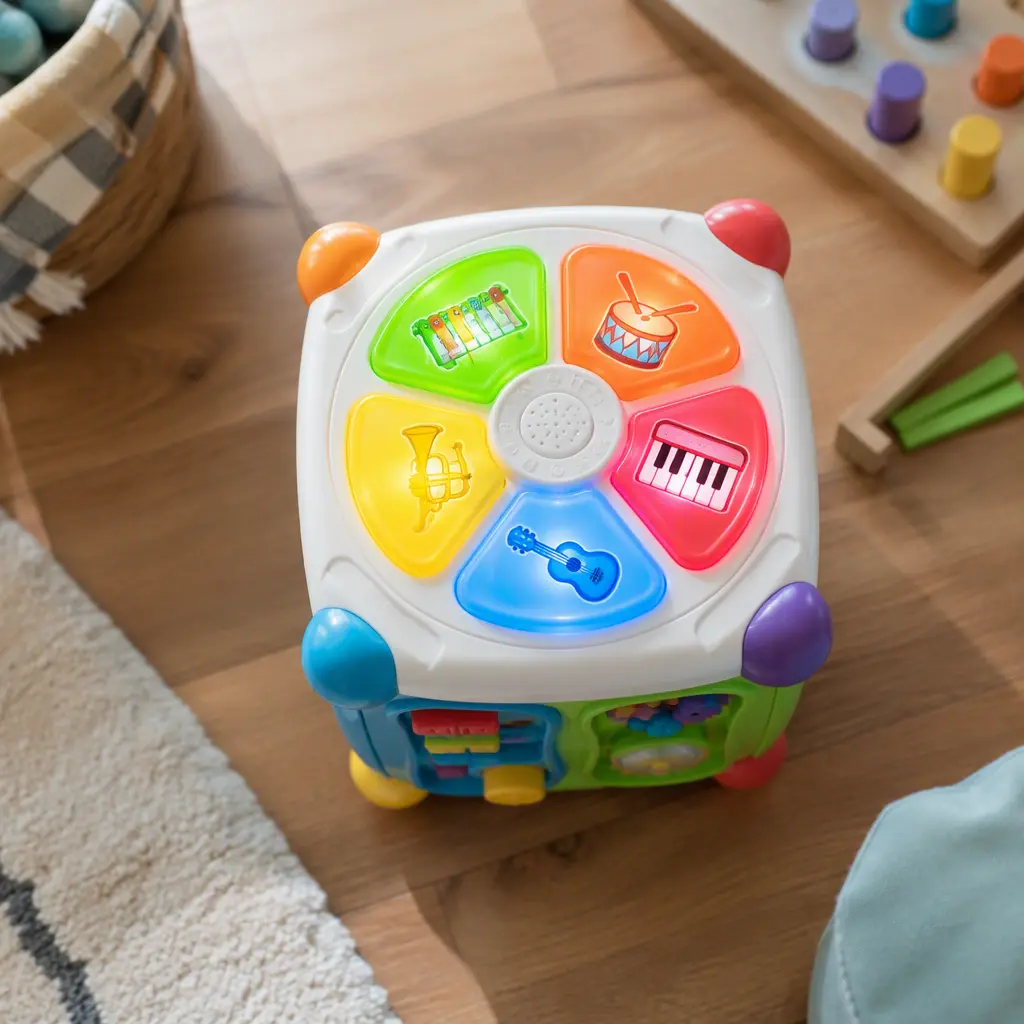
The Munchkin Mozart Magic Cube arrived during a period when parents were looking for toys that felt educational without turning playtime into homework. At first glance, it looks like a bright activity cube for toddlers, packed with buttons and lights. What made it stand out was its unusual hook: instead of random electronic sounds, the toy let children layer instruments into recognizable classical compositions. With a tap of a button, a child could add violin, piano, flute, trumpet, or harp parts into a simplified arrangement inspired by Mozart. The result was part sensory toy, part early music lesson, and part interactive experiment in cause and effect.
Where it came from
The Mozart Magic Cube was introduced by Munchkin, a company best known for baby and toddler products designed around everyday parenting routines and early development. While many electronic infant toys focused on animal sounds, alphabet drills, or simple melodies, this cube leaned into a different idea: exposing very young children to the structure of music itself. The toy borrowed heavily from the popularity of “Baby Mozart” and similar classical music trends that became widespread in the late 1990s and early 2000s, when parents were encouraged to see music as part of early cognitive development.
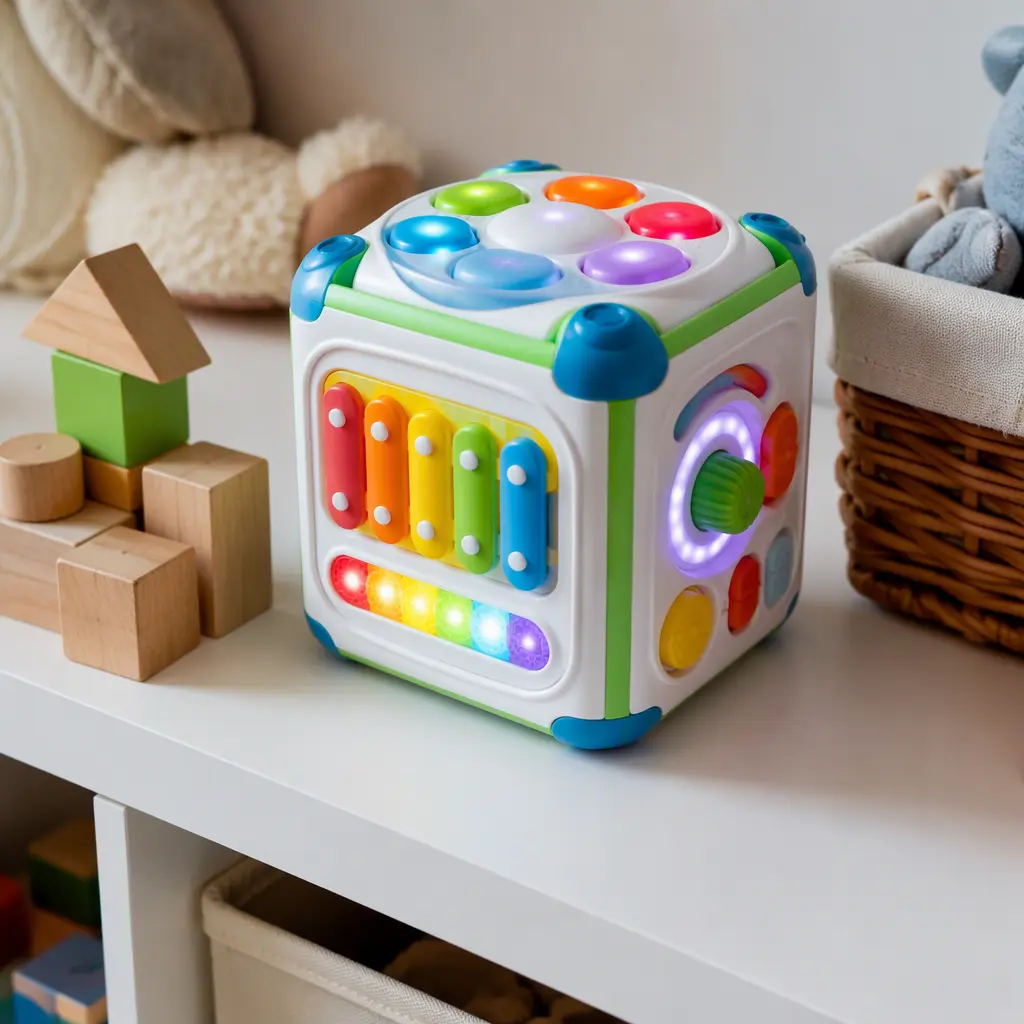
Rather than presenting classical music as something formal or distant, the cube translated it into tactile play. Each side of the toy represented a musical instrument, and children could activate or mute layers while a melody continued underneath. It was an approachable way to demonstrate that music is built from separate parts working together. For toddlers, that interaction was often more important than the educational claims around it. The toy rewarded experimentation immediately with lights, sound changes, and repetition, all within a durable format designed for small hands.
Why it works
The cube succeeds because it combines several forms of play at once. It is a sensory toy, thanks to the lights and sounds. It is also a cause-and-effect toy, since every button changes the music instantly. Most importantly, it turns passive listening into participation. Even children too young to understand instruments by name can recognize that pressing different buttons changes how the song feels. That feedback loop encourages repeat play without requiring complicated instructions.
The design also avoids one of the common problems with electronic toys: overwhelming noise. Instead of layering unrelated sound effects, the cube stays within a controlled musical structure. The melodies remain recognizable and pleasant even after repeated use, which likely explains why many parents remember the toy more fondly than louder activity gadgets from the same era.
- Instrument buttons allow children to add or remove musical layers
- Large controls are easy for toddlers to press repeatedly
- Light-up elements reinforce cause-and-effect learning
- Compact cube design encourages floor play and portability
- Classical-inspired arrangements create calmer sound patterns than many electronic toys
Who it's for
The Mozart Magic Cube was primarily designed for infants and toddlers, especially children exploring button-based interaction for the first time. The chunky controls and rounded shape suit early motor development, while the audio feedback keeps very young children engaged. Older preschoolers may enjoy experimenting with combinations of instruments, though the toy is generally aimed at the under-three crowd. Adults often remember it because it occupied a rare middle ground: stimulating without being excessively chaotic. That has helped the cube maintain a second life through hand-me-downs, resale markets, and nostalgia-driven parenting conversations online.
Variants and what to look for today
Over the years, the Mozart Magic Cube has appeared in slightly updated versions with cosmetic changes, revised sounds, or different light arrangements, but the core interaction has remained largely the same. Some versions emphasize brighter LEDs or softer button textures, while others slightly alter the musical arrangements. The overall concept, however, has stayed consistent: layered instrumental play centered around familiar classical themes.
For families shopping today, condition matters more than rarity. Many cubes spent years in nurseries and playrooms, so secondhand units may show heavy wear around buttons, battery compartments, or speakers. Since the toy depends entirely on responsive audio output, buyers should test every instrument button if purchasing used. Generic imitation musical cubes also exist, but some replace the layered orchestral concept with unrelated sound effects, losing the feature that made the original memorable.
- Check battery compartments for corrosion on older used units
- Test each instrument button to confirm audio layering works properly
- Look for sturdy button response without sticking
- Consider volume level if buying for smaller spaces
- Modern musical activity cubes may offer similar concepts with updated materials
Frequently asked questions
Does the toy play actual Mozart compositions?
The cube uses simplified arrangements inspired by Mozart-style classical music rather than full orchestral recordings. The goal is interactive layering and musical exploration rather than formal music education.
What age range works best for this toy?
Most children engage with it between infancy and toddlerhood, especially during stages when pressing buttons and observing reactions becomes exciting. Older preschoolers may still enjoy experimenting with instrument combinations.
Why do parents still talk about it years later?
Many electronic toys from the same era relied on repetitive jingles or loud sound effects. The Mozart Magic Cube stood out because its music felt calmer and more structured, making it easier for adults to tolerate during repeated play sessions.
Are newer musical toys similar?
Yes. Many modern developmental toys now incorporate layered audio, sensory feedback, and music mixing concepts. The Mozart Magic Cube helped popularize the idea that toddler music toys could be interactive rather than purely passive noisemakers.
The Munchkin Mozart Magic Cube remains an interesting example of how a simple toy can reflect broader parenting trends and design ideas. It translated classical music into something tactile and approachable for very young children, while still functioning as a sturdy activity toy. Long after its initial popularity peak, it continues to be remembered less for flashy technology and more for a surprisingly elegant idea: teaching children that music is something they can shape themselves.