Strategy Board Games Kids Can Finish in 30 Minutes
A parent-friendly guide to short-play board games that teach real strategy without long rulebooks. Learn what to look for, age fit, and game styles that build planning skills in under 30 minutes.
Compare prices and availability
Check current prices and availability for this guide on eBay.
As an eBay Partner, we may be compensated if you make a purchase.
Many parents want board games that do more than fill time. Short-play strategy games can teach planning, decision-making, and adaptability without requiring a long rulebook or a two-hour commitment. For kids ages 9–12, the sweet spot is often games that feel thoughtful and competitive, yet still wrap up in about 30 minutes. This guide explains how to spot those games and which types tend to deliver meaningful strategy in a kid-friendly format.
What to look for
Not every short game teaches strategy. Some rely mostly on luck or quick reactions. Strategy-focused games, even fast ones, give players meaningful choices and let those choices shape the outcome. When shopping, it helps to look past the box claims and focus on how the game actually plays.
- Meaningful decisions each turn, such as choosing between multiple useful actions
- Limited randomness, or luck that can be managed through planning
- Clear goals that reward foresight, not just quick moves
- Simple rules that combine in interesting ways
- A playtime that naturally ends in 20–30 minutes without rushing
Age suitability
For ages 9–12, kids are usually ready for games that involve multi-step thinking, light math, and anticipating opponents’ moves. Short strategy games in this range should challenge them without overwhelming them. Look for games where kids can compete on equal footing with adults, but where the rules can still be explained in under ten minutes. If a game requires constant rule lookups, it may slow play and reduce enjoyment for this age group.
Standout categories or types
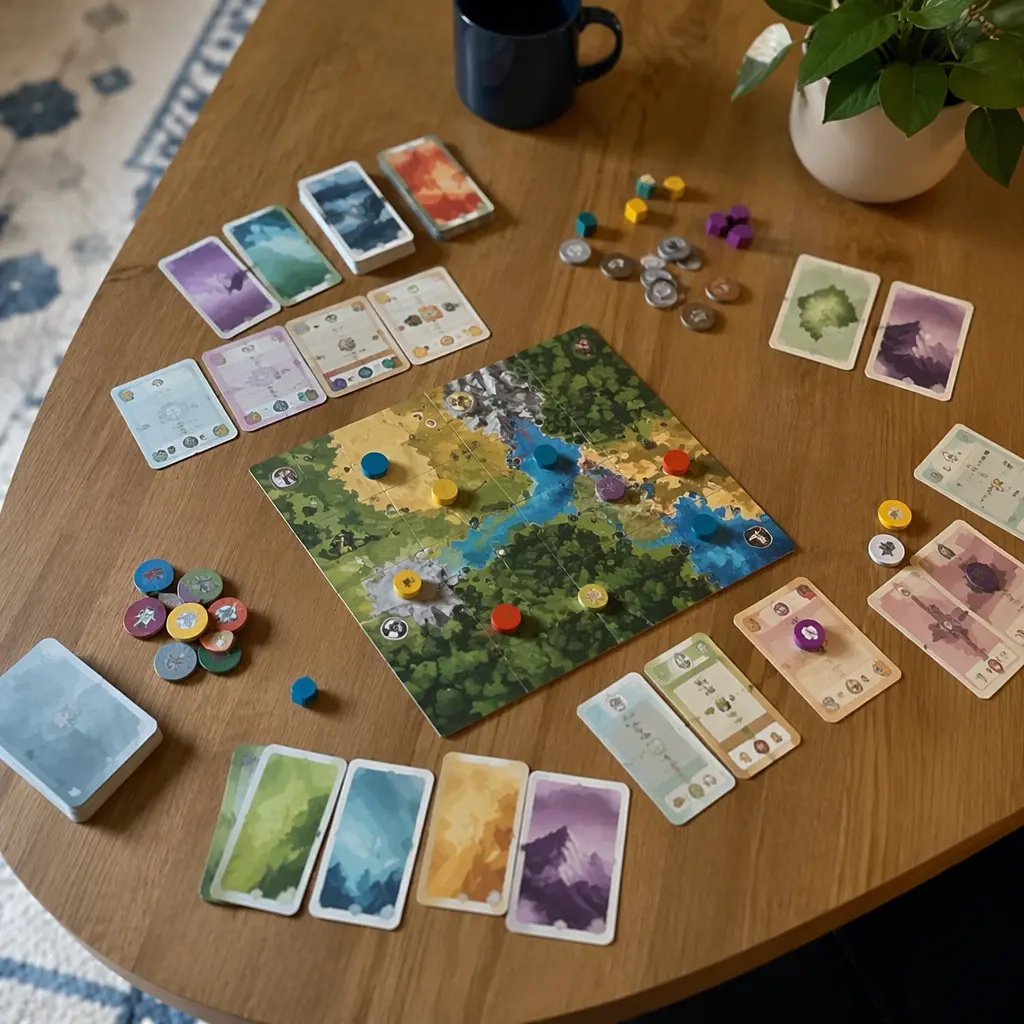
Certain game styles consistently deliver strong strategy in a short timeframe. These designs are popular because they focus on decisions rather than lengthy setup or complex bookkeeping. While themes and artwork vary, the underlying mechanics tend to work well for kids learning strategic thinking.
- Drafting games, where players choose from a shared set of options and must adapt to what others take
- Tile-laying or pattern-building games that reward long-term planning in a small space
- Area control games with simple maps that emphasize timing and positioning
- Hand-management games that challenge players to use limited resources efficiently
Frequently asked questions
Can a 30-minute game really teach strategy?
Yes. Strategy does not depend on length, but on decision quality. Short games often strip away extra rules and focus on a few core choices, helping kids practice planning, trade-offs, and adapting to opponents.
Are these games mostly competitive or cooperative?
Most short strategy games for this age group are competitive, which helps kids learn to anticipate others’ moves. Some include optional cooperative modes or team play, which can be useful for younger or more sensitive players.
How much reading is usually required?
Many are designed to be language-light, using symbols instead of text. This makes them accessible for kids with different reading levels and helps keep turns moving quickly.
Do quick strategy games hold long-term interest?
They can, especially when the game offers multiple paths to victory or changing setups. Kids often enjoy mastering strategies over repeated plays and experimenting with new approaches.
Short-play strategy board games can be a smart addition to a family game shelf. They fit easily into busy schedules, encourage thoughtful play, and help kids build skills they can transfer to school and everyday problem-solving. By focusing on clear choices and manageable playtimes, parents can find games that are both fun and genuinely educational.