Clics: The snap-together toy built for wearable creations
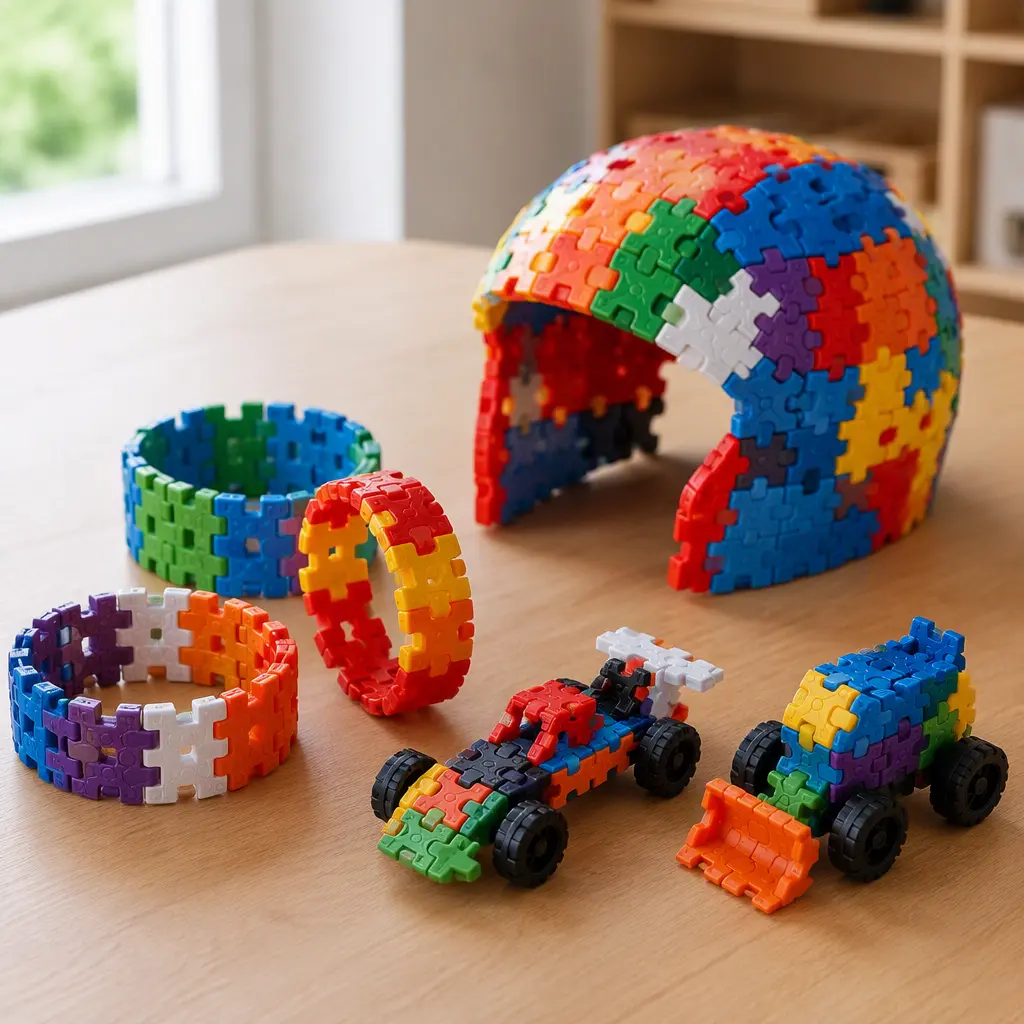
Clics turned simple plastic strips into helmets, bracelets, vehicles, and oversized models with a flexible snap system that encouraged open-ended building and wearable play.
Compare prices and availability
Check current prices and availability for this guide on eBay.
As an eBay Partner, we may be compensated if you make a purchase.
Clics arrived during a period when construction toys were becoming increasingly specialized, yet its core idea stayed unusually simple. Instead of relying on bricks, magnets, or rods and connectors, Clics used flat plastic pieces that snapped together with a firm click to create surprisingly sturdy shapes. Children could build animals, cars, robots, and even wearable items like hats and bracelets from the same basic parts. That blend of flexibility and physical play helped the toy stand out in a crowded category and gave it a different feel from more rigid building systems.
Where it came from
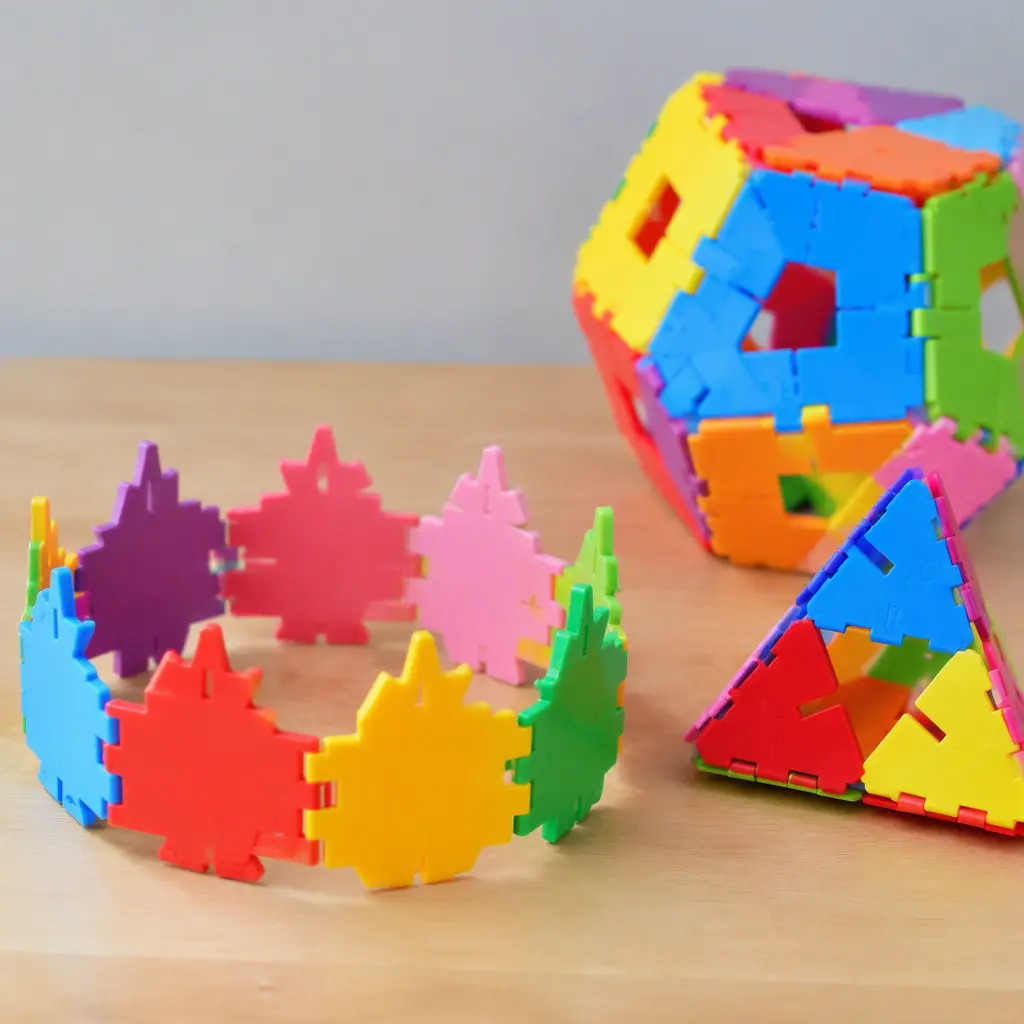
Clics first appeared in the mid-2000s, launched by a Belgian company looking for a building system that felt intuitive for younger children but still expandable for older builders. The pieces were designed around a simple snapping mechanism that let children connect flat strips in multiple directions without needing precise alignment or significant hand strength. The satisfying clicking sound became part of the toy’s identity and gave children immediate feedback as they built.
The system also reflected a shift in how construction toys were marketed at the time. Rather than focusing only on static display models, Clics leaned into movement, wearable play, and oversized creations. Children were encouraged to build masks, crowns, bracelets, and structures large enough to interact with physically. That approach made the toy feel less like a miniature modeling kit and more like an active craft system that blended construction play with costume play.
Why it works
The appeal of Clics comes from how quickly children can move from loose pieces to recognizable objects. The flat components stack compactly, but once connected they create surprisingly large forms. Because the pieces can bend slightly and connect at different angles, children often experiment freely rather than following rigid instructions. That open-ended style gives the toy a lower barrier to entry than some construction systems that depend heavily on exact sequencing.
Wearable play is another reason the system developed a loyal following. Many construction toys stay on the floor or shelf after assembly, but Clics creations could become props for pretend play. A child might build a bracelet one moment and redesign the same pieces into a vehicle or creature the next. The toy naturally encourages rebuilding instead of treating finished models as permanent objects.
- Flat snap-together pieces that connect quickly without tools
- Flexible building style that supports both simple and large-scale models
- Wearable creations including crowns, masks, and bracelets
- Bright colors and oversized parts suited to group play
- Open-ended construction that encourages rebuilding and experimentation
Who it's for
Clics is generally aimed at children who enjoy hands-on creative play but may not yet have the patience for highly technical model kits. The larger pieces are approachable for younger builders, while older children often enjoy testing the system’s structural limits with bigger creations. Parents and educators have also used the toy in classrooms and activity groups because the pieces are easy to sort, durable enough for repeated use, and well suited to collaborative building. Adults interested in nostalgic construction toys sometimes revisit Clics because its design sits somewhere between classic snap-together toys and modern STEM-oriented systems.
Variants and what to look for today
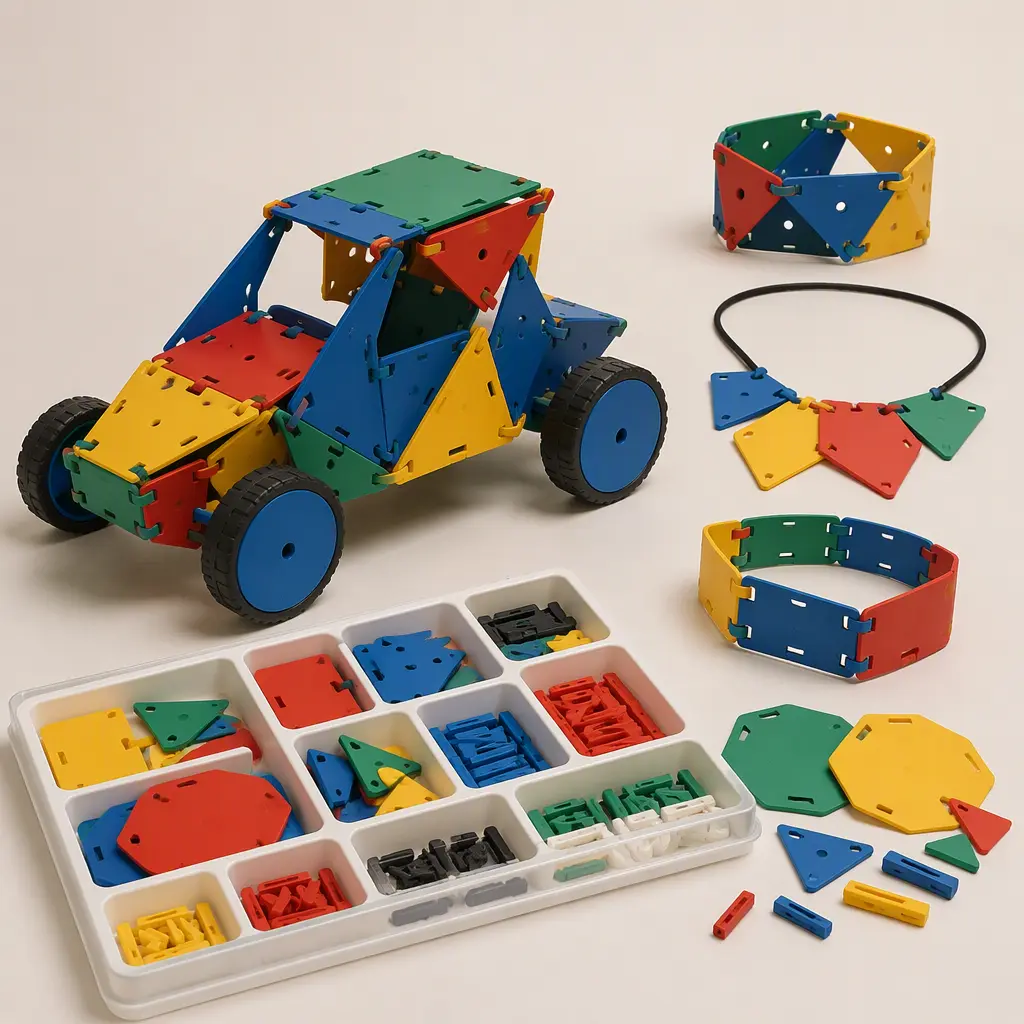
Over time, Clics expanded into themed sets and larger collections designed around vehicles, animals, fantasy builds, and educational activities. Some sets emphasized free building while others included instruction-heavy projects. Accessory pieces such as wheels, curved connectors, and specialty shapes broadened what builders could create without changing the underlying snap system.
If you are shopping for Clics today, compatibility matters more than specific themes. Earlier and later generations of pieces generally work together, but mixed used lots can sometimes include unrelated building systems that do not connect properly. Buyers looking for long-term replay value often prioritize larger assortments of basic pieces over highly themed sets because the core building parts offer the most flexibility.
- Starter tubs with large assortments are useful for open-ended play
- Vehicle-focused sets add wheels and moving parts
- Educational packs are often designed for classroom group activities
- Check for clean snapping connections when buying secondhand pieces
- Avoid heavily worn pieces that no longer lock together securely
Frequently asked questions
Are Clics pieces compatible across different sets?
Most standard Clics pieces are designed to work together across themes and collection sizes. Specialty accessories may vary, but the core snap connections generally remain consistent.
What ages are best suited for Clics?
The toy is commonly used by early elementary-age children through preteens. Younger children often focus on wearable creations and simple shapes, while older builders experiment with larger structures and moving designs.
Does Clics focus more on instructions or free building?
The system supports both approaches, but its design naturally encourages experimentation. Many children quickly move beyond the included project ideas and start inventing their own creations.
Why did wearable builds matter so much to the brand?
Wearable creations gave Clics a different identity from many construction toys. Building something that could be carried, worn, or used during pretend play helped extend the experience beyond assembly alone.
Clics never reached the cultural scale of the largest construction toy brands, but it earned attention by approaching building from a different direction. Its flat pieces, wearable creations, and emphasis on quick experimentation gave children a system that felt active and flexible rather than purely mechanical. Years after its introduction, the toy remains recognizable for the simple click that turned loose plastic strips into something imaginative and personal.