Masters of the Universe and the Rise of Story-Driven Toys
Launched in 1982, Masters of the Universe blended fantasy, science fiction, and muscular action figures into a multimedia toy phenomenon that reshaped Saturday-morning marketing.
Compare prices and availability
Check current prices and availability for this guide on eBay.
As an eBay Partner, we may be compensated if you make a purchase.
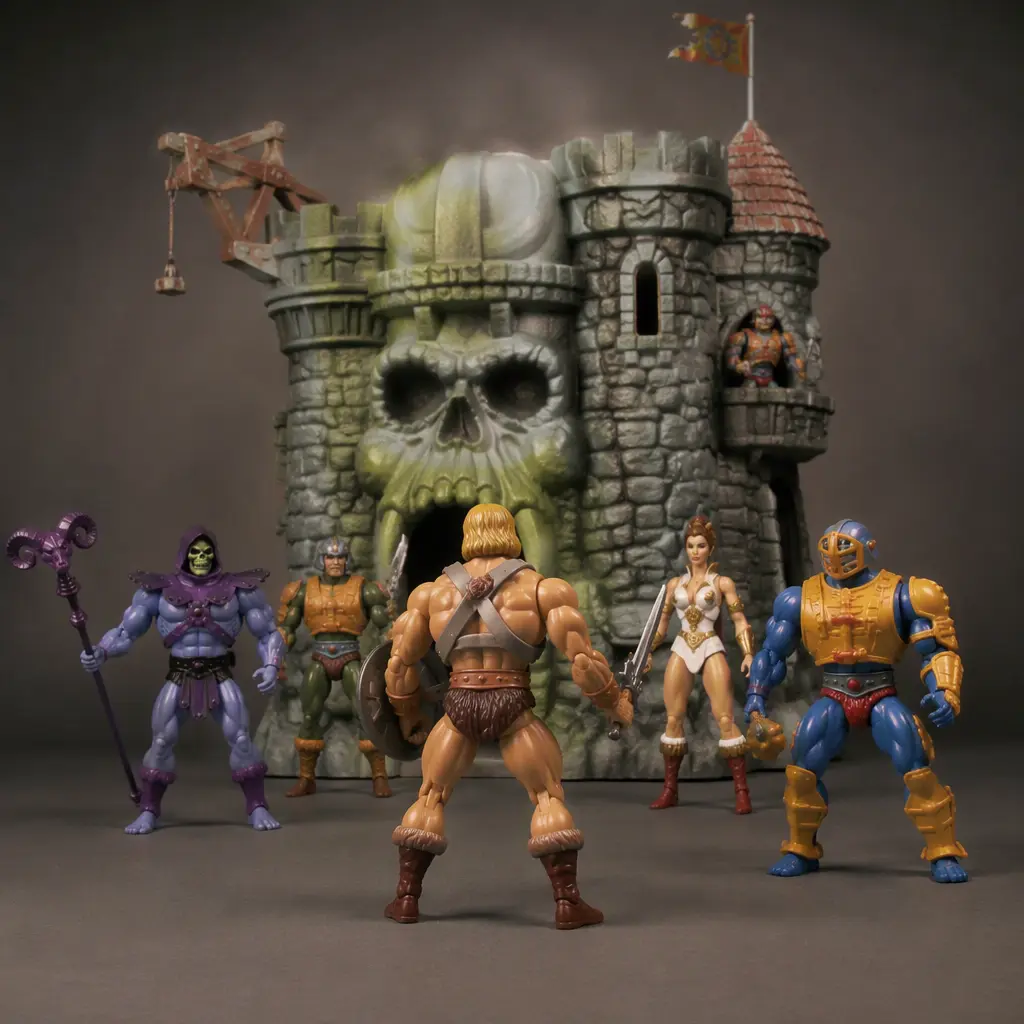
Few toy lines captured the feel of 1980s pop culture as completely as Masters of the Universe. Introduced at a moment when toy companies were beginning to tie cartoons, comics, and merchandising together more aggressively, the line transformed simple action figures into part of a much larger fantasy universe. With barbarian heroes, skull-faced villains, oversized weapons, and brightly colored vehicles, the series stood out immediately on toy shelves. Even people who never owned the figures often remember the atmosphere around them: after-school cartoons, dramatic mini-comics packed into toy packages, and a world that felt somewhere between science fiction and myth.
Where it came from
Masters of the Universe debuted in 1982 through Mattel during a competitive era for boys' action toys. The company had seen success with fashion dolls but wanted a line that could compete in the growing action-figure market. Early development drew from sword-and-sorcery trends popular in movies and paperback fantasy art at the time. Instead of pursuing realism, the design team leaned into exaggerated physiques, colorful armor, and a strange blend of ancient fantasy and futuristic technology.
The original figures were larger and more muscular than many competing toys of the era, giving them a distinctive shelf presence. He-Man, Skeletor, Man-At-Arms, and the rest of the early cast arrived with mini-comics that established the fictional world of Eternia. Soon afterward, the animated television series expanded that mythology into a daily after-school event. This combination of toys and storytelling helped define a new model for children's entertainment, where the toy line and the narrative constantly reinforced each other.
Why it works
The appeal of Masters of the Universe comes partly from how direct and visually readable the toys are. Each figure has a strong silhouette and a clear personality. Children could instantly tell heroes from villains based on colors, armor, creature features, or facial expressions. The toys were also designed for tactile play. Thick limbs, simple action features, and large accessories made them durable enough for energetic battles on living-room floors.
The world itself also invited imagination. Eternia was never limited to a single genre. One figure might resemble a barbarian warrior while another looked like a robot, beast creature, or cosmic wizard. That flexibility allowed children to create stories that mixed castles, spaceships, monsters, and magic without needing strict rules. The line encouraged broad imaginative play rather than careful screen accuracy.
- Large, muscular figure designs that stood out from smaller action figures of the time
- Fantasy and science-fiction themes blended into a single toy universe
- Distinctive villains and heroes with memorable accessories and color schemes
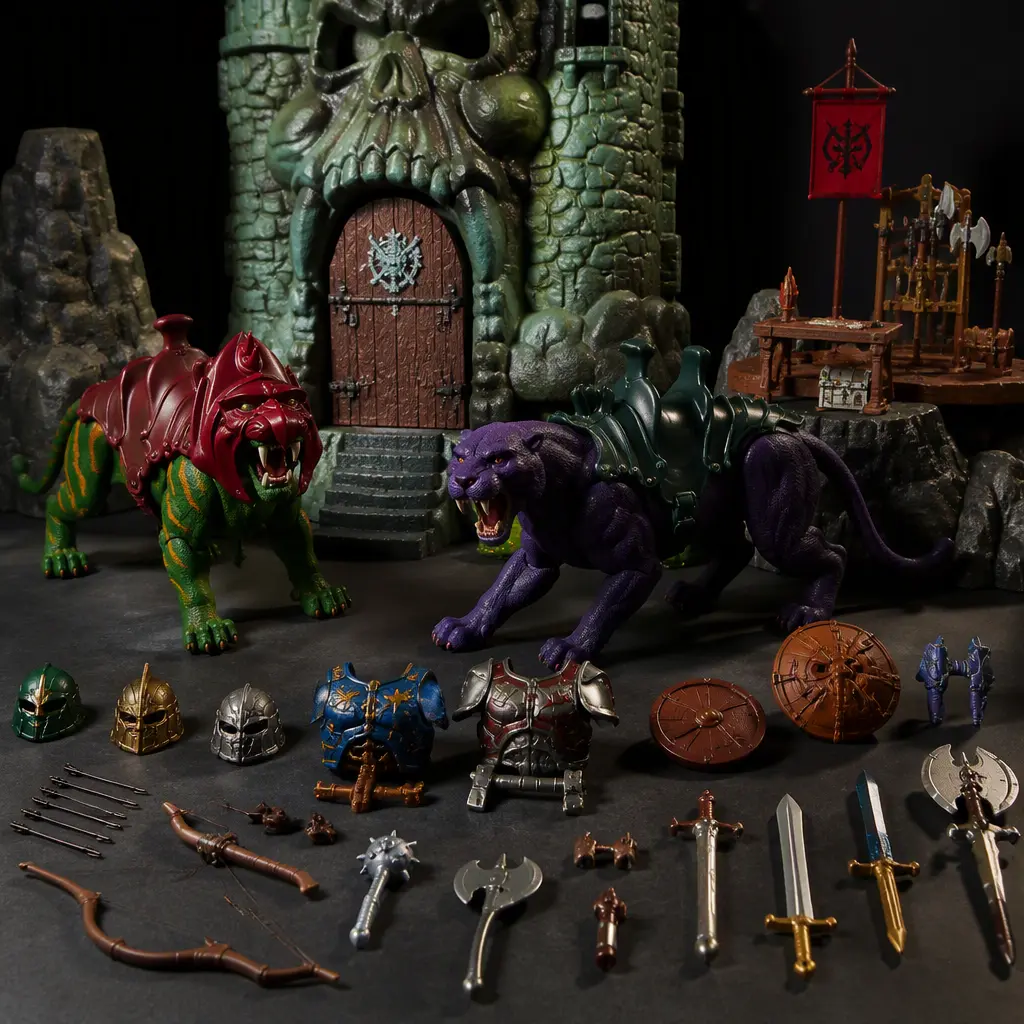
- Vehicles, creatures, and castle playsets that expanded storytelling possibilities
- Mini-comics and cartoons that gave children instant backstory and character roles
Who it's for
Originally marketed toward elementary-school children, Masters of the Universe still attracts a surprisingly wide audience today. Younger kids often respond to the bold visual design and straightforward good-versus-evil storytelling. Older collectors, meanwhile, are drawn to the line as a symbol of 1980s toy culture and early multimedia branding. Parents who grew up with the franchise frequently introduce it to their own children through newer animated series and updated figure releases. The figures tend to appeal most to children who enjoy imaginative adventure play rather than highly detailed simulation or electronic features.
Variants and what to look for today
Over the decades, Masters of the Universe has gone through several revivals. Some modern versions stay close to the chunky proportions and bright colors of the original 1980s toys, while others use more detailed sculpting aimed at adult collectors. Animated reboots and streaming-era adaptations have also introduced softer redesigns intended for younger audiences. Because the franchise has remained active for so long, shoppers today can usually choose between retro-inspired play figures and more display-oriented collectibles.
Condition matters heavily for vintage toys from the original era. Loose joints, worn paint, missing armor pieces, and damaged elastic components are common in older figures. Reproductions and unofficial copies also circulate widely, especially online. For casual buyers, modern reissues can provide a simpler way to experience the look and feel of the originals without the fragility or collector pricing attached to authentic early releases.
- Retro-style reissues that recreate the original toy proportions
- Collector-focused figures with extra articulation and display accessories
- Animated-series versions designed for younger children
- Castle and vehicle playsets that echo the original fantasy aesthetic
- Vintage figures that may require checking for missing accessories or worn joints
Frequently asked questions
Was Masters of the Universe created for the cartoon?
No. The toy line came first in 1982, and the animated series followed afterward to expand the world and support the characters. The toys, mini-comics, and cartoon were designed to work together as a connected experience.
Why were the original figures so muscular?
The exaggerated physiques helped the figures stand out visually and physically on store shelves. The larger bodies also made the toys feel durable and powerful in children's hands, reinforcing the heroic fantasy theme.
Are modern versions compatible with older toys?
Some retro-inspired releases are designed to resemble and roughly scale with vintage figures, but compatibility varies depending on the specific line. Collector-oriented versions are often larger, more detailed, or more articulated than the originals.
Why does the franchise still have fans decades later?
Masters of the Universe arrived at a key moment in toy history and left a strong visual impression. Its mix of fantasy, science fiction, monsters, and adventure remains easy to recognize, and many adults remember the line as part of a broader childhood media experience tied to cartoons and imaginative play.
More than forty years after its debut, Masters of the Universe remains one of the clearest examples of how toys evolved into full entertainment ecosystems. The figures themselves were simple, sturdy, and visually bold, but the surrounding stories gave them unusual staying power. Whether approached as nostalgic collectibles, children's adventure toys, or a milestone in marketing history, the line still represents a major turning point in the relationship between play and storytelling.