Peg Dolls vs Action Figures for Open-Ended Play
Compare peg dolls and action figures for ages 3–5, including storytelling style, durability, sibling sharing, storage, and supervision needs for everyday play.
Compare prices and availability
Check current prices and availability for this guide on eBay.
As an eBay Partner, we may be compensated if you make a purchase.
Peg dolls and action figures can both support imaginative play, but they encourage different kinds of storytelling and fit different family routines. For children aged 3–5, the choice often comes down to how much structure a child enjoys in pretend play, how the toys will be shared with siblings, and how much noise, clutter, and character-based media parents want in the playroom. Peg dolls are usually simple wooden figures with minimal details, while action figures tend to have defined characters, accessories, and recognizable roles. Neither option is automatically better for every child. The most useful choice depends on how your child naturally plays and how much flexibility you want the toy to have over time.
What to look for
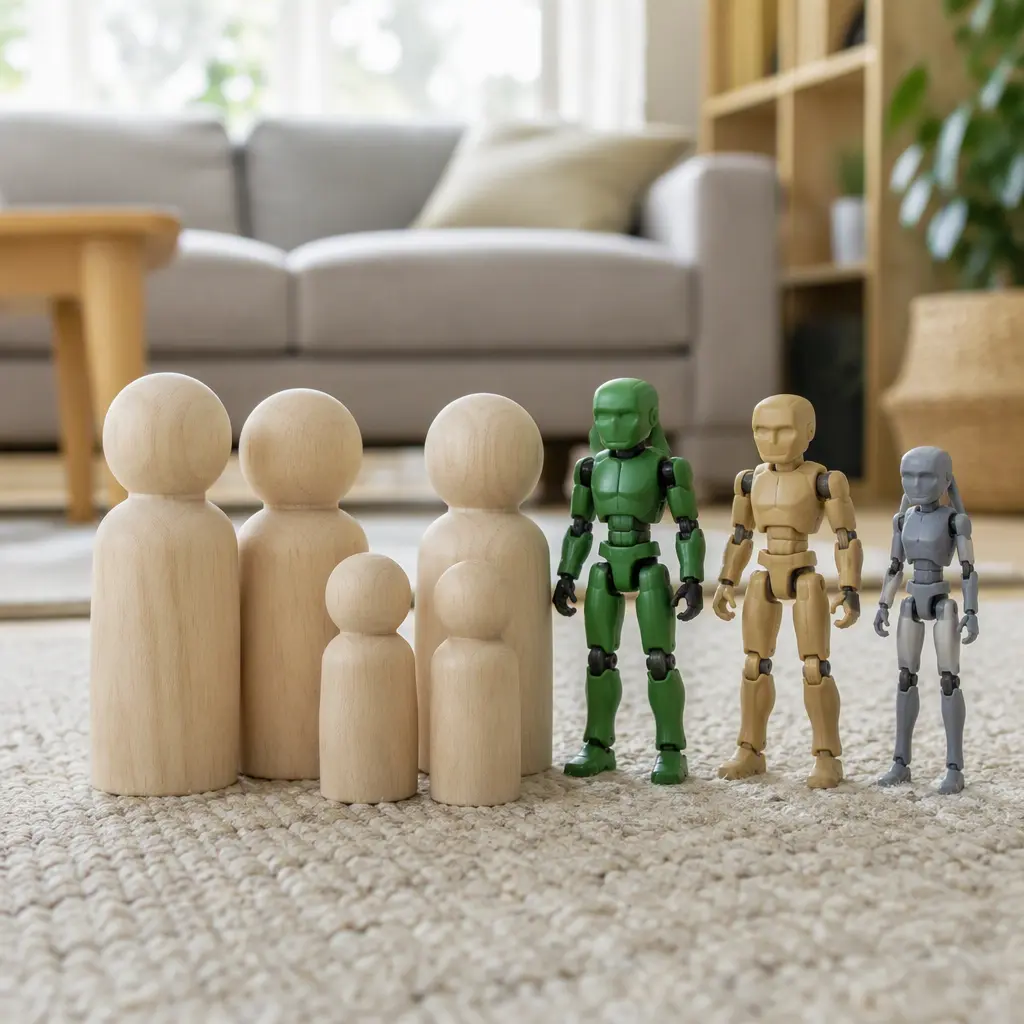
Open-ended toys work best when they match a child’s attention span, motor skills, and play habits. Some children create long pretend scenarios from very simple objects, while others prefer toys with clear identities and dramatic roles. Storage space, cleaning, durability, and sibling dynamics also matter more than many parents expect, especially in homes where toys are shared across ages.
- Choose peg dolls if your child enjoys building worlds, assigning roles, or combining toys with blocks, loose parts, or play silks.
- Choose action figures if your child prefers recognizable heroes, creatures, vehicles, or story-driven adventures.
- Look for rounded edges and sturdy construction, especially for younger preschoolers who still mouth toys or throw them during active play.
- Consider accessory load. Action figures often come with small removable pieces that are easy to lose and may not suit homes with babies or toddlers.
- Think about noise and overstimulation. Peg dolls are usually quiet and simple, while licensed action figures can encourage faster-paced, media-inspired play.
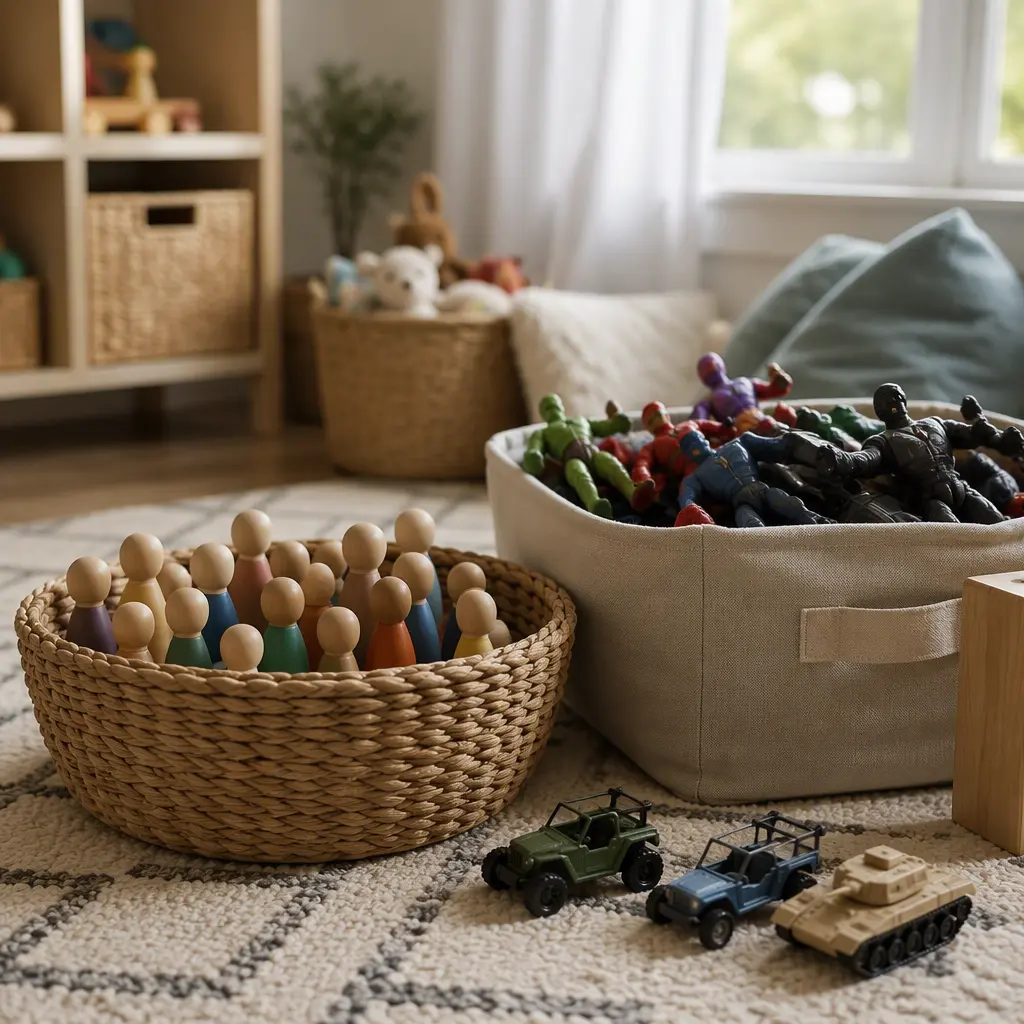
- Check storage needs. A basket of peg dolls stores compactly, while larger figure collections and accessories can spread across multiple bins.
- For sibling sharing, simpler toys often create fewer ownership disputes because they are not tied to one specific character or storyline.
- If durability matters for travel or outdoor use, solid wood peg dolls generally tolerate rough handling well, though painted finishes can chip over time.
Age suitability
For ages 3–5, both toy types can work well when matched to developmental stage and supervision level. Younger preschoolers often benefit from the simplicity of peg dolls because there are fewer fragile parts and fewer fixed story expectations. A child can turn one peg doll into a parent, animal caretaker, shopkeeper, or imaginary creature within the same afternoon. By ages 4–5, many children begin gravitating toward more detailed dramatic play with battles, rescues, teams, or character relationships, which can make action figures more engaging. Some children move back and forth between both styles depending on mood. A highly imaginative child may continue preferring minimalist toys long after peers shift toward branded characters, while another child may use action figures as a social bridge during cooperative play with friends.
Options compared
Peg dolls are often chosen by parents looking for quieter, screen-free play with broad creative possibilities. Because the figures have limited facial detail and no fixed backstory, children supply more of the narrative themselves. This can support flexible storytelling and cooperative play where siblings negotiate roles together. Peg dolls also combine easily with other open-ended toys such as wooden blocks, train tracks, dollhouses, nature collections, or sensory bins. They tend to suit calmer play spaces and families trying to reduce the influence of television or movie tie-ins.
Action figures usually appeal more strongly to children who enjoy action sequences, recognizable personalities, and dramatic conflicts. They can encourage energetic social play and may hold attention longer for children who prefer concrete characters over abstract imagination. For some preschoolers, familiar figures make pretend play easier because the character already has a clear voice, role, or goal. The trade-off is that highly specific characters sometimes narrow the storyline. Children may replay scenes from media rather than inventing their own scenarios. Action figures can also create more friction between siblings when one child feels attached to a particular character.
- Peg dolls: best for open-ended storytelling, mixed-age play, quiet environments, compact storage, and combining with other Montessori-style or Waldorf-inspired toys.
- Peg dolls: less appealing for children who strongly prefer recognizable characters, moving joints, or dramatic action play.
- Action figures: best for children who enjoy role-play battles, heroes, fantasy worlds, vehicles, and collaborative adventure games.
- Action figures: less practical for minimalist playrooms because collections and accessories can grow quickly.
- Wooden peg dolls are typically lightweight and portable for travel bags or restaurant play.
- Action figures with articulated joints may support more dynamic poses but can wear out faster under rough preschool handling.
- Families with younger siblings may prefer larger, simple figures to reduce small-part concerns and cleanup time.
Frequently asked questions
Do peg dolls help imagination more than action figures?
Not necessarily. Peg dolls encourage children to invent more details because the toys are intentionally simple, but many children also create rich stories with action figures. The difference is usually in storytelling style rather than creativity level. Minimalist toys invite broader interpretation, while character toys often inspire more dramatic or narrative-driven play.
Are action figures too overstimulating for preschoolers?
That depends on the specific toy and the child using it. Simple figures without lights or sound effects can still support healthy pretend play. Overstimulation is more likely when toys are heavily tied to fast-paced media, include electronic features, or arrive with large accessory sets that overwhelm cleanup and focus.
Which option works better for siblings?
Peg dolls are often easier to share because they are less tied to ownership of a specific character. Children can swap roles freely during play. Action figures can still work well for siblings, especially if there are enough figures to reduce competition, but recognizable heroes and villains sometimes lead to disagreements over who gets the preferred character.
Are wooden peg dolls durable enough for everyday use?
Solid wooden peg dolls are generally durable for indoor and outdoor pretend play. They can survive drops and rough handling well, although painted finishes may chip after heavy use. Because they have few moving parts, there is less mechanical wear compared with articulated plastic figures.
Is it reasonable to keep both types of toys?
Many families find that a mix works well. Peg dolls can support quieter creative play, while action figures provide excitement and social storytelling. Rotating toys instead of leaving everything available at once can help maintain interest without overwhelming the play space.
For most families, the better choice is the one that matches a child’s natural play style and fits the household routine. Peg dolls usually suit parents seeking flexible, low-clutter, screen-free play with broad imaginative potential. Action figures often suit children who thrive on dramatic stories, recognizable roles, and energetic group play. Watching how your child already plays with stuffed animals, blocks, or dress-up items can offer the clearest clue about which direction will hold their attention over time.