Wooden Dollhouses vs Fold-Up Fabric Houses
Comparing wooden dollhouses and fold-up fabric play houses for children aged 3–5, with practical advice on storage, durability, cleanup, noise, and imaginative play in smaller homes.
Compare prices and availability
Check current prices and availability for this guide on eBay.
As an eBay Partner, we may be compensated if you make a purchase.
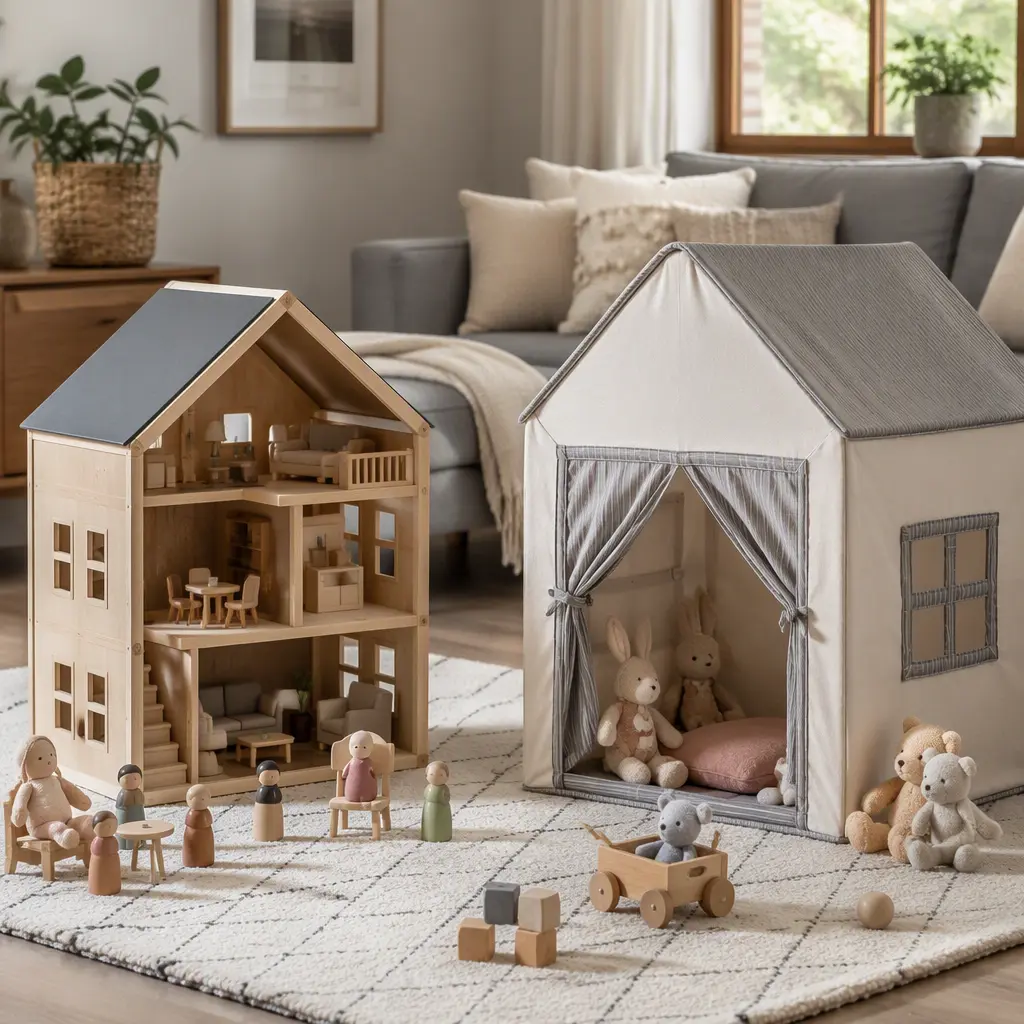
For families with limited storage space, choosing between a wooden dollhouse and a fold-up fabric play house often comes down to daily practicality as much as play value. Both support imaginative, screen-free play for children aged 3–5, but they fit differently into family routines. Wooden dollhouses usually offer structured pretend play with small figures and furniture, while fold-up fabric houses encourage larger movement-based role play and are easier to pack away. The better choice depends on available floor space, how often the toy needs to be stored, the child’s play style, and how much supervision is realistic during everyday use.
What to look for
The most useful dollhouse or play house is usually the one that fits comfortably into daily life rather than the largest or most detailed option. In smaller homes, storage and setup time matter just as much as appearance. Parents may also want to consider how independently a child can use the toy, whether it creates clutter, and how durable it will remain after frequent folding, carrying, or rough play.
- Check the footprint carefully, including opened size and storage size for fold-up models.
- For wooden dollhouses, look for rounded edges and sturdy construction that can handle repeated moving.
- Fabric houses are lighter and easier to relocate but may collapse or wrinkle with rough use.
- Consider accessory size. Small dolls and furniture pieces can quickly create clutter and may need separate storage bins.
- Think about noise levels. Wooden accessories tapping on hard surfaces can be louder than soft fabric play.
- Choose washable materials or wipe-clean surfaces if snacks, markers, or outdoor play are likely.
- Look at play flexibility. Fabric houses often support active role play, while wooden dollhouses suit quieter storytelling play.
- If siblings will share the toy, wider openings and simpler layouts are usually easier for cooperative play.
Age suitability
Children aged 3–5 are typically developing longer pretend-play sequences, making both toy types appropriate when matched to developmental stage. Younger preschoolers often enjoy fabric houses because they can physically enter or interact with them using larger movements. This can feel more intuitive than arranging small accessories. By ages 4–5, many children begin creating more detailed stories with miniature figures, furniture, and room setups, which is where wooden dollhouses often become more engaging. Families with younger siblings should pay attention to small accessory pieces, since miniature furniture and dolls may not suit homes with babies or toddlers who still mouth objects.
Options compared
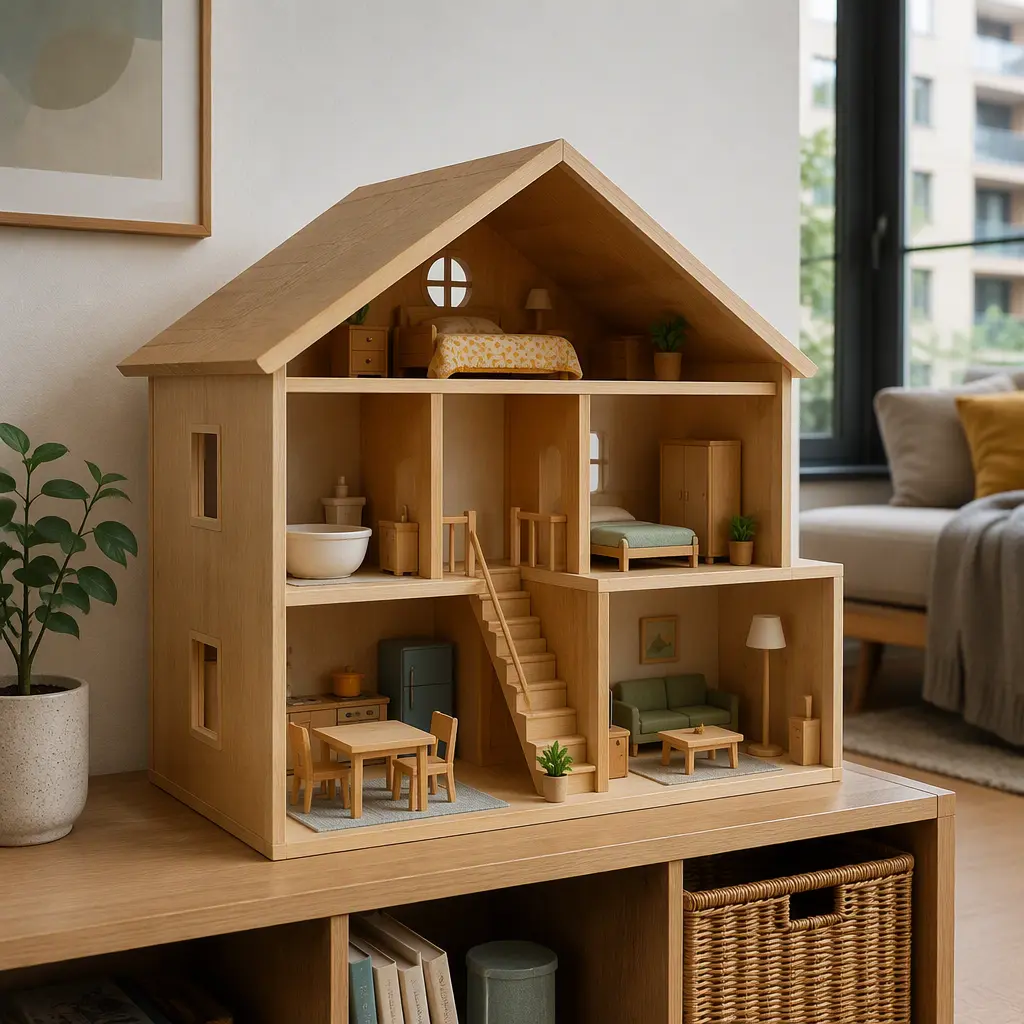
Wooden dollhouses tend to work best for families who can dedicate a permanent or semi-permanent play area. They are usually heavier, harder to store, and less portable, but they also feel more stable during play. Many children return to them repeatedly because miniature furniture and figures encourage storytelling, organizing, and social role play. For quieter households or apartments with downstairs neighbors, wooden accessories can occasionally create more noise when pieces are dropped or dragged across floors.
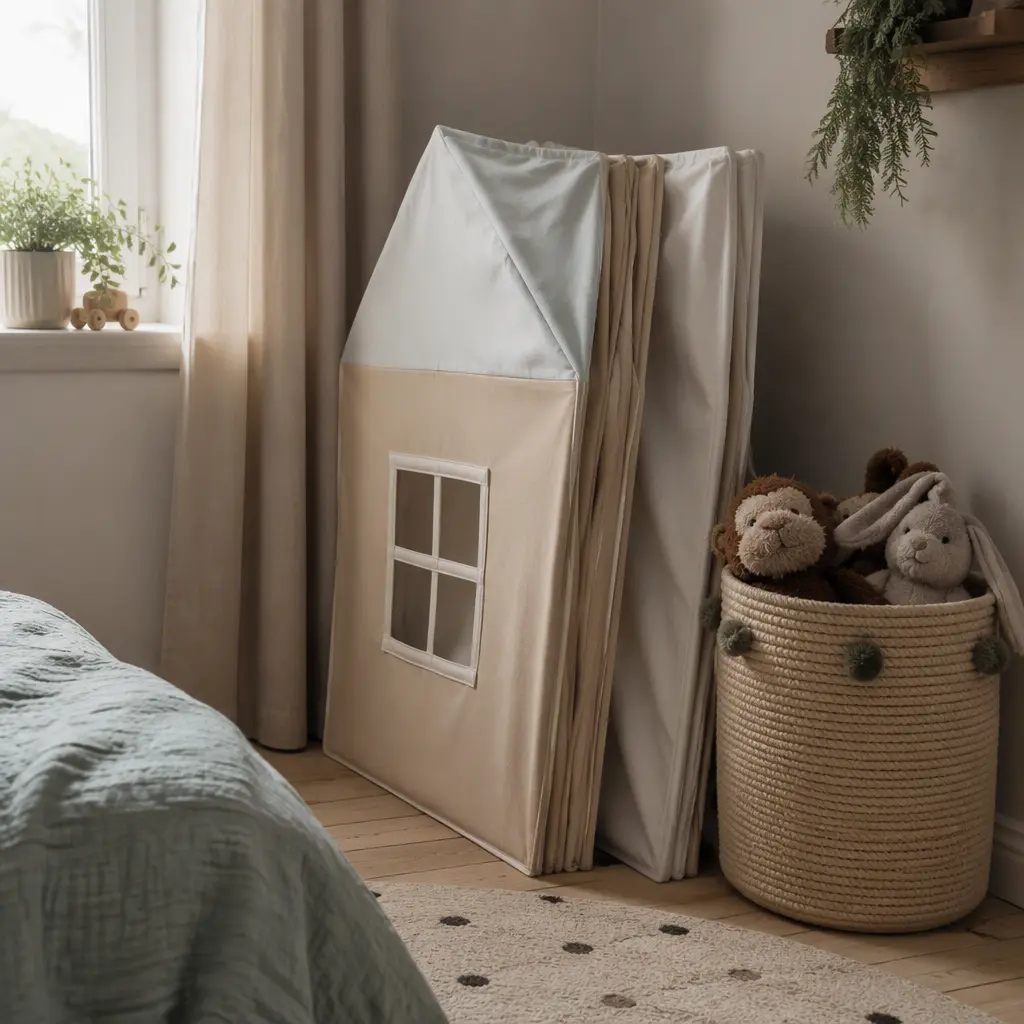
Fold-up fabric houses are often the easier choice for homes where toys must disappear quickly at the end of the day. They are lightweight, easier to move between rooms, and commonly collapse into flat storage. This flexibility can matter in shared living spaces or smaller bedrooms. They also support larger physical play, which can suit energetic children who lose interest in small accessories. The trade-off is durability. Fabric walls, mesh windows, and flexible frames may wear faster than wood, especially if children climb on them or repeatedly fold and unfold them roughly.
- Choose a wooden dollhouse if your child enjoys arranging furniture, creating detailed stories, or returning to familiar pretend-play routines.
- Choose a fold-up fabric house if quick storage, portability, and active imaginative play are bigger priorities.
- Wooden styles generally suit quieter independent play sessions and display well in playrooms or bedrooms.
- Fabric styles are often better for temporary setups in living rooms, apartments, or shared family spaces.
- Families with limited storage may prefer collapsible fabric designs over large fixed wooden structures.
- Children who become frustrated by tiny accessories may engage longer with larger fabric spaces and plush toys.
- Wooden dollhouses can last through multiple age stages but may eventually require dedicated shelving or storage space.
Frequently asked questions
Are wooden dollhouses too heavy for small apartments?
Some larger wooden dollhouses are difficult to move regularly, especially in apartments where toys need frequent cleanup. Compact or bookshelf-sized versions are usually more practical for smaller homes. Checking dimensions before buying is important because photos can make dollhouses appear smaller than they are.
Do fabric play houses get messy quickly?
Fabric houses themselves are usually simple to tidy because they contain fewer small pieces. However, children often bring blankets, stuffed animals, and extra toys inside them, which can spread clutter across a room. Choosing a model that folds down quickly can make cleanup easier at the end of the day.
Which option encourages more imaginative play?
Both can support strong imaginative play, but in different ways. Wooden dollhouses often encourage storytelling with characters and household routines, while fabric houses support movement-based pretend scenarios such as camping, reading corners, or make-believe shops. The better fit depends on how the child naturally prefers to play.
Are small accessories a problem for preschoolers?
Many children aged 3–5 manage miniature furniture and dolls well, but small parts can still create cleanup challenges or safety concerns around younger siblings. Families who want lower-maintenance play may prefer larger accessories or fabric setups with fewer loose items.
Which option lasts longer?
Wooden dollhouses generally hold up better over years of indoor use if stored carefully and kept dry. Fabric houses are lighter and more portable but may show wear sooner at seams, folding points, or support frames. Longevity often depends on how frequently the toy is moved, folded, or climbed on.
For families short on space, the most practical choice is often the toy that can stay usable without creating daily frustration. Wooden dollhouses offer long-term pretend-play depth and visual appeal but require more dedicated space and organization. Fold-up fabric houses trade some durability and detail for flexibility, portability, and faster cleanup. Matching the toy to the child’s play habits and the household’s storage reality usually leads to the better long-term value.