Wooden vs Plastic Dollhouses for Small Homes
Choosing a dollhouse for a small home means balancing storage, durability, noise and doll compatibility. This guide compares wooden and plastic dollhouses for ages 3–5.
Compare prices and availability
Check current prices and availability for this guide on eBay.
As an eBay Partner, we may be compensated if you make a purchase.
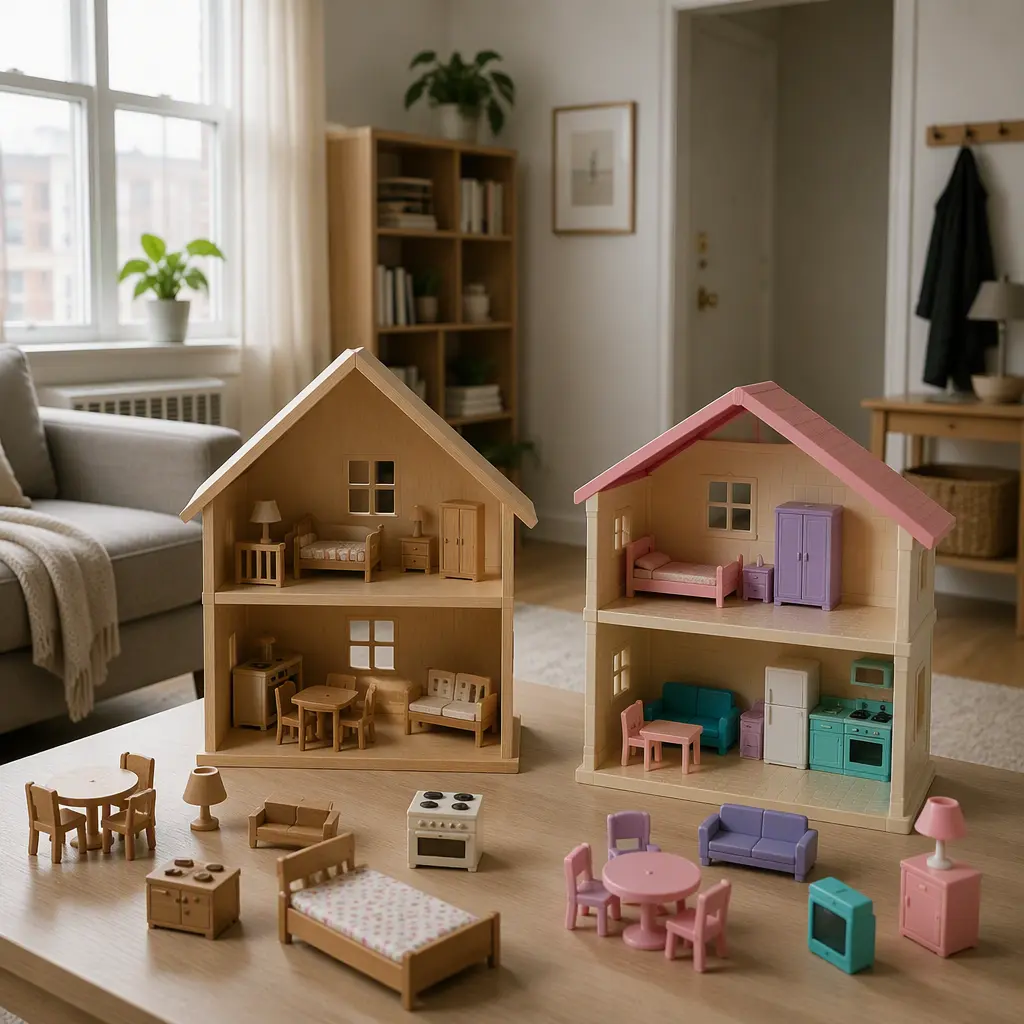
A dollhouse can become a long-running play toy for preschoolers, but in smaller homes the size, storage footprint and noise level matter just as much as appearance. Parents choosing between wooden and plastic dollhouses often find that each type solves a different problem. Wooden dollhouses usually focus on durability, classic styling and open-ended play, while plastic versions tend to be lighter, easier to move and more forgiving around spills or rough handling. For children aged 3–5, the best choice often depends less on looks and more on where the toy will live, which dolls are already in the toy box and how much adult setup or supervision is realistic.
What to look for
The most practical dollhouse is usually the one that fits smoothly into daily routines. In small homes, oversized toys can quickly become floor clutter, especially if they cannot be folded, stacked or easily moved. Material also affects maintenance. Wooden dollhouses are often heavier and sturdier, while plastic versions are typically lighter and simpler to wipe clean. Doll compatibility is another overlooked issue. Some dollhouses are designed for very small figures, while others fit larger fashion dolls or toddler-safe figures. Checking scale before buying can prevent frustration and extra spending on replacement accessories.
- Measure both floor space and vertical space before choosing a dollhouse, especially if it will stay assembled full time.
- Look for rounded edges and chunky furniture pieces for children aged 3–5 to reduce frustration and accidental breakage.
- Check whether existing dolls will fit through doors, beds and furniture openings.
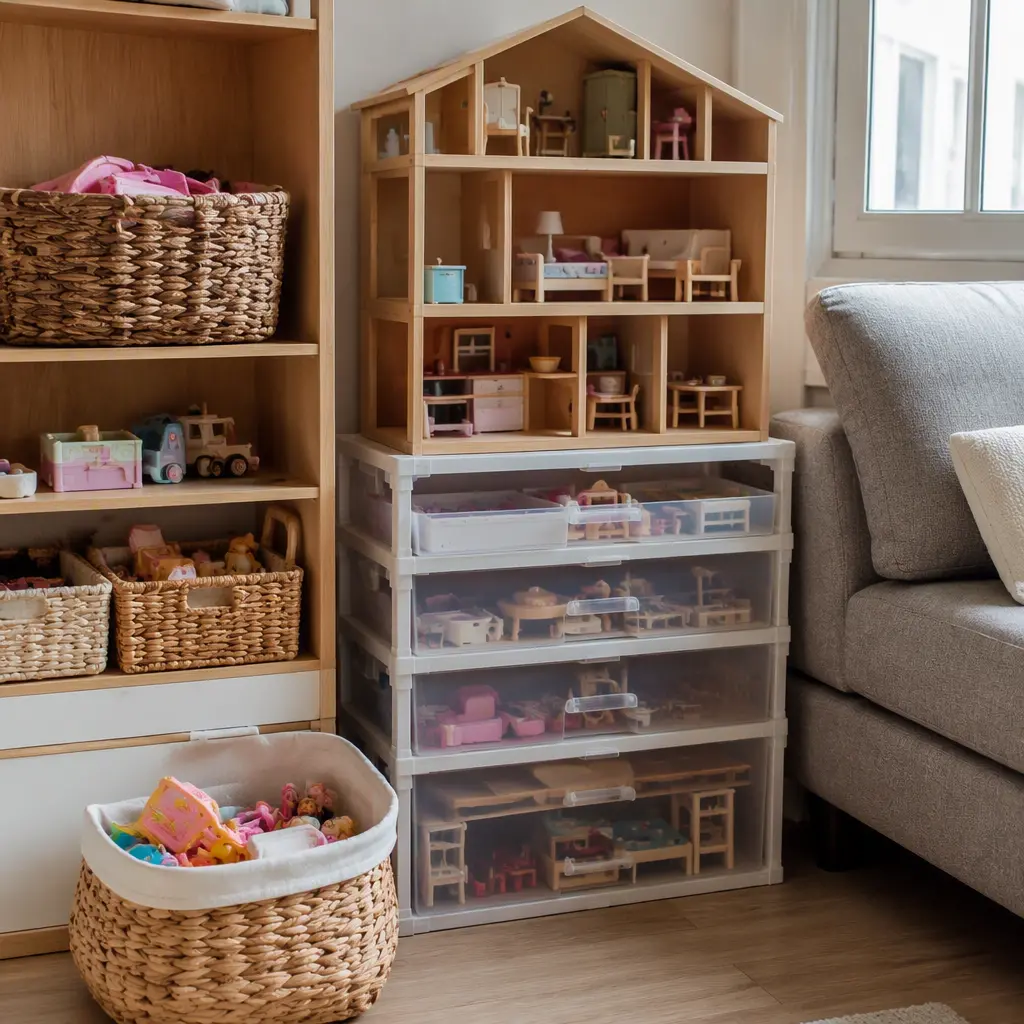
- Consider storage style: foldable, corner-fit and shelf-height designs work better in apartments or shared bedrooms.
- Wooden dollhouses are often quieter during play, while lightweight plastic furniture can create more noise on hard floors.
- Think about cleanup time. Sets with many tiny accessories can become difficult to manage in smaller spaces.
- If siblings will share the toy, wider open-sided designs usually support cooperative play more easily.
Age suitability
For ages 3–5, simpler dollhouses are usually easier to enjoy than highly detailed collector-style sets. Preschoolers benefit from sturdy furniture, easy-access rooms and pieces large enough for independent play. Wooden dollhouses often suit children closer to age 4 or 5 because they can be heavier and may require more careful setup. Plastic dollhouses can work well for younger preschoolers because they are lighter to reposition and sometimes include fewer fragile accessories. However, some very lightweight plastic sets can tip more easily during energetic play. Parents should also check whether accessories include small parts that may not suit younger siblings sharing the same play area.
Options compared
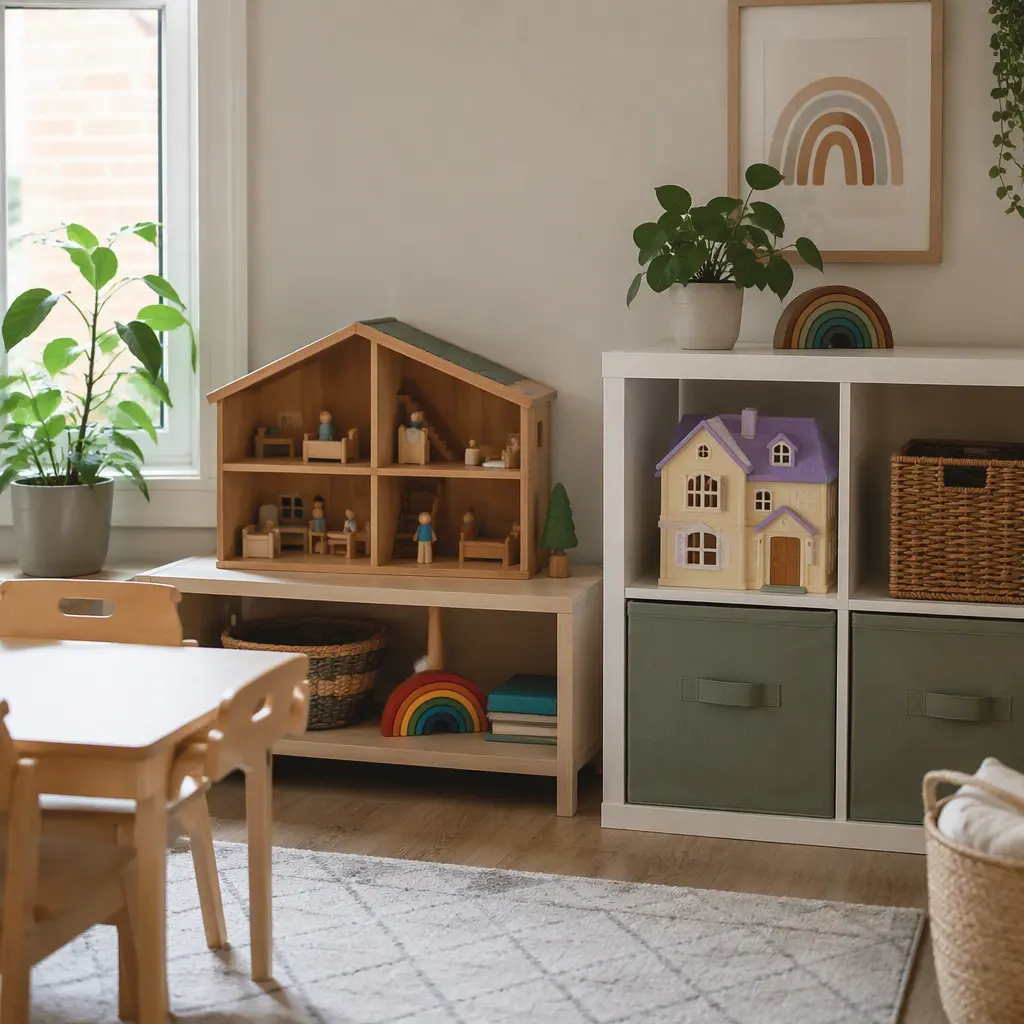
Wooden dollhouses are often chosen for long-term durability and a furniture-like appearance that blends into living spaces. They tend to feel more stable during play and may survive years of use if treated carefully. Their extra weight can also be helpful in preventing tipping. In small homes, though, that same weight becomes a drawback when the toy needs to move between rooms or be packed away regularly. Larger wooden dollhouses also tend to stay assembled permanently, which may not suit families already managing limited floor space.
Plastic dollhouses usually make more sense for flexible storage and portability. Many are lighter, easier to carry and quicker to clean after messy play. Some fold closed or separate into sections, which helps when toys must fit into closets or under beds. The trade-off is that lightweight construction may feel less stable, and thin plastic furniture can crack or warp over time. Noise can also become a factor in apartments because hard plastic accessories tapping against floors and walls may be louder than wooden pieces.
- Choose a wooden dollhouse if you want a longer-lasting toy, quieter play and a design that can stay visible in shared living spaces.
- Choose a plastic dollhouse if you need easier storage, lower carrying weight or a toy that can move between rooms frequently.
- Open-front wooden houses often suit cooperative sibling play because multiple children can reach rooms at once.
- Compact foldable plastic houses may suit apartments or homes where toys must be packed away daily.
- Families using existing fashion dolls should carefully compare doll height with room scale before buying either type.
- Children who enjoy rearranging furniture repeatedly may prefer lighter plastic accessories, while children who play more gently may enjoy heavier wooden pieces.
- If storage is extremely limited, smaller shelf-sized dollhouses with fewer accessories are often more practical than multi-story sets regardless of material.
Frequently asked questions
Are wooden dollhouses safer than plastic ones?
Safety depends more on construction quality and age suitability than on material alone. Wooden dollhouses can feel sturdier, but they may also be heavier if tipped or climbed on. Plastic dollhouses are lighter but can include smaller snap-together parts. Regularly checking for loose pieces matters with either type.
Which dollhouse type works best in apartments?
Compact plastic dollhouses often work well in apartments because they are easier to move and sometimes fold for storage. However, a smaller wooden dollhouse with open shelving can also fit well if it doubles as room decor and stays in one dedicated spot.
Can preschoolers use dollhouses with older siblings?
Shared play can work well if accessories are age-appropriate for the youngest child. Older children may enjoy smaller detailed pieces that are not suitable for ages 3–5, so families may need separate accessory bins or supervised play times.
Do dollhouses encourage useful play skills?
Dollhouse play supports imaginative storytelling, role-play and social interaction. Preschoolers often practice routines like bedtime, meals and sharing through pretend play. Open-ended dollhouses without electronic features can also encourage longer independent play sessions.
How much storage space should a dollhouse setup need?
Besides the main dollhouse itself, furniture and dolls usually need additional storage. Baskets, under-bed bins or cube shelves can help keep accessories manageable. In small homes, limiting the number of tiny accessories often makes cleanup faster and daily play more realistic.
For most families with limited space, the better dollhouse is the one that matches everyday routines rather than the largest or most detailed option. Wooden dollhouses often suit families wanting a long-lasting, display-friendly toy with quieter play, while plastic dollhouses can be easier to store and move around. Checking doll scale, storage needs and cleanup expectations before buying usually prevents the most common frustrations and helps preschoolers enjoy the toy for longer.