Soft Toys Safe for Babies Starting Solid Foods
A safety-first guide to choosing plush and fabric toys for babies who are starting solids. Learn what materials, construction details, and care features matter during messy mouthing stages.
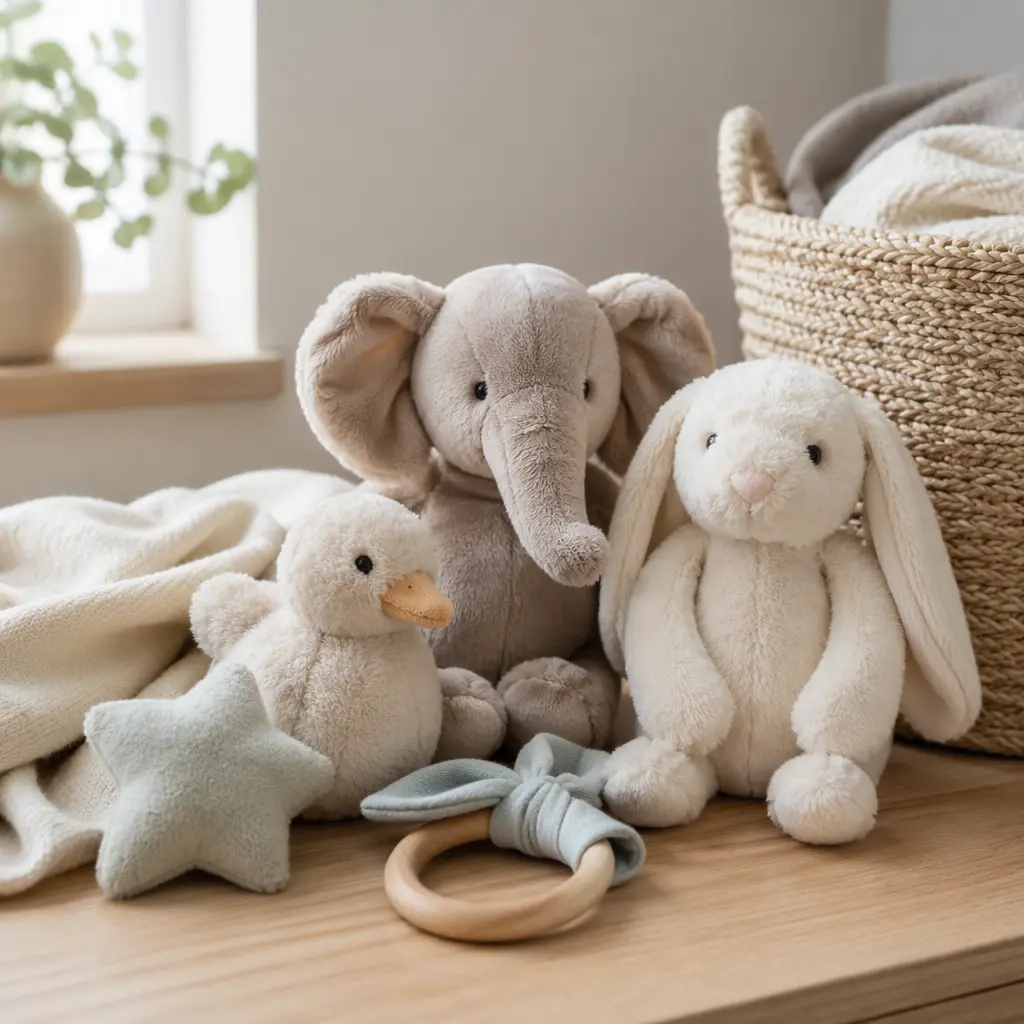
Compare prices and availability
Check current prices and availability for this guide on eBay.
As an eBay Partner, we may be compensated if you make a purchase.
When babies begin exploring solid foods, everything nearby tends to get mouthed, squeezed, and smeared. Soft toys are often within reach during feeding and play, so safety and cleanliness matter more than ever. This guide focuses on plush and fabric toys that can better handle drool, food residue, and frequent washing while staying appropriate for babies under 12 months.
What to look for
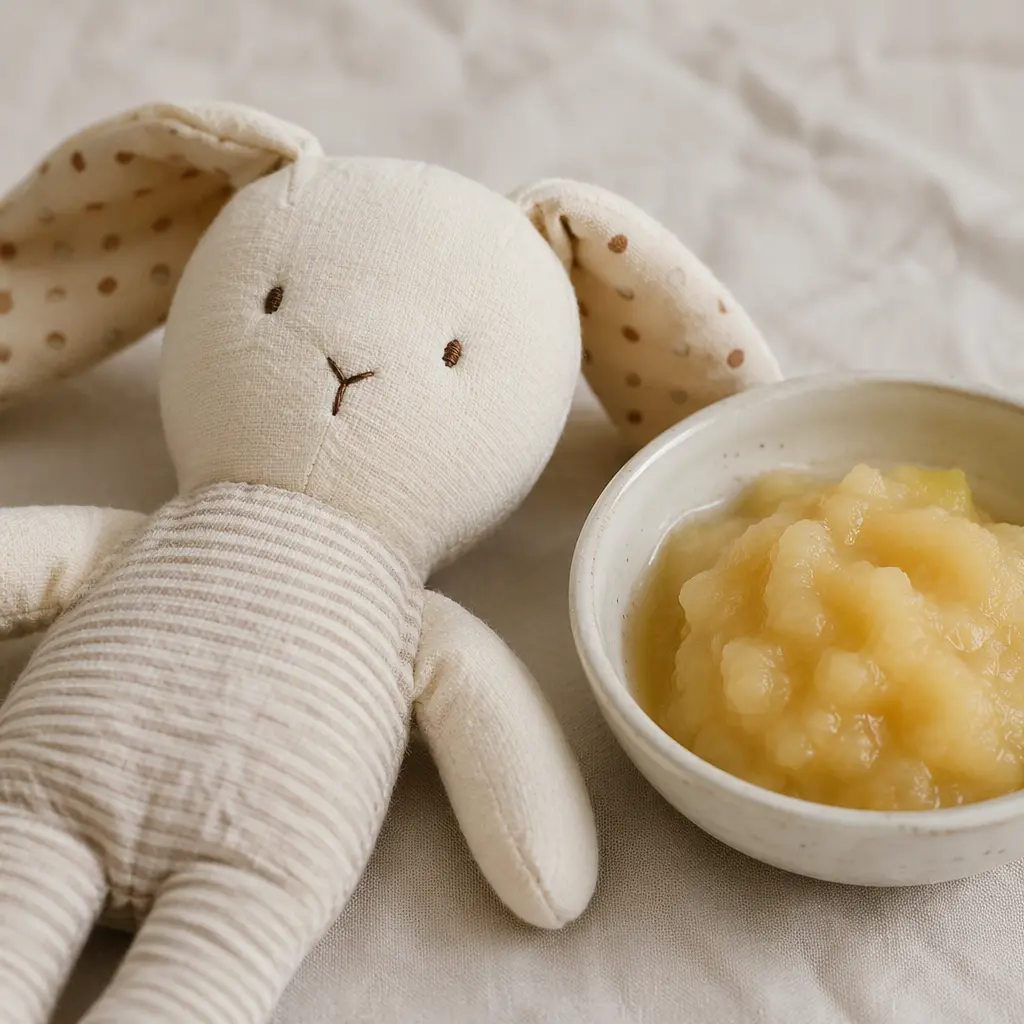
During the early feeding stage, a soft toy’s materials and construction are more important than its theme or decoration. Babies explore with their mouths, and toys may come into contact with food, saliva, and surfaces that are not perfectly clean.
- Washability: Machine-washable toys with clear care instructions are easier to keep hygienic after spills and drool.
- Simple materials: Natural fibers or clearly labeled synthetic fabrics can be easier to assess for safety and care.
- Secure stitching: Tight seams reduce the risk of filling or threads coming loose when wet or chewed.
- Minimal embellishments: Avoid buttons, ribbons, or layered textures that can trap food or detach.
- Low-pile or smooth fabric: Short, dense plush or flat fabric is easier to clean than long, shaggy fibers.
Age suitability
For babies aged 0–12 months, soft toys should be specifically labeled for infant use. At this stage, toys are often used for sensory comfort rather than imaginative play. Babies starting solids may not coordinate hands and mouth well yet, so toys are likely to be chewed, dropped, and reused quickly. Choosing toys designed for early infancy helps reduce choking risks and supports safe exploration during feeding routines.
Standout categories or types
Not all soft toys perform the same during messy stages. Some categories are better suited to frequent washing and heavy mouthing, while others are best reserved for calmer playtimes.
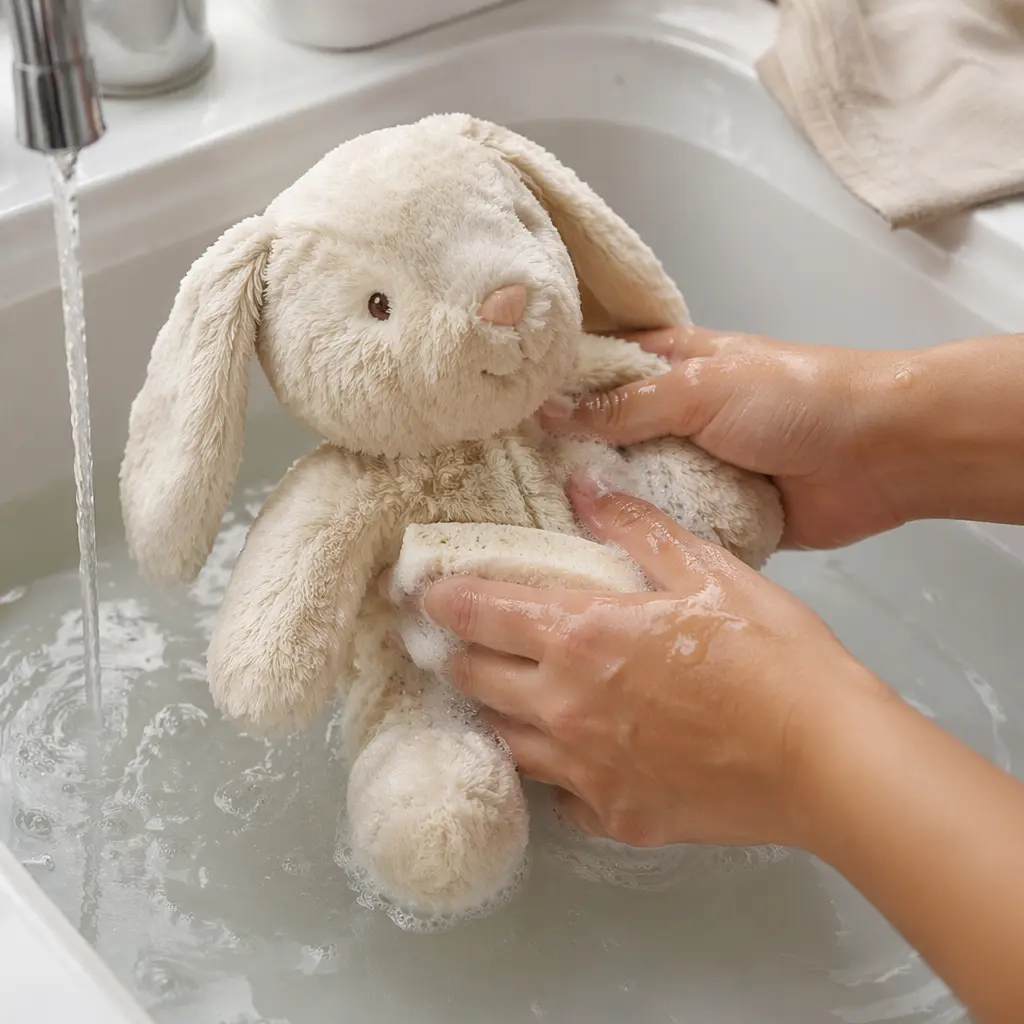
- Washable plush toys: Designed to withstand repeated machine washing without losing shape or softness.
- Fabric comforters: Small, flat comfort items with minimal bulk that dry quickly and are easy to inspect.
- Organic fabric toys: Often made with fewer dyes and finishes, which some parents prefer during mouthing phases.
- Crinkle or sensory cloth toys: Lightweight fabric toys that add sound or texture without hard components.
Frequently asked questions
Can soft toys be used during meals?
Soft toys can be nearby during meals, but they should not distract babies from eating or become heavily soiled. If a toy gets food on it, it should be cleaned before the next use.
How often should plush toys be washed at this stage?
During the transition to solids, many parents wash frequently used soft toys every few days or sooner if visibly dirty. Toys used during feeding may need washing after each messy meal.
Are fabric toys safer than hard toys for mouthing?
Fabric toys are generally softer on gums and less likely to cause bumps, but safety depends on construction. Secure seams and age-appropriate design are key for any toy.
Should soft toys be dried in a dryer?
Follow the care label. Some plush toys handle low-heat drying well, while others last longer when air-dried to prevent shrinkage or damage.
Soft toys can remain part of a baby’s routine even during the messy transition to solid foods. By focusing on washable materials, simple construction, and regular inspection, parents can choose plush and fabric toys that support comfort and exploration while keeping safety and hygiene front and center.