Melissa & Doug Ice Cream Counter and the Rise of Screen-Free Roleplay
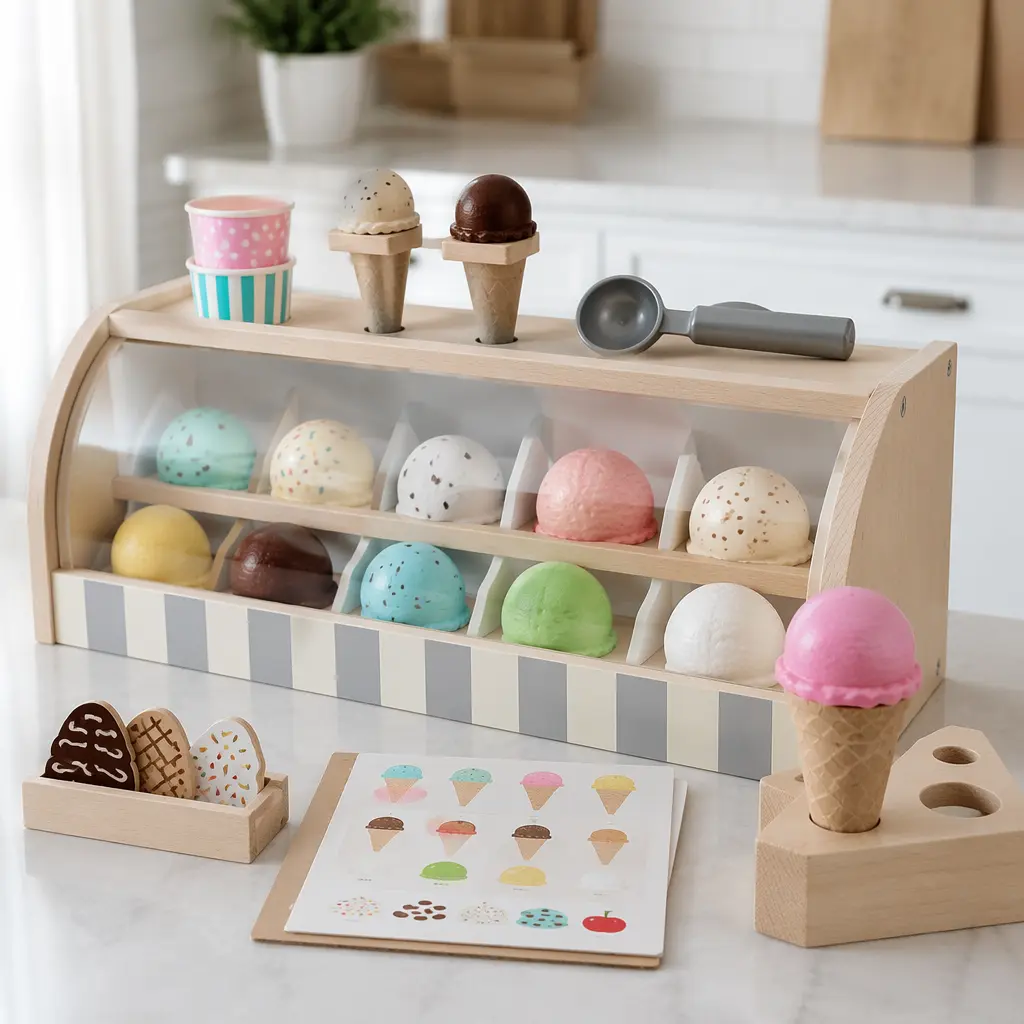
The Melissa & Doug Ice Cream Counter became a modern playroom staple by turning simple wooden scoops and pretend orders into repeatable family roleplay that feels timeless.
Compare prices and availability
Check current prices and availability for this guide on eBay.
As an eBay Partner, we may be compensated if you make a purchase.
The Melissa & Doug Ice Cream Counter arrived during a period when many parents were looking for toys that could hold a child’s attention without a screen, batteries, or complicated rules. At first glance, it is a simple pretend-play set built around wooden ice cream scoops and a countertop display. In practice, it became something more enduring: a structured roleplay activity that children could return to again and again with siblings, parents, or friends. The toy combines the familiarity of a neighborhood ice cream shop with tactile play, light problem-solving, and social interaction. That mix helped turn it from another wooden toy into a modern playroom fixture.
Where it came from
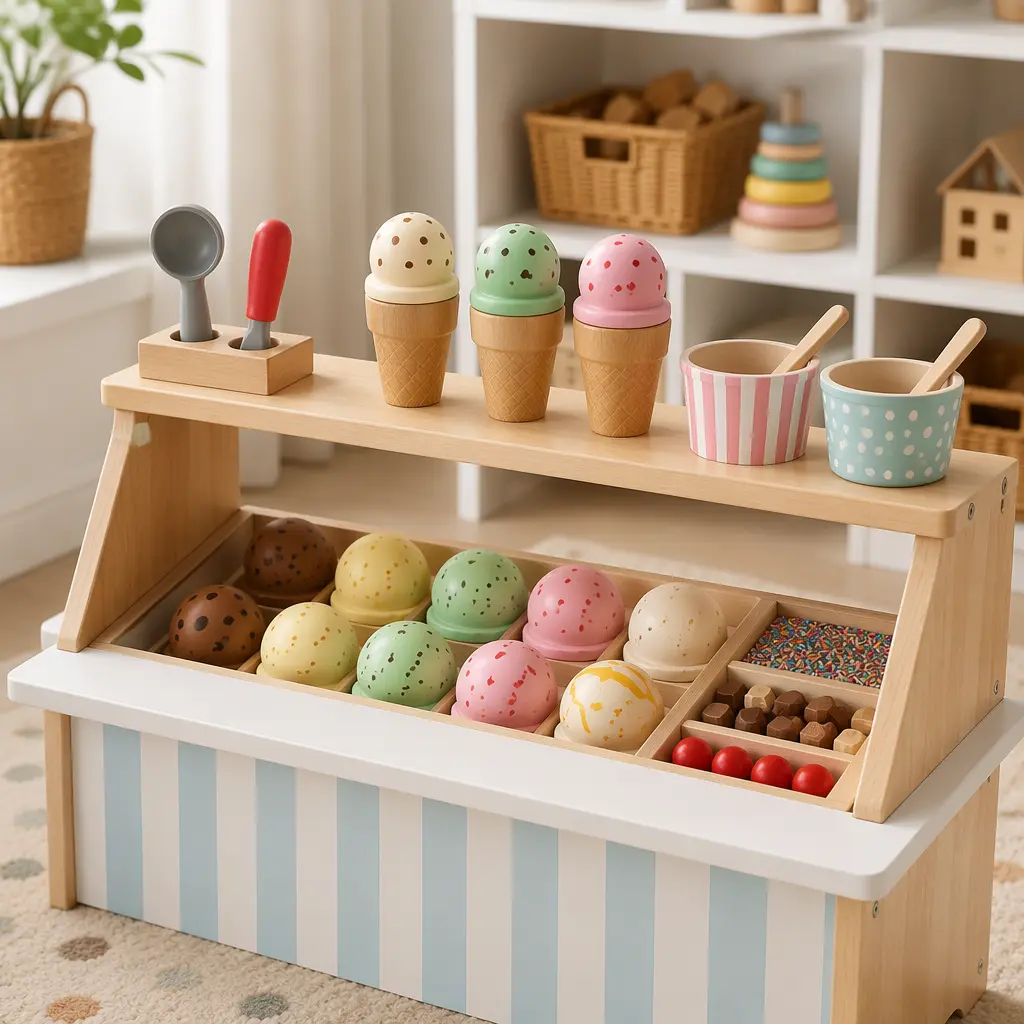
Melissa & Doug built its reputation around classic-style toys designed to encourage open-ended play. Founded in the late 1980s, the company became closely associated with wooden puzzles, pretend food, craft kits, and roleplay sets that emphasized hands-on interaction rather than electronics. The Ice Cream Counter emerged as part of a broader movement toward realistic pretend-play toys that mirrored everyday experiences children already understood.
The concept itself is straightforward: children run a miniature ice cream shop using wooden scoops, cones, cups, toppings, and serving tools. But the timing mattered. As tablets and app-based entertainment became common in homes, many families started seeking activities that encouraged conversation and imagination without feeling educational in an obvious way. The Ice Cream Counter fit neatly into that space. It borrowed the appeal of toy kitchens and grocery sets while adding a simple structure: take an order, scoop the flavors, serve the customer, and start again.
Why it works
One reason the set has endured is that it gives children enough structure to start playing immediately while still leaving room for improvisation. The scooping mechanic is especially important. Many versions use magnetic or stackable scoops that let children physically lift and transfer the pieces using a toy scooper. That tiny action creates a satisfying sense of realism and gives younger children a repeatable task they can master.
The toy also supports several styles of play at once. Some children focus on storytelling and customer service. Others treat it like sorting and matching, organizing flavors and toppings into patterns. Parents often notice that the set naturally encourages turn-taking and conversation because one person becomes the customer while another runs the shop. Unlike many novelty toys, the play pattern is flexible enough to grow with a child over several years.
- Wooden construction that feels durable and tactile
- Pretend scooping action that imitates a real ice cream counter
- Open-ended roleplay with no fixed storyline
- Accessories that support counting, sorting, and memory play
- Compact countertop format that works in bedrooms or family rooms
Who it's for
The Ice Cream Counter is generally aimed at preschool and early elementary-age children, especially those who enjoy pretend kitchens, grocery stores, or café-style roleplay. Younger children often enjoy the physical action of stacking scoops and filling orders, while older children may invent elaborate shop systems complete with menus, payment rules, and family-wide games. Adults tend to appreciate the set for different reasons. The wooden design feels less disposable than many plastic roleplay toys, and the activity naturally invites family participation. It is common for the toy to become part of a recurring evening or weekend routine where children “serve” desserts to parents, grandparents, or siblings.
Variants and what to look for today
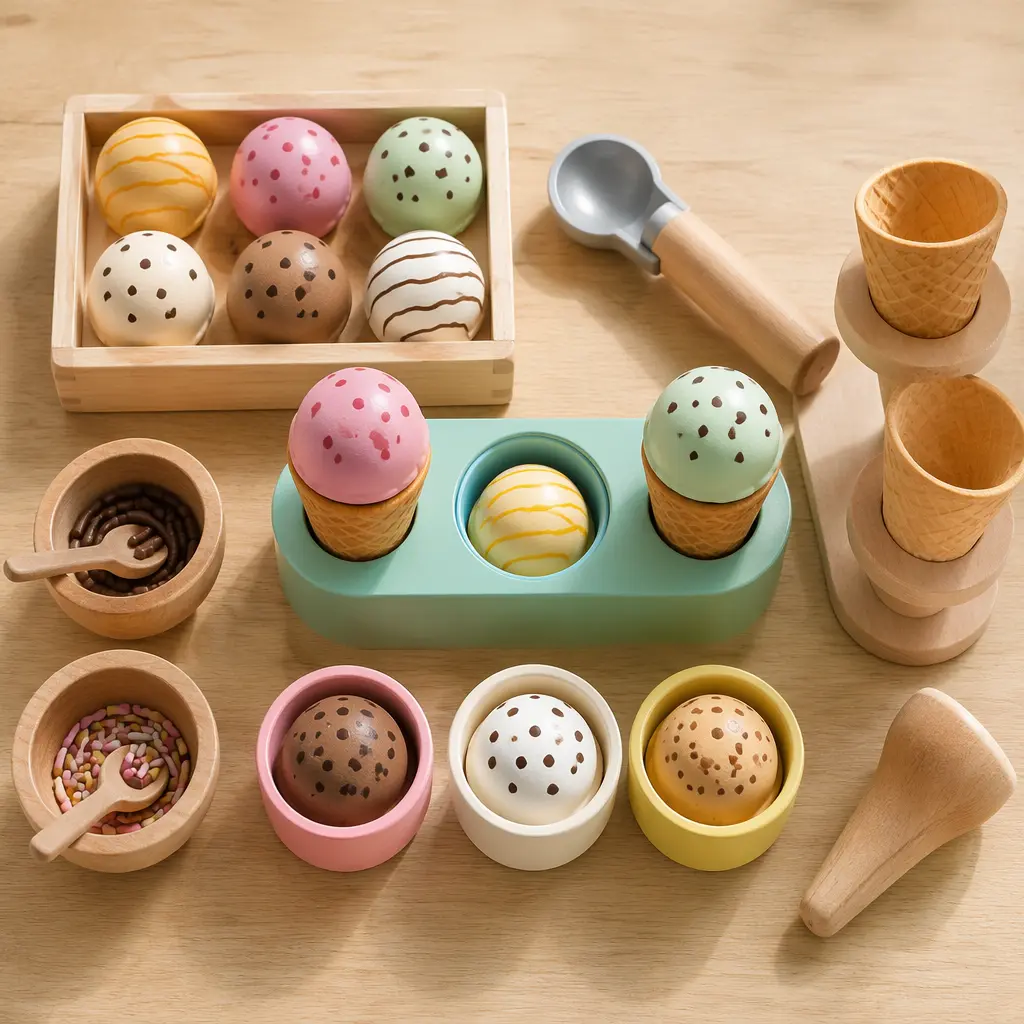
Modern pretend-play dessert sets now come in many forms, from compact travel-friendly counters to larger café systems with cash registers, menus, or extra food accessories. Some families prefer a minimalist wooden setup focused on scooping and serving, while others look for larger collections that connect with toy kitchens and play food sets already in the home.
When shopping today, durability matters more than extra features. Well-fitted wooden pieces, smooth edges, and sturdy scoops tend to hold up better through repeated play. It is also worth checking how accessories are stored, since small toppings and serving pieces can scatter easily in busy playrooms. Generic imitation sets sometimes reduce the tactile quality that makes the original format satisfying, especially if the scoops do not stack securely or the serving tools feel flimsy.
- Look for sturdy wooden construction with smooth finishes
- Choose a set size that matches available storage space
- Check whether scoops and toppings attach securely during play
- Consider compatibility with existing pretend kitchens or food toys
- Avoid sets with rough edges or weak connectors on serving tools
Frequently asked questions
Is the Ice Cream Counter mainly educational or imaginative?
It leans heavily toward imaginative play, but children naturally practice counting, sequencing, memory, and conversation while using it. The educational value comes through repetition and interaction rather than formal lessons.
Does a wooden pretend-play set hold up over time?
Wooden roleplay toys are often valued because they can tolerate years of handling without relying on electronics or delicate moving parts. Scratches and small dents are common with regular use, but many families see that wear as part of the toy’s appeal.
Why do children keep returning to this kind of toy?
The setup mirrors a familiar real-world experience, which makes it easy to understand. Children also enjoy role reversal. Running the “shop” lets them imitate adult routines while staying in control of the interaction.
Can it work for independent play?
Yes, although it often becomes more engaging with another person involved. Many children begin by serving imaginary customers on their own and later expand the game into family roleplay once they understand the routine.
The Melissa & Doug Ice Cream Counter represents a larger shift in modern toys toward slower, more repeatable forms of play. Its appeal is not tied to technology, surprise gimmicks, or collectible trends. Instead, it succeeds by giving children a familiar social scenario, a handful of tactile tools, and enough freedom to reinvent the experience every time they sit down to play. That combination has helped it endure as a reliable screen-free activity in many homes.