Melissa & Doug Food Groups and the appeal of pretend groceries
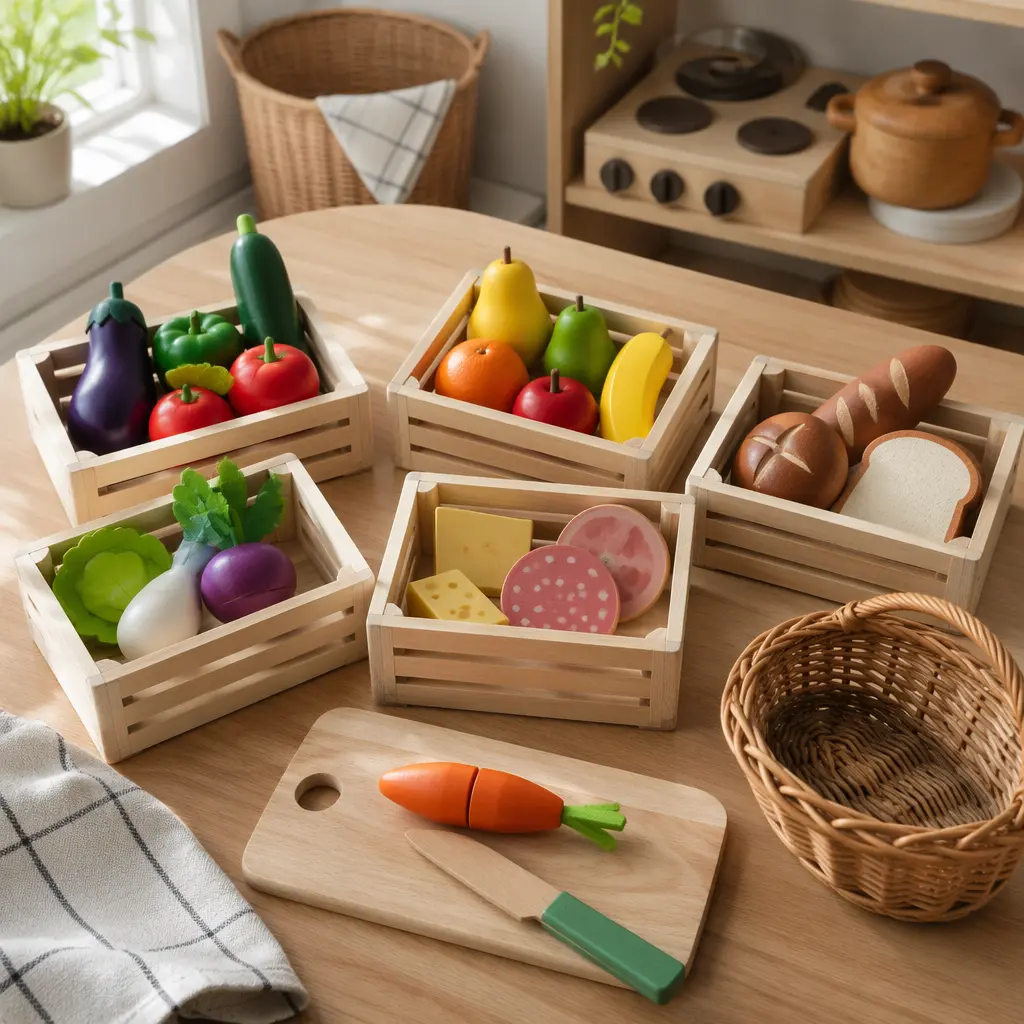
Melissa & Doug Food Groups sets turned pantry basics into hands-on pretend play, helping children practice sorting, routines, and everyday independence through familiar foods.
Compare prices and availability
Check current prices and availability for this guide on eBay.
As an eBay Partner, we may be compensated if you make a purchase.
Pretend grocery toys have been around for decades, but Melissa & Doug Food Groups sets arrived at a moment when many parents were looking for simpler, screen-free toys built around everyday routines. Instead of fantasy themes or battery-powered features, the sets focused on familiar foods children could recognize from home kitchens and grocery trips. Wooden milk cartons, bread slices, fruit, vegetables, and proteins became tools for imaginative play, sorting games, and early conversations about meals. The appeal was straightforward: children enjoy imitating the adults around them, and grocery play gives them a safe, repeatable way to rehearse small pieces of independence.
Where it came from
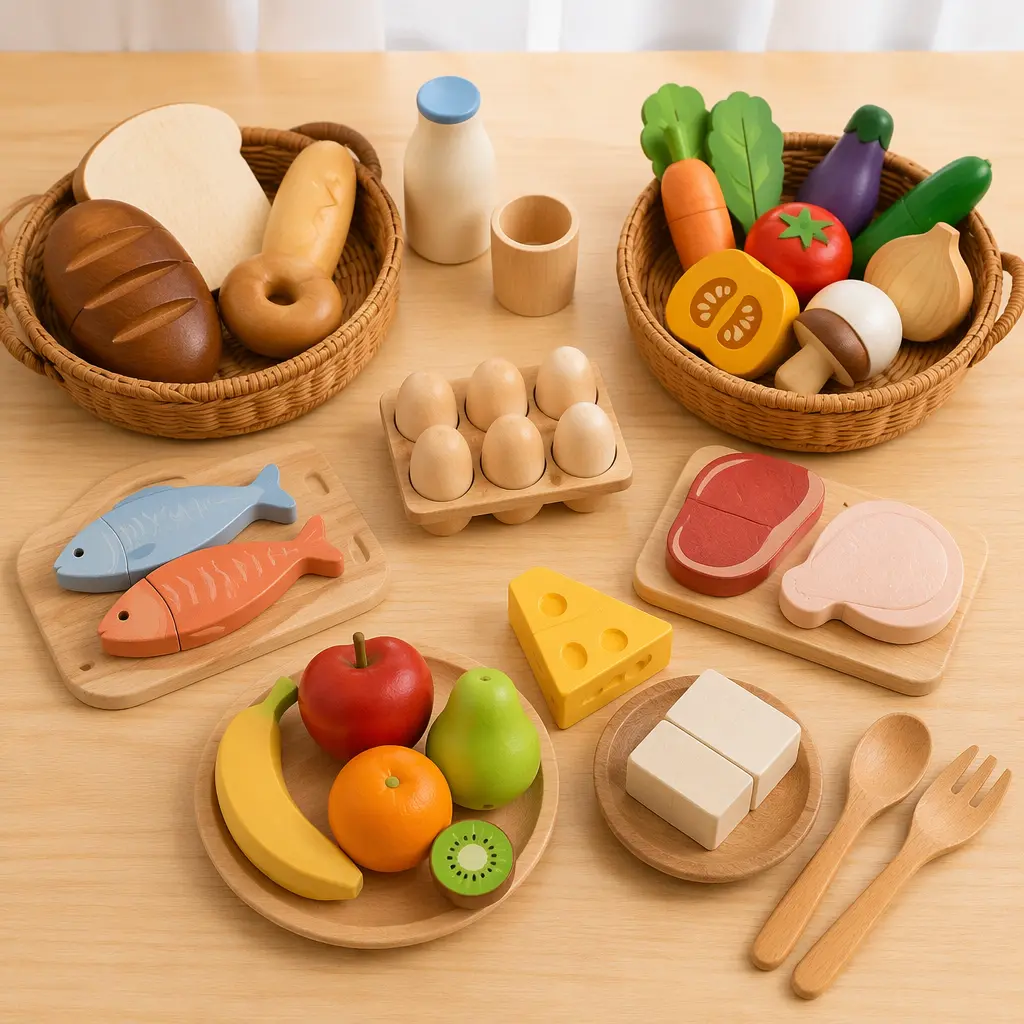
Melissa & Doug built its reputation during the late 1990s and early 2000s by focusing on classic-style toys with tactile materials and open-ended play patterns. Founded by Melissa and Doug Bernstein, the company leaned heavily into wooden puzzles, role-play sets, and activity toys that felt closer to traditional preschool classrooms than electronic entertainment aisles. By the time the Food Groups collection appeared in the mid-2000s, pretend kitchens and toy grocery carts were already popular, but many sets on the market used lightweight plastic or exaggerated cartoon styling.
The Food Groups concept stood out because it connected pretend play with recognizable categories children encountered at home and school. The pieces were designed around fruits, vegetables, grains, proteins, and dairy items that could be sorted, counted, served, or packed away into compartments. That educational angle mattered, but the toys worked mainly because they fit naturally into everyday routines. Children could stock shelves, prepare pretend meals, host toy picnics, or copy what they saw during family grocery shopping. The familiar scale and simple shapes made the toys approachable for preschool-age children who were just beginning to understand routines around meals and household responsibilities.
Why it works
The strongest feature of Food Groups sets is that they do not dictate a single way to play. A child can sort foods into categories one day, run a pretend grocery store the next, and use the same pieces inside a toy kitchen later in the week. That flexibility gives the toys a longer lifespan than many heavily themed playsets. The tactile quality also matters. Wooden pretend food has enough weight and texture to feel substantial in small hands, which can make repetitive actions like stacking, sorting, and serving more satisfying.
The sets also support a type of role-play adults sometimes overlook: rehearsal of ordinary life. Children imitate shopping lists, meal preparation, sharing snacks, and organizing shelves because those routines are visible and understandable. Pretend groceries create low-pressure opportunities to practice turn-taking, language development, and categorization. Even cleanup becomes part of the play pattern when children return foods to crates or shelves.
- Recognizable foods that connect easily to everyday routines
- Wooden construction that feels durable and tactile
- Open-ended play suitable for kitchens, markets, or classrooms
- Simple category sorting that supports early learning
- Compatible with many other pretend-play accessories and toy kitchens
Who it's for
Food Groups sets are primarily aimed at preschool and early elementary ages, especially children who enjoy imitation play. They tend to work well for children developing social play skills because the pieces encourage sharing roles such as shopper, cook, cashier, or server. Parents and educators often appreciate that the toys can support counting, matching, and vocabulary without feeling like formal lessons. Adults who collect or curate playrooms also tend to favor these sets because the wooden pieces photograph well, store neatly, and fit into broader Montessori-inspired or classroom-style toy collections.
Variants and what to look for today
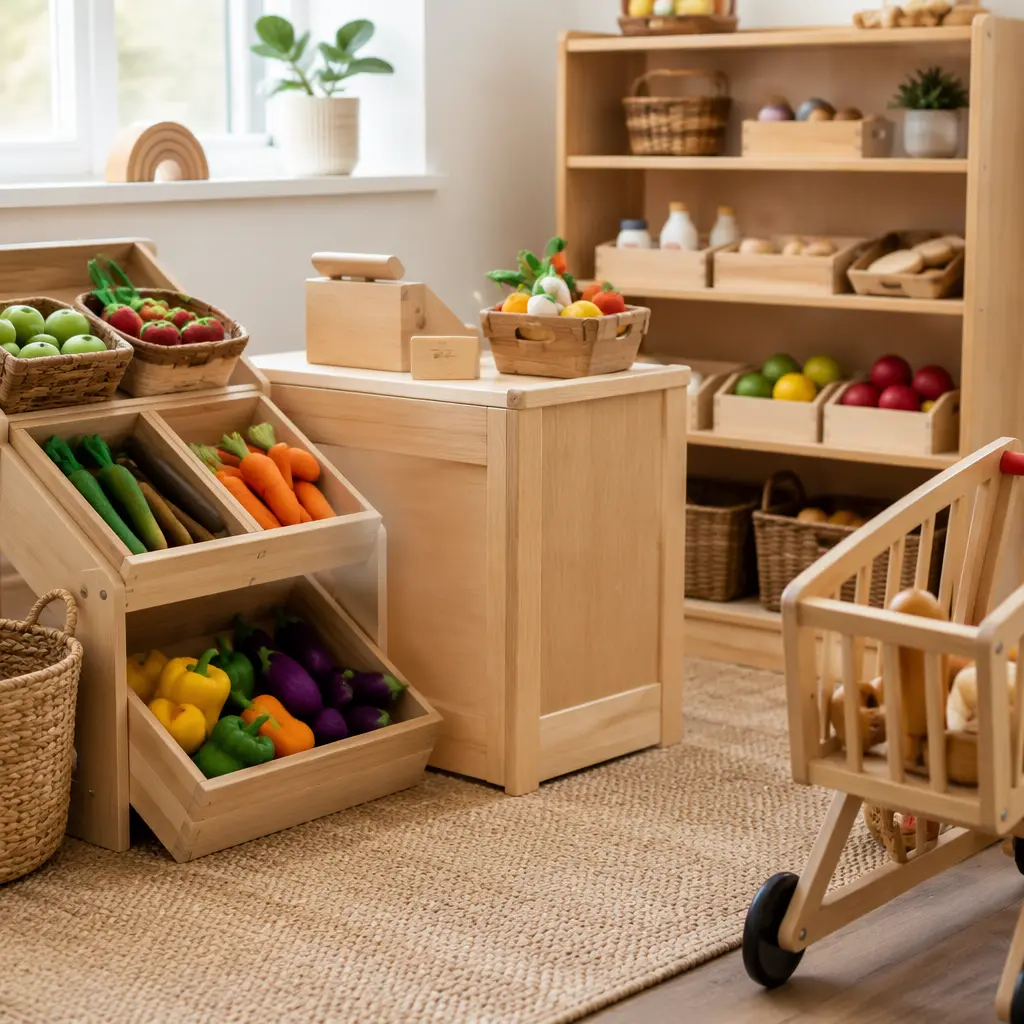
Over time, pretend food collections expanded far beyond the original food-group format. Today it is common to see companion sets focused on cutting food, sandwich making, breakfast items, baking, snacks, or market-style accessories. Some families build larger pretend grocery systems by combining food crates with toy cash registers, aprons, kitchen stations, or shopping baskets. Because the pieces are generally scaled for preschool hands, many sets can be mixed together without looking out of place.
When shopping today, material quality is still one of the main differences between brands. Wooden pieces usually hold up better over years of use, especially in classrooms or shared play spaces. Painted surfaces should feel smooth rather than rough or flaky, and attached fasteners should be secure. Some lower-cost pretend food sets focus on quantity over durability, using very lightweight materials that chip or split more easily. Storage is another practical consideration. Sets with trays, crates, or divided boxes are often easier for children to clean up independently, which reinforces the organizational aspect that makes grocery play appealing in the first place.
- Look for smooth finishes and rounded edges on wooden pieces
- Choose sets with storage crates or trays if space is limited
- Mixed-material sets can add texture variety to pretend kitchens
- Classroom users may prefer larger collections for group play
- Very tiny accessory pieces may be less practical for younger preschoolers
Frequently asked questions
Are Food Groups toys mainly educational or mainly for pretend play?
They work best as pretend-play toys first. Sorting and food-category learning are built into the design, but most children engage with them through imaginative routines like cooking, shopping, and serving meals.
Do wooden pretend food sets hold up better than plastic ones?
In many homes and classrooms, wooden sets tend to feel sturdier and more substantial over time. They are often heavier and less likely to dent easily, though finishes can wear if pieces are heavily used.
Can these toys work without a full play kitchen?
Yes. Many children use pretend food with simple baskets, shelves, or blankets for picnic-style play. A dedicated kitchen setup can expand the experience, but it is not required for imaginative grocery games.
Why do grocery-themed toys stay popular?
They connect directly to routines children observe every day. Shopping, preparing meals, and organizing food are familiar activities, which makes the play easy to understand and repeat across different ages.
Melissa & Doug Food Groups sets endured because they focused on ordinary experiences rather than novelty. The toys give children recognizable objects, flexible play patterns, and opportunities to imitate daily life in manageable ways. In a toy market often driven by licensed characters and fast-moving trends, pretend groceries remain surprisingly durable because the routines behind them do not really change. Children still watch adults shop, prepare meals, and organize kitchens, and they still want a small version of that world for themselves.