Playmobil Knights and the Rise of Open-Ended Worldbuilding
Playmobil Knights turned simple medieval play into expansive worldbuilding. Since the 1970s, the modular figures, castles, and accessories have encouraged imaginative storytelling across generations.
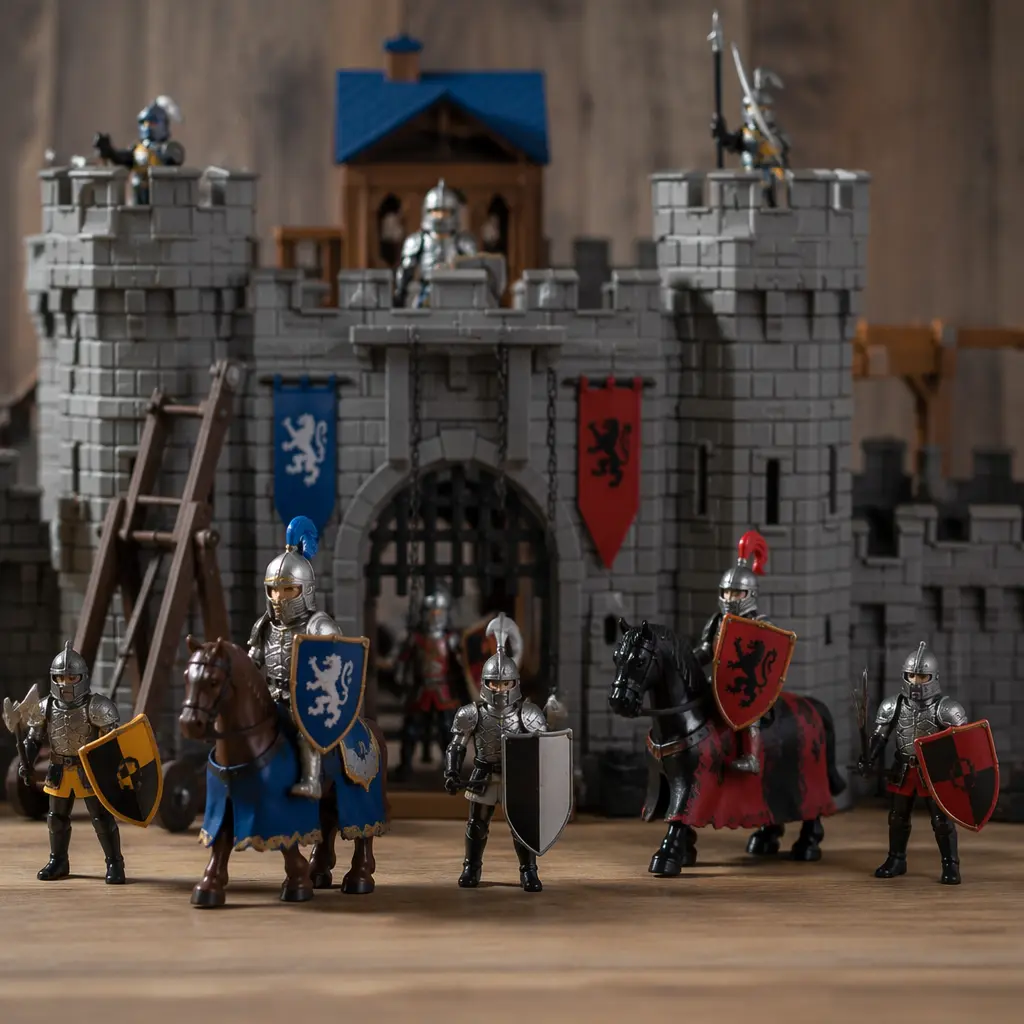
Compare prices and availability
Check current prices and availability for this guide on eBay.
As an eBay Partner, we may be compensated if you make a purchase.
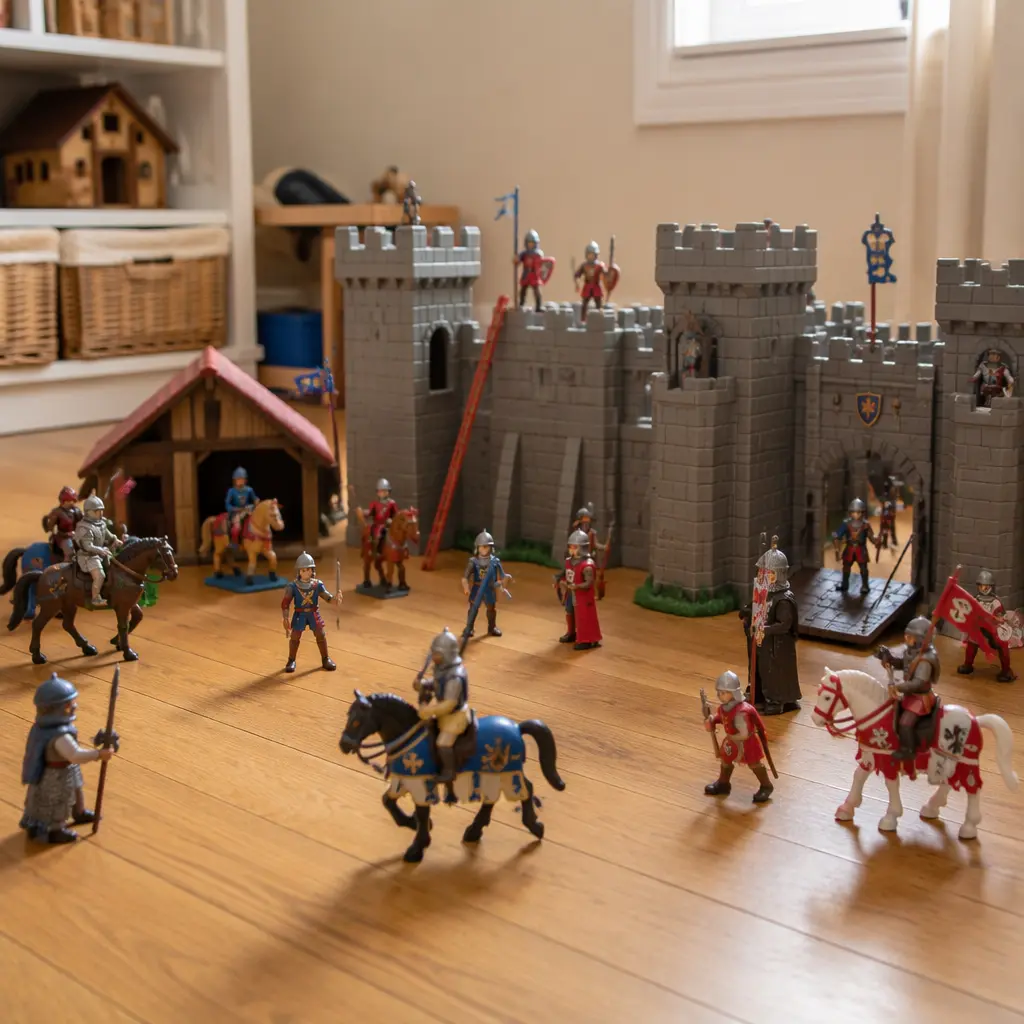
For many families, Playmobil Knights became less about medieval history and more about building entire imaginary worlds. The line combined small poseable figures with castles, horses, carts, armor, and everyday medieval details that encouraged long-running stories instead of one-time play scenarios. Children could stage sieges one day, royal feasts the next, then rebuild the whole setting into something completely different. That flexibility helped the toy line become one of the defining examples of open-ended pretend play during the late twentieth century.
Where it came from
Playmobil debuted in 1974 through the German company Geobra Brandstätter during a period when rising oil costs pushed toy makers toward smaller, more material-efficient products. Inventor Hans Beck designed the original figures to be compact, durable, and simple enough for children to handle easily. The now-familiar figure style featured rotating heads, grasping hands, and minimal facial detail. Rather than focusing on realism, Beck emphasized play value and adaptability.
The medieval knight theme quickly became one of Playmobil's signature worlds. While the company also explored construction workers, pirates, farms, and modern city life, knights and castles offered a particularly strong framework for imaginative storytelling. The setting naturally supported conflict, exploration, teamwork, and adventure while remaining broad enough for children to invent their own rules. Over time, the knight line expanded into larger castles, siege equipment, fantasy-inspired elements, and more detailed accessories, but the core appeal stayed remarkably consistent.
Why it works
Playmobil Knights succeeded because the toys strike a careful balance between structure and openness. The figures have a recognizable style and enough accessories to suggest a medieval world, but they leave room for children to decide what kind of story unfolds. Unlike highly scripted toys tied closely to a movie or television plot, Playmobil rarely tells players exactly how to play. A castle can become a fortress, a village, a tournament ground, or the headquarters of an entirely invented kingdom.
The physical design also supports repeat play. The figures are sturdy, easy to pose, and large enough for younger children to manipulate comfortably. Accessories connect and combine without requiring advanced building skills, making setup fast and inviting. That lower barrier to entry helped Playmobil become a favorite in homes where children wanted immersive pretend play without the complexity of a construction system.
- Simple articulated figures designed for easy handling
- Modular castles and accessories that can be rearranged repeatedly
- Large range of compatible medieval vehicles, animals, and scenery
- Minimal facial detail that encourages children to project personalities
- Durable plastic construction suited to long-term play and hand-me-down collections
Who it's for
Playmobil Knights has traditionally appealed to children roughly between ages four and ten, especially those drawn to storytelling, roleplay, and imaginative settings. Younger children often enjoy arranging scenes and acting out simple adventures, while older kids may build more elaborate kingdoms with alliances, rivalries, and ongoing narratives. The line also developed a strong adult collector audience. Some collectors focus on vintage castle sets from the 1970s and 1980s, while others appreciate the toy's distinctive design language and display potential. Parents often value the line because it encourages independent, screen-free play without feeling overly complicated.
Variants and what to look for today
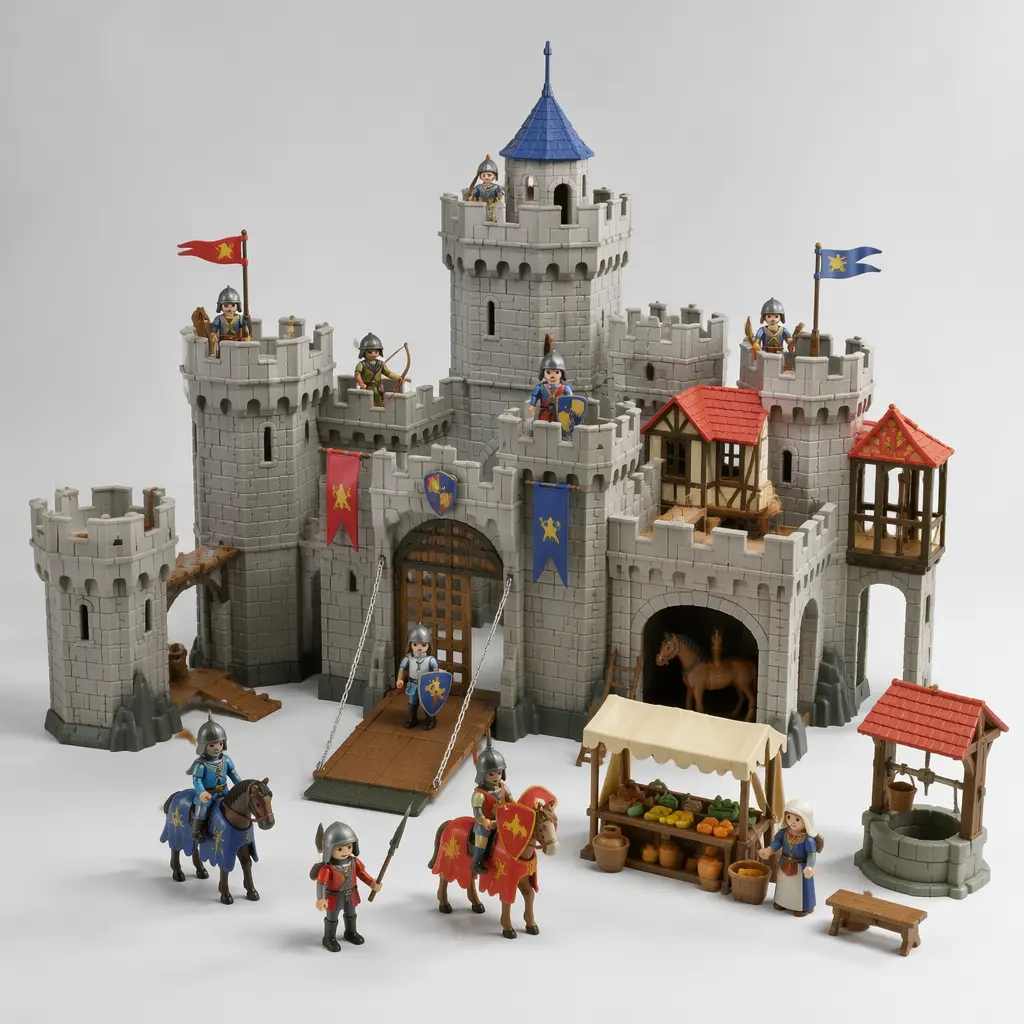
Over the decades, Playmobil Knights expanded far beyond the original castle-and-soldier format. Different generations introduced larger fortresses, fantasy-inspired dragons, armored cavalry units, royal courts, traveling merchants, and tournament scenes. Some releases leaned toward historical medieval imagery, while others adopted a more storybook or fantasy tone. Modern versions often include more detailed sculpting and additional play functions, though the basic figure system remains compatible across many eras.
Collectors and parents shopping today will find a mix of vintage and current editions. Older sets are often prized for their simpler color palettes and classic styling, while newer sets may include more moving parts and decorative detail. Condition matters with secondhand purchases because small accessories such as helmets, shields, flags, and weapons are frequently lost over time.
- Look for complete accessory sets if buying secondhand
- Check castle hinges, clips, and drawbridges for wear
- Mixed-era collections are often compatible and easy to combine
- Very cheap imitation figures may use brittle plastic or poor-fitting parts
- Storage bins and sorting trays help keep smaller accessories organized
Frequently asked questions
Are older Playmobil Knights sets compatible with newer ones?
In many cases, yes. One reason the line endured is that the basic figure scale and connection system changed very little over the years. Castles, figures, horses, and accessories from different generations can often be combined without much difficulty.
Why do collectors still seek vintage Playmobil Knights sets?
Many collectors appreciate the earlier design style, which tended to use simpler shapes and more restrained colors. Vintage sets also carry nostalgia value for adults who grew up with the toy line during the 1970s, 1980s, and 1990s.
Is Playmobil more about building or roleplay?
Compared with construction toys, Playmobil places more emphasis on storytelling and scene creation. There is some assembly involved, especially with larger castles, but the primary focus is imaginative play after setup rather than engineering challenges.
Do Playmobil Knights sets hold up well over time?
Generally, yes. The figures and larger components are known for durability, which is one reason many families pass sets between siblings or generations. Smaller accessories are the parts most likely to disappear or show wear.
Playmobil Knights helped establish a style of toy play centered on flexible worldbuilding rather than fixed narratives. Its castles, figures, and accessories gave children enough structure to begin a story while leaving the details entirely open to imagination. Decades after its debut, the line remains recognizable not because it chased trends, but because it trusted children to invent adventures of their own.