Playmobil Pirate Ships and the Long Life of Adventure Play
Playmobil pirate ships turned simple plastic figures into sprawling seafaring adventures, blending detailed world-building with open-ended pretend play that still appeals to collectors and kids today.
Compare prices and availability
Check current prices and availability for this guide on eBay.
As an eBay Partner, we may be compensated if you make a purchase.
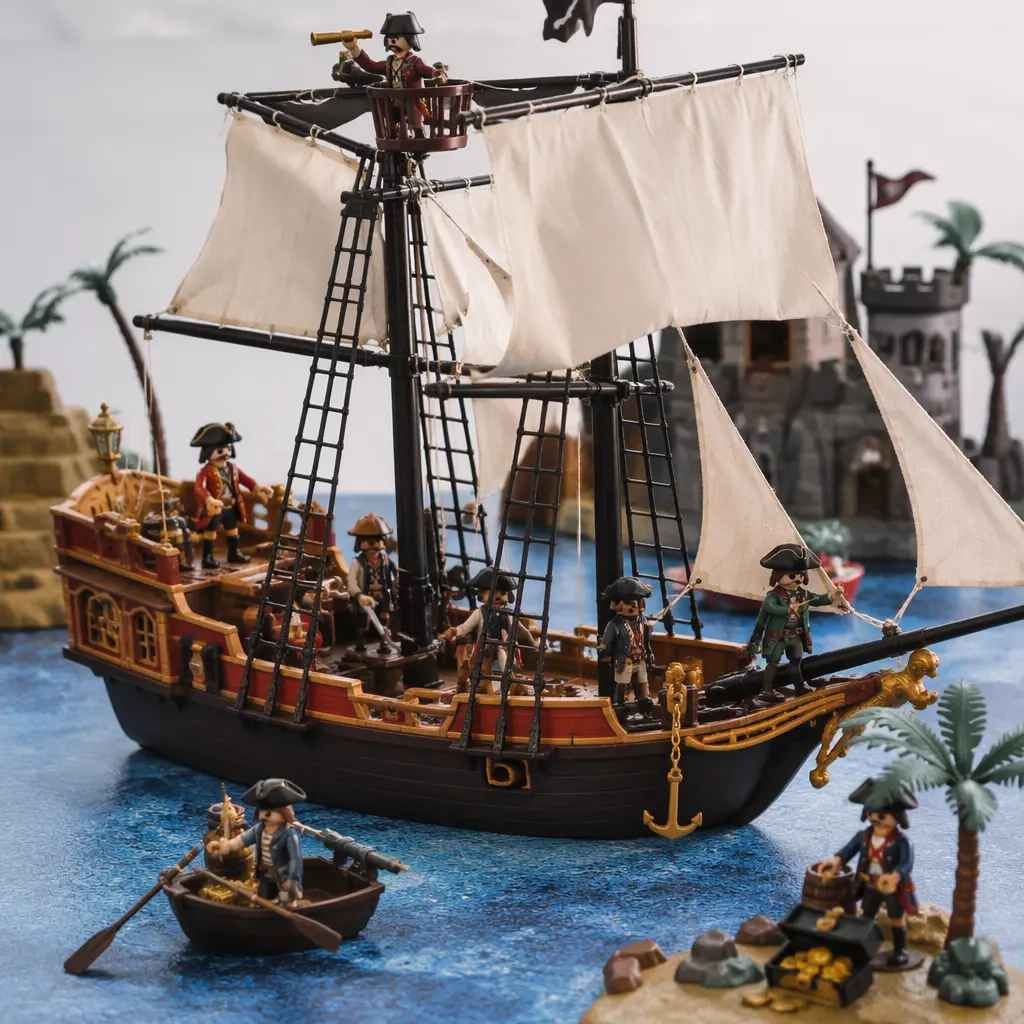
For many children of the 1980s and 1990s, a Playmobil pirate ship was less a toy and more a portable adventure world. The ships combined miniature figures, working accessories, hidden compartments, cannons, treasure chests, and modular scenery into one open-ended play system that encouraged long storylines rather than quick gimmicks. Unlike many licensed toys tied to films or television shows, these pirate sets relied almost entirely on imagination. A child could stage sea battles one day, treasure hunts the next, and peaceful island trading missions after that. That flexibility helped the pirate range remain one of Playmobil’s most recognizable themes for decades.
Where it came from
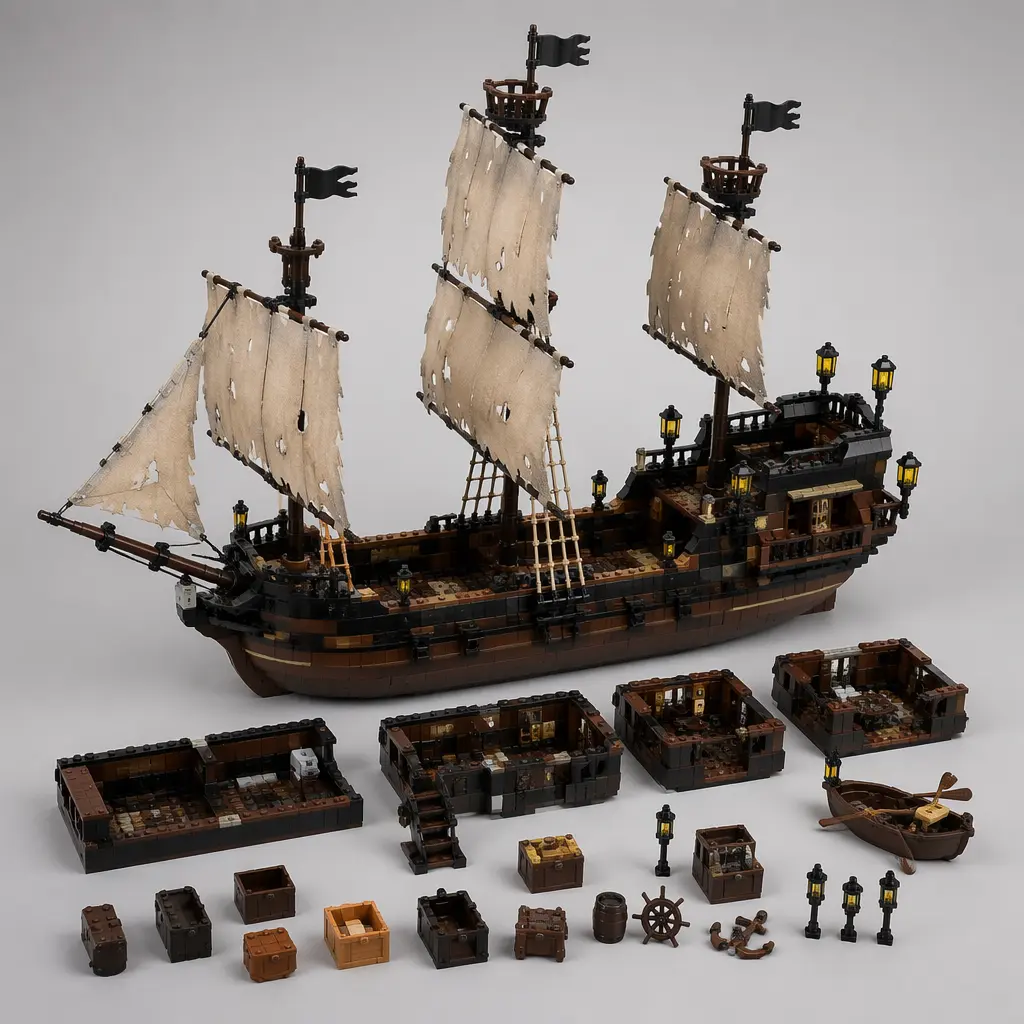
Playmobil itself began in Germany during the 1970s under the Brandstätter Group, with inventor Hans Beck developing the small, simplified figures that became the company’s signature. The original concept focused on durable, expressive toys that encouraged role-playing instead of battery-powered action. Knights, construction workers, and frontier figures arrived first, but pirate-themed sets followed in 1978 and quickly became one of the line’s defining successes.
The timing mattered. Pirate stories already had a strong hold on children’s culture through novels, cartoons, and classic adventure films. Playmobil translated those ideas into a compact system that felt large in scale despite the small figures. Ships floated in water, cannons launched harmless projectiles, and modular island sets connected into larger environments. The line also reflected a broader shift in toy design during the late twentieth century: children increasingly wanted immersive worlds rather than isolated toys. Playmobil pirate ships delivered exactly that without becoming overly complicated.
Why it works
The core appeal of Playmobil pirate ships comes from balance. The toys are detailed enough to spark curiosity but simple enough for children to control entirely through imagination. The figures have minimal facial features and limited articulation compared with action figures, yet that simplicity becomes a strength. A single pirate captain can become a hero, villain, explorer, or comic character depending on the story a child invents.
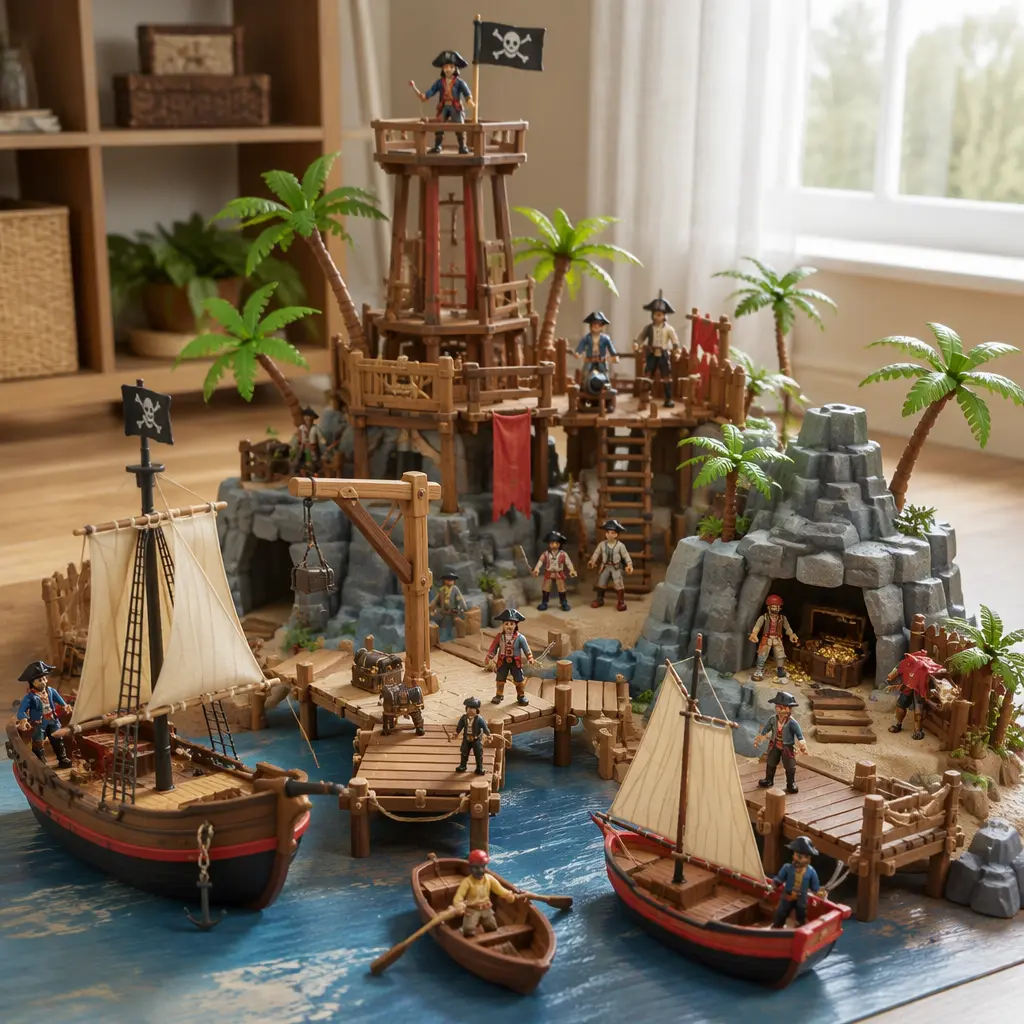
The ships themselves also encourage active play instead of passive display. Decks open for access to interior cabins, accessories can be rearranged, and nearly every object suggests an activity. Rope ladders invite boarding actions. Treasure chests create goals. Cannons introduce conflict without realism becoming too intense for younger children. The scale allows many sets to connect together, creating sprawling island forts, hidden coves, and naval encounters across an entire room.
- Floating ship designs encouraged water play as well as floor-based play
- Modular accessories let children rebuild scenes repeatedly
- Neutral figure expressions supported open-ended storytelling
- Detailed environments created a sense of exploration and discovery
- Durable plastic construction helped many sets survive for generations
Who it's for
Playmobil pirate ships have traditionally appealed to children roughly ages 4 through 10, especially those drawn to storytelling and imaginative role-play. Younger children often enjoy the tactile accessories and simple narratives, while older kids tend to build larger adventures with forts, sea monsters, and treasure islands. The line also developed a substantial adult collector audience. Vintage pirate ships from the 1980s and 1990s are frequently restored, displayed, or expanded with custom scenery. Parents who grew up with the sets often introduce them to their own children because the play style still feels timeless despite changes in technology.
Variants and what to look for today
Over the years, Playmobil released pirate ships in many sizes and styles, from compact starter boats to large multi-sail flagships designed as centerpiece toys. Some focused on naval combat, while others emphasized island exploration, hidden treasure, or fantasy-inspired sea adventures. Modern releases tend to include more sculpted details and brighter colors than earlier versions, though many collectors still prefer the cleaner look of classic editions from the late twentieth century.
If you are searching for pirate sets today, condition matters more than rarity claims. Missing sails, broken mast clips, or incomplete accessory collections are common in older sets because the toys were heavily played with. Reproduction parts are widely available, but original pieces are usually preferred by collectors. Families buying for active play often prioritize sturdier modern editions with updated assembly systems and safer projectile designs.
- Look for complete accessory sets including sails, cannons, and treasure pieces
- Check that hull sections and masts connect securely
- Older sets may show sun fading if stored near windows
- Modern versions often use simplified assembly for younger builders
- Avoid low-quality imitation sets with brittle plastic or loose-fitting parts
Frequently asked questions
Do Playmobil pirate ships float?
Many classic and modern pirate ships are designed to float in bathtubs or shallow water play areas. Smaller accessory boats may vary depending on the edition, and older sets should be checked for missing plugs or damaged hull pieces before water use.
Are vintage pirate sets compatible with newer ones?
In most cases, yes. One reason the Playmobil system endured for so long is that figures, accessories, and many environmental pieces remained broadly compatible across decades. Some newer connection systems and sculpt details differ slightly, but the scale stays consistent.
Why do collectors value the pirate theme so highly?
The pirate range represents one of Playmobil’s most expansive and imaginative themes. Large ships, island forts, sea creatures, and treasure-focused accessories created a strong sense of adventure that many collectors associate with the company’s creative peak.
Are these toys mainly for display or active play?
They work well for both. Many families still use pirate ships as active pretend-play toys, while collectors often build elaborate shelf displays or dioramas. The durable construction and modular system support either approach.
Decades after their introduction, Playmobil pirate ships remain a strong example of how thoughtful toy design can outlast changing trends. They did not depend on screens, catchphrases, or complex electronics to hold attention. Instead, they offered children a structured world full of possibilities and trusted them to invent the rest. That combination of detail and freedom continues to make the pirate range one of the most enduring adventure toy lines ever produced.