Playmobil Western: How cowboy playsets became a classic
Playmobil Western turned frontier myths into calm, open-ended play. Decades after its 1970s debut, the line still stands out for durable figures, modular towns, and imaginative storytelling.
Compare prices and availability
Check current prices and availability for this guide on eBay.
As an eBay Partner, we may be compensated if you make a purchase.
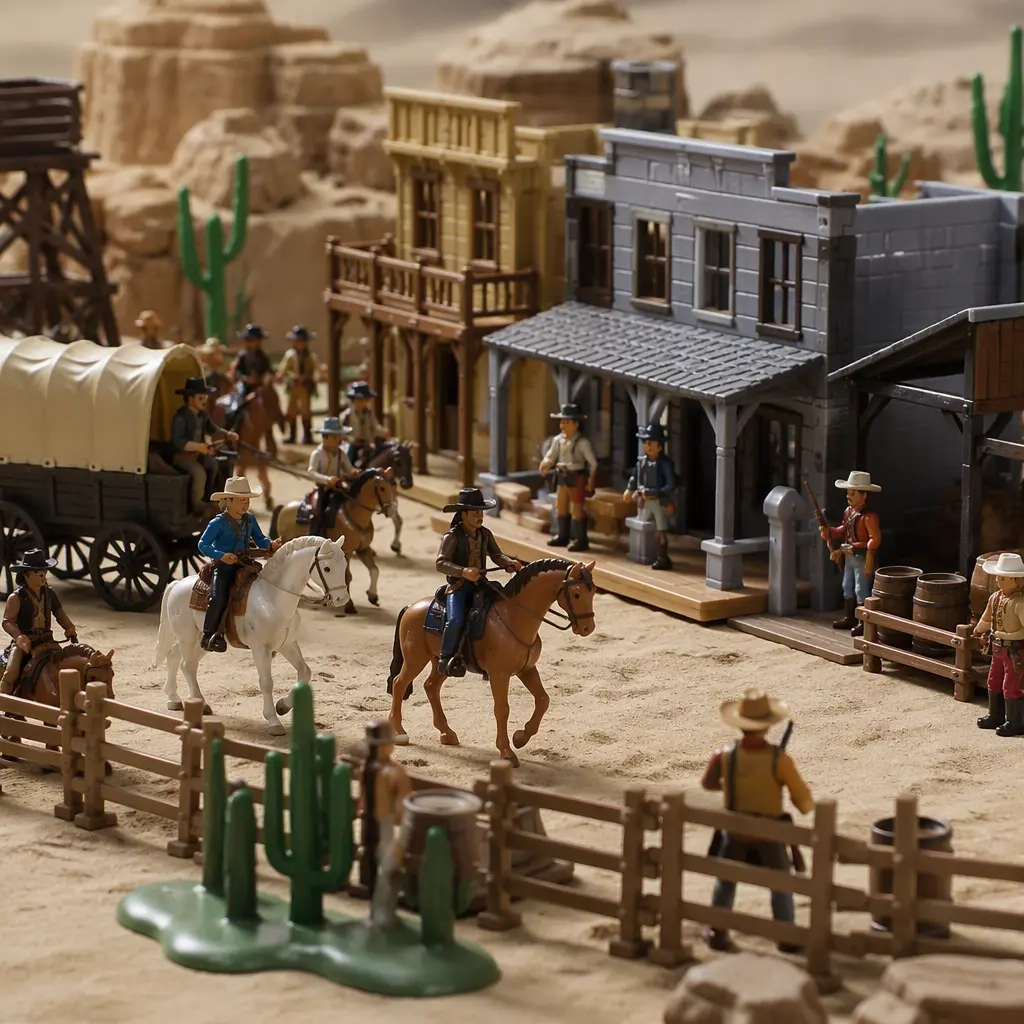
For many children growing up in the late 1970s and 1980s, Playmobil Western sets offered a quieter alternative to action-heavy toy lines. Instead of explosions or electronic features, the appeal came from building a frontier town, arranging stagecoach chases, caring for horses, or inventing stories around sheriffs, ranchers, and travelers. The line became one of Playmobil’s most recognizable themes because it matched the company’s broader philosophy: simple figures, sturdy accessories, and open-ended pretend play that could expand over years rather than a single season.
Where it came from
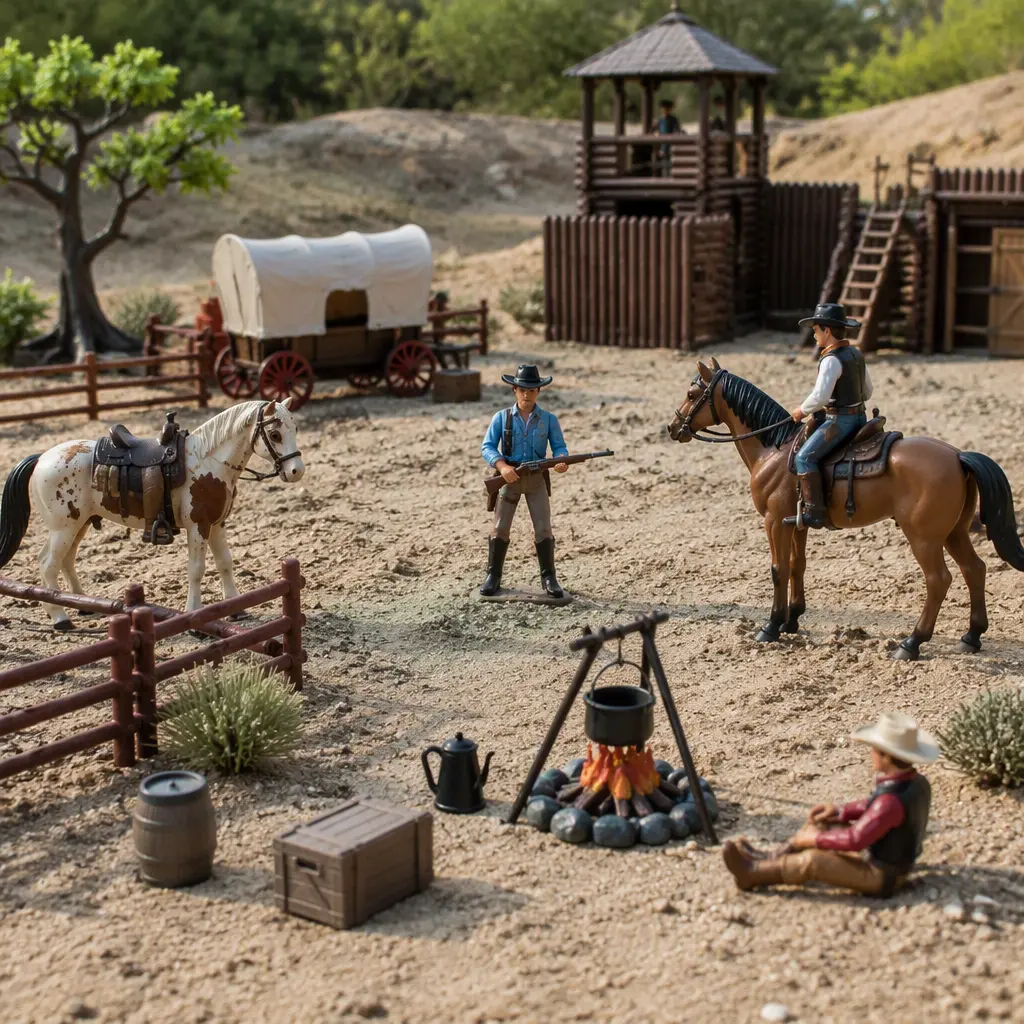
Playmobil itself launched in Germany in the mid-1970s during a period when toy makers were searching for products that used less plastic during rising oil prices. Designer Hans Beck developed the compact, smiling figures with movable arms and simple hand grips that became the brand’s signature. The figures were intentionally uncomplicated. Beck reportedly believed children would supply the imagination themselves rather than rely on highly detailed expressions or electronics.
The Western theme arrived in 1975 and quickly became one of the company’s foundational worlds alongside knights, construction, and city life. Cowboy stories already had deep roots in television, comics, and film, so children immediately recognized the setting. Playmobil translated those familiar frontier images into a modular toy system with forts, saloons, covered wagons, horses, and desert outposts. Unlike many licensed products of the era, the sets were not tied to one film or TV series, which gave children more freedom to invent their own towns and characters.
Why it works
The enduring appeal of Playmobil Western comes from how flexible the sets feel in play. The figures are small enough to build large scenes around but sturdy enough to survive years of handling. Buildings open easily for access, horses and wagons connect without much frustration, and accessories are designed to encourage role-play instead of display-only collecting. Children can create peaceful ranch life one moment and a train robbery the next without needing complicated rules.
Another important part of the design is compatibility. A sheriff’s office from one decade can usually fit beside newer horse stables or frontier forts from another. That consistency helped the line last across generations, with parents often mixing older collections with modern reissues. The visual style also stayed recognizably Playmobil: rounded figures, bright colors, and enough detail to suggest a setting without overwhelming younger players.
- Compact figures with simple articulation that are easy for younger children to handle
- Modular buildings and accessories that connect into larger frontier scenes
- Strong focus on storytelling rather than electronics or competitive play
- Durable horses, wagons, fences, and camp accessories designed for repeated use
- Consistent scale across decades, making older and newer sets easy to combine
Who it's for
Playmobil Western sets are generally best suited for children who enjoy imaginative storytelling and world-building rather than fast-paced electronic toys. The small accessories mean many sets are aimed at children over age four, though older kids often stay engaged because the system supports bigger layouts and ongoing narratives. Adults remain active collectors as well, especially those who grew up with classic Playmobil during the 1980s and 1990s. Some collectors focus on vintage forts and trains, while others enjoy building large western dioramas with landscapes, livestock, and custom scenery.
Variants and what to look for today
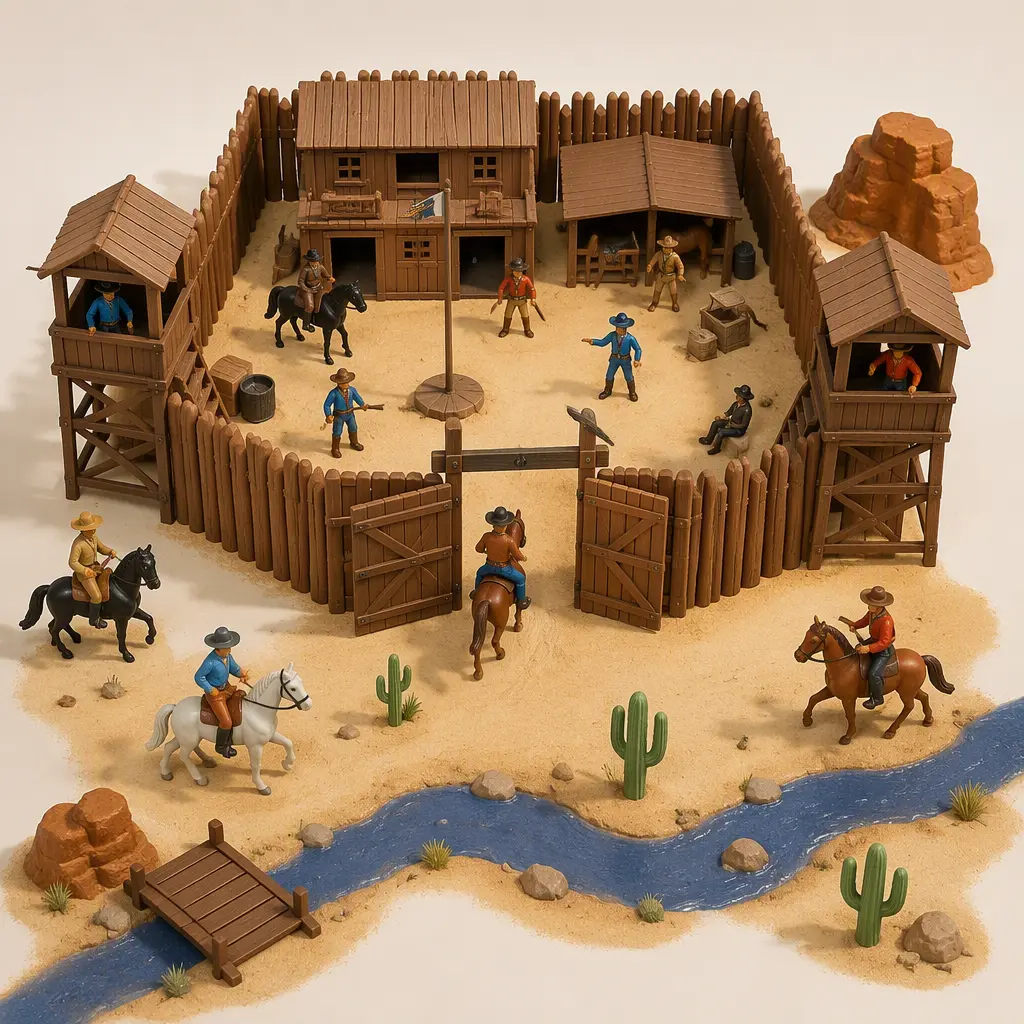
Playmobil has revisited the Western theme many times through reissues, redesigned forts, smaller starter packs, and expanded horse-centered sets. Older releases often have slightly different color tones and simpler accessory counts, while newer versions may include more detailed landscaping pieces or updated wagon designs. Collectors usually value complete sets with original accessories, especially horses, hats, lanterns, and fencing, since small parts are the first items to disappear over time.
For families buying today, condition matters more than rarity claims. Vintage Playmobil is known for durability, but sun fading, cracked reins, or missing clips can affect how enjoyable a set is to use. Modern reproductions and mixed-part bundles are common online, so it helps to compare figures, saddle shapes, and accessory styles carefully when shopping secondhand.
- Starter cowboy sets for younger children entering the Playmobil system
- Larger forts and frontier buildings for display and extended storytelling
- Horse and wagon sets that mix easily with farm or adventure themes
- Vintage secondhand collections with mixed accessories and figures
- Modern reissues that recreate classic frontier layouts with updated parts
Frequently asked questions
Why did Playmobil Western become so popular?
The theme combined familiar cowboy imagery with highly flexible play. Children could build towns, stage rescues, manage ranches, or create travel adventures using the same core figures and buildings. The modular design encouraged long-term collecting instead of one-time play.
Are vintage Playmobil Western sets still usable?
Yes. One reason collectors value Playmobil is the durability of the plastic and the consistent scale across generations. Many vintage sets still work well for active play if the parts remain complete and undamaged.
How is Playmobil different from action figures?
Playmobil focuses less on poseability and combat mechanics and more on environments, accessories, and storytelling. The figures have simple movement, but the larger play system encourages children to create scenes and narratives around them.
Do modern Playmobil Western sets connect with older ones?
In most cases, yes. Buildings, horses, wagons, and figures from different decades usually fit together smoothly because Playmobil has kept the overall figure scale and design language remarkably consistent.
Nearly fifty years after its introduction, Playmobil Western remains one of the clearest examples of how a toy line can survive changing trends through strong fundamentals rather than constant reinvention. The figures are simple, the stories are open-ended, and the frontier setting still invites children to build entire worlds from a handful of horses, fences, and dusty roads. That combination of durability and imagination is what turned a cowboy playset into one of Playmobil’s defining classics.