Wooden Train Sets: Why simple tracks still power big play
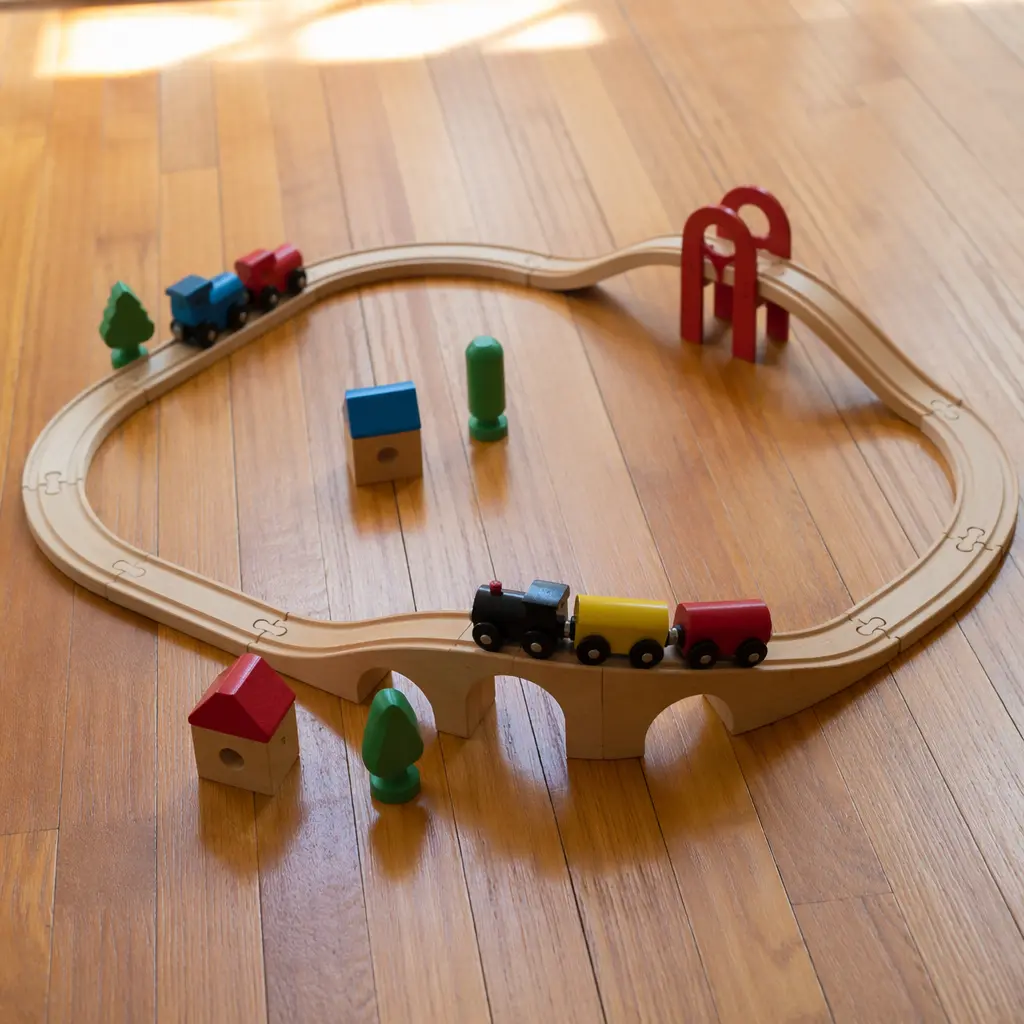
Wooden train sets have anchored open-ended play for generations. Their sturdy tracks, modular design, and calm pace invite creativity, storytelling, and problem-solving that grow with a child.
Compare prices and availability
Check current prices and availability for this guide on eBay.
As an eBay Partner, we may be compensated if you make a purchase.
Few toys feel as quietly confident as a wooden train set. No screens, no batteries, just smooth tracks, chunky trains, and the invitation to build a world from scratch. For decades, wooden trains have been a fixture in playrooms and classrooms alike, anchoring open-ended play that can be as calm or as imaginative as a child wants it to be.
Where it came from
Wooden train sets trace their roots to mid‑20th‑century Europe, where toymakers began producing simple wooden railways designed for durability and everyday play. Early sets were intentionally minimal: a few track pieces, a small engine, and wagons that could be pushed by hand.
The idea spread quickly. As families looked for toys that could survive siblings and encourage independent play, wooden trains found a lasting place. Over time, bridges, buildings, and scenery were added, but the core concept stayed the same: modular tracks that connect easily and invite experimentation.
Why it works
At heart, wooden train sets are a systems toy. Children build, test, adjust, and rebuild, learning how parts relate to one another. The absence of fixed outcomes is key: there is no “right” layout, only the next idea to try.
The design also encourages cooperative play. Tracks are shared, problems are solved together, and stories emerge naturally as trains travel from station to station.
- Simple push-along trains that work at a child’s pace
- Standardised wooden tracks that connect in many configurations
- Tactile materials that feel warm and sturdy
- Scenery pieces that spark storytelling without dictating it
Who it's for
Most wooden train sets are suitable from around age three, when children can safely handle small pieces and begin building simple layouts. They grow well beyond the preschool years, though. Older children enjoy designing complex rail networks, while adults often find themselves drawn into the calm, nostalgic rhythm of building alongside them.
Variants and what to look for today
Today’s wooden train sets range from small starter loops to sprawling collections with cranes, tunnels, and battery-powered engines. The best sets still prioritise compatibility, allowing new pieces to slot into what you already own.
When shopping, look for smooth joins, solid wood construction, and non-toxic finishes. Many families mix and match pieces over time, so avoid overly niche systems that limit expansion.
Frequently asked questions
Are wooden train sets compatible across brands?
Many wooden train tracks follow similar sizing, making cross-brand play possible. Small variations exist, so it’s worth testing new pieces with what you already have.
Do battery trains replace push-along play?
Battery-powered engines can add variety, but they work best as an occasional option. Push-along trains keep children physically involved and in control of the story.
How much space do you need?
A small floor area is enough for a starter set. Larger layouts can be built temporarily and packed away, which is part of their appeal.
Why do they last so long?
Their durability, timeless design, and open-ended nature mean they rarely feel outdated. Pieces are often passed down, gathering stories along the way.
In a world crowded with flashy toys, wooden train sets endure by doing less, not more. They give children the materials to imagine, build, and rebuild—skills that never really go out of style.