Brio Labyrinth: The Wooden Maze That Outlasted Generations
First introduced in 1946, the Brio Labyrinth turned a simple steel ball and wooden maze into one of the most enduring dexterity toys ever made, surviving decades of changing technology and play trends.
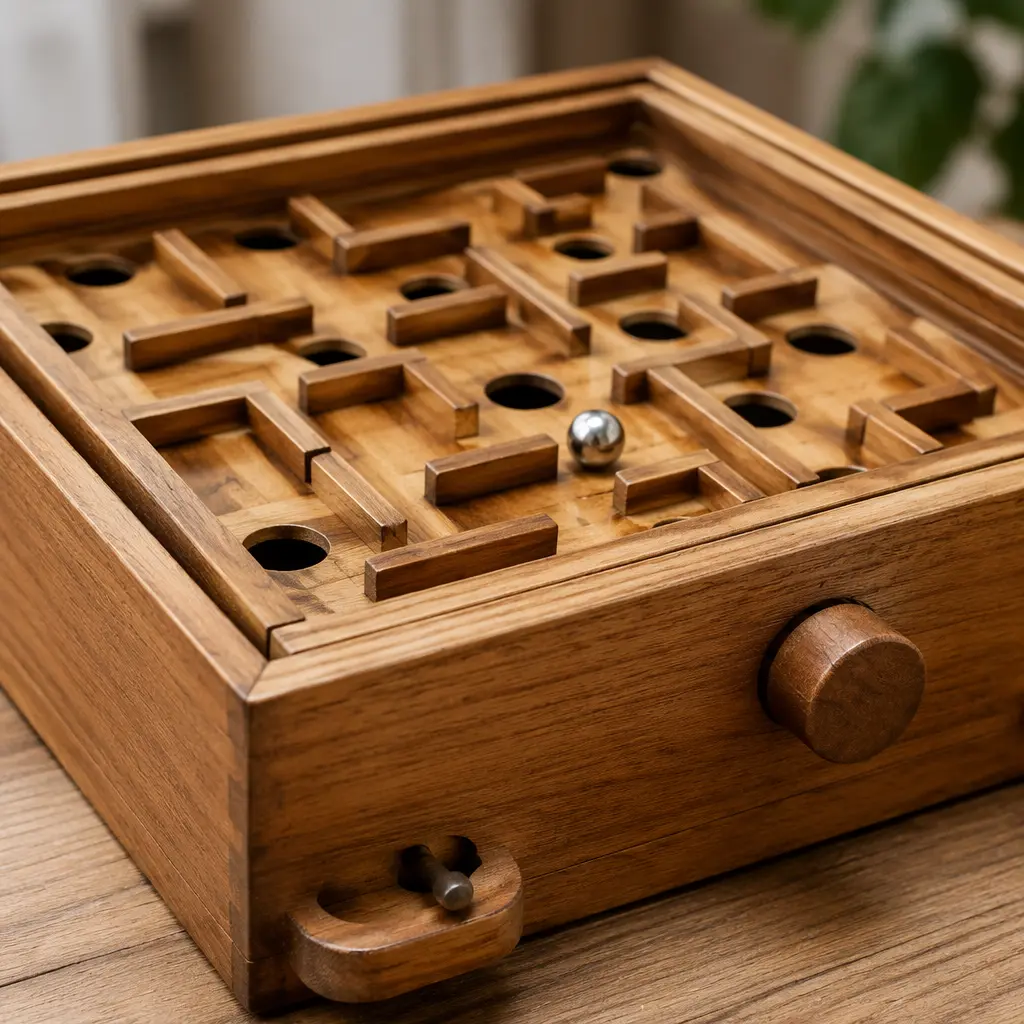
Compare prices and availability
Check current prices and availability for this guide on eBay.
As an eBay Partner, we may be compensated if you make a purchase.
Few toys explain the appeal of hands-on play as clearly as the Brio Labyrinth. At first glance, it is almost stubbornly simple: a wooden board, a steel ball, a maze of holes, and two control knobs. Yet that simplicity is exactly why the game has endured since the mid-20th century. While electronic toys have come and gone in waves, the Labyrinth has remained quietly relevant by offering something screens still struggle to reproduce: precise physical feedback, concentration, and the satisfying tension of mastering movement through touch alone.
Where it came from
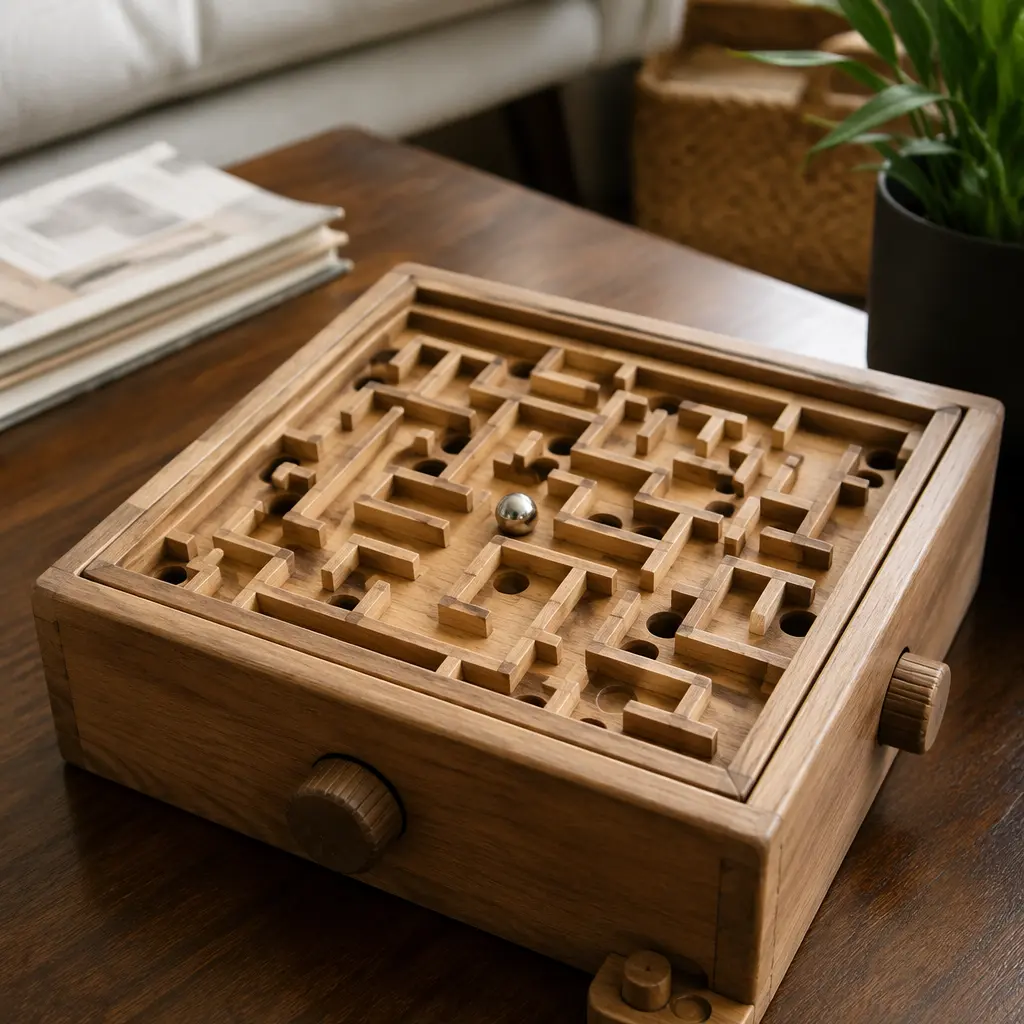
The Labyrinth was introduced by Swedish toy company Brio in 1946, during a period when durable wooden toys were still central to family playrooms. Brio had already built a reputation for carefully made wooden products, and the company approached toys with a distinctly Scandinavian design philosophy: practical construction, clean aesthetics, and long-term usability rather than novelty alone.
The original idea is often linked to earlier fairground dexterity games and mechanical tabletop puzzles, but Brio refined the concept into a more elegant and reliable form. The player guides a small steel ball through a field of traps by tilting the board with two knobs that control movement along different axes. The challenge sounds straightforward until the ball gains momentum, forcing players to balance patience with quick adjustment. In many homes, the game became less of a casual toy and more of an object that sat permanently on a shelf or coffee table, waiting to challenge visitors across generations.
Why it works
The brilliance of the Labyrinth lies in how much tension and concentration it creates from such limited mechanics. There are no batteries, no random effects, and no hidden systems. Every movement is visible and immediate. The steel ball reacts instantly to tiny changes in angle, rewarding steady hands while exposing rushed decisions. Children quickly learn that success depends less on speed than on rhythm and control.
That direct physical connection gives the game unusual staying power. Many electronic games eventually become tied to outdated hardware or changing software standards, but a mechanical dexterity game ages differently. The tactile feel of wood, the sound of the ball rolling across the surface, and the increasing confidence that comes with practice are timeless experiences. Parents often find that children who lose interest in more passive toys still return to dexterity games because they feel active and skill-based rather than scripted.
- Two-knob control system that allows precise movement in multiple directions
- Solid wooden construction designed for repeated long-term use
- Visible cause-and-effect gameplay with no electronic components
- Short play sessions that encourage repeated attempts and skill improvement
- Broad appeal across children, teens, and adults due to adjustable difficulty through practice
Who it's for
The Labyrinth works especially well for school-age children developing patience, coordination, and fine motor control, though many adults end up just as invested. Younger children can enjoy simpler sections of the maze under supervision, while older players often become fascinated by improving completion times or attempting perfect runs. Because the challenge comes from precision rather than complex rules, it also translates well across generations. Grandparents, parents, and children can all compete on equal terms after only a few minutes of explanation.
Variants and what to look for today
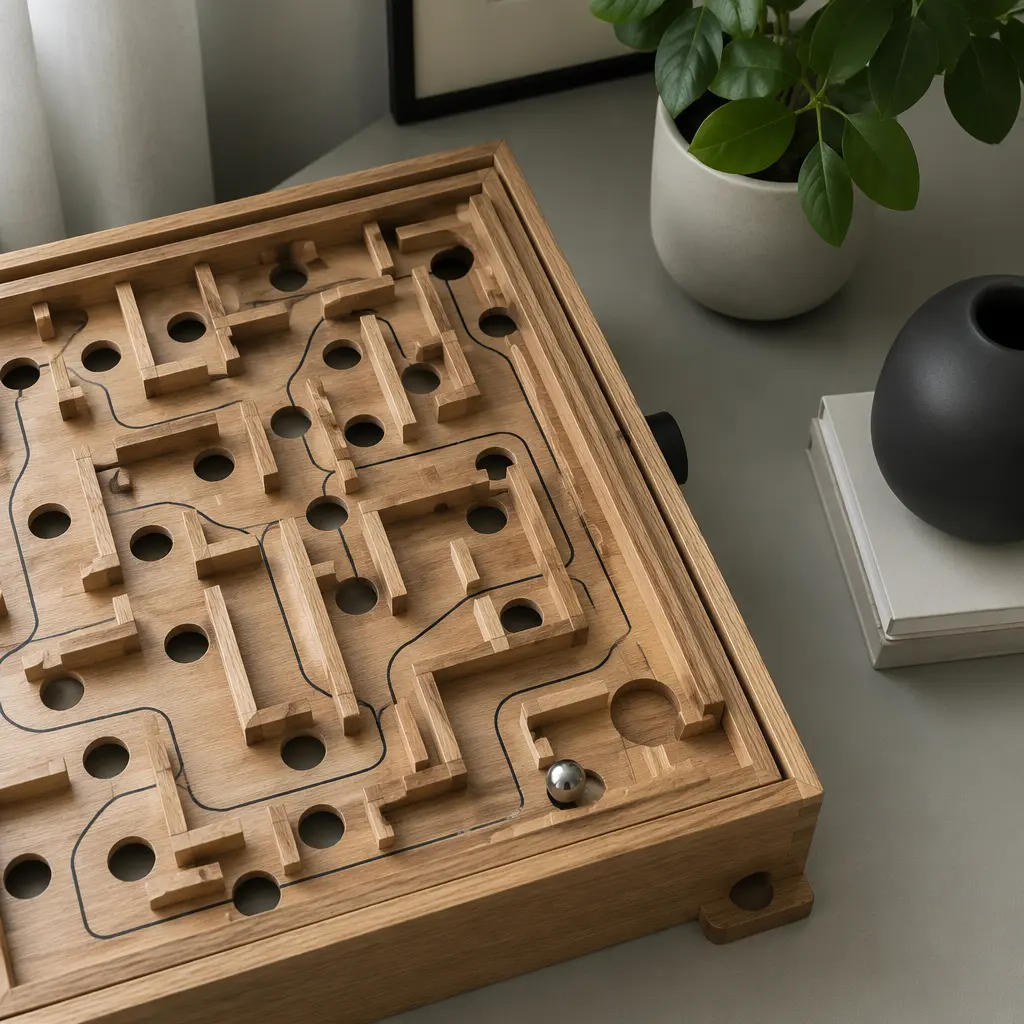
Modern versions of the Labyrinth remain remarkably close to the original formula, which is part of the toy's appeal. Most editions still use a wooden board, metal ball, and mechanical tilt controls, though newer releases may vary in maze layout, size, or difficulty. Some compact travel-oriented versions simplify the course, while larger editions preserve the more demanding style associated with the classic design.
Buyers today will also encounter many generic marble maze games inspired by the same concept. Some are well made, but construction quality matters more here than with many other toy categories. Uneven surfaces, poorly aligned control mechanisms, or lightweight materials can dramatically change the feel of the game. A good dexterity maze should move smoothly and consistently, allowing players to feel in control even during difficult sections.
- Look for solid wood or similarly sturdy construction rather than thin composite material
- Check that the control knobs move smoothly without sticking
- Larger play surfaces are usually easier for beginners to learn on
- Travel versions can be convenient but may feel less precise
- Avoid very lightweight copies that make the ball movement unpredictable
Frequently asked questions
Is the Brio Labyrinth still made today?
Yes. The game remains available in updated forms, and its core design has changed very little since the original postwar release. That continuity is part of why collectors and families still seek it out.
What skills does the game help develop?
Players practice hand-eye coordination, patience, timing, and fine motor control. Because the maze requires careful adjustment rather than button pressing, it also encourages focus and spatial awareness.
Is it better as a solo game or a family activity?
It works well as both. Many players enjoy practicing alone to improve their control, while families often turn it into a challenge game by timing runs or competing to see who can reach the finish with the fewest mistakes.
Why has the design survived for so long?
The Labyrinth survives because it delivers a challenge that remains satisfying regardless of technology trends. Mechanical skill toys create immediate feedback and visible progress, and that experience does not become obsolete when new entertainment formats appear.
The Brio Labyrinth occupies an unusual place in toy history. It is neither flashy nor complicated, and it rarely dominates holiday wish lists in the way electronic products do. Yet decade after decade, it continues to earn shelf space because it captures something fundamental about play: the pleasure of learning a physical skill through repetition and touch. In a category crowded with digital distractions, that quiet confidence may be the game's greatest achievement.