AI Toys With UK Parental Controls That Matter
A practical guide to AI and connected toys for ages 3–5, focusing on mute switches, account permissions, offline play, app controls and privacy settings parents are likely to use day to day.
Compare prices and availability
Check current prices and availability for this guide on eBay.
As an eBay Partner, we may be compensated if you make a purchase.
AI and connected toys for preschoolers now range from talking story companions to app-linked robots and interactive learning pets. For parents in the UK, the most useful features are often not the headline AI functions but the practical controls around them. A physical microphone mute switch, clear account permissions, offline play options and easy-to-find privacy settings usually matter more in daily use than advanced conversation features. Children aged three to five also benefit from toys that still work as simple play objects when Wi‑Fi is unavailable or an app is removed. The strongest buying decision is often choosing how connected you want the toy to be in the first place.
What to look for
Many products described as AI toys use very different technology. Some only respond to buttons, movement sensors or pre-recorded phrases, while others send voice recordings to cloud services for speech recognition or personalised responses. Manufacturer descriptions do not always make this distinction clear. For younger children, simpler systems can reduce privacy concerns and technical frustration while still delivering interactive play. It also helps to check whether setup requires a parent account, ongoing app access or a paid subscription after an initial period.
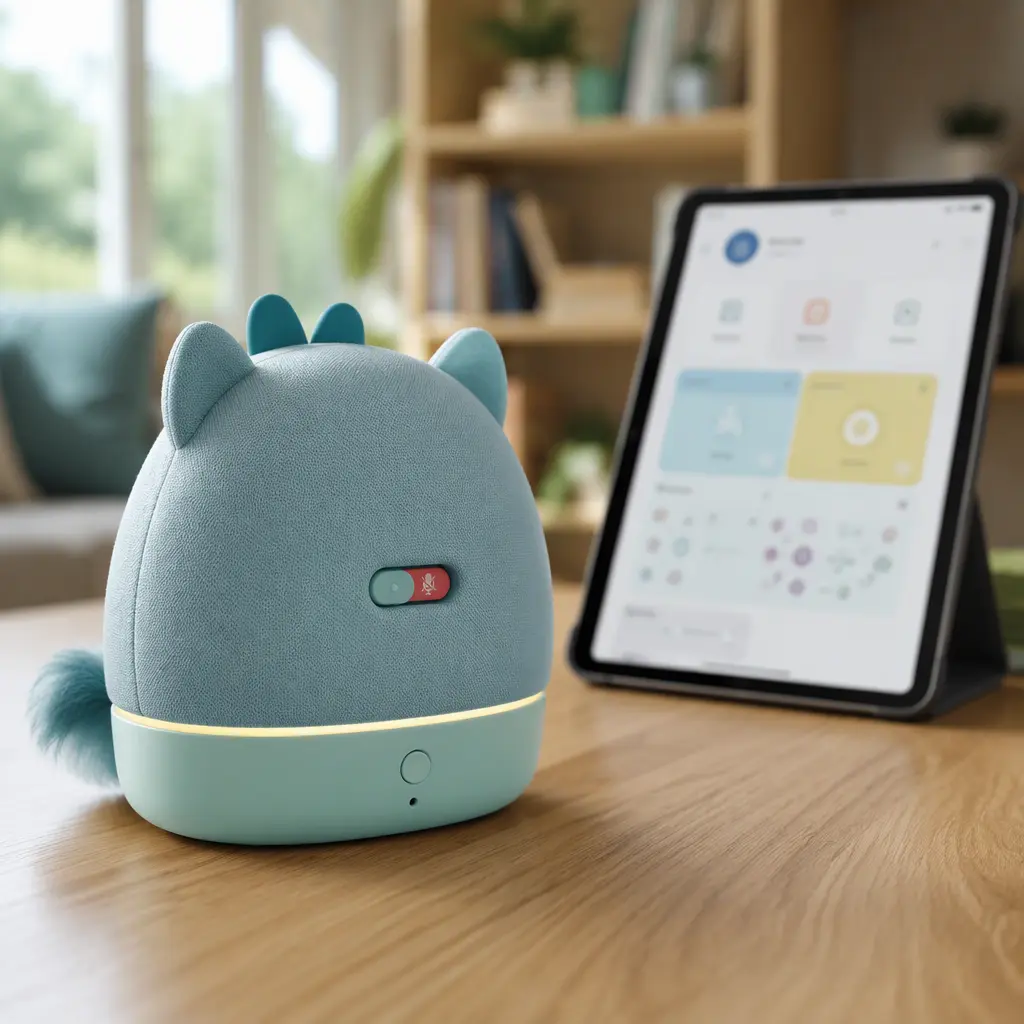
- Physical mute switches are usually easier and more reliable than app-only microphone controls.
- Look for toys that still allow stories, music or movement features without an internet connection.
- Parent dashboards should offer simple permission settings rather than complex menus hidden inside multiple apps.
- Check whether multiple adults can manage the toy or whether one account controls everything.
- Battery life and charging method matter for daily use, especially with toys that stay connected to Wi‑Fi.
- Cloud-based AI features may stop working if support ends, so consider whether the toy still has offline play value.
- Some smart toys require frequent app updates that may not support older phones or tablets over time.
- Volume limits and night modes are useful for bedrooms and shared living spaces.
Age suitability
For children aged three to five, the best connected toys usually keep interactions short, predictable and easy to supervise. Preschoolers often enjoy repetition and familiar routines more than open-ended AI conversations. Toys with simple voice prompts, guided games, songs or movement challenges tend to suit this age group better than chatbot-style products designed for older children. Parents should also consider physical durability. Younger children may drop toys, press buttons repeatedly or carry them between rooms. Compact smart speakers marketed as child-friendly can sometimes be less practical than purpose-built toys with reinforced casings and fewer exposed ports.
Options compared
Voice-assistant-based toys are often the most flexible but also the most dependent on accounts, apps and cloud services. Some products connect directly to broader ecosystems such as smart speakers or family assistant apps. These can support music, stories and routines, but they also raise more questions around recordings, household permissions and accidental purchases. Parents who already use smart assistants may appreciate centralised controls, while families wanting a simpler setup may find them unnecessarily complicated.
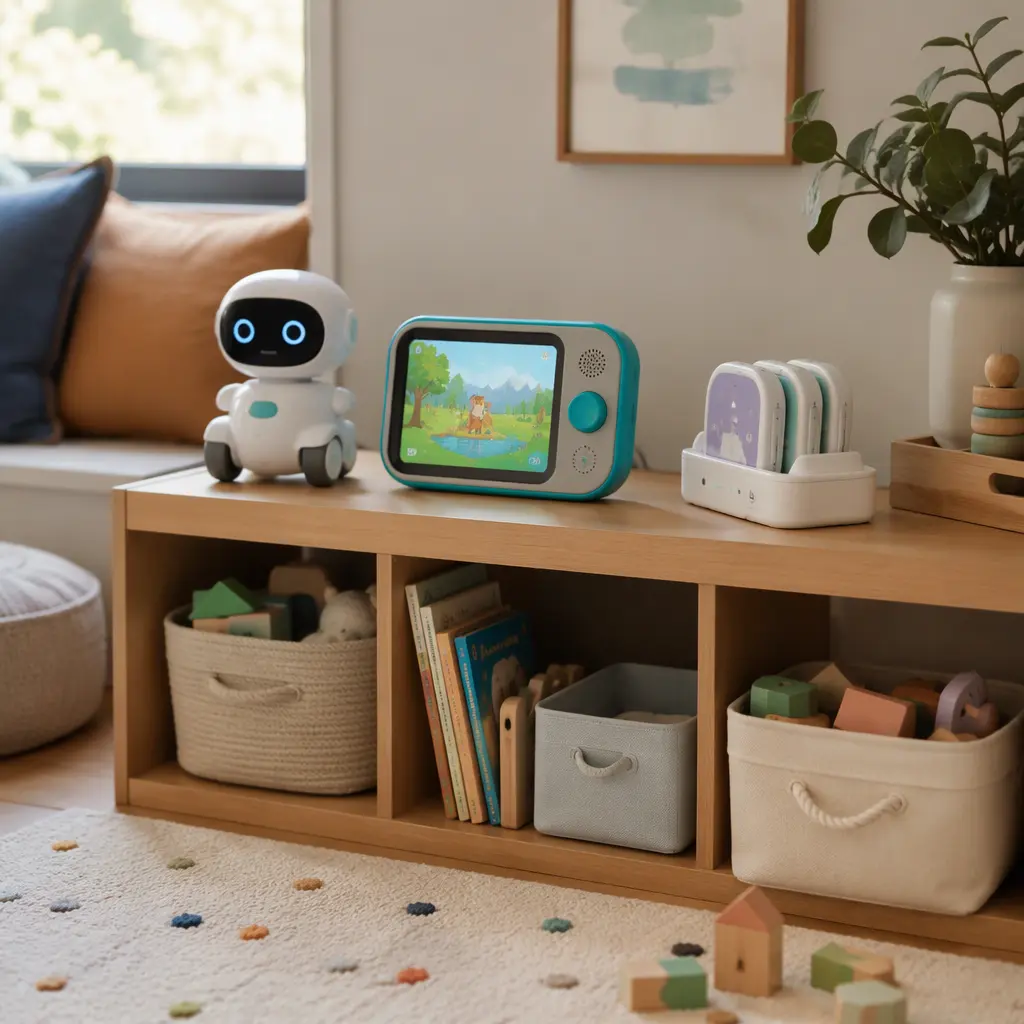
Dedicated AI companions and interactive learning toys are usually more limited in function but easier to manage. Many include parent dashboards with bedtime controls, approved contact settings or restricted conversation topics. The trade-off is that some features may require subscriptions or manufacturer accounts to unlock updates and new content. Offline-first toys sit at the opposite end of the scale. These may use basic speech recognition or sensors without sending data online. They generally offer fewer personalised responses but often have better long-term usability because they continue working even if app support changes.
- Smart speaker companions: flexible and feature-rich, but best for families already comfortable managing connected home accounts.
- Interactive story toys: usually easier for ages 3–5, with stronger bedtime and volume controls and simpler routines.
- Robot pets and learning robots: good for movement and engagement, though charging needs and noise levels vary widely.
- Offline interactive toys: lower privacy concerns and less setup, but usually less adaptive or conversational.
- App-heavy subscription toys: suitable for families who want expanding content libraries, but worth checking long-term costs and device compatibility.
Frequently asked questions
Do preschool AI toys always record children’s voices?
Not always. Some toys process speech locally with simple commands, while others send recordings to cloud services for interpretation. Manufacturer privacy pages should explain whether recordings are stored, reviewed or deletable. Physical mute switches remain one of the clearest indicators that parents can fully disable listening functions when needed.
Is offline mode important?
Offline mode can make a major difference in day-to-day usability. Toys that continue to tell stories, play games or respond to button controls without internet access are generally more reliable for travel, grandparents’ homes and households limiting screen or Wi‑Fi time. Offline functionality also reduces dependence on long-term cloud support.
What parental controls matter most in real use?
The most practical controls are usually the simplest: microphone mute switches, bedtime timers, volume limits, approved contact lists and permission settings for purchases or downloads. Complicated dashboards with many menus are less likely to be used consistently. Parents should also check whether settings remain active after updates or resets.
Are subscriptions common with AI toys?
Some connected toys include optional subscriptions for expanded stories, educational content or advanced AI conversations. Others require cloud credits or app memberships after an introductory period. Before buying, it helps to confirm which features work permanently without additional payments and whether the toy remains useful if subscriptions are cancelled.
Should parents avoid camera-equipped toys for this age group?
Camera-equipped toys are not automatically unsuitable, but they deserve closer scrutiny. Parents may prefer products that clearly explain image storage, parental approval and deletion controls. For many three-to-five-year-olds, microphones and cameras add little practical play value compared with simpler interactive features such as stories, songs and movement games.
The most useful AI toy for a preschooler is usually the one that fits smoothly into family routines rather than the one with the longest feature list. Clear mute controls, dependable offline play and straightforward parent permissions often matter more than advanced conversational abilities. For many families, a simpler connected toy with limited data collection and easy supervision will provide a better long-term balance between interactivity, privacy and everyday practicality.