Best Offline Audio Toys for Quiet Time Ages 6–8
A parent-focused guide to offline audio toys for ages 6–8, covering kid-safe controls, headphone use, bedtime practicality, storage, durability and screen-free listening options.
Compare prices and availability
Check current prices and availability for this guide on eBay.
As an eBay Partner, we may be compensated if you make a purchase.
Offline audio toys can give children independent entertainment without adding more screen time or requiring constant internet access. For ages 6–8, the most useful options balance simple controls with enough independence that children can choose stories, music or calming audio on their own. Parents often look for toys that work quietly during early mornings, shared bedrooms, travel or bedtime routines, but practical details matter just as much as the audio itself. Volume limits, headphone compatibility, durable controls and easy storage can make the difference between a toy that becomes part of daily quiet time and one that sits unused after a few weeks.
What to look for
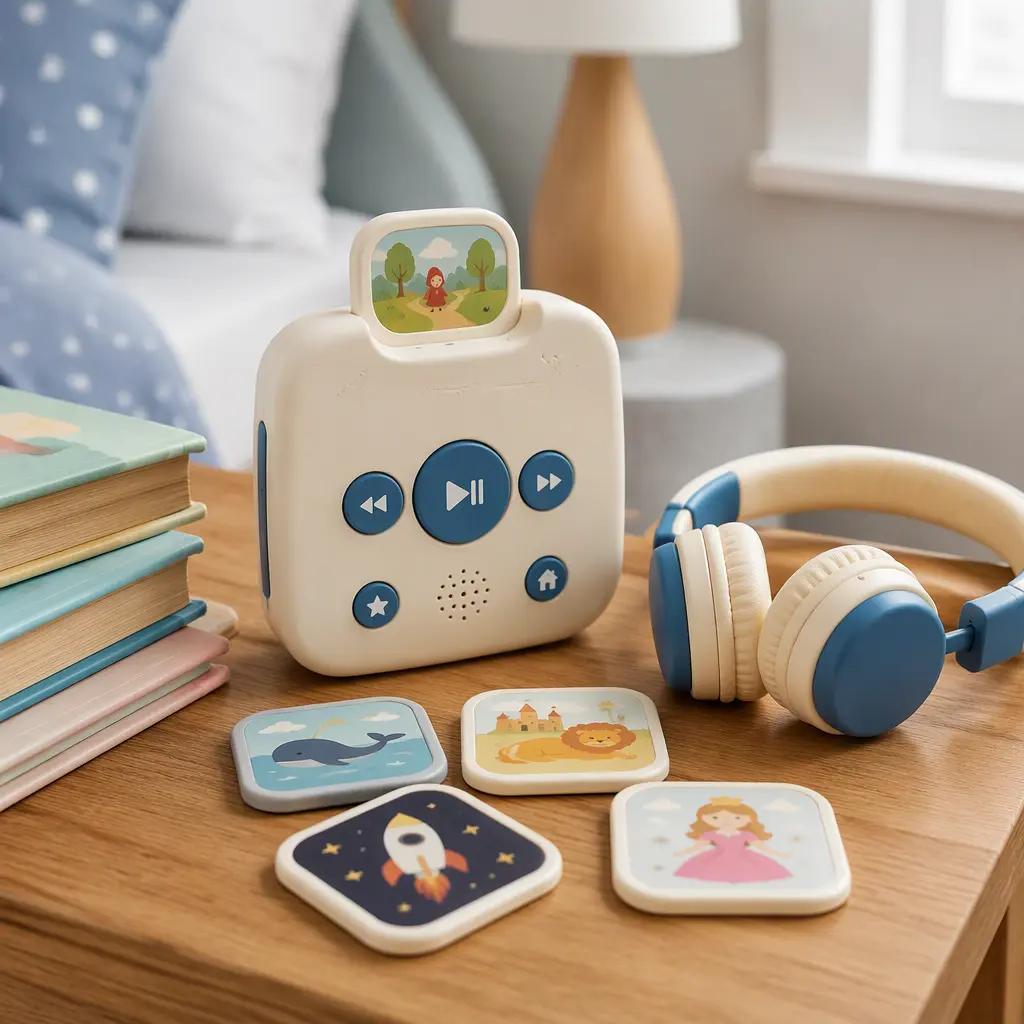
The best offline audio toys for this age group are easy enough for children to operate independently but sturdy enough to survive everyday handling. Some systems use physical figures, cards or tokens to start playback, while others rely on built-in speakers with simple menu navigation. The right choice depends on how your child listens and where the toy will be used most often.
- Simple controls: Large buttons and physical playback controls are easier for younger children than touchscreen menus.
- Offline playback: Look for toys that work fully without apps, subscriptions or constant Wi‑Fi connections after setup.
- Headphone compatibility: Helpful for shared bedrooms, travel and quiet mornings. Wired headphone ports are often simpler for children than Bluetooth pairing.
- Volume limits: Child-oriented audio devices may include capped volume settings to reduce excessively loud listening.
- Battery and charging needs: Rechargeable units reduce disposable batteries but require regular charging habits.
- Durability: Rubberized edges, sturdy handles and simple moving parts tend to hold up better in backpacks and playrooms.
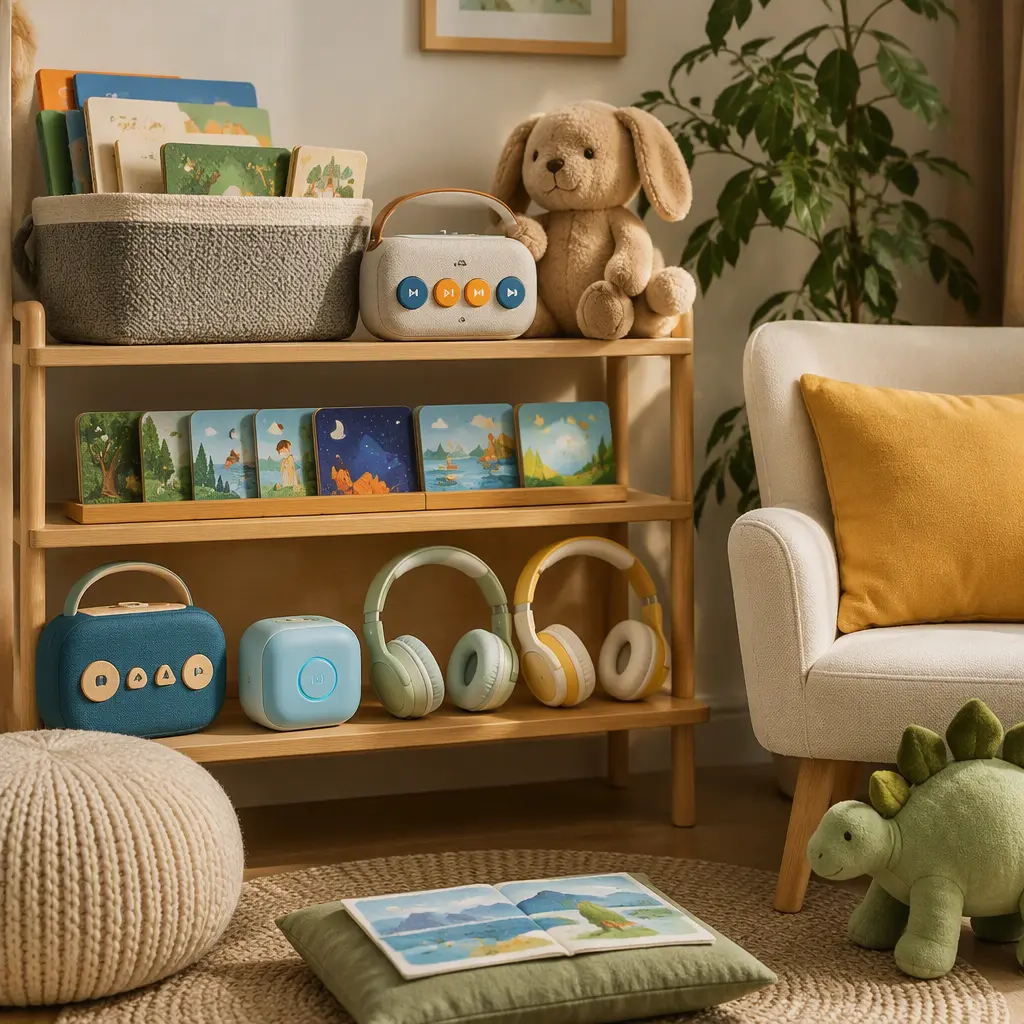
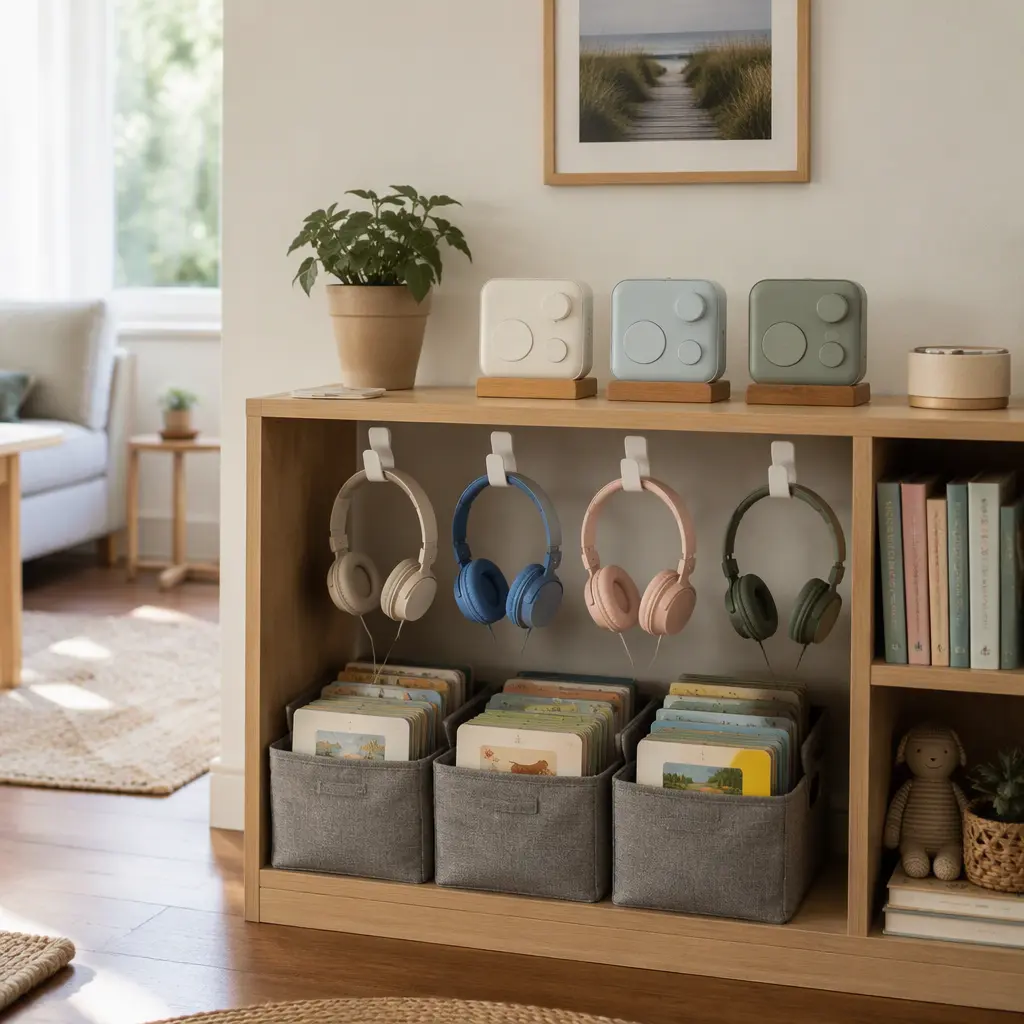
- Storage footprint: Collections that rely on physical story cards or figures may need bins or shelves to avoid clutter.
- Bedtime usefulness: Softer speakers, sleep timers and calming audio options work better for evening listening than highly interactive sound effects.
Age suitability
Children aged 6–8 are usually ready for more independence than preschool-focused audio toys expect. Many can manage playlists, pause functions and headphones without adult help, but they still benefit from tactile controls and clearly organized audio collections. Story-based audio players suit children who enjoy reading time, imaginative play or calming solo activities. Portable music players may appeal more to children who like dancing, movement or creating routines around music. At this age, some children also begin listening to longer chapter-book audio, so battery life and comfortable listening become more important than novelty features.
Options compared
Character-based audio players that use figures, cards or tokens are often the easiest starting point for independent quiet time. Children can physically select a story without scrolling through menus, and many systems are designed for younger hands. These can work especially well for bedtime because they feel calm and predictable. The trade-off is storage space. Story collections can spread across bedrooms quickly, and replacing missing pieces may become frustrating over time.
Portable offline music players with preloaded audio or local file playback usually offer longer-term flexibility for older children. They may support audiobooks, music and educational content in one device, often with headphone options that suit travel or shared spaces. However, menu-based navigation can feel less intuitive for children who prefer immediate physical interaction. Some children also lose interest if setup depends heavily on adults transferring audio files.
- Story-token systems: Best for children who enjoy routine, bedtime stories and tactile play. Less ideal for families trying to minimize toy clutter.
- Portable audio players: Good for travel, long-form audiobooks and shared bedrooms with headphones. Better suited to children comfortable navigating simple menus.
- Speaker-style bedtime players: Useful for calming nighttime listening and winding down without bright lights. Usually less portable for car trips or outdoor use.
- Build-your-own audio kits: Appeal to children interested in recording sounds or experimenting creatively. Often require more supervision and setup time.
- Simple CD or disc players for kids: Can work well for families who already own physical audiobooks or music collections, though discs scratch more easily and take more storage space.
Frequently asked questions
Are headphones necessary for quiet-time audio toys?
Not always, but they can make a big difference in shared homes or bedrooms. Built-in speakers are easier for younger children to manage independently, while headphones reduce background noise during early mornings, travel or sibling nap times. Comfortable wired headphones are often simpler and more reliable for this age group than wireless models.
Do offline audio toys still need apps?
Some products require an app for initial setup or downloading content, while others work entirely through physical media or preloaded audio. Families trying to avoid subscriptions or account management may prefer systems that function fully offline once purchased.
What works best for bedtime?
Calmer speaker-based players with sleep timers and straightforward controls tend to fit bedtime routines better than highly interactive toys. Soft narration, gentle music and automatic shutoff features are often more practical than devices with flashing lights or game-style sound effects.
Are physical story collections difficult to organize?
They can become messy without a simple storage system. Small bins, labeled drawers or bookshelf baskets help children keep track of story pieces independently. Families with limited storage space may prefer all-in-one audio players instead of collectible formats.
Which option lasts longest as children grow?
Flexible audio players that support audiobooks and music often remain useful longer than preschool-focused systems. Children around ages 6–8 may gradually shift from short stories toward chapter books, podcasts or music playlists, so adaptable playback options can extend the toy's lifespan.
The right offline audio toy depends less on novelty and more on how it fits daily family routines. Children who need calm independent play may benefit from simple story systems with easy controls, while frequent travelers or audiobook fans may get more use from flexible portable players and headphones. Focusing on ease of use, volume management, storage and bedtime practicality usually leads to a better long-term fit than choosing the most feature-heavy device.