StoryPhones vs Yoto Mini for Shared Kids’ Bedrooms
Comparing StoryPhones and Yoto Mini for siblings sharing a room, with a focus on bedtime listening, quiet overnight use, headphones, controls, storage and family practicality.
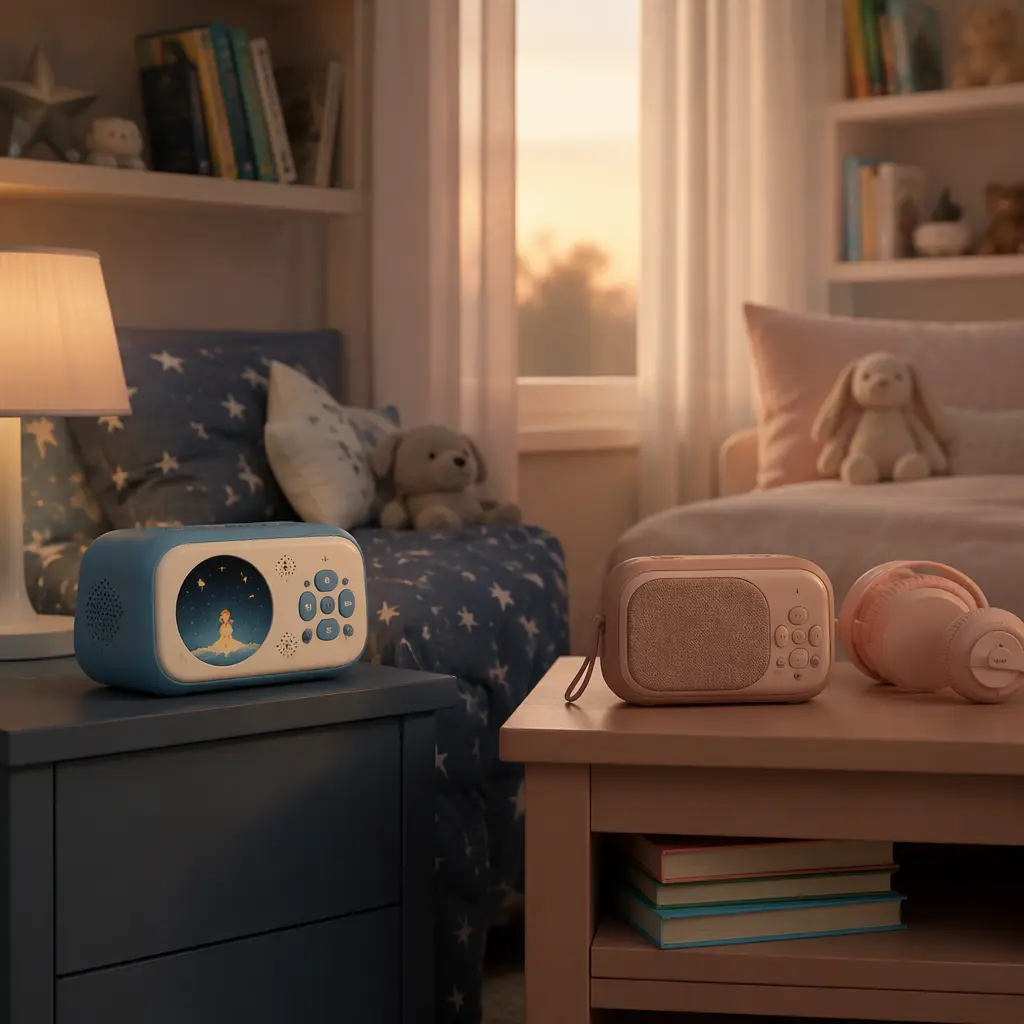
Compare prices and availability
Check current prices and availability for this guide on eBay.
As an eBay Partner, we may be compensated if you make a purchase.
For families with children sharing a bedroom, an audio player can make bedtime calmer or create a new source of arguments. StoryPhones and the Yoto Mini are both designed for screen-free listening, but they solve the problem differently. StoryPhones focus on wireless headphone listening, while the Yoto Mini works more like a compact speaker-based audio player with optional headphone support. For children aged 6–8, the better choice often comes down to how sensitive siblings are to noise, whether both children need equal access, and how much parents want to manage cards, charging and app setup.
What to look for
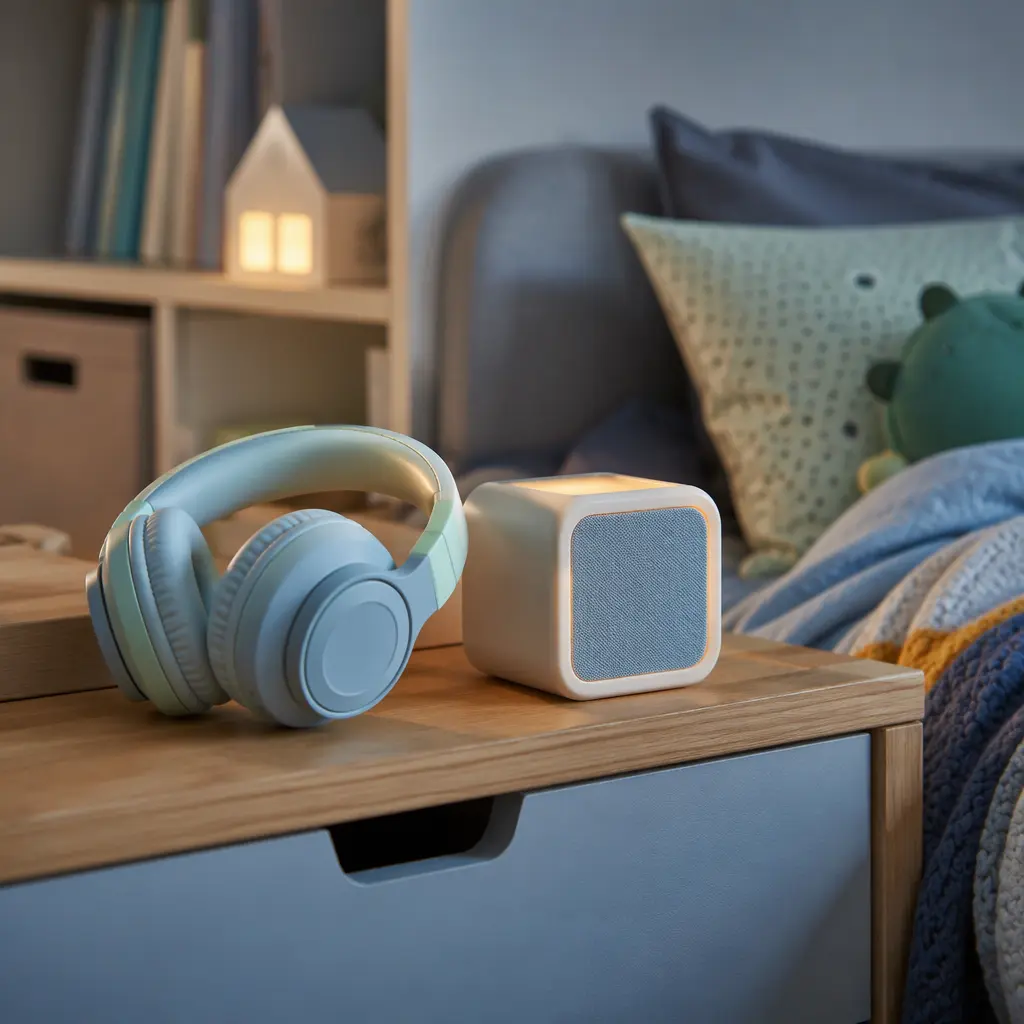
Bedtime listening in a shared room puts different demands on an audio player than daytime use. Volume control matters more than portability, and overnight charging habits become important quickly. Parents should also think about how children select content independently and whether the setup encourages sharing or competition.
- Headphone support: Wireless headphones help keep one child’s listening private and reduce bedtime noise disputes.
- Speaker volume control: Devices with precise low-volume settings are usually more suitable for overnight listening.
- Ease of independent use: Children in the 6–8 range often manage simple physical controls more easily than app-heavy systems.
- Content format: StoryPhones use audio tokens attached to headphones, while Yoto Mini relies on physical cards and app-linked content.
- Battery and charging habits: Portable audio devices are often moved between beds, cars and living spaces, so regular charging routines matter.
- Offline usefulness: Downloaded content can help avoid interruptions if Wi‑Fi is unstable or unavailable overnight.
- Storage and organisation: Small cards and tokens are easy to lose in shared rooms unless families use labelled containers or bedside storage.
- Sibling fairness: Some setups naturally encourage one-child-at-a-time listening, while others are easier to share or rotate fairly.
Age suitability
Both StoryPhones and Yoto Mini generally suit children aged 6–8 well, but they encourage slightly different listening habits. StoryPhones may appeal more to children who already enjoy headphones and want private listening without disturbing a sibling. The headphone-first design can work especially well for children with different sleep schedules or different taste in stories and music. Yoto Mini tends to suit families looking for more flexible listening around the house as well as at bedtime. Children can use it as a speaker during the day, then switch to headphones at night. Some younger children may find Yoto’s card system easier to understand immediately, while older children often appreciate the broader mix of stories, podcasts, music and radio-style content available through the Yoto ecosystem.
Options compared
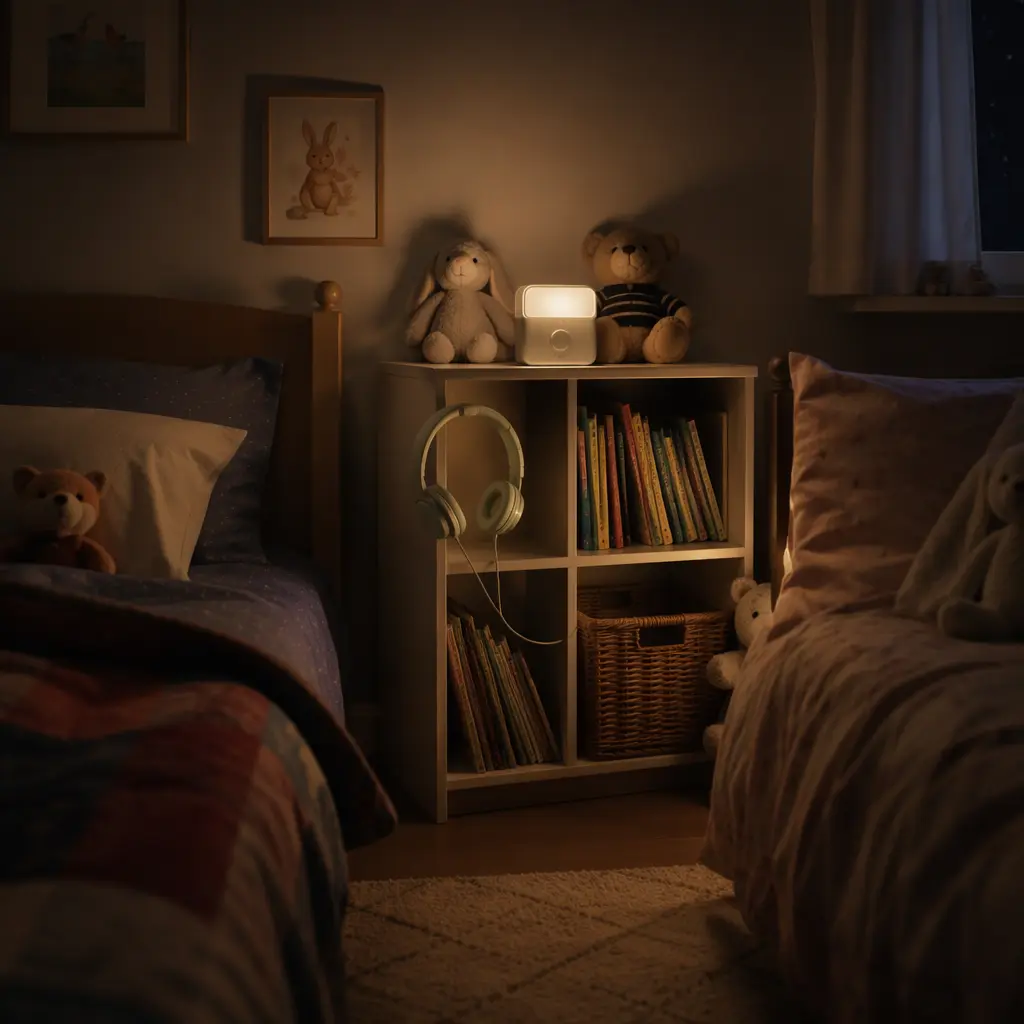
StoryPhones are built around the idea of personal listening. The headphones themselves are central to the experience, and the audio tokens act as a simple way for children to switch between stories or music. In a shared bedroom, this approach can reduce the common problem of one child keeping the other awake with repeated stories or songs. Wireless listening also avoids placing a speaker close to one child’s bed. However, families should expect more dependence on keeping headphones charged and paired correctly. If the headphones are misplaced or run out of battery, the device becomes less convenient quickly.
The Yoto Mini offers more flexibility but may require more bedtime rules in shared spaces. It can operate through its built-in speaker or through wired or wireless headphones depending on the setup. For siblings who enjoy listening together, the speaker mode can become part of a shared bedtime routine. On the other hand, children with different schedules or lighter sleepers may find speaker playback frustrating. Yoto’s physical cards are easy for children to swap independently, but shared access can sometimes create disputes over favourite stories or whose turn it is to choose content.
- Choose StoryPhones if quiet personal listening is the main priority and siblings regularly disturb each other at bedtime.
- Choose Yoto Mini if the device will also be used around the house for daytime listening, travel or shared story sessions.
- StoryPhones may suit children who prefer wearing headphones and like a more self-contained listening experience.
- Yoto Mini may suit families who want broader content options and flexible speaker or headphone use.
- Families with limited bedside space may prefer the smaller footprint of compact audio players over separate speaker setups.
- Parents who want fewer accessories to track may prefer systems with simpler storage needs, since cards and audio tokens both require organisation.
Frequently asked questions
Which is quieter for overnight listening?
StoryPhones are usually the quieter option because listening happens directly through the headphones. Yoto Mini can also be quiet when headphones are connected, but many families use it as a bedside speaker during at least part of the evening.
Do these devices need Wi‑Fi all the time?
Both systems can offer offline listening after content is downloaded or synced, although setup and content management may still involve companion apps and internet access. Families should check current manufacturer guidance for offline features and regional support.
Which is easier for siblings to share fairly?
The answer depends on how children listen. Yoto Mini works better for shared story time because multiple children can hear the speaker together. StoryPhones reduce conflict when children want different content at the same time because listening stays private.
Are there privacy concerns with connected kids’ audio players?
Parents should review how companion apps handle accounts, listening history and connected features. These devices are different from conversational AI toys because they primarily play pre-selected audio rather than generating responses. Even so, app accounts, cloud syncing and wireless connectivity are worth reviewing before purchase.
What about durability for everyday family use?
Portable audio players and headphones are regularly dropped, carried between rooms and packed for travel. Protective cases, easy-to-clean materials and replaceable accessories may matter more than extra features for many families. Small cards and tokens can also be lost easily in busy shared bedrooms.
For shared bedrooms, the quieter and more private design of StoryPhones can make bedtime simpler, especially for light sleepers or siblings with different routines. Yoto Mini remains the more flexible all-around audio player for families who want shared listening during the day and independent use at night. The best choice depends less on content libraries and more on how your household manages noise, bedtime routines, charging and sibling cooperation.