Toniebox Lite vs Yoto Mini for Early-Waking Kids
A UK-focused guide comparing Toniebox Lite and Yoto Mini for children aged 3–5, with practical advice on volume limits, independent use, subscriptions, sleep routines and bedroom-friendly playback.
Compare prices and availability
Check current prices and availability for this guide on eBay.
As an eBay Partner, we may be compensated if you make a purchase.
For parents of children who wake at 5am ready for the day, screen-free audio players are often suggested as a calmer alternative to tablets or TV. Two of the most discussed options in the UK are the Toniebox Lite and the Yoto Mini. Both are designed for independent listening, both offer stories and music aimed at preschoolers, and both are marketed as child-friendly alternatives to screens. The important question for tired parents is whether either device genuinely helps children stay settled independently for longer. In practice, the answer depends less on the story library and more on factors such as volume control, how easily a child can operate the device alone, bedroom suitability, and how much setup parents are willing to manage.
What to look for
For early-morning use, the main goal is usually quiet independent listening rather than high-energy play. A device that works well in the living room may be less successful at 5am if it is too loud, too stimulating, or difficult for a tired preschooler to navigate alone. UK parents should also consider how much the device depends on apps, Wi‑Fi or subscriptions, especially if they want something that continues working during travel or without regular phone setup.
- Volume control matters more than speaker quality. A player with clear low-volume playback is often more useful for bedrooms than one designed to fill a room.
- Simple controls help children stay independent. Preschoolers usually cope better with large physical controls than touchscreens or menu systems.
- Headphone support can help older preschoolers avoid waking siblings, but some children aged 3–5 dislike wearing headphones in bed.
- Battery life affects overnight convenience. Devices that regularly need charging may end up unavailable during early mornings.
- Consider offline usefulness. Some audio systems rely heavily on apps or cloud syncing for setup and content management.
- Storage and durability differ. Softer, padded designs are often more forgiving when dropped from beds or carried downstairs half-awake.
- Check ongoing costs. Story figures, cards, subscriptions and downloadable content can add up over time.
Age suitability
For children aged 3–5, the biggest difference between these two systems is usually how independently they can use them. Toniebox-style players are often easier for younger preschoolers because interaction is highly physical: placing a character on top starts playback, and simple tapping or tilting controls the audio. Yoto Mini systems tend to suit slightly older or more confident children who can manage cards, basic menus and navigation buttons. That does not mean a four-year-old cannot use a Yoto Mini independently, but some children will need more support at first. Parents should also think about sleep habits. Children who become overstimulated easily may do better with shorter stories, gentle audio and fewer choices available at bedtime.
Options compared
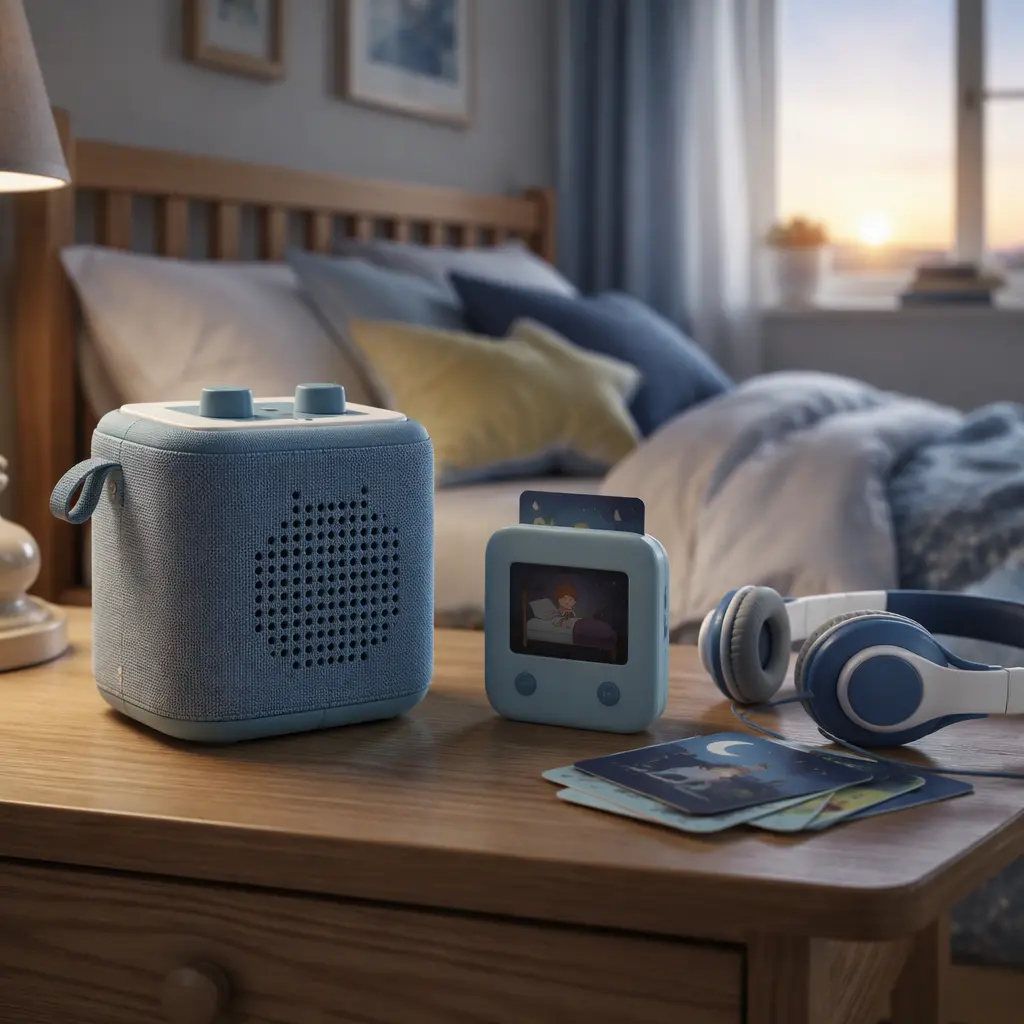
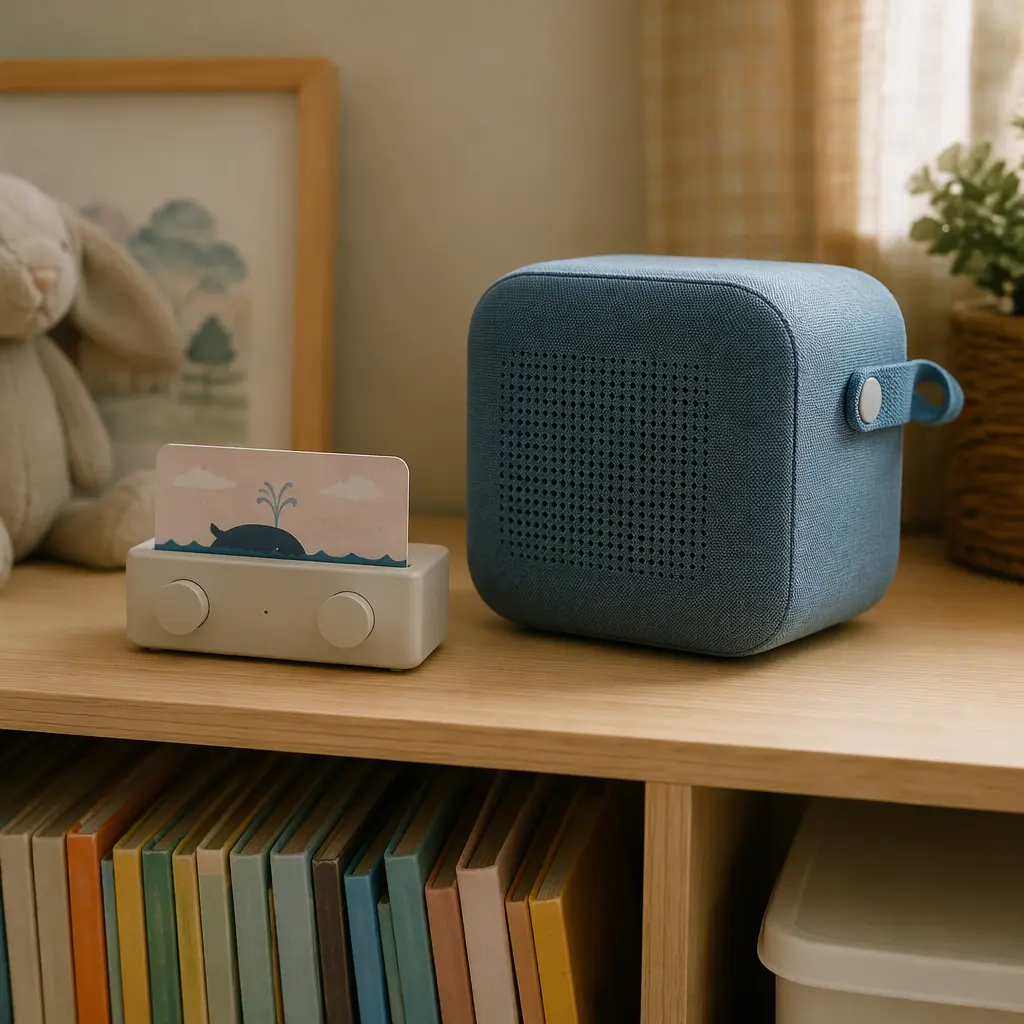
The Toniebox approach focuses on tactile simplicity. Children place a character figure on the speaker to begin playback, making it accessible even for many three-year-olds. The soft outer design is also appealing for bedroom use because it is less likely to feel fragile if dropped. For early-waking children, this simplicity can genuinely reduce parent involvement. The trade-off is that story selection depends on owning physical figures, which can become expensive and harder to store over time. Some parents also find the speaker volume less precise at lower settings than they would like for shared bedrooms.
The Yoto Mini takes a different approach. It is smaller, more portable and generally better suited to travel or shared family spaces. Story playback uses cards rather than figures, which many families find easier to store in large collections. Features such as headphone support and compact size may work well for older preschoolers who wake before siblings. However, the more structured interface means some younger children still need help changing content independently in the early morning. Parents should also be aware that app setup, Wi‑Fi syncing and account management play a larger role in the experience. If your goal is the least parent interaction possible at dawn, that setup complexity matters.
- Choose a Toniebox-style player if your child is younger, prefers physical play, or struggles with menus and buttons.
- Choose a Yoto Mini-style player if portability, headphone listening or compact storage matter more.
- Avoid relying on either option as a guaranteed sleep solution. Some children become more alert once stories begin.
- For noise-sensitive homes, look carefully at low-volume performance and headphone compatibility rather than maximum loudness.
- Families who prefer minimal app involvement may prefer simpler systems with stronger offline usability.
Frequently asked questions
Do these audio players actually help children stay in bed longer?
They can help some children stay occupied calmly for longer periods, especially those already comfortable with independent quiet play. Results vary widely depending on the child’s temperament and sleep habits. Audio often works best as part of a broader morning routine rather than a standalone solution.
Which option is quieter for shared bedrooms?
That depends partly on room acoustics and listening habits, but headphone support gives compact players like the Yoto Mini an advantage for sibling sharing. Some parents prefer speaker playback for safety and comfort reasons, especially with younger preschoolers.
Are subscriptions required?
Core playback usually works without an ongoing subscription, but both ecosystems may offer optional memberships, extra content libraries or downloadable audio purchases. Parents should check what content ownership looks like before building a large collection.
Do these devices use microphones or cameras?
These audio players are generally focused on playback rather than conversational AI features. They are not comparable to smart speakers with always-listening voice assistants. However, companion apps, cloud syncing and account systems may still collect usage or account data, so reviewing privacy settings and manufacturer policies is worthwhile.
Is either device useful without Wi‑Fi?
Downloaded or preloaded audio can often play offline after setup, which is useful for travel and bedrooms with weak signals. Initial configuration, account management and adding new content may still require internet access through a companion app.
For parents hoping for extra sleep, neither the Toniebox Lite nor the Yoto Mini is a guaranteed fix for early waking. The more realistic benefit is giving some children a calmer, more independent way to start the morning without immediately needing a screen or adult attention. For most 3–5 year olds, the better choice comes down to how independently they can operate the device at half-awake o’clock, how quietly it fits into your household, and whether you prefer figure-based simplicity or card-based flexibility.