Toy Drums vs Keyboards for Noise-Sensitive Homes
Comparing toy drums and keyboards for ages 3–5 in apartments and shared homes, with practical advice on volume control, headphone use, replay value, storage and supervision.
Compare prices and availability
Check current prices and availability for this guide on eBay.
As an eBay Partner, we may be compensated if you make a purchase.
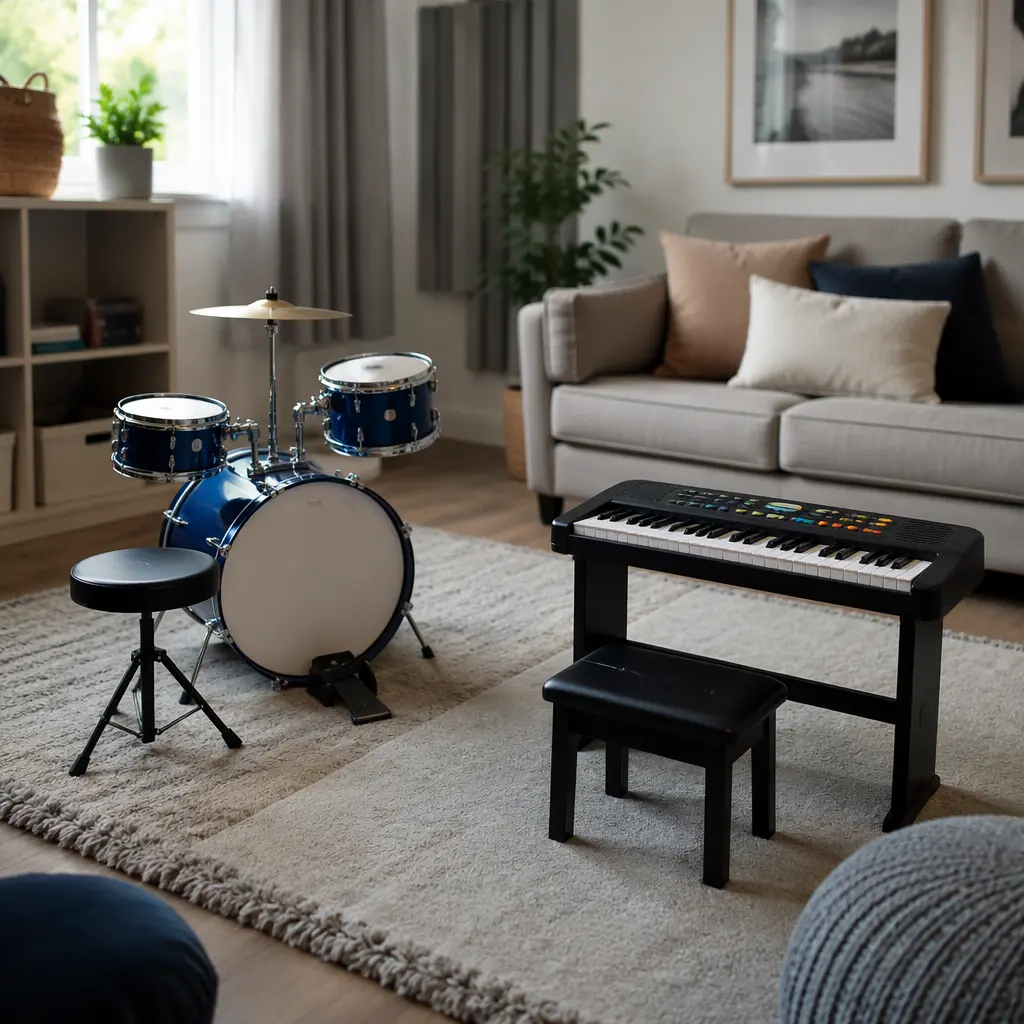
For families in apartments, shared homes or noise-sensitive households, music toys can be surprisingly difficult to choose. Toy drums encourage active movement and rhythm play, while keyboards usually offer more control over volume and repetition. For children aged 3–5, the better choice often depends less on musical ability and more on how much sound a home can realistically handle, how often adults need quiet time and whether the toy can stay engaging without becoming overwhelming. Both categories can support coordination, listening skills and imaginative play, but they create very different kinds of noise and require different levels of supervision, storage space and patience from nearby adults.
What to look for
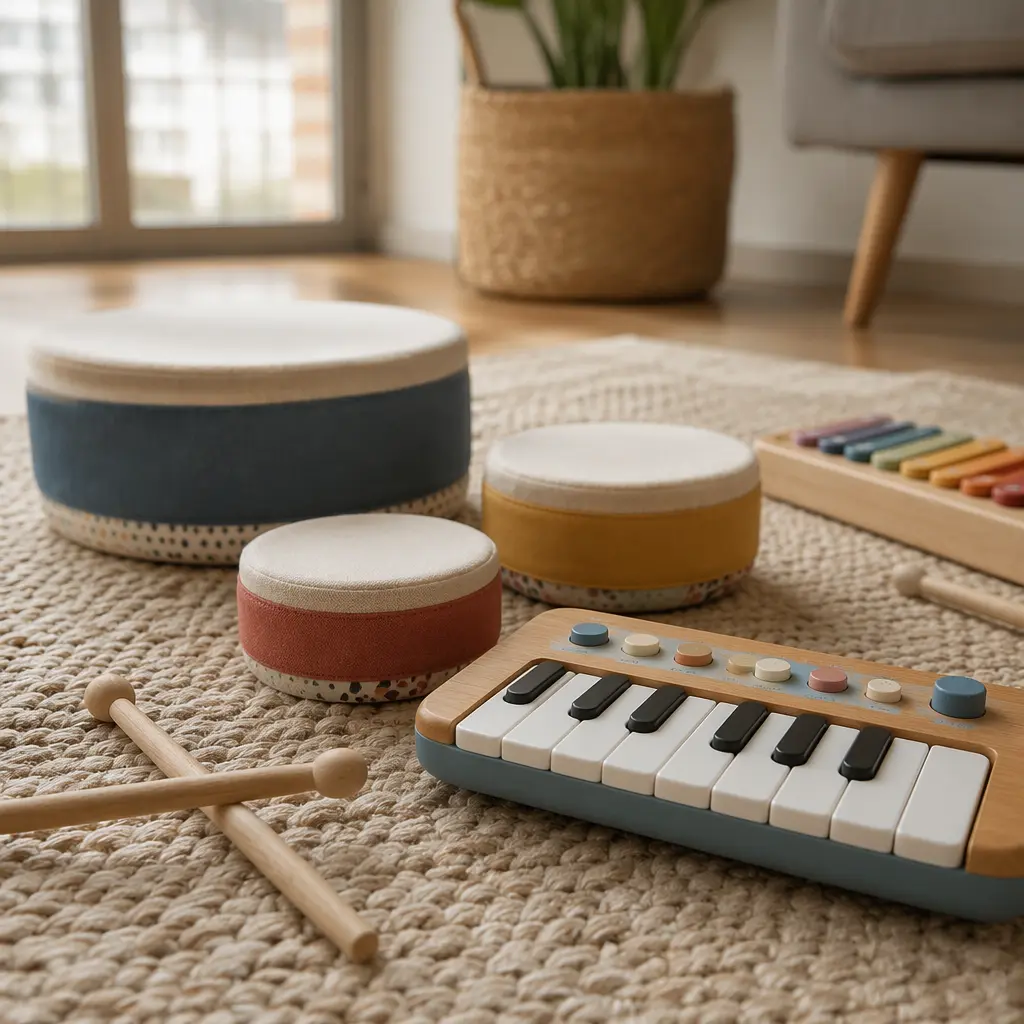
Noise-sensitive homes benefit from music toys that allow adults to adjust sound levels without removing the fun entirely. Some toys are designed around open-ended music making, while others rely on bright sound effects, pre-recorded songs or flashing electronics that can become tiring over time. Before choosing, it helps to think about where the toy will be used, how often siblings or neighbors may hear it and whether the child prefers energetic movement or calmer seated play.
- Look for adjustable volume settings with more than one sound level rather than a simple on/off switch.
- Headphone compatibility can make keyboards easier for apartments, though very young children may still need volume monitored carefully.
- Soft drum pads or fabric-covered drums tend to reduce sharp impact noise compared with hard plastic drum surfaces.
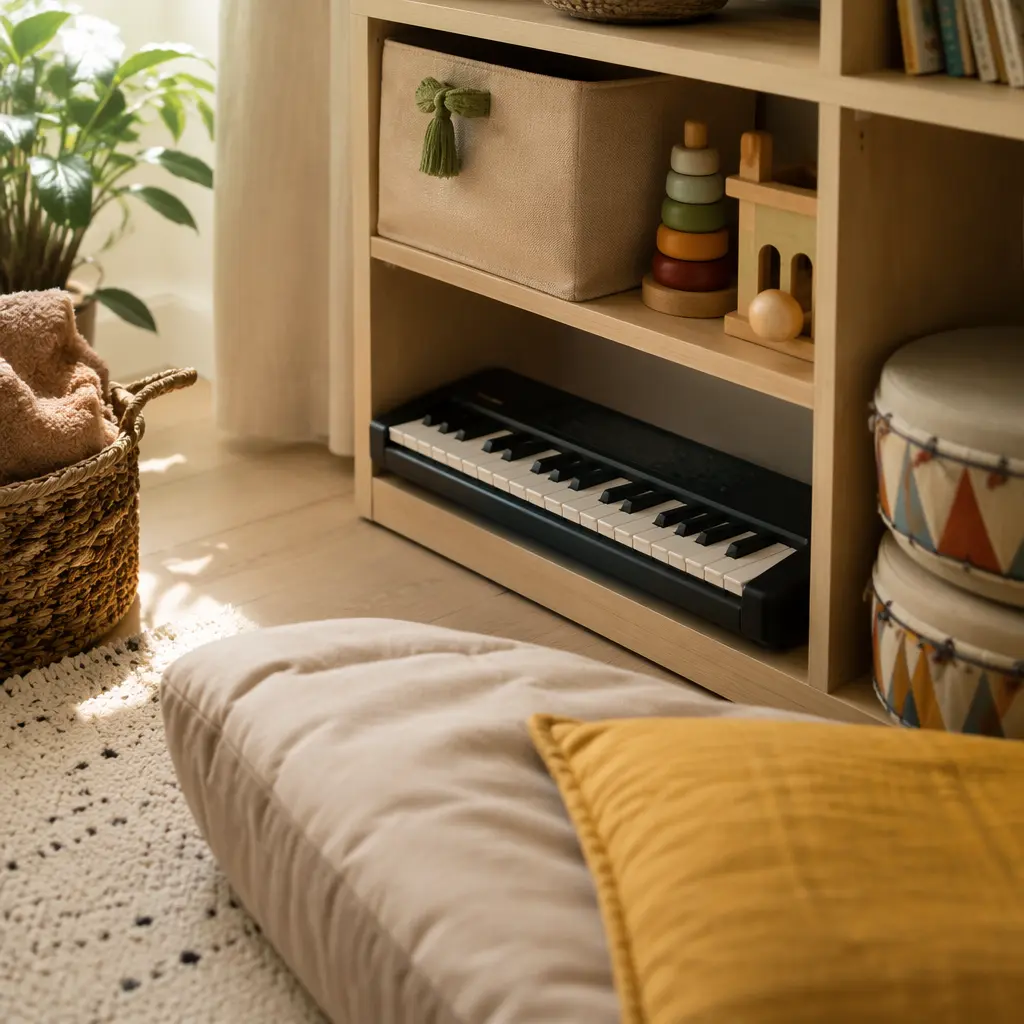
- Check the toy size against available floor space. Drum kits spread outward, while keyboards usually store more easily on shelves or under furniture.
- Battery-powered toys with constant demo songs can become repetitive in shared spaces. Simpler instruments often create less background noise.
- Children who enjoy full-body movement may stay engaged longer with drums, while children who prefer patterns and repetition may return to keyboards more often.
- Consider cleanup and storage. Drumsticks, detachable pedals and small accessories are easier to misplace than an all-in-one keyboard unit.
Age suitability
Between ages 3 and 5, most children are still experimenting rather than learning formal music skills. At the younger end of the range, simple cause-and-effect play matters more than musical accuracy. Large drum surfaces are usually easier for younger preschoolers to use successfully because they reward movement immediately. Keyboards often become more appealing closer to age 4 or 5, when children can repeat simple patterns, recognize musical differences and sit with one activity for longer periods. Some very small keyboards have tiny keys that frustrate younger children, while oversized drum sets may encourage rough indoor play if space is limited. For this age group, durable construction and manageable sound levels usually matter more than advanced electronic features.
Options compared
Toy drums are usually the louder option in real-world use, even when marketed for preschoolers. The main challenge is not electronic volume but impact noise. Repeated tapping travels through floors and walls more easily than many parents expect, especially in apartments with hard flooring. Drums tend to suit energetic children who enjoy physical play, standing movement and fast sensory feedback. They can also work well for short bursts of active indoor play during bad weather. However, families needing quiet mornings, calm evenings or frequent shared work-from-home time may find drums difficult to manage unless they choose softer practice-style drum pads or smaller hand drums.
Keyboards generally offer more flexibility for noise-sensitive homes because many include volume adjustment or headphone support. The sound is also more predictable and directional than drumming. Children can experiment independently without creating constant impact noise across a room. Keyboards often provide stronger long-term replay value for children who enjoy repetition, imitation songs and imaginative pretend performances. The trade-off is that some electronic keyboards rely heavily on flashing lights, demo music and sound effects that adults may find overstimulating. Smaller keyboards can also feel less satisfying for children who mainly want energetic movement rather than seated play.
- Choose toy drums if your child enjoys active movement, rhythm games and physical play, and your home can tolerate occasional louder sessions.
- Choose keyboards if you need adjustable volume, easier storage and quieter independent play for shared-wall living.
- Soft practice drum pads can offer a middle ground for children interested in percussion without the sharpest noise levels.
- Simpler keyboards with fewer electronic extras may age better in family spaces because they create less repetitive background sound.
- Avoid very large toy drum kits in small apartments unless there is a dedicated play area with rugs or soft flooring.
- Children sensitive to loud sounds themselves may prefer keyboards because the sound source feels more controlled and predictable.
Frequently asked questions
Are toy keyboards actually quiet enough for apartments?
Many are quieter than toy drums because the sound comes from speakers rather than physical impact. Models with adjustable volume or headphone support are usually easier for apartment living. Even so, repeated demo songs and electronic effects can still carry through small spaces, especially at higher settings.
Do headphones make keyboards a better choice for preschoolers?
Headphones can reduce household noise significantly, but younger children still need supervision with volume levels and cable use. Some children aged 3–5 may not tolerate headphones for long periods. For occasional quiet play, they can still be useful in shared homes.
Can toy drums be made less noisy?
Yes. Rugs, foam mats and padded drum surfaces can soften impact sound noticeably. Smaller tabletop drums are usually easier to manage than full standing kits. Limiting play to daytime hours also helps in homes with nearby neighbors.
Which option keeps children interested longer?
Replay value depends heavily on the child’s play style. Drums often stay exciting for active children who enjoy movement and rhythm games, while keyboards may hold attention longer for children who like repeating tunes, experimenting with sounds or pretending to perform songs.
Are electronic music toys too stimulating before bedtime?
Some can be. Toys with flashing lights, fast demo music and loud sound effects may make quiet transitions harder in the evening. Simpler instruments with lower sound levels are often easier to fit into calmer routines later in the day.
For most noise-sensitive homes with children aged 3–5, keyboards are usually the easier option to manage day to day because they offer more predictable sound control and simpler storage. Toy drums still have value for movement, coordination and energetic play, but they work best when families have enough space, soft flooring and realistic expectations about indoor noise. Choosing the quieter toy does not necessarily mean choosing the less engaging one. Matching the toy to the home environment often leads to longer, less stressful play overall.