First Ride-On Toys That Work Indoors and Outdoors
A parent-friendly guide to compact, no-battery ride-on toys for ages 1–2 that handle both indoor floors and outdoor paths. Learn what to look for, age fit, safety tips, and common questions.
Compare prices and availability
Check current prices and availability for this guide on eBay.
As an eBay Partner, we may be compensated if you make a purchase.
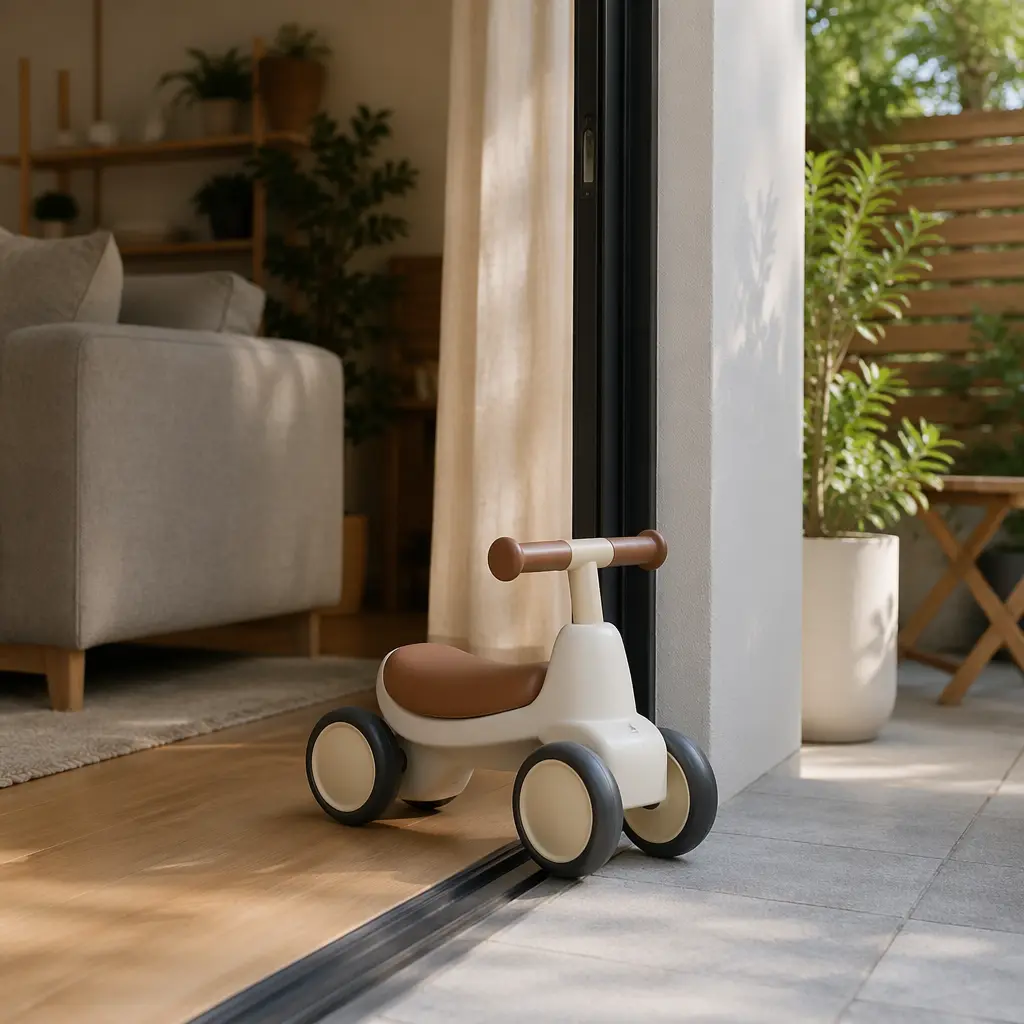
For many toddlers, a first ride-on is about learning balance, steering, and confidence—not speed or screens. Parents often want one toy that works on living room floors and outside on sidewalks or patios. Compact, no-battery ride-ons fit that need, offering simple motion powered by little legs and enough durability for mixed play spaces. This guide explains what to look for when choosing an indoor-outdoor ride-on for ages 1–2, with a focus on safety, size, and everyday practicality.
What to look for
Indoor-outdoor ride-ons need to balance stability with maneuverability. Because they’re used in tighter spaces, details that might not matter outdoors alone—like turning radius and floor protection—become important.
- Low seat height: Helps early walkers sit, scoot, and push with feet flat on the ground.
- Wide wheelbase: Adds stability during turns and reduces tip risk.
- Smooth, non-marking wheels: Designed to roll quietly on indoor floors without leaving scuffs.
- Lightweight frame: Easier for toddlers to control and for adults to carry between spaces.
- Simple steering: Limited or gentle steering prevents jackknifing in small rooms.
- Weather-tolerant materials: Plastic or sealed wood that can handle occasional outdoor moisture.
Age suitability
For the 1–2 year range, ride-ons should support early motor skills rather than challenge balance too aggressively. Many toddlers at this age are still mastering walking, so a ride-on works best when it allows slow scooting and frequent stops. Look for designs that don’t require pedaling or advanced steering. Adjustable seats can extend usability, but even fixed-seat models can work well if the height is appropriate for your child’s current stage.
Standout categories or types
Several styles of no-battery ride-ons work particularly well across indoor and outdoor settings. The right category depends on how much space you have and how your toddler prefers to move.
- Foot-to-floor scooters: Toddlers sit and push with both feet, offering maximum control and slow, predictable movement.
- Low-profile balance-style ride-ons: These resemble early balance bikes but with extra stability and limited steering for indoor safety.
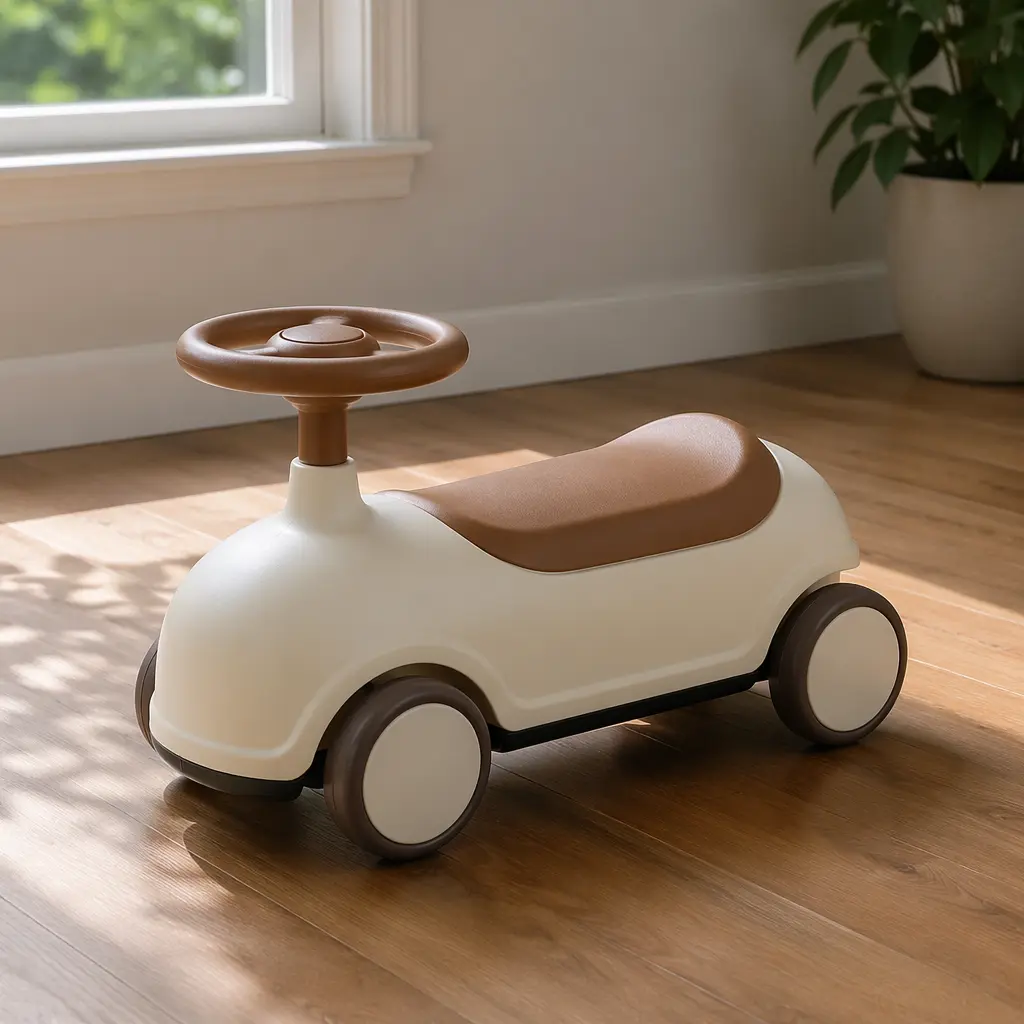
- Four-wheel sit-on cars: Designed for straight-line scooting, they’re easy to manage in hallways and on sidewalks.
- Rock-and-roll hybrids: Some models convert between a stationary rocker and a rolling base, offering indoor flexibility.
Frequently asked questions
Will ride-on toys damage indoor floors?
Most indoor-friendly ride-ons use smooth plastic or rubberized wheels designed to be non-marking. It’s still a good idea to avoid grit or sand on wheels, which can scratch hardwood or laminate surfaces.
Are these toys safe for small apartments?
Yes, compact ride-ons are often chosen for apartments and condos. Look for a short overall length and limited steering range so toddlers can turn without bumping into walls or furniture.
What outdoor surfaces work best?
Flat, smooth surfaces like sidewalks, patios, and driveways are ideal. Grass and gravel create resistance and can frustrate younger toddlers who are still learning to scoot.
How much noise do ride-ons make indoors?
Noise levels vary by wheel material. Softer or rubberized wheels tend to be quieter on tile and wood, while hard plastic wheels can sound louder during turns.
Is a balance-style ride-on too advanced for a 1-year-old?
Some balance-style designs are appropriate if they’re very low to the ground and stable. For early walkers, models that emphasize scooting rather than lifting feet off the floor are usually easier to manage.
A well-chosen first ride-on can become part of daily play, moving easily from indoors to outdoors as weather and space allow. By focusing on stability, size, and simple design, parents can find a no-battery option that supports safe exploration and early movement skills throughout the toddler years.