Creepy Crawlers: The Toy Oven That Turned Bugs Into Play
Creepy Crawlers turned a miniature hot plate into a strange, unforgettable craft toy. Generations of kids poured liquid goo into metal molds and baked rubbery insects at home.
Compare prices and availability
Check current prices and availability for this guide on eBay.
As an eBay Partner, we may be compensated if you make a purchase.
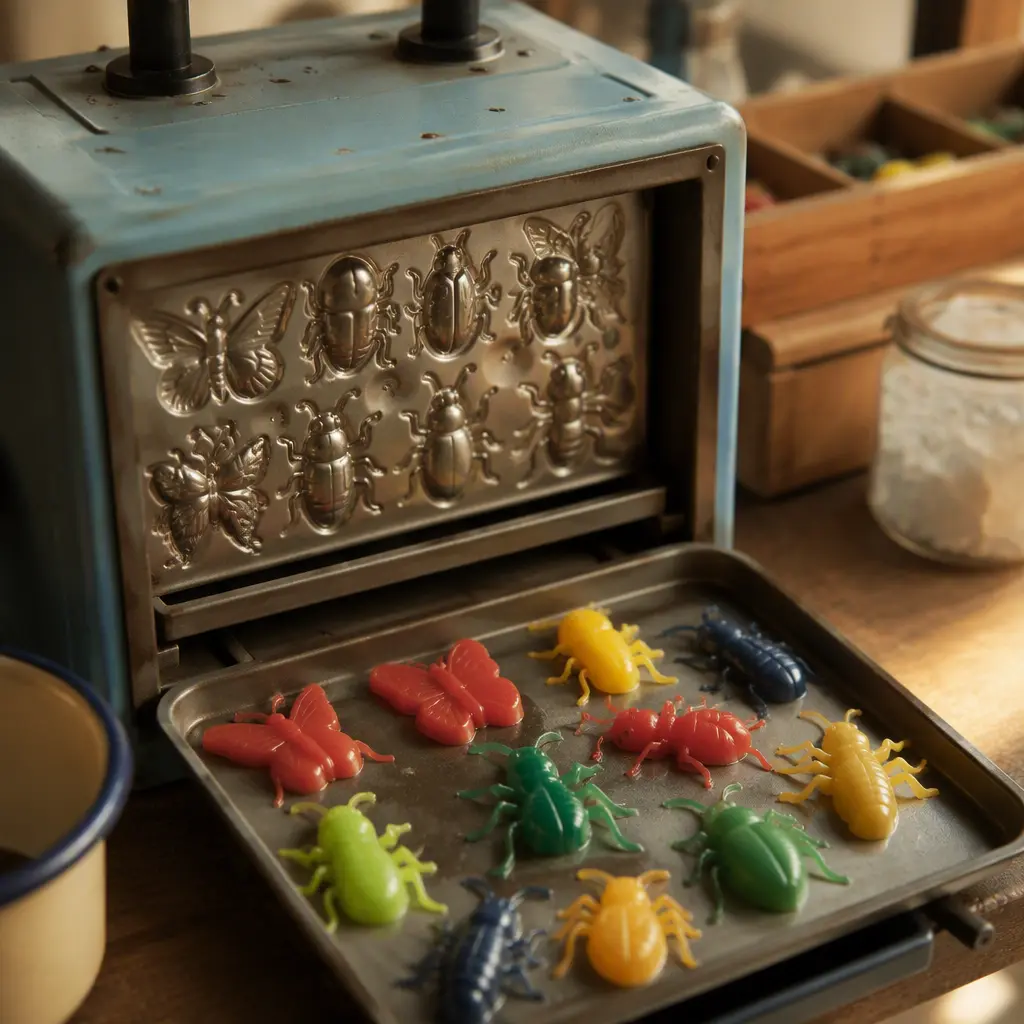
Few toys captured the thrill of doing something that felt slightly forbidden quite like Creepy Crawlers. Part craft kit, part toy oven, and part harmless science experiment, it invited kids to pour colorful liquid material into metal molds and heat them into stretchy spiders, beetles, snakes, and other rubbery creatures. The appeal was immediate: you were not just playing with a toy, you were manufacturing your own tiny monsters at the kitchen table. For many children, especially in the 1960s through the 1990s, Creepy Crawlers delivered the rare combination of gross-out humor, hands-on creativity, and the excitement of using real heat.
Where it came from
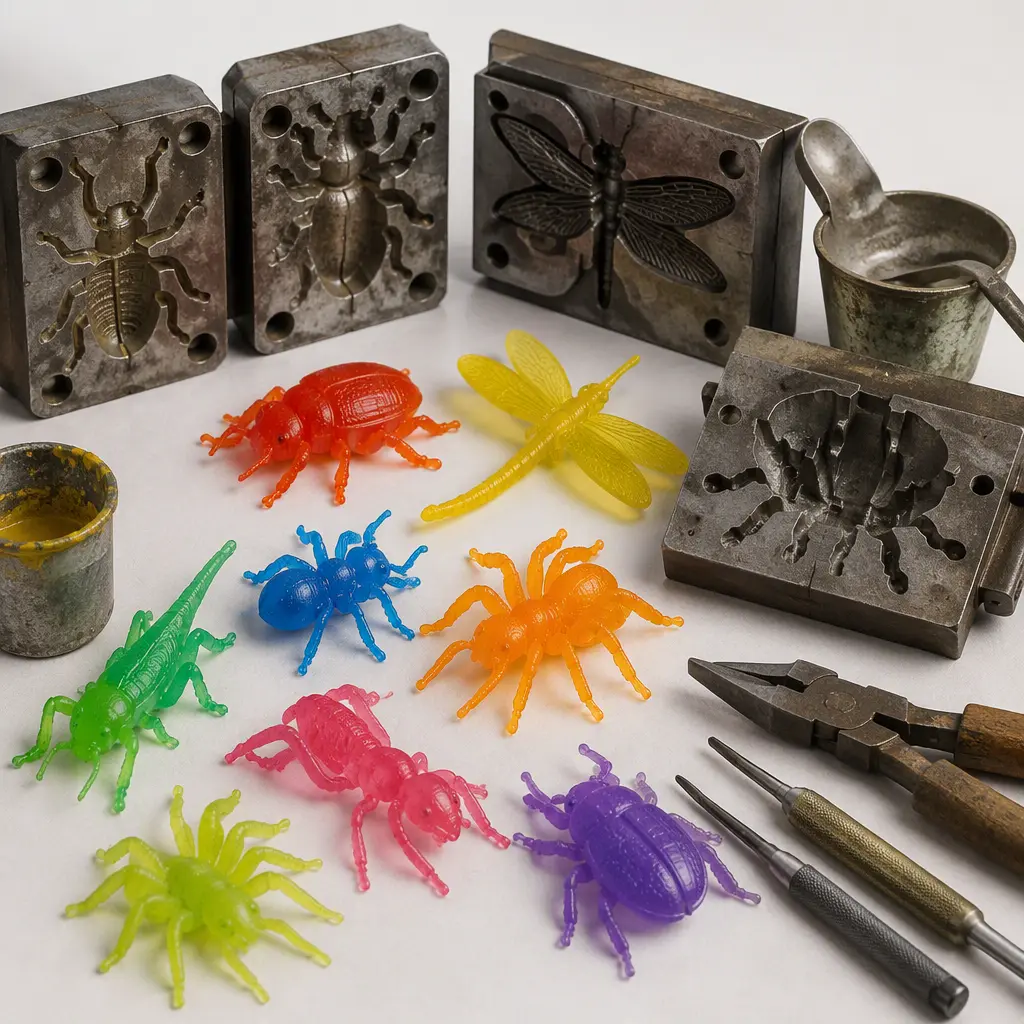
Creepy Crawlers debuted in 1964 during a period when toy companies were fascinated by miniature versions of adult machines and appliances. Produced by Mattel, the set was built around the now-famous “Thingmaker” concept, a line of activity toys that used heated metal molds and liquid plastic compounds to create small objects at home. Instead of baking cakes or candies, Creepy Crawlers focused on rubbery insects and reptiles that leaned into the era’s growing appetite for monsters, practical jokes, and television creature features.
The original toy used a heating element called the “Magicam” oven and a vinyl-based liquid compound commonly known as Plastigoop. Children would pour the goo into detailed molds, slide them onto the heated plate, and wait while the material cured into flexible shapes. The process felt surprisingly industrial for a toy aimed at children. It also reflected broader mid-century enthusiasm for chemistry sets, model kits, and educational toys that promised kids a glimpse into manufacturing and science. Over the decades, Creepy Crawlers was reintroduced several times with updated materials and safer heating systems, but the core idea stayed remarkably consistent.
Why it works
At its heart, Creepy Crawlers succeeds because it transforms a simple craft activity into a complete process with anticipation built into every step. Kids choose colors, fill molds, wait for the material to set, peel the finished bug free, and then immediately want to make another. That cycle creates a satisfying mix of experimentation and reward. Small changes in color combinations or mold-filling techniques produce different results, so the toy encourages tinkering without requiring advanced skill.
The design also benefits from tactile appeal. The finished creations are stretchy, squishy, and strange in a way that invites handling. Unlike many craft projects that end up displayed on a shelf, Creepy Crawlers creations became prank props, trading items, and collectible miniatures. The toy occupied a space somewhere between arts-and-crafts and toy-making, which helped it appeal to children who might not normally gravitate toward either category.
- Simple process that feels like real manufacturing
- Reusable molds encourage experimentation
- Bright translucent colors create visually dramatic results
- Finished bugs double as toys, collectibles, and prank items
- Hands-on activity supports patience and sequencing skills
Who it's for
Historically, Creepy Crawlers appealed most strongly to children who enjoyed hands-on projects and slightly mischievous humor. Modern recreations are generally aimed at school-age kids rather than very young children because even updated versions still involve heated components or close supervision. Adults who grew up with the toy often return to it for nostalgia, especially collectors interested in classic toy design from the 1960s through the 1990s. It also attracts fans of retro craft kits and unconventional STEM-adjacent toys that let children observe materials changing form through heat and timing.
Variants and what to look for today
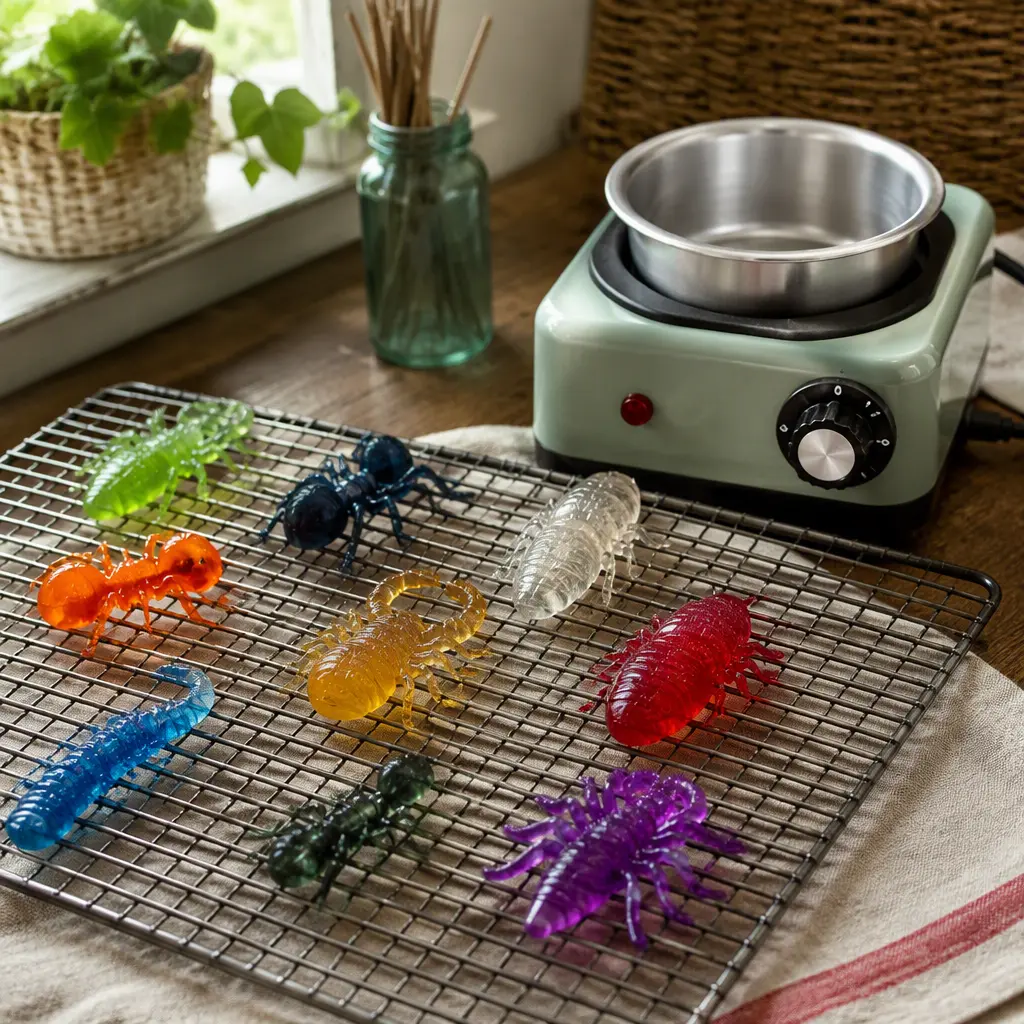
The Creepy Crawlers name has appeared in several forms over the years. Vintage sets from the 1960s and 1970s are collectible partly because of their heavy metal molds, retro packaging style, and direct connection to the original Thingmaker era. Later editions often replaced exposed hot plates with enclosed heating systems designed around stricter toy safety standards. Some versions expanded beyond insects into monsters, aliens, or fantasy creatures, while others focused on brighter colors and glow effects.
Anyone shopping for a set today should pay attention to completeness. Molds, heating trays, and liquid compounds were frequently separated or discarded over time, especially with older used sets. Reproduction materials are common and often more practical than decades-old compounds, which may have dried out or become unreliable. Generic bug-making kits also exist, and while some are perfectly usable, the mold detail and material consistency can vary widely.
- Vintage sets appeal to collectors and nostalgia-focused buyers
- Modern reissues usually include safer enclosed heating systems
- Look for complete mold collections and functioning heating components
- Replacement crafting compounds are often easier to source than original materials
- Check age recommendations carefully for younger users
Frequently asked questions
Was Creepy Crawlers considered educational?
While it was mainly marketed as entertainment, the toy introduced basic concepts related to heat, material transformation, sequencing, and simple manufacturing processes. Many parents appreciated that it rewarded patience and careful following of instructions.
Did the original versions really get hot?
Yes. Early Creepy Crawlers sets used genuine heating elements and metal molds that became very hot during use. That realism was part of the appeal at the time, though modern toy standards have led to safer redesigns and additional protective features.
Why do collectors still care about Creepy Crawlers?
The toy represents a distinctive era of hands-on toy design when companies experimented with miniature working appliances and home manufacturing themes. Collectors are often drawn to the original molds, unusual advertising style, and the strong nostalgia attached to making rubbery bugs at home.
Are modern versions the same as the originals?
Modern releases usually preserve the core process of pouring material into molds and heating it into flexible shapes, but the materials and heating methods are often updated for safety, durability, and easier cleanup. The experience is similar even if the equipment feels less industrial than the vintage sets.
Creepy Crawlers endured because it delivered something many toys only imitate: the feeling of creating an object from scratch. The bugs themselves were silly, stretchy, and disposable, but the process made children feel capable and curious. In an era increasingly filled with instant digital entertainment, the memory of waiting for a rubber spider to finish baking still stands out. It was weird, messy, slightly risky, and unforgettable in exactly the way classic toys often are.