Cubelets: Robot Blocks That Turn Coding Into Hands-On Play
Cubelets transformed robotics kits into snap-together blocks that teach coding logic through movement, light, and sensors, giving kids a tactile way to explore STEM concepts without relying on screens.
Compare prices and availability
Check current prices and availability for this guide on eBay.
As an eBay Partner, we may be compensated if you make a purchase.
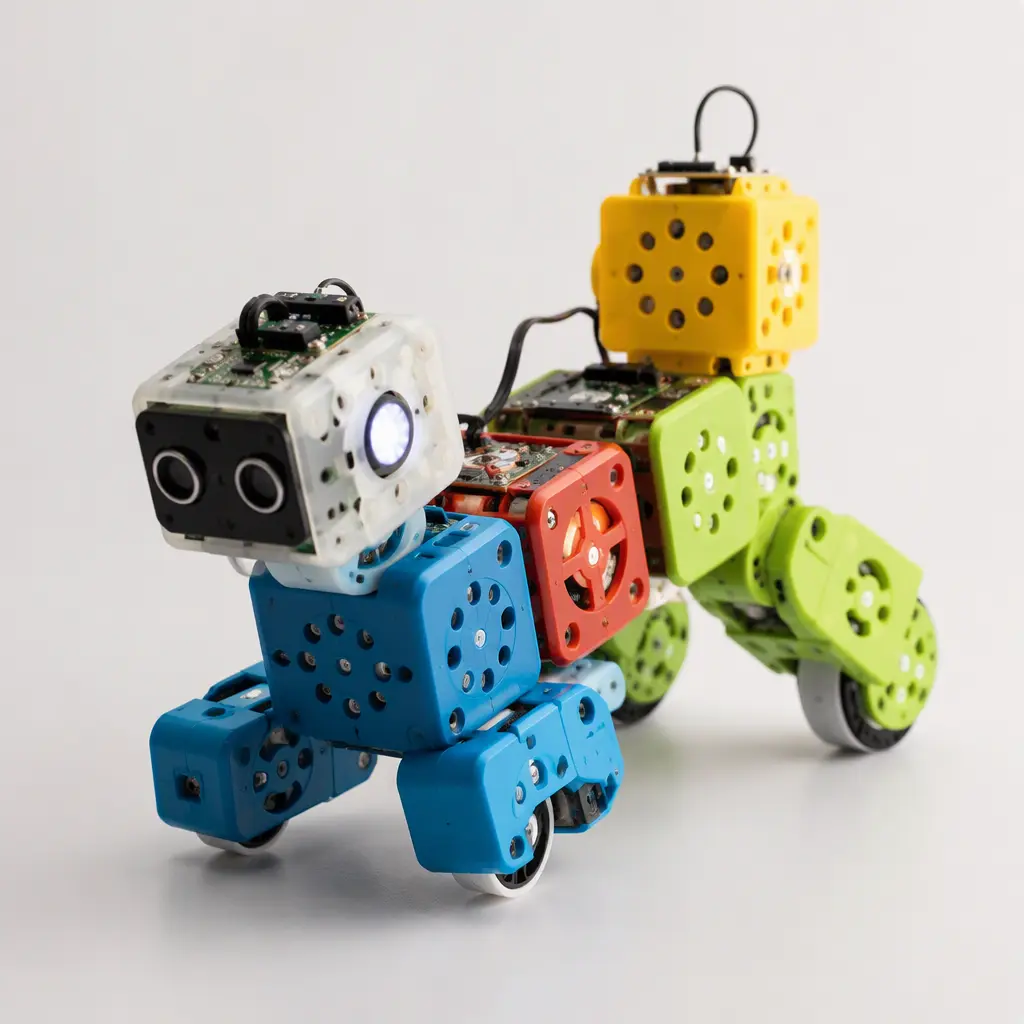
Cubelets arrived at a moment when educational technology was increasingly moving onto tablets and laptops, yet their biggest idea was refreshingly physical. Instead of asking children to learn coding concepts through menus and apps first, the system turned robotics into a set of magnetic blocks that could be snapped together by hand. Each cube carried a simple behavior such as sensing light, spinning, driving, or producing output, and when connected, the blocks created surprisingly complex reactions. The appeal came from immediacy. A child could build a moving robot in minutes while quietly absorbing ideas about inputs, outputs, logic, and systems thinking without needing to write code at all.
Where it came from
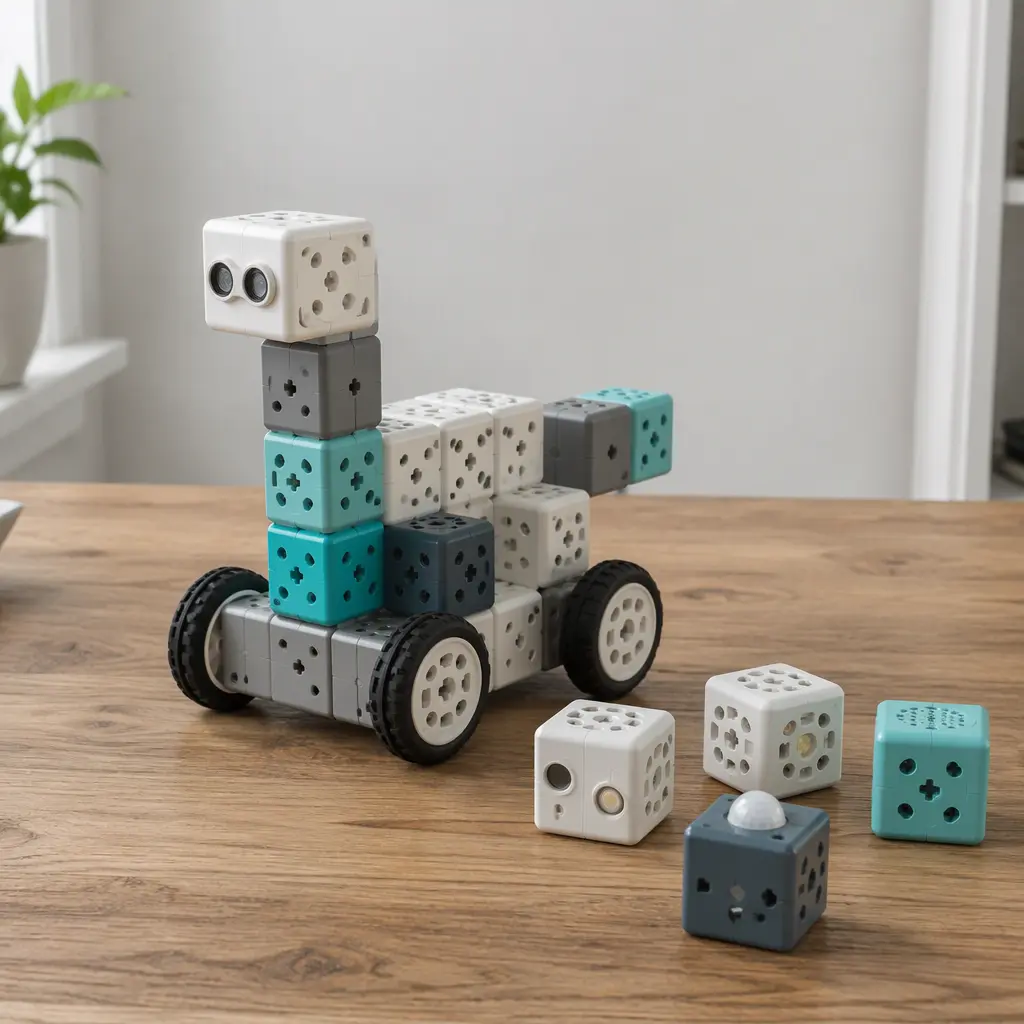
Cubelets were introduced in 2012 by Modular Robotics, a company founded in Boulder, Colorado. The project grew out of academic robotics research focused on modular systems and accessible engineering education. Traditional robotics kits often required wiring, programming knowledge, or careful assembly before anything worked. Cubelets approached the problem differently by reducing robotics to interchangeable building blocks that attached magnetically and communicated automatically.
The original purpose was educational, but the design borrowed lessons from classic construction toys. Instead of teaching robotics as a technical specialty, Cubelets framed it as experimentation. A child could connect a distance sensor to a drive block and instantly see motion change based on nearby objects. Rearranging the cubes changed the robot's behavior in visible ways. That immediate cause-and-effect relationship became the heart of the product's identity and helped it find a place in classrooms, libraries, museums, and homes.
Why it works
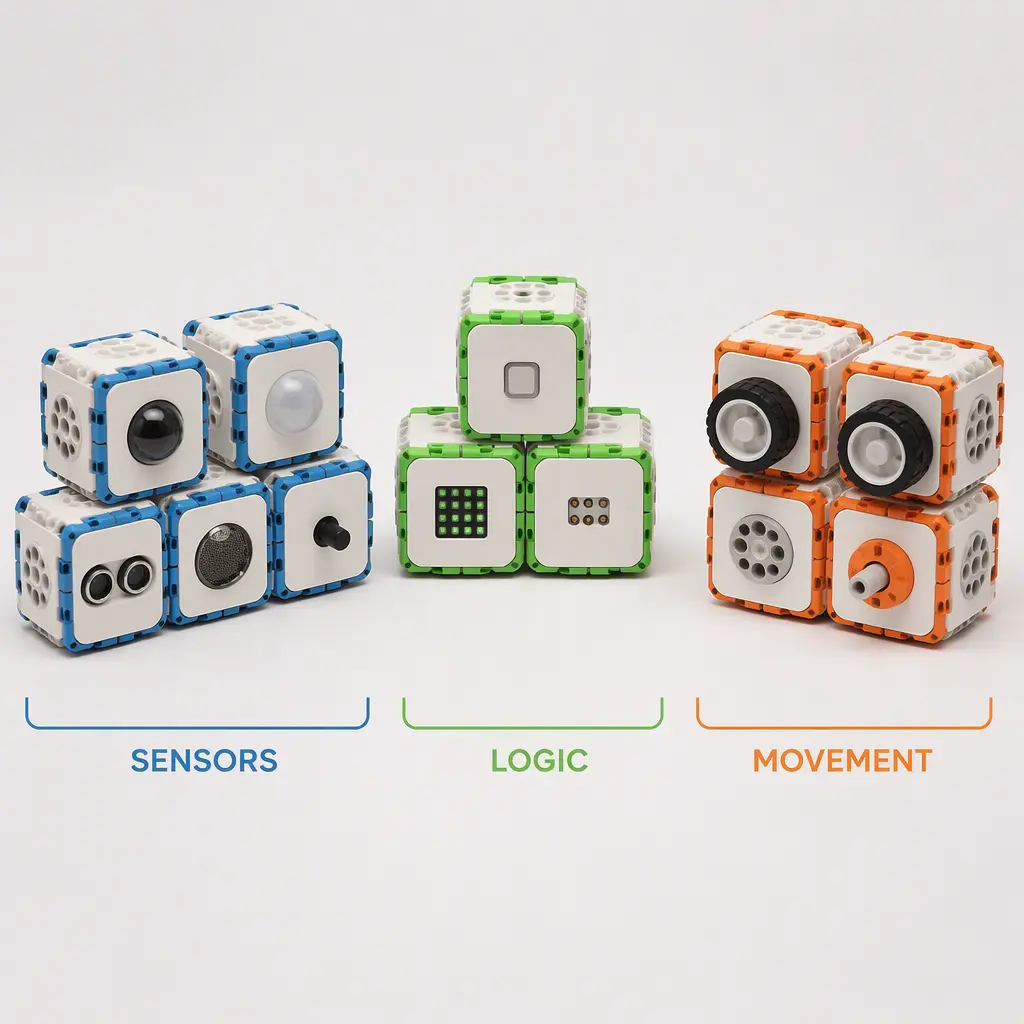
The core design idea behind Cubelets is deceptively simple: every cube performs one function, and the behavior of the whole machine emerges from how those functions combine. Unlike many robotics toys that hide the engineering behind a polished shell, Cubelets leave the logic exposed. Sensor blocks detect information from the environment, thinking blocks modify or route that information, and action blocks respond through movement, sound, or light. Children can physically trace how information flows through the robot just by looking at the arrangement.
That tangible feedback loop makes abstract computing concepts easier to understand. Rearranging cubes acts almost like rewriting a program, except the process happens through touch instead of typing. The modular approach also encourages experimentation because there is very little penalty for failure. If a robot behaves unexpectedly, the fix may simply involve rotating or swapping a block. This lowers the intimidation factor that sometimes comes with beginner robotics kits.
- Magnetic connections that allow quick assembly without wires
- Sensor cubes that react to light, distance, temperature, or motion
- Output cubes that create movement, sound, or visual feedback
- Expandable systems that can grow from simple builds to complex robots
- Screen-free play that still introduces coding and systems thinking concepts
Who it's for
Cubelets are designed primarily for school-age children, though the appeal stretches well beyond elementary classrooms. Younger children often enjoy the immediate physical play of making robots move or react, while older kids can begin exploring computational thinking and problem-solving strategies. Teachers and parents tend to appreciate that the system supports open-ended experimentation rather than scripted outcomes. Adult hobbyists and educators have also embraced Cubelets because the blocks provide a fast, visual way to demonstrate robotics principles without lengthy setup or technical barriers.
Variants and what to look for today
Modern Cubelets sets range from introductory collections with only a handful of blocks to larger classroom-focused systems capable of building surprisingly advanced robots. Some versions emphasize coding extensions through companion apps and programming tools, while others stay focused on hands-on construction and experimentation. The overall philosophy has remained consistent even as the technology has evolved: the cubes themselves remain the main interface.
When shopping today, it helps to focus on the types of blocks included rather than the total number alone. A balanced mix of sensors, action cubes, and logic components usually creates more interesting builds than a larger collection dominated by one category. Buyers should also pay attention to battery systems, charging methods, and compatibility across generations if combining older and newer sets. Generic imitators sometimes copy the visual idea of modular robotics blocks without matching the durability or reliable magnetic connections that make the original system work smoothly.
- Starter sets are often best for younger children or first-time users
- Classroom bundles typically include more sensors and collaborative building options
- Coding-enabled versions add programmable behaviors for older users
- Look for durable magnetic connectors and solid battery performance
- Check compatibility if mixing sets from different production years
Frequently asked questions
Do Cubelets require coding?
No. One of the system's defining ideas is that children can explore coding concepts without typing code at all. The arrangement of the cubes effectively becomes the program. Some newer extensions add optional coding features for advanced users.
Are Cubelets more like building blocks or robotics kits?
They sit somewhere between the two categories. The blocks connect as easily as a construction toy, but the behaviors and reactions are rooted in robotics and computational logic. That hybrid approach is part of what made the system stand out.
What ages are Cubelets best suited for?
Many children can begin experimenting with basic movement and sensor interactions in early elementary school, while older kids and teens can explore more sophisticated logic and programming concepts. Adult educators also use them for demonstrations and workshops.
Why did Cubelets become popular in schools?
Educators were drawn to the system because it makes abstract STEM concepts visible and interactive. Students can test ideas quickly, collaborate on builds, and learn through trial and error without needing advanced technical skills or extensive setup time.
More than a decade after their introduction, Cubelets remain notable because they approached educational robotics from a different angle. Instead of placing screens at the center of the experience, they emphasized touch, experimentation, and visible systems. That approach helped demystify coding and robotics for many children while preserving the open-ended curiosity that makes great construction toys memorable in the first place.