Action Man: The European figure that shaped imaginative play
Introduced in 1966, Action Man brought military role-play and detailed accessories into European toy rooms, influencing generations of action figures and imaginative storytelling.
Compare prices and availability
Check current prices and availability for this guide on eBay.
As an eBay Partner, we may be compensated if you make a purchase.
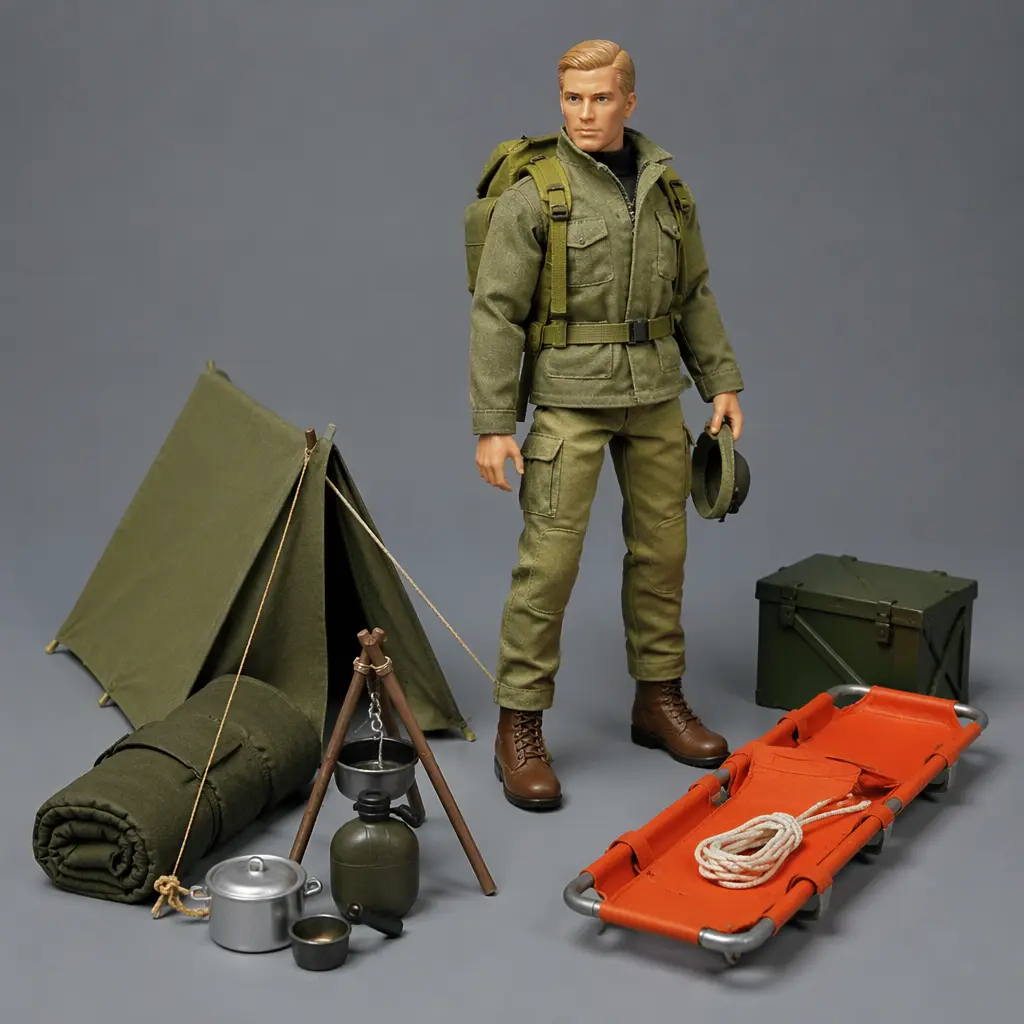
Action Man arrived in Europe during the mid-1960s and quickly became more than a toy soldier. With articulated joints, realistic uniforms, and a growing range of vehicles and adventure gear, the figure encouraged open-ended storytelling in a way many earlier toys did not. For children, it offered a chance to invent missions, rescues, expeditions, and everyday heroic scenes. For collectors today, it represents a turning point in how action figures were designed, marketed, and played with.
Where it came from
Action Man was introduced in 1966 by the British toy company Palitoy under license from Hasbro, adapting the American G.I. Joe concept for European audiences. While military themes were central at first, the line quickly expanded beyond combat scenarios into exploration, sports, rescue work, and science-themed adventures. That broader approach helped the toy appeal to children interested in storytelling rather than strict military role-play.
The figure itself stood out because of its articulated body and interchangeable clothing. Earlier dolls and figures often had stiff poses or limited accessories, but Action Man encouraged customization. Children could swap outfits, equip new gear, and build entirely different personalities around the same figure. Over time, features such as gripping hands and flocked hair made the toy feel more expressive and lifelike, helping it stand apart in crowded toy aisles.
Why it works
Part of Action Man’s staying power comes from how flexible the play pattern was. The figure worked as a blank canvas. One day it could be a mountain climber, the next a diver or astronaut. That adaptability encouraged imaginative play without requiring a complicated rule system or electronics. The accessories did much of the storytelling work, and the scale made it easy to create large adventures in relatively small spaces.
The design also balanced realism with durability. The articulated body allowed dynamic poses, while the removable uniforms and equipment added tactile appeal. Even decades later, many collectors remember the sound of buckles, snaps, and plastic equipment cases as part of the experience.
- Articulated limbs for poseable play
- Interchangeable uniforms and themed equipment
- Adventure-focused settings beyond military themes
- Detailed accessories scaled for hands-on interaction
- Durable construction that encouraged repeated play
Who it's for
Originally aimed at school-age children, Action Man appealed most strongly to kids who liked imaginative solo play and collecting gear-based accessories. The toy rewarded patience and creativity because much of the fun came from setting scenes and building stories. Today, collectors include adults who owned the figures as children as well as younger hobbyists interested in vintage toy history, military miniatures, or retro design. The larger scale also makes the figures easier to display and customize than many smaller modern action figures.
Variants and what to look for today
Over the years, Action Man appeared in many forms, from early military editions to adventurer, athlete, and rescue-themed versions. Some collectors focus on the original 1960s and 1970s figures produced by Palitoy, while others prefer later revivals that introduced updated sculpting and brighter, more modern accessories. Condition matters heavily because fabric uniforms, elastic components, and small accessories are easy to lose or damage over time.
When shopping today, it helps to pay attention to body condition and completeness rather than rarity claims. Many vintage figures have loose joints, cracked hands, or replacement clothing from different eras. Reproduction accessories are common and can still be useful for display or play, but serious collectors often look for original stitching, period-correct materials, and consistent wear across the figure and accessories.
- Check joints and gripping hands for cracks or looseness
- Look for complete uniforms and matching accessories
- Expect some replacement parts in older figures
- Modern reproductions can be better for younger children
- Be cautious of heavily restored figures sold as fully original
Frequently asked questions
Was Action Man the same as G.I. Joe?
The two lines were closely connected. Action Man was produced by Palitoy under license from Hasbro and shared many similarities with G.I. Joe, but the branding, accessories, and marketing evolved differently for European audiences.
Why did Action Man become so popular in Europe?
The figure combined realism, articulation, and interchangeable gear at a time when few toys offered that level of flexibility. Its expansion into adventure themes also broadened its appeal beyond military play.
Are vintage Action Man figures collectible?
Yes. Original figures, boxed accessories, and complete outfits are widely collected. Condition and originality usually matter more than claims about rarity.
Do children still play with Action Man-style toys?
Many modern action figures still follow the same basic formula pioneered by Action Man: articulated bodies, swappable accessories, and open-ended imaginative storytelling.
Action Man helped define what an action figure could be. Its combination of articulation, accessories, and imaginative flexibility influenced decades of toy design across Europe and beyond. Even now, the toy stands as a reminder that some of the most enduring play experiences come from simple tools for storytelling rather than complicated technology.