Aggravation: Why a simple marble race still sparks big feelings
Born in 1960, Aggravation turns a wooden board, marbles and one die into laughter, groans and surprise comebacks—proof that simple rules can fuel unforgettable family game nights.
Compare prices and availability
Check current prices and availability for this guide on eBay.
As an eBay Partner, we may be compensated if you make a purchase.
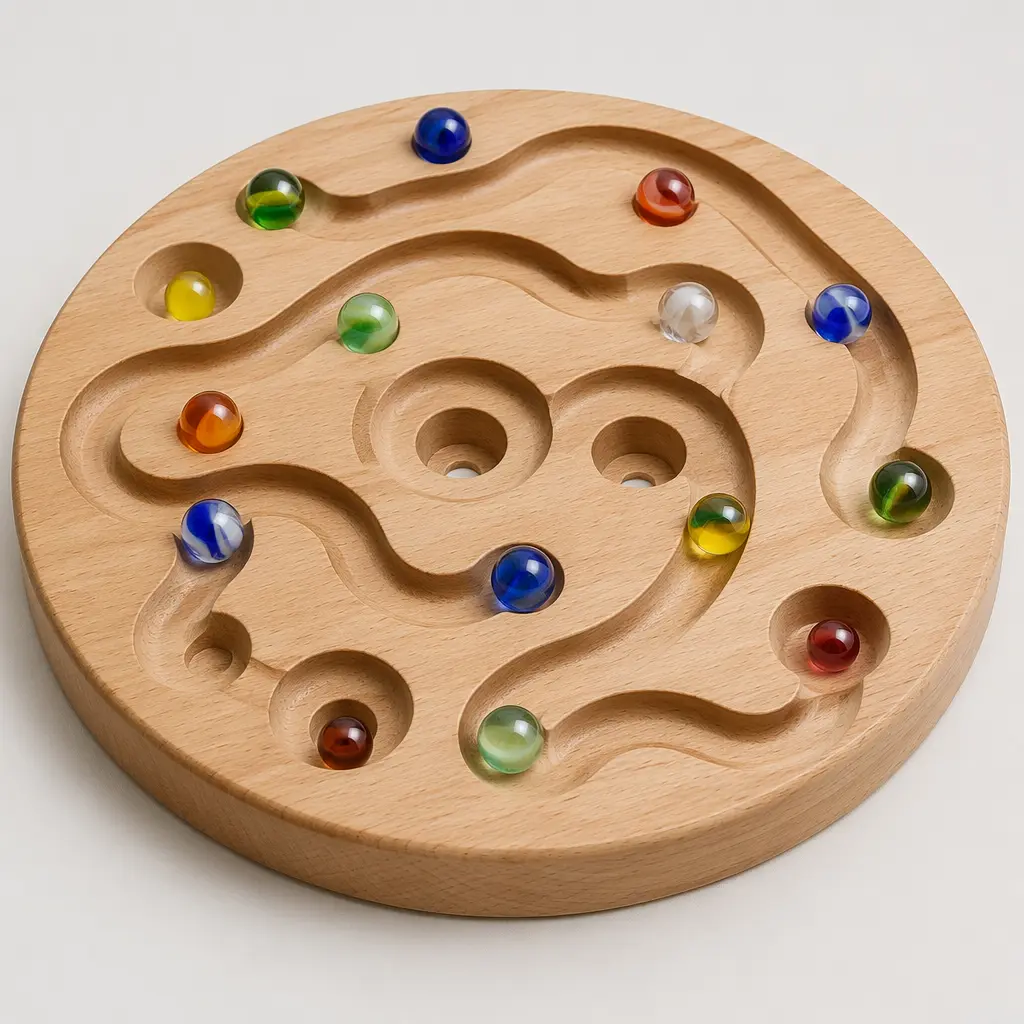
Aggravation doesn’t look like much at first glance: a round board, a handful of marbles, and a single die. Yet sit down with family or friends and it quickly becomes loud, tense and strangely personal. One lucky roll can launch a marble from home; one unlucky move can send it straight back. Six decades on, this simple marble race still delivers big emotions around kitchen tables.
Where it came from
Aggravation emerged in 1960 in the United States, inspired by older race games where pieces travel a loop and try to reach home before opponents. Its design echoes earlier European games, but the modern version was popularised by families who made their own boards from wood, drilling holes and using marbles they already had.
That homemade spirit became part of its identity. Even as commercial versions followed, Aggravation kept the feel of a craft project turned tradition. It wasn’t flashy or themed; it was practical, durable, and built for repeat play, which helped it settle into cupboards alongside cards and dominoes rather than trend-led board games.
Why it works
At its core, Aggravation is about momentum and risk. Players need a specific roll to leave home, but once moving, every decision carries consequences. Do you race ahead or land on an opponent and send them back? The rules are easy to learn, yet the emotional swings keep everyone invested.
- One die keeps turns fast and understandable for all ages
- Marbles provide a tactile, satisfying sense of progress
- Shortcuts and bumping add surprise and interaction
- Comebacks are always possible, right to the final roll
Who it’s for
Aggravation suits mixed-age groups particularly well. Children can grasp the basics quickly, while adults appreciate the tension and table talk it generates. Because luck plays a big role, experienced players don’t dominate, making it welcoming for grandparents, teens and first-time players alike.
Variants and what to look for today
Modern Aggravation sets vary mainly in materials and size. Wooden boards remain popular for their weight and durability, while lighter plastic versions travel more easily. Player counts can differ too, so it’s worth checking how many people a board supports before buying.
Look for smooth-drilled holes so marbles sit securely, and a board with clearly defined tracks. Very cheap copies may use thin plastic that shifts during play or marbles that chip easily, which can take away from the experience.
Frequently asked questions
How long does a typical game take?
Most games finish in 20–30 minutes, though a close race with lots of bumping can run longer.
Is Aggravation all luck?
Luck drives movement, but players still choose when to take shortcuts or block others, which shapes the outcome.
Can it be played with fewer players?
Yes. While it shines with a full table, many boards work well with two or three players.
Aggravation endures because it doesn’t overpromise. It offers a clear goal, a bit of chaos, and the pleasure of shared reactions. In a world of sprawling rulebooks and themed expansions, this marble race remains a reminder that simple design can still stir big feelings.