BRIO Wooden Trains: Why simple tracks still power big play
Since 1958, BRIO’s wooden trains have shown how simple pieces can fuel years of imaginative play. Here’s why wooden railways remain a gold standard for kids and parents alike.
Compare prices and availability
Check current prices and availability for this guide on eBay.
As an eBay Partner, we may be compensated if you make a purchase.
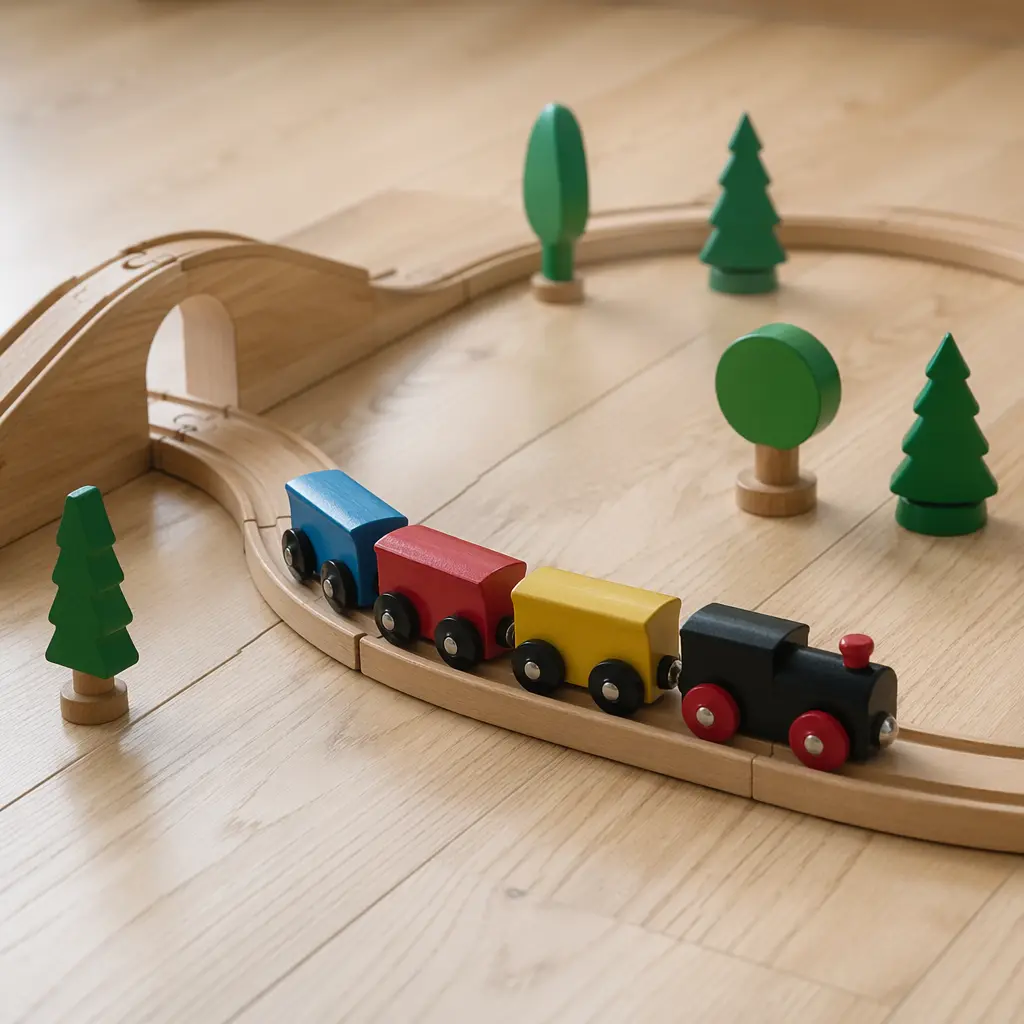
Wooden train sets are one of those rare toys that feel both timeless and modern. BRIO Wooden Trains, in particular, have become shorthand for quality, durability, and open-ended play. With nothing more than wooden tracks, simple trains, and a few accessories, children can build worlds that change every day — no screens, no scripts, just imagination and problem-solving at work.
Where it came from
BRIO’s wooden railway story began in Sweden in 1958, during a post-war era that valued craftsmanship and long-lasting goods. The company had already been making wooden toys for decades, but the introduction of a modular wooden railway system marked a turning point. The idea was simple: create sturdy wooden tracks and vehicles that could be rearranged endlessly and expanded over time.
The original purpose wasn’t to chase trends or characters, but to support developmental play. The trains were designed to withstand years of use, often passing from one sibling to the next. That philosophy — fewer pieces, better made — helped establish wooden trains as a staple in homes, nurseries, and classrooms across Europe and beyond.
Why it works
At its core, a wooden train set is a system. Tracks connect predictably, trains roll smoothly, and cause-and-effect is easy to see. This clarity is exactly what makes the toy so powerful. Children learn by experimenting: What happens if I add a bridge? Can this train reach the station faster? Why won’t this piece fit here?
BRIO-style wooden trains also succeed because they don’t over-direct play. There are no flashing lights demanding attention and no fixed storylines to follow. The child supplies the narrative, which changes as skills and interests grow.
- Simple wooden track pieces that connect intuitively
- Magnetic couplings that make trains easy to join and separate
- Balanced weight for smooth rolling and stability
- Compatibility with many other wooden train brands
- Durable materials designed for years of handling
Who it's for
Wooden trains are typically suitable from around age three, when children can safely handle the pieces and start building simple layouts. That said, the appeal often stretches well beyond early childhood. Older children enjoy planning complex track systems, while adults often find themselves joining in — or rediscovering sets from their own childhoods. It’s a toy that naturally encourages shared play across ages.
Variants and what to look for today
Today’s wooden train landscape is broader than ever. You’ll find starter sets with basic loops, large deluxe sets with bridges and stations, and themed accessories like farms, cities, or harbours. While BRIO remains a benchmark for fit and finish, many modern wooden trains are designed to be cross-compatible, allowing families to mix and match.
When choosing pieces today, look for smooth sanded edges, strong magnets, and solid wood construction. Be cautious of very lightweight or poorly finished tracks, which can splinter or separate easily. The best sets feel satisfying in the hand and stay flat on the floor during play.
Frequently asked questions
Are wooden trains still relevant in a digital age?
Yes. In fact, many parents value them more than ever as a counterbalance to screens. Wooden trains support hands-on learning, patience, and creativity in ways digital toys often can’t.
Do wooden train sets work with other brands?
Most wooden railway systems use similar track dimensions, making them largely compatible. Small variations exist, but mixing brands is common and usually successful.
How long do wooden trains typically last?
With basic care, wooden trains can last decades. It’s not unusual for sets to be handed down through families, picking up stories along the way.
Are they educational?
They support spatial reasoning, fine motor skills, and early engineering thinking — all through play rather than instruction.
More than sixty years on, BRIO Wooden Trains still represent a quiet confidence in good design. They don’t shout for attention, but once they’re on the floor, they tend to stay there — rearranged, rebuilt, and rediscovered again and again. That staying power is what makes them a true classic.