Care Bears: How kindness became a toy aisle staple
Launched in the 1980s, Care Bears turned plush toys into emotional teachers. Their bright colours and simple messages helped generations of kids learn empathy, sharing, and feelings through play.
Compare prices and availability
Check current prices and availability for this guide on eBay.
As an eBay Partner, we may be compensated if you make a purchase.
Care Bears are more than just brightly coloured teddy bears. Since the early 1980s, they have represented a simple but powerful idea: that emotions matter, and kindness can be taught through play. At a time when many toys focused on action, competition, or collectibles, Care Bears leaned into feelings—happiness, sharing, bravery, and even grumpiness—and invited children to talk about them.
Where it came from
Care Bears began life not as toys, but as characters created for greeting cards. American Greetings introduced the bears in 1981 as part of a push to create relatable, emotionally expressive characters. Each bear represented a specific feeling or value, making them easy for children and adults to understand at a glance.
The leap to plush toys came in 1983, when the characters were turned into soft, huggable bears. Their timing was perfect. The early 1980s saw a boom in character-driven toys tied to cartoons, books, and movies. Care Bears quickly expanded into animated specials and a television series, cementing their place in pop culture and turning them into a full-fledged toy family.
Why it works
At their core, Care Bears succeed because they combine comfort with communication. As plush toys, they are soft, approachable, and non-threatening—ideal for young children. As characters, they provide a shared language for emotions. A child doesn’t need to explain how they feel when they can point to a bear that already represents it.
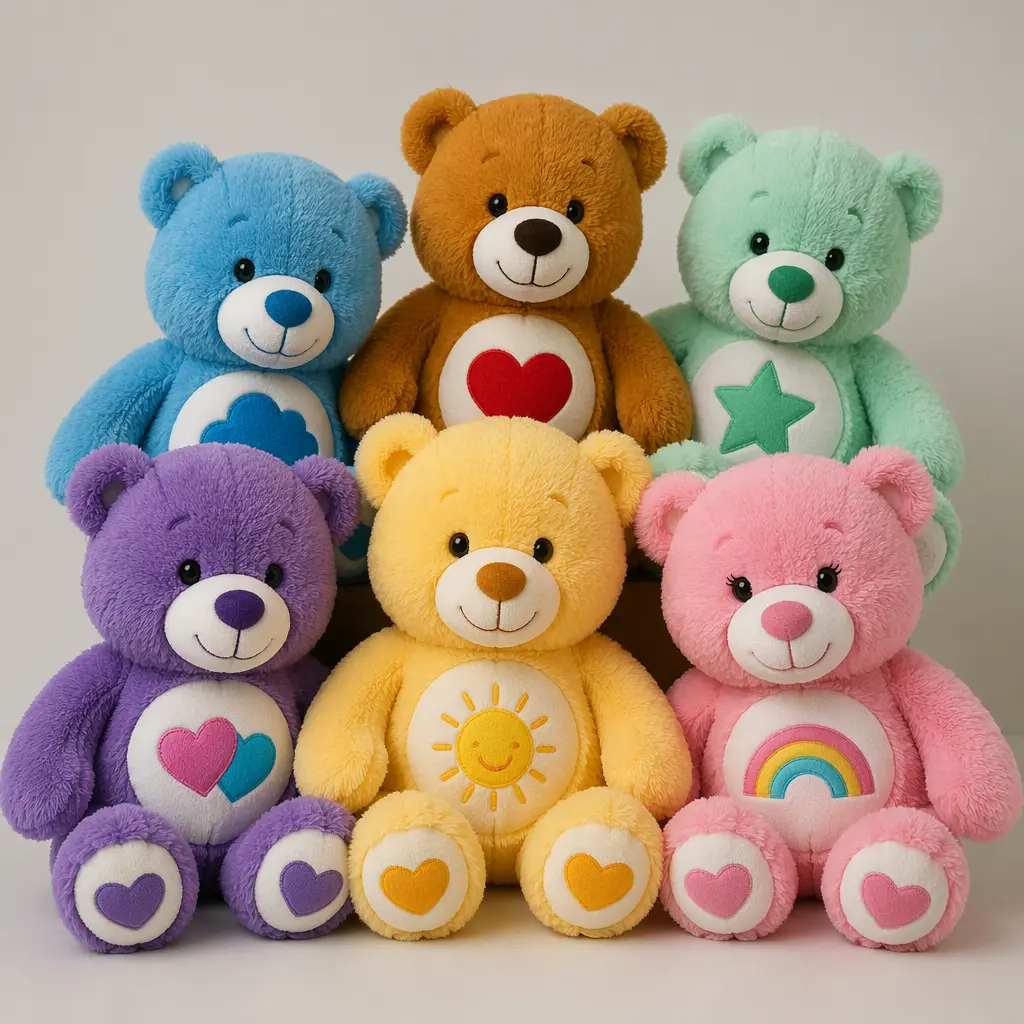
The design is deliberately simple, which is part of its strength. Bold colours make each bear easy to tell apart, while the belly symbols act as visual shorthand for feelings and values.
- Soft plush construction designed for comfort and hugging
- Bright, distinct colours that are easy for children to recognise
- Belly symbols that represent emotions or positive traits
- Friendly facial expressions that feel welcoming rather than intense
Who it's for
Care Bears are typically aimed at preschool and early primary-age children, but their appeal stretches wider. Younger children enjoy them as comforting plush toys, while slightly older kids engage with the characters and stories. There is also a strong adult fan base, made up of parents who grew up with Care Bears themselves and collectors drawn to their nostalgic value.
Variants and what to look for today
Over the decades, Care Bears have been reimagined many times. Modern versions often feature softer materials, updated colour palettes, and simplified designs to suit today’s tastes. Some lines focus on smaller, portable plush toys, while others offer larger, bedtime-friendly bears.
If you’re shopping today, it’s worth paying attention to build quality and materials. Well-made plush toys should have securely stitched features and feel durable enough to withstand regular handling. Be cautious of very cheap imitations that mimic the look but lack the softness and finishing that make the originals comforting.
Frequently asked questions
What age are Care Bears suitable for?
Most Care Bears plush toys are suitable from toddler age upwards, depending on size and construction. Always check age recommendations, especially for smaller versions.
Are Care Bears still popular today?
Yes. While they are rooted in the 1980s, Care Bears continue to be reintroduced to new generations through updated toys, media, and nostalgic appeal.
Do Care Bears help with emotional learning?
They can. By associating characters with specific feelings or values, Care Bears give children an accessible way to talk about emotions and empathy during play.
Are they mainly for collectors now?
Collectors are a significant part of the audience, but Care Bears remain very much children’s toys, especially in their modern plush-focused lines.
Care Bears have endured because they tap into something timeless. Toys come and go, but the need for comfort, understanding, and kindness never really changes. By wrapping those ideas in a soft, colourful bear, Care Bears found a way to stay relevant across generations—one hug at a time.