The Erector Set: How a 1913 metal toy built engineers
Invented in 1913, the Erector Set turned strips of steel and bolts into bridges, cranes, and careers—showing how open‑ended play can teach real engineering thinking.
Compare prices and availability
Check current prices and availability for this guide on eBay.
As an eBay Partner, we may be compensated if you make a purchase.
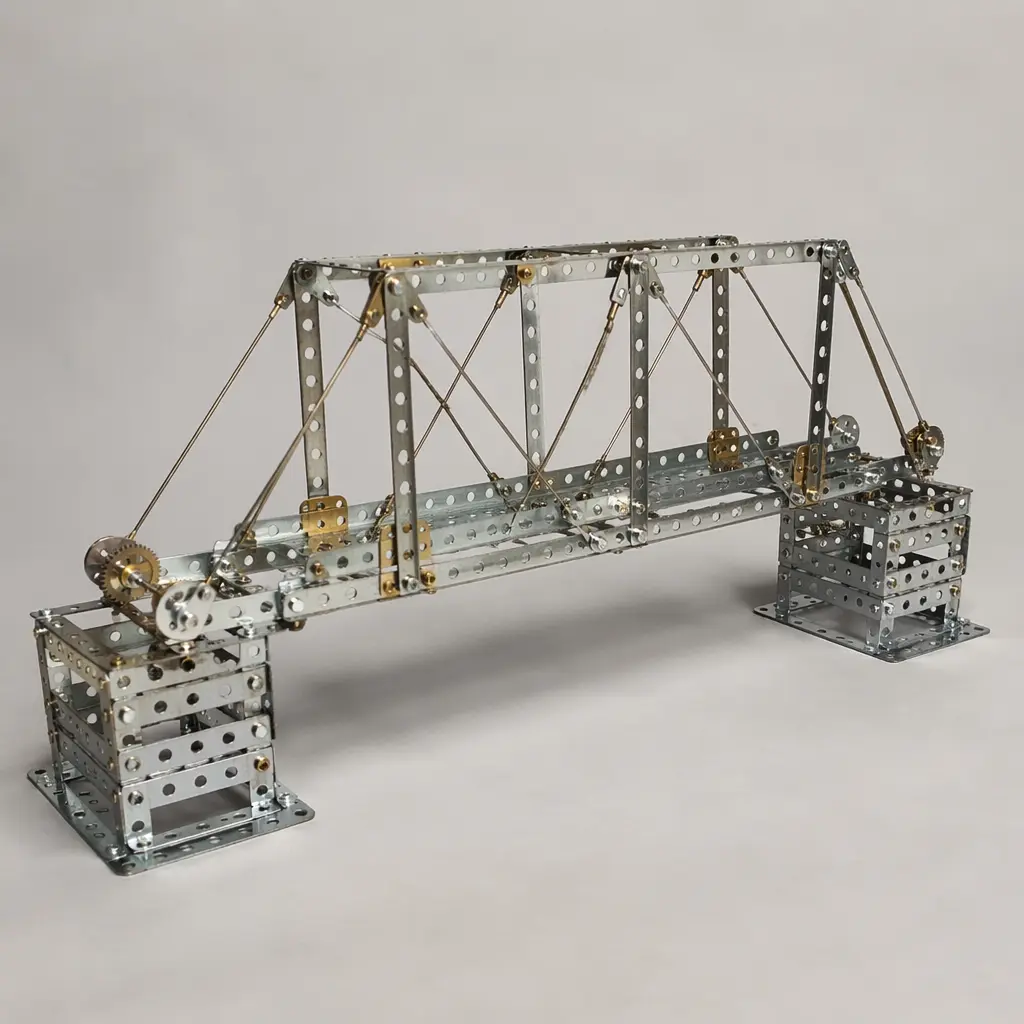
Long before STEM was a buzzword, the Erector Set was already teaching it. Made from simple metal strips, plates, gears, and bolts, this early‑20th‑century construction toy invited kids to build real mechanisms—bridges that spanned gaps, cranes that lifted loads, and towers that wobbled if you got the physics wrong. It looked serious, felt industrial, and quietly suggested that understanding how things work could be fun.
Where it came from
The Erector Set was introduced in 1913 by A.C. Gilbert, an inventor and former Olympic pole vaulter who believed toys could educate as well as entertain. Inspired by the steel frameworks of modern cities and the rise of mechanical engineering, Gilbert designed a set that mirrored real construction methods. Instead of snap‑together parts, builders used nuts and bolts—just like adults did on job sites.
Early sets were marketed as tools for building character and practical skills. Instruction manuals showed cranes, Ferris wheels, and even working elevators, reinforcing the idea that this was a toy for serious minds. Over the decades, the sets evolved in size and complexity, but the core idea—learning by assembling real structures—remained unchanged.
Why it works
At its heart, the Erector Set succeeds because it is honest about mechanics. Nothing is hidden. If a beam bends or a wheel won’t turn, the builder has to diagnose the problem and fix it. That trial‑and‑error process mirrors real engineering far more closely than many modern toys that disguise complexity behind plastic shells.
The open‑ended nature of the system also matters. There’s no single “right” model to complete and put away. Builders can follow instructions, then remix parts into something entirely new. Over time, this encourages planning, spatial reasoning, and patience.
- Real nuts and bolts that teach tool use and precision
- Modular metal parts that can be reused endlessly
- Mechanisms like gears and pulleys that demonstrate motion
- A scale and weight that feel closer to real materials
Who it’s for
Traditionally aimed at older children, the Erector Set has always skewed a bit older than many building toys. School‑age kids who enjoy problem‑solving and following multi‑step instructions tend to thrive with it. It also has strong adult appeal—many parents and grandparents remember it from their own childhoods and enjoy revisiting the experience alongside kids. It’s less about quick wins and more about slow, satisfying progress.
Variants and what to look for today
Over the years, the Erector Set name has covered a wide range of kits, from small starter boxes to sprawling sets with motors and advanced mechanisms. Modern versions often use lighter metals or include plastic components to improve safety and ease of use, while vintage sets are prized for their heft and classic look.
If you’re shopping today, focus on the breadth of parts rather than flashy extras. A good assortment of beams, plates, fasteners, and gears offers more long‑term value than a set built around one showpiece model. Be cautious of very cheap look‑alikes that skimp on material quality—poorly threaded bolts or thin metal can turn a thoughtful build into a frustrating one.
Frequently asked questions
Is the Erector Set still educational by today’s standards?
Yes. While it lacks screens or coding, it teaches foundational engineering skills like structural stability, mechanical motion, and problem‑solving. These concepts translate well to modern STEM learning.
Does it require adult supervision?
Younger builders benefit from help, mainly because of small parts and tools. Older children can work independently once they’re comfortable using a wrench or screwdriver safely.
Are vintage sets better than modern ones?
Vintage sets often feel sturdier and have nostalgic appeal, but modern sets tend to be safer and easier to handle. The best choice depends on whether you value authenticity or convenience.
How does it compare to plastic building toys?
Metal construction sets demand more patience and precision. Plastic systems are quicker and lighter, but metal offers a closer approximation of real‑world building.
A century on, the Erector Set remains a reminder that powerful learning doesn’t need to be loud or flashy. By trusting kids with real materials and real challenges, it helped launch countless engineering careers—and it still has the same quiet confidence today.