GeoMag Panels and the Rise of Magnetic Architecture Play
GeoMag Panels turned simple magnetic rod building into sturdy geometric construction, giving kids and adults a hands-on way to explore architecture, engineering, and open-ended design.
Compare prices and availability
Check current prices and availability for this guide on eBay.
As an eBay Partner, we may be compensated if you make a purchase.
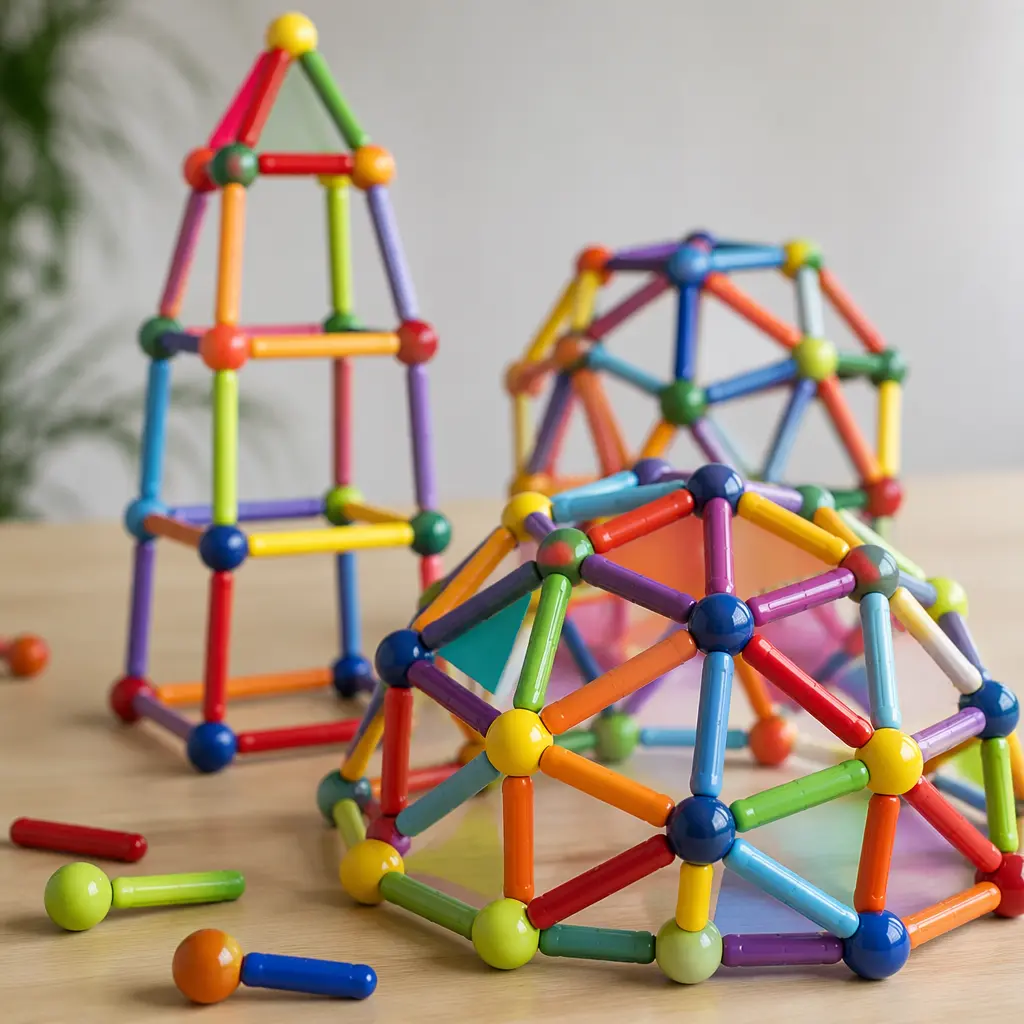
GeoMag Panels arrived at a moment when magnetic construction toys were shifting from novelty desk gadgets into more ambitious building systems. Earlier magnetic sets often focused on simple rods and steel balls that could form abstract shapes, but the addition of triangular and polygonal panels changed the experience dramatically. Suddenly, children could build enclosed forms, stable towers, bridges, domes, and structures that resembled real architecture rather than floating sculptures. That shift helped magnetic construction evolve into a category associated with both creative play and hands-on STEM learning.
Where it came from
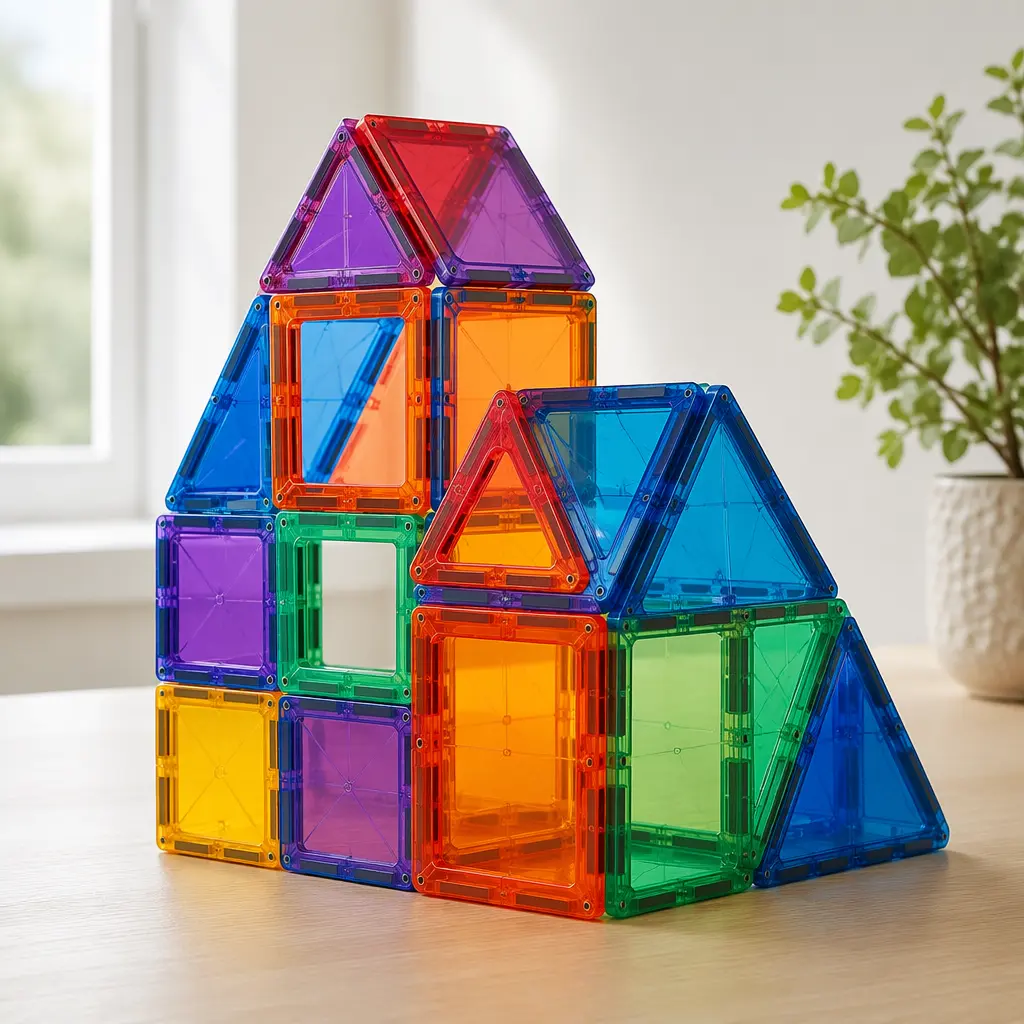
GeoMag originated in Switzerland in the late 1990s, during a period when educational toys increasingly emphasized engineering, problem-solving, and tactile experimentation. The original concept was straightforward: magnetic rods connected through steel spheres to create flexible geometric frameworks. The appeal crossed age groups quickly because the system felt both playful and surprisingly sophisticated. Children could stack simple shapes while older users explored symmetry, balance, and structural strength.
The introduction of Panels expanded the system into something closer to architectural modeling. Lightweight plastic panels snapped into the magnetic frameworks, reinforcing shapes and allowing builders to create enclosed volumes. The added surfaces made constructions sturdier and more visually complete, while also encouraging experimentation with geometry. Instead of only understanding how lines connect in space, users could see how planes and surfaces work together. Schools and museums embraced the format because it blended art, physics, and design in a way that felt approachable rather than technical.
Why it works
The core appeal of GeoMag Panels is the immediate feedback built into magnetic play. Pieces pull together with satisfying resistance, making experimentation feel intuitive even for younger children. Unlike traditional brick systems that depend on exact alignment, magnetic construction encourages trial and error. Shapes can collapse, pivot, and rebuild quickly, which keeps the process dynamic. Panels add another layer because they transform loose skeletal frames into recognizable structures with walls, roofs, and repeating patterns.
The design also scales well across age groups. Younger builders may focus on colorful stacking and basic geometry, while older children often move toward engineering challenges such as creating tall towers or stable bridges. Adults sometimes use the sets as desk toys or creative modeling tools because the movement and balance involved can feel calming and exploratory at the same time. The best magnetic construction toys reward curiosity without demanding instructions, and GeoMag Panels fit that tradition closely.
- Magnetic connections allow fast experimentation and rebuilding
- Panels reinforce structures and create more architectural shapes
- Open-ended play supports creativity rather than fixed outcomes
- Geometric building encourages spatial reasoning and engineering concepts
- Pieces can scale from simple beginner builds to complex large structures
Who it's for
GeoMag Panels are typically aimed at school-age children, though the broad age appeal is part of the toy family's staying power. Younger children often enjoy the sensory experience of magnetic snapping and colorful shapes, while older kids can tackle more advanced structural projects. Adult interest has remained strong too, especially among people drawn to architecture, design, and fidget-friendly desk toys. Families tend to appreciate that the toy works equally well for solo experimentation or collaborative building sessions. As with most magnetic toys, younger children should always use age-appropriate sets with properly sized pieces and supervision where recommended.
Variants and what to look for today
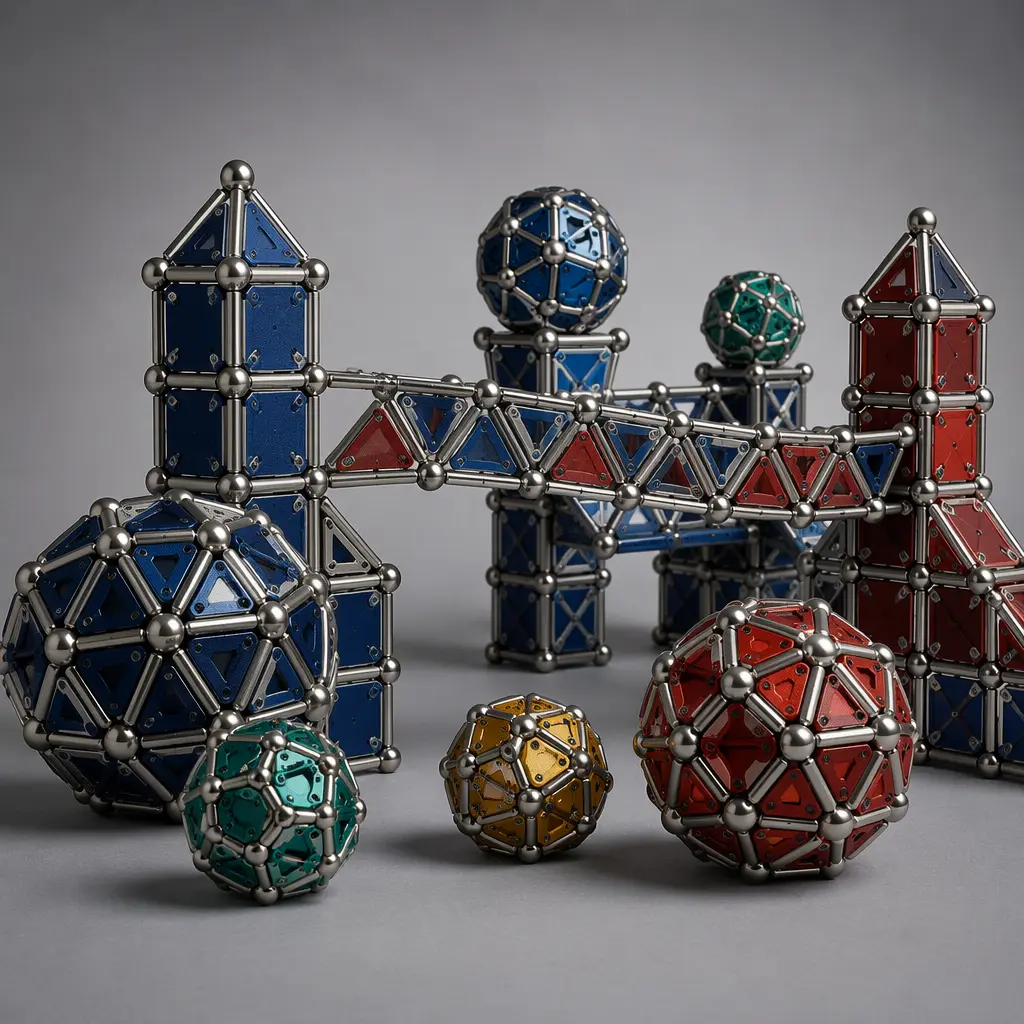
Modern GeoMag-style sets come in several formats, ranging from simple starter kits to larger collections focused on architecture, mechanics, or educational STEM activities. Some emphasize translucent panels and bright colors for visual appeal, while others lean toward muted palettes aimed at older builders and classroom settings. Larger sets naturally allow more ambitious structures, but smaller collections can still provide a satisfying introduction to magnetic construction principles.
Buyers today will also notice how widely the magnetic construction category has expanded. Many brands now offer compatible-looking systems with rods, spheres, and panels. Quality can vary significantly. Strong magnets, durable rods, and securely enclosed magnetic components tend to separate premium sets from cheaper alternatives. Storage matters as well because loose magnetic pieces can scatter easily in busy households or classrooms.
- Starter sets are useful for younger builders learning basic shapes
- Larger mixed-piece collections support more advanced architecture builds
- Translucent panels create striking window and dome effects
- Classroom-oriented sets often prioritize durability and sorting storage
- Very low-cost imitations may use weaker magnets or brittle connectors
Frequently asked questions
Are GeoMag Panels considered STEM toys?
Yes. The toy family is widely associated with STEM learning because it introduces geometry, balance, structural engineering, and problem-solving through hands-on experimentation. Many schools and learning centers use magnetic construction systems for group activities.
What makes panels different from earlier magnetic building sets?
Panels create surfaces instead of just frameworks. That allows builders to make enclosed forms such as houses, domes, and towers with greater stability. The addition of panels also helps younger users visualize geometric concepts more clearly.
Can adults enjoy magnetic construction toys too?
Absolutely. Many adults use magnetic construction sets as creative desk toys or design tools. The open-ended building style appeals to hobbyists interested in architecture, sculpture, and mechanical problem-solving.
Do magnetic construction toys require instructions?
Most sets include example builds, but the strongest appeal comes from experimentation. Builders can follow patterns, invent structures freely, or combine both approaches. The toy system rewards improvisation as much as replication.
GeoMag Panels helped redefine what magnetic construction could be. By adding surfaces and architectural possibilities to a simple rod-and-sphere system, the toy family bridged the gap between abstract geometry and real-world building concepts. Years after magnetic construction first became popular, Panels remain a reminder that small design changes can dramatically expand how people play, learn, and create.